
Do your Job! Nikolay
An open letter to Nickolay Mladenov, supposed promoter of peace in the Middle East
The Honorable Nikolay Mladenov
UN Special Coordinator for the Middle East Peace Process
Dear Mr. Mladenov,
Your latest comments regarding the Israel/Gaza conflict leave me feeling confused. You are quoted saying, “If [the UN] stopped talking to Israelis and Palestinians about peace, Israel would come off as a lot worse in world media” (https://hamodia.com/2018/06/13/un-envoy-helping-gazans-comes-return-israeli-soldiers-remains/). From that comment, I can infer that you mean that the UN is helping Israel’s image improve with the rest of the world. I would very much like to hear you elaborate just how the UN is helping present a positive image of Israel on the world stage?
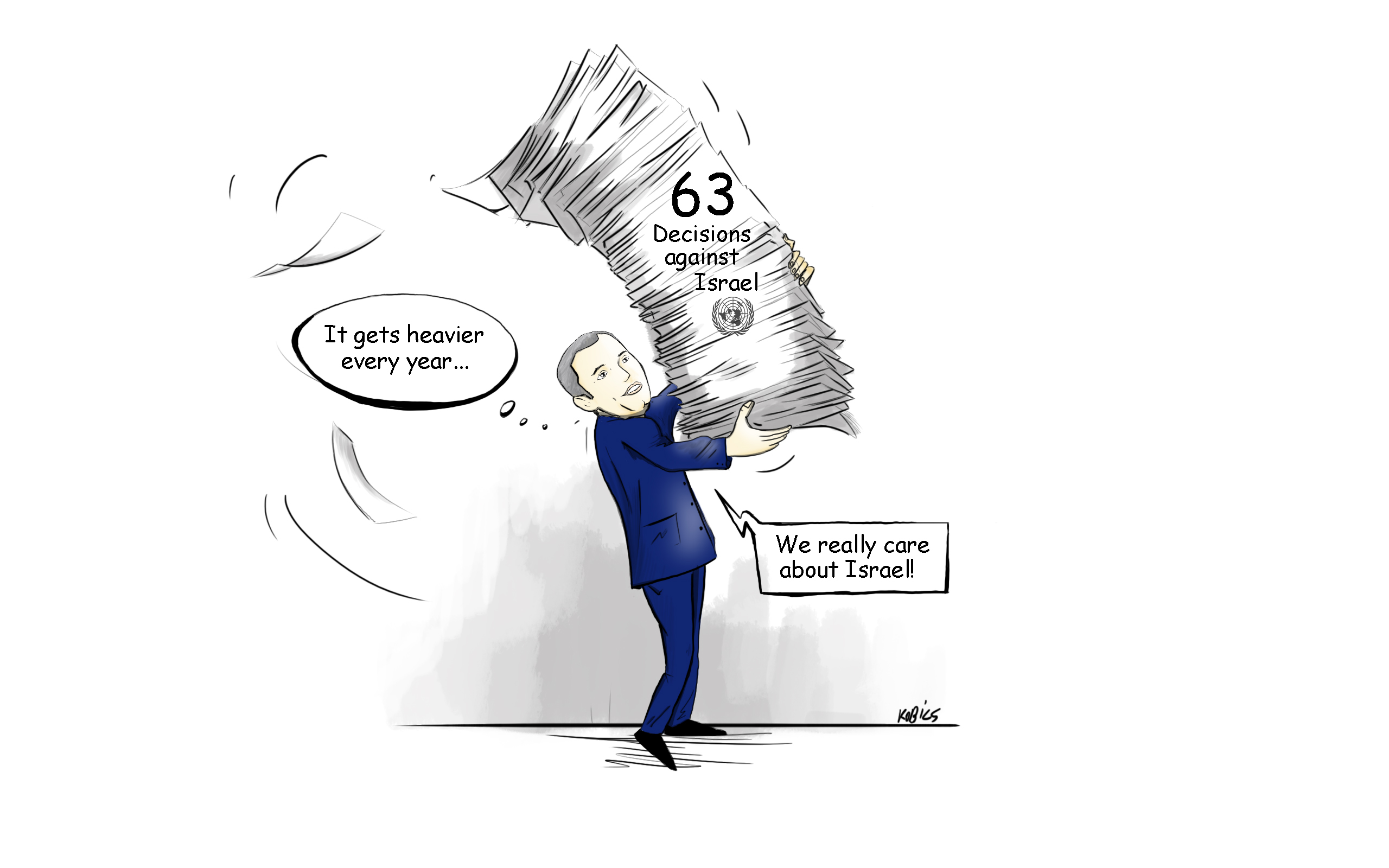
Was the UN attempting to support Israel and present a positive image when passing a resolution against Israel for its response to the Gaza border fence riots? It was admitted by a Hamas official, prior to the voting of the resolution, that 50 of the 62 rioters killed at the Gaza border riot were Hamas terrorists. Knowing this, the UN still voted 120-8 that Israel used excessive force. How can you say that Israel protecting its border from actual terrorists was unjustified? Resolutions like this, that unfairly target Israel and tell half-truths, make it appear, Mr. Nikolay Mladenov, that the UN is not preventing the worsening of Israel’s world image, but advocating for it.
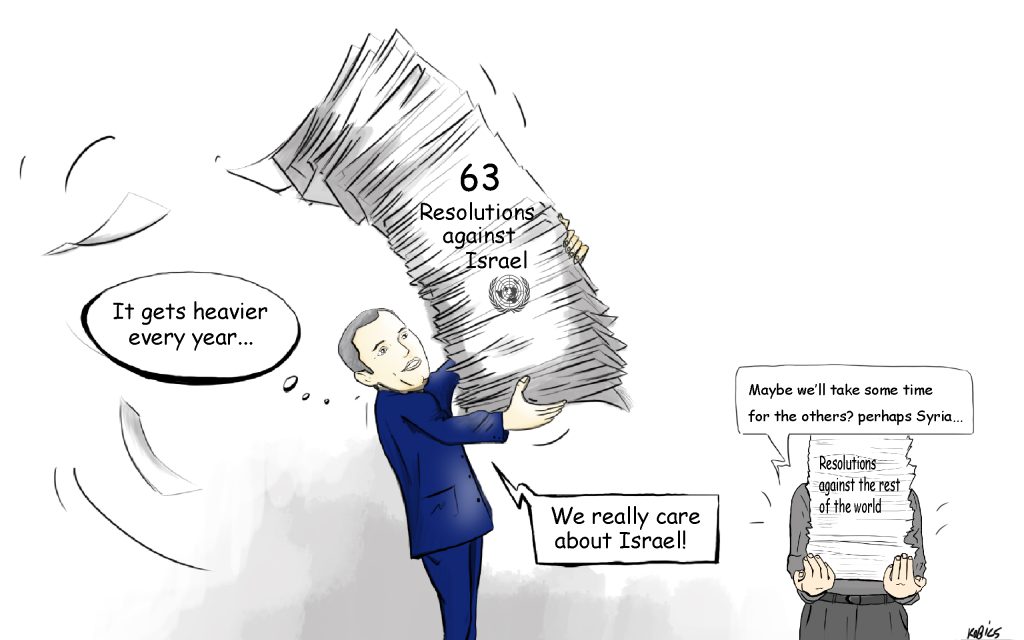
Supporting Israel doesn’t have to mean saying positive things about the Jewish state. You could show support simply by being unbiased, and by disavowing countries or groups when they attempt to harm Israel. You don’t have to look hard to find an instance of Hamas doing something worth condemning. Hamas fires rockets from heavily populated areas into Israel which puts Gazan civilians at risk. Hamas places military compounds in the basements of schools and hospitals thereby endangering children and the sick. Most recently, Hamas sent terrorists to the Gaza border fence in an attempt to use a riot as a smokescreen to sneak into Israel and cause harm however possible. If the UN really cared about representing the Israel/Gaza conflict fairly, and not just trying to negatively paint Israel as the bad guy, wouldn’t the UN condemn some of these actions by Hamas?
Just recently, Nikki Haley, the United States’ ambassador to the UN proposed a resolution to condemn Hamas's violent border riots. What happened? The proposal didn’t even receive a 2/3 majority. Why couldn’t the UN condemn such an obvious wrongdoing by Hamas. Mr. Mladenov, this complete unwillingness to condemn even the most obvious violations gives the appearance that the UN does not want to “support both sides” as you say, but instead only criticize Israel.
Mr. Mladenov, your job as the UN Special Coordinator for the Middle East Peace Process is to, “lead the UN system in all political and diplomatic efforts related to the peace process in the Middle East and to coordinate the humanitarian and development work of UN agencies and programs in the occupied Palestinian territory, in support of the Palestinian Authority and the Palestinian people.” How does your agency support a terrorist organization that has complete control over the Gaza Strip? Does your agency support legitimizing a terrorist group by giving them a country to control? How does supporting a group, whose mission is to destroy Israel, show Israelis that the UN is trying to protect Israel’s world image?
The United Nations is designed to prevent conflict. Instead of preparing for battle, countries should be able to come before the UN in agreement to prevent bloodshed. But when the UN consistently attacks only one side, it makes a State believe that their voice doesn’t matter, or even worse, that the UN is against them. Israel has time and time again shown restraint against its enemies while Hamas shows no such restraint in its plans to destroy Israel, kill Jews, and do so while killing its own citizens. You say that the UN helps support Israel’s image on the world stage, but your actions show otherwise.
Constantly waiting,
A concerned intern of the Jerusalem Institute of Justice
Article by Jared White

Hamas, the PA and Groundhog Day
…. why doesn’t anyone in Cairo look happy on the historic occasion of signing a reconciliation deal in October, 2017?
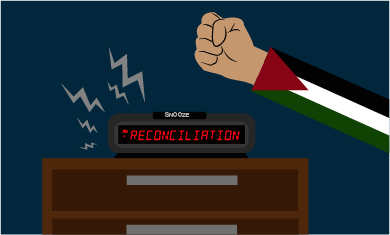
Like the classic Bill Murray movie, Groundhog Day, Hamas and the Palestinian Authority hear their clock alarms go off only to discover they are repeating the same events over-and-over. In their case, these events are their fantasy reconciliation, first tried in 2007, 2008, 2011, 2012, 2014 and now yet again in 2017. These words about the ‘historic’ 2014 effort could have been written today. Still, could the seventh time be the charm?
Just. Possibly. What has changed?
In a region where movements are the extension of leaders, more than states, three major Palestinian players have chained themselves together and then, no doubt unintentionally, lost the disentanglement key.
The first player, Yehya Al-Sinwar, famed architect of Hamas terrorism, took a governmental leadership role early in 2017. Facing the unexpected rebellion of thousands in Gaza this spring who were driven into the streets by a desperation greater even than fear of their own leaders, Sinwar began reaching out, remarkably, to a childhood friend but longer-time enemy, Mohammed Dahlan.
Dahlan, a former Fatah security chief in Gaza, was long a bitter political and military foe of Hamas. However, Dahlan has been engaged in a multi-year internal war with PA leader, Mahmoud Abbas, over the latter’s determined refusal to open any path for a successor, and Dahlan above all.
Al-Sinwar, with Dahlan’s help, began searching for ways to pressure the PA, as well as secure direct aid for Gaza from Dahlan’s own sponsors in the UAE.
If Sinwar and Dahlan believed the old man in Ramallah would buckle, they miscalculated badly. Abbas immediately cut PA distribution of electricity to Hamas by 40% and added a series of other punishing actions. He even fired 6,000 of the PA’s own employees in Gaza. Money (especially the lack of it) talks.
Now, even more desperate, Hamas reached out to another enemy, President Abdel Fattah el-Sisi of Egypt. Hamas agreed to halt its long-successful attrition of Egyptian security across a broad swath of the Sinai in return for Gaza infrastructure aid. Sisi agreed, providing that Hamas also signed on for reconciliation with Abbas, as well as broader Egyptian leadership of regional peace efforts. This converges with Egypt’s own ambitions and need to be seen again as a Sunni power broker across the Middle East and counter-poise to Iran. Good luck with that.
Fast-forward: the (now) four-fold tag team of mutual despisers crafted a marvelous reconciliation agreement that called for the Palestinian Authority to resume direct governance of the Gaza Strip while Hamas disarms. Anwar Sadat himself could hardly have done better, and all this without apparent pressure from Israel, nor obvious involvement from the remarkably invisible American President.
Lest it all seem entirely fictional, Hamas leaked the signed agreement and entertained the PA in Gaza for the first time in a decade. All players professed, in unison, that the play must certainly go on, according to plan.
Yes, but whose plan?
Yehya Al-Sinwa had promised to break the headof anyone who stood in the way of the agreement, which sounded promising. Alas, he then proclaimed with still greater insistence that “The discussion is no longer about recognizing Israel but about wiping Israel out,” adding for good measure, that Hamas would disarm when “Satan enters paradise.” Oops.
Neither Israel nor the famed Quartet has greeted this with, shall we say, enthusiasm.
So, recalling Groundhog Day, isn’t this latest reconciliation much ado about less-than-nothing at all?
Possibly. Not. This has become the first act in a new, highly consequential drama to determine who will take control of Palestinianism in the near-future, given the shared failures of Hamas and PA to deliver either victory-over or peace-with Israel. Like its kissing cousin, the interminable Palestinian-Israeli peace process, this latest intra-Palestinian reconciliation process may now be an unstoppable public-relations fixture.
Meanwhile, the three main players are glued together. Abbas will go, but he will most likely refuse to disappear until Dahlan has been denied the throne in Ramallah. For their part, Sinwar and Hamas need the PA as a foil for their military ambitions, and would prefer a compromised and dependent Dahlan at its head over someone who owes them nothing. Dahlan, of course, foresees Hamas dependence upon him. Meanwhile, Sisi loses nothing if reconciliation collapses, but stands to gain much even from a modest, positive result.
Of the main players, who has been the winner to-date?
Conventional wisdom, as always, claims to know: it’s Abbas, followed closely by el-Sisi. Even if Hamas reneges on demilitarization, the PA seems to have gained the upper-hand in Gaza. But there are a few who believe that Hamas has enticed both Abbas and Sisi into a cunning trap, aided as usual by Iran.
As for the losers, sadly, it remains the Palestinian people, as usual. Even those Palestinians who blame Israel recognize internal failures as the critical cause for current events: “Both Hamas and Fatah are out of options. Their regional politicking was a failure, and their political program ceased to impress Palestinians who are feeling orphaned and abandoned.”
If our analysis proves right, this latest reconciliation ‘process’ must provide a second and third act to follow the first. We will devote future posts, as needed, to analyze relationships between the major players over the coming months, as well as the curious invisibility of America’s President Trump and the veiled visibility of Israel during these seemingly crucial days of negotiation.
Meanwhile, set your alarm and keep an eye out for groundhogs.
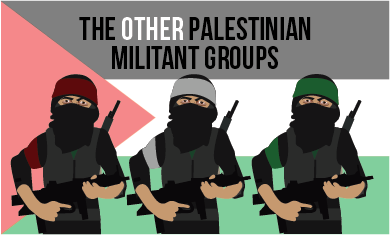
The Other Palestinian Militant Groups
Given the well-known profile of Hamas, you may be forgiven for thinking that they are the only militant group in the Palestinian territories. Their famous green banners, softly-spoken leader Khaled Meshaal and rallies attended by tens of thousands have elevated their profile to global recognition. However, their military wing the Izz ad-Din al-Qassam Brigades are by no means the only militant group in the West Bank or Gaza Strip.
The al-Aqsa Martyrs’ Brigade are associated with the governing Fatah party and are, at least theoretically, a secular entity[1]. Rather than impose theocratic rule over Israel and the Palestinian territories, its intention is to expel Israelis from the territory by means of armed resistance. Believed to have been established in late 2000, the Brigade became proficient in the practice of suicide bombing – a trademark of Hamas. Examples of this include the suicide bombing on a bus in Rehavia in January 2004[2], and the twin-suicide bombing at the Tel Aviv bus station that killed 23 people in January 2003[3]. After the Palestinian intifadas and the international community’s intolerance of Palestinian terrorism, the group remained largely dormant. On July 26, 2007, Palestinian Authority (PA) President Mahmoud Abbas announced the disarmament of ‘all the armed militias and irregular military or paramilitary groups’ existing in the Palestinian Authority[4]. The militiamen were ordered to turn in their weapons to the PA, sign a declaration renouncing terror and then had the option of being absorbed into the PA’s security forces. Conventional wisdom would suggest such a disarmament, in addition to Fatah’s adherence to the Oslo Accords and the Palestinian Liberation Organization’s 1993 rejection of violence and terrorism, would negate the existence of a Fatah-affiliated military group.
However, during Operation Protective Edge in July 2014, their headquarters in the West Bank announced an ‘open war against the Zionist enemy in all [possible] ways with [operational] surprises, in accordance with all the laws and international conventions that bestow on us [the Palestinian people] the right to armed struggle so as to remove this occupation from all the Palestinian land[5]’. While their exact membership is unknown, they published a list in August 2016 detailing over 30 attacks they were responsible for between July and the first half of August. These include firing toward the Gush Etzion Junction on July 23 and August 10, as well as shooting near the settlement of Itamar on July 25[6].
The other important group is the Al-Quds Brigade, the armed wing of the Islamist movement Palestinian Islamic Jihad (PIJ). In terms of ideology, they are largely indistinguishable from Hamas and their military wing. They reject the idea of living alongside an Israeli state and advocate for continued armed resistance. The group operates primarily out of the Gaza Strip and to a lesser extent in the West Bank due to the PA’s security arrangements with Israel. In Gaza, they are known to work closely with Hamas and have coordinated rocket attacks together, according to PIJ leader Ramadan Shalah[7].
Other smaller groups, with limited military capabilities, include the Popular Resistance Committees (PRC), Popular Front for the Liberation of Palestine (PFLP), and Harakat al-Sabireen. However, these groups suffer from limited financial assets and much of their intended recruitment goes to Hamas’ military wing, the al-Aqsa Martyrs’ brigade and the Al-Quds brigade.
The challenge for Israel is how to engage an enemy that is a non-state entity. These groups operate in densely populated areas and often intentionally fire out of civilian infrastructure. Furthermore, many militants are often in contravention of international humanitarian customary and treaty law when they are either not appropriately uniformed or wear the uniforms of the Israeli military. One such example was the use of a van with a ‘TV’ insignia by members of the Al-Quds Brigade and the al-Aqsa Martyrs’ Brigade to attack an Israeli military position on the border with Gaza in 2007[8]. Questions relating to the responsibility of militant groups to international humanitarian law are explored in the JIJ Report Hamas and the International Human Rights Law.
[1] Robinson, P. 2008, Dictionary of International Security, Polity Press, UK, p. 16
[2] Aderet, O. 2010, ‘The Intifada That Was’, Haaretz, October 1, viewed 8 March 2017, http://www.haaretz.com/israel-news/the-intifada-that-was-1.316608
[3] Israeli Ministry of Foreign Affairs 2003, ‘Suicide bombing at old central bus station in Tel-Aviv-5-Jan-2003’, January 5, viewed 9 March 2017, http://mfa.gov.il/MFA/MFA-Archive/2003/Pages/Suicide%20bombing%20at%20old%20central%20bus%20station%20in%20Tel-.aspx
[4] Abbas cited in Halevi, J. D. 2014, ‘The Al-Aqsa Martyrs Brigades, the Military Wing of Fatah, Is Officially Returning to Armed Struggle and Terror’, Jerusalem Center for Public Affairs, August 20, viewed 9 March 2017, http://jcpa.org/al-aqsa-martyrs-brigades-military-wing-fatah/
[5] Halevi, J. D. 2014, ‘The Al-Aqsa Martyrs Brigades, the Military Wing of Fatah, Is Officially Returning to Armed Struggle and Terror’, Jerusalem Center for Public Affairs, August 20, viewed 9 March 2017, http://jcpa.org/al-aqsa-martyrs-brigades-military-wing-fatah/
[6] ibid
[7] Hashem, A. 2014, ‘Islamic Jihad leader: negotiations gain “nothing”’, Al-Monitor, March 14, viewed 9 March 2017, http://www.al-monitor.com/pulse/originals/2014/03/islamic-jihad-pa-israel-ramadan-abdullah-shalah.html
[8] Human Rights Watch 2007, ‘Gaza: Armed Palestinian Groups Commit Grave Crimes’, June 13, viewed 9 March 2017, http://pantheon.hrw.org/legacy/english/docs/2007/06/13/isrlpa16156.htm

Terror Tunnels: An International Legal Perspective
Perhaps the most significant feature of 2014’s Operation Protective Edge was the emergence of the terror tunnel phenomenon. Unlike Hamas’ traditional modus operandi of rocket attacks from Gaza, the tunnel phenomenon showcased the alarming ability of Hamas militants to burrow behind enemy lines into Israeli territory and launch attacks on towns and kibbutzim.
Amid reports that Israel might need to consider a threat of Hezbollah tunnels in northern Israel, we analyze the applicability of international law to these tunnels.
Given the recent emergence of the tunnels, their limited use around the world, and their ineffectiveness to state actors, international law does not specifically outline prohibitions on their use. Such is the view of Israeli international legal expert Professor Daphne Richemond-Barak, who noted ‘there is no legal literature’ on the issue and even ‘very little military theory and strategy’. Instead, we are forced to rely on relevant international humanitarian treaty and customary law.
The most obvious contravention of international law relates to the tunnels’ ability to assist in aggression against both Israeli targets and its territorial integrity. Although self-defense is guaranteed to member states of the United Nations by Article 51 of the UN Charter, Hamas’ claims of the tunnel’s ‘defensive’ nature are dubious at best. Many of the now-destroyed tunnels extended into areas of Israel without military targets, such as those with exit points close to the kibbutzim of Kerem Shalom, Holit and Nir Oz. Thus, the tunnels are understood to pose an intentional threat toward civilian targets within Israeli territory – well beyond the pretext of self-defense.
The exit points of these tunnels are not the only areas in violation of international law. The positioning of these tunnels’ entry points is also of significance, particularly as it relates to the Geneva Convention Relative to the Protection of Civilian Persons in Time of War (IV). The central theme of this treaty is the separation of civilians from military personnel to safeguard the wellbeing of non-combatants. Alarmingly, many of the tunnels’ entry points emanate from civilian areas and infrastructure such as mosques, schools and apartment blocks. This is in contravention of the following international laws:
- Article 28 of the 1949 Geneva Convention IV
- Articles 12(4) and 51(7) of the 1977 Additional Protocol 1 to the Geneva Conventions
- Article 8(2)(b)(xxiii) of the 1998 International Criminal Court Statute
- Customary International Law
Richemond-Barak also notes the significant risk posed to children in the construction of the tunnels. As argued in a Journal of Palestine Studies article of 2012, by Hamas’ own admission at least 160 individuals had died in constructing the tunnels at the time of the article’s publishing. Alarmingly, an extremely high number of these are believed to be children as they are ‘prized for their nimble bodies’.
Furthermore, the way in which these tunnels must be eliminated also makes Hamas liable for violations of international law. The aforementioned access points of the tunnels (in mosques, schools, apartment blocks etc.) inevitably means that their dismantlement will result in damage to civilian infrastructure and endanger the lives of civilians themselves. Mapping the paths and structural integrity of the tunnels is extremely difficult and rarely accurate. For those tasked with destroying the tunnels, there is a substantial element of ‘unknown’ in doing so; increasing the likelihood of unforeseen damage to Gazan civilians and their infrastructure.
Thus, in the absence of international law that deals specifically with the phenomenon of terror tunnels, one must apply existing relevant international humanitarian laws and norms to the issue. In doing so, one can establish that the use of underground terror tunnels is undeniably contrary to international law and a war crime.
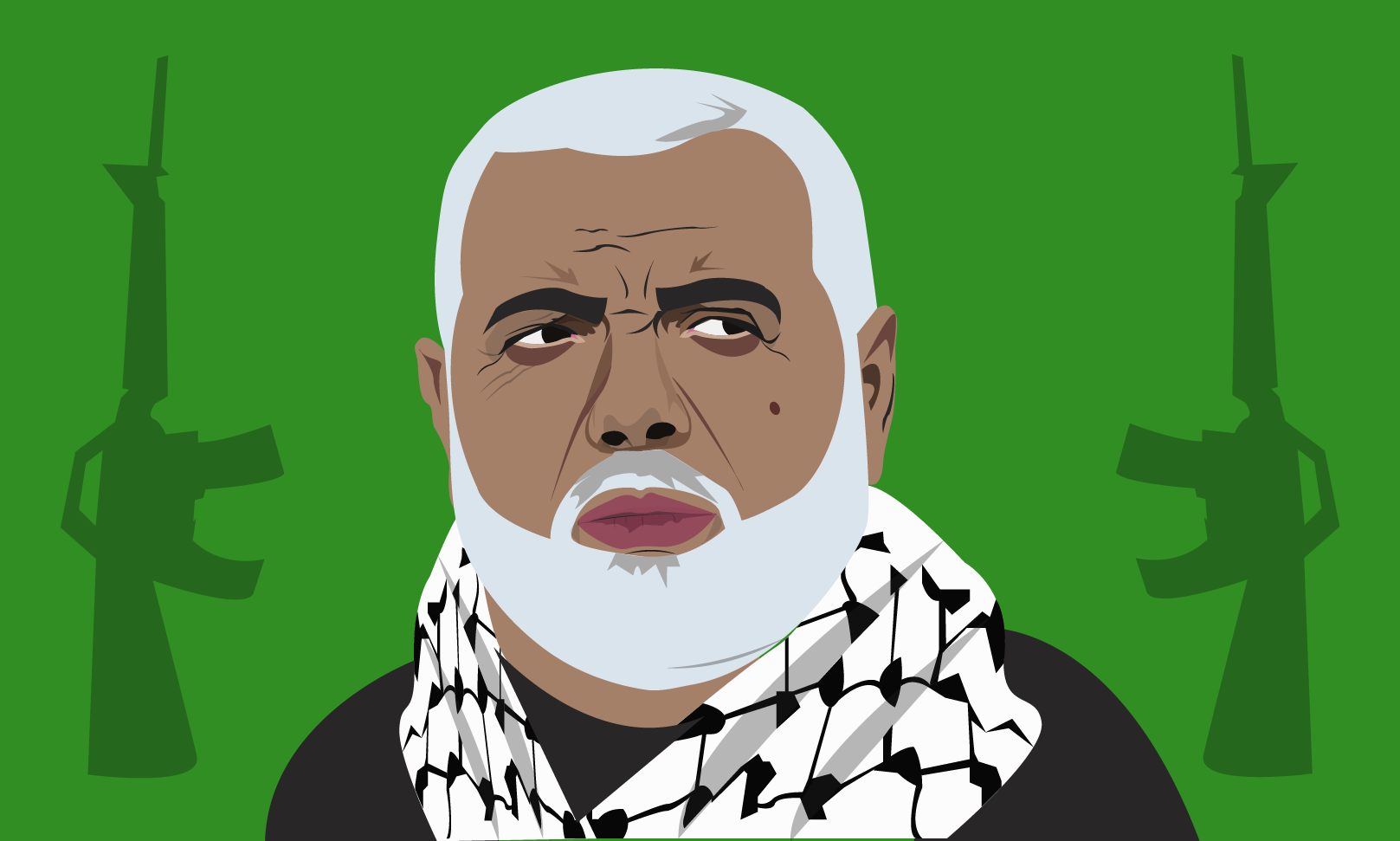
International leader Ismail Haniyeh
Ismail Haniyeh
The recent replacement of Khaled Meshaal with Ismail Haniyeh as Chairman of the Hamas Political Bureau signals a major shift in the inertia that has characterized the group in recent decades. Meshaal has served in his current role for over 20 years, while Haniyeh served as the disputed Prime Minister of the Palestinian Authority between 2006 and 2014.
So how much do we know about Hamas’ future leader? And what can we expect from the man who has enemies not only in Israel, but also among the Palestinian political establishment?
Early Life & Background
Haniyeh was born in 1963 in the Al-Shati Refugee Camp in the north of the Gaza Strip – at that time under Egyptian military occupation. His parents originated from Ashkelon, but became refugees after fleeing the 1948 Arab-Israeli War.
He attended schools run by the United Nations Relief and Works Agency and graduated from the Islamic University of Gaza with a degree in Arabic literature. During these years he became involved with Hamas and served as the head of the students’ council representing the Muslim Brotherhood (The Islamic University of Gaza’s founder happens to be Mahmoud al-Zahar – one of the co-founders of Hamas). He graduated at the same time as the first intifada, which likely helped to formulate his antagonism toward Israel and his esteem for armed resistance. He was given a short prison sentence by Israeli authorities in Gaza for his role in the protests and was detained again in 1988 and imprisoned for 6 months. In 1989, he was again imprisoned for three years.
Haniyeh was released in 1992 and was deported by Israeli authorities to Lebanon with senior Hamas leaders and 400 other activists. Using Lebanon as their base, they garnered substantial support and media exposure – both in the Middle East and around the world. He was able to return to Gaza in 1993 and was appointed Dean of the Islamic University of Gaza.
In 1997, he became the head of the office of Sheikh Ahmed Yassin – the spiritual leader and one of the co-founders of Hamas. The two men enjoyed a close relationship, leading to Haniyeh also serving as the group’s representative to the Palestinian Authority.
Amid the second Intifada, Hamas’ popularity surged as a response to the perceived success of armed resistance and suicide bombing. Furthermore, with many members of Hamas’ leadership being assassinated by Israeli security forces, Haniyeh was able to avoid competing with factional and personal rivals within Hamas for more authoritative positions.
Movement Through Hamas
Haniyeh’s ascension through the Hamas ranks also drew increased attention from Israeli security focus. In line with Israel’s policy of targeting leaders complicit in terror attacks against Israelis, Haniyeh and Yassin were slightly injured in an Israeli airstrike on an apartment block in Gaza city in September 2013. Six months later, Yassin was killed in a targeted assassination by an Israeli helicopter. As the spiritual leader, co-founder and close friend of Haniyeh, Yassin’s assassination more than likely strengthened Haniyeh’s loathing of Israel. Following Yassin’s assassination, Abdel-Aziz Rantissi was appointed his successor in Gaza. However, he too was assassinated in April 2014. Because of these efficient assassinations, Hamas decided to install a secret ‘collective leadership’ with Haniyeh, Mahmoud al-Zahar and Said al-Siyam.
In December 2005, Haniyeh was chosen to head the Hamas list in the Palestinian legislative elections. In the elections the following month, Hamas won a commanding majority with 76 seats out of a possible 132. Fatah won the next most seats with 43. Haniyeh was then confirmed as Prime Minister of the Palestinian National Authority and was asked by President Mahmoud Abbas to form a government.
Weeks of negotiations regarding a coalition with Fatah and other factions failed, and Haniyeh was forced to appoint a cabinet comprised primarily of Hamas members. This new cabinet was met with skepticism and repudiation from the US and the EU, both of whom threatened to cut funding to the Palestinian Authority unless Hamas renounced violence and recognized Israel. Haniyeh did not meet these requests and pleaded with them to not carry out their threats.
Strained Relations with Fatah
On December 14, 2016, an assassination attempt occurred at the Rafah border crossing between Gaza and Egypt that killed one of Haniyeh’s bodyguards and injured his son. Hamas consequently blamed Fatah for the assassination attempt.
In June 2007, after a week of fierce fighting between Hamas and Fatah, Hamas seized control of the Gaza Strip. President Abbas subsequently dissolved the Hamas-dominated government and dismissed Haniyeh as Prime Minister. Unsurprisingly, Haniyeh rejected the move and presented himself as the de facto Prime Minister - and would remain so up until June 2014.
Since that time, his role has been characterized by two main activities: trying to reach a reconciliation/unity agreement with Fatah and continuing the policy of mukawama (armed resistance) against Israel and its citizens. No elections have been held in the Gaza Strip since 2006, enabling Hamas to cement their control of the territory.
As the most senior official of the Gazan government, Haniyeh is understood to be responsible for the human rights abuses and war crimes emanating from Hamas in the territory. This means that, among other incidents, he is liable for:
- 3,278 rocket attacks on Israel in 2008
- 2,248 rocket attacks on Israel in 2012
- 4,562 rocket attacks on Israel between 8 July-26 August 2014
- The summary, extrajudicial executions of at least 23 people in July/August 2014
Personal Life
Haniyeh has thirteen children. He is thought to have become a millionaire through over 2,500 square meters of land in Gaza as well as selling subsidized fuel for profit. Three of his sisters, Kholidia, Laila and Sabah, are citizens of Israel and live in the Bedouin town of Tel as-Sabi near Beersheva.
In early 2012, Israeli authorities granted permission for Haniyeh’s sister and her critically ill husband to travel to Rabin Medical Center in Petah Tikva to receive emergency heart treatment. Similarly, in addition to several other members of Haniyeh’s family, his daughter spent a week in a Tel Aviv hospital for emergency treatment in October 2014.
Future Prospects
Amid the change in leadership, the continuity of past Hamas behavior will remain. Although the group will vote on a new charter in the near-future, they are not expected to renounce violence or support any of the norms laid out in the Oslo Accords of 1993. Due to pressure from the international community and media, they may do away with various anti-Semitic articles of the charter such as ‘The Day of Judgment will not come until Muslims fight the Jews, when the Jew will hide behind stones and trees. The stones and trees will say, “O Muslim, O servant of God, there is a Jew behind me, come and kill him”’.
His attitude toward both Israel and Fatah is not likely to be any warmer than his predecessor. He would harbor added enmity toward Israel for destroying his house in 2014’s Operation Protective Edge and for assassinating his mentor Sheikh Yassin. In relation to Fatah, he no doubt still resents the fact that he was dismissed as the Prime Minister of the Palestinian Authority in favor of Third Way’s Salam Fayyad. Known as a firebrand public speaker, he is likely to be received more poorly by the international community than the erudite and softly-spoken Meshaal. Coupled with the volatile militancy he displays at Hamas rallies, it does not bode well for those hoping for peace and stability.
What Palestinians are Afraid to Tell
https://www.youtube.com/watch?v=qrF09CvzyLg
We believe that these voices must be heard!
The international community, and particularly the US and EU, have invested unwisely and irresponsibly in the Palestinian Authority. Much of the money has been stolen in broad daylight by their corrupt leaders. These leaders have absolutely no incentive to ever build a Palestinian state or make peace. The conflict with Israel is very lucrative for them personally, and very little funding is actually monitored or preconditioned on progress or reforms. Instead of building a Palestinian democracy, their leaders have built a radicalized police state which systematically abuses human rights in the West Bank and Gaza. To think that this system is funded by Western democracies is so disheartening.
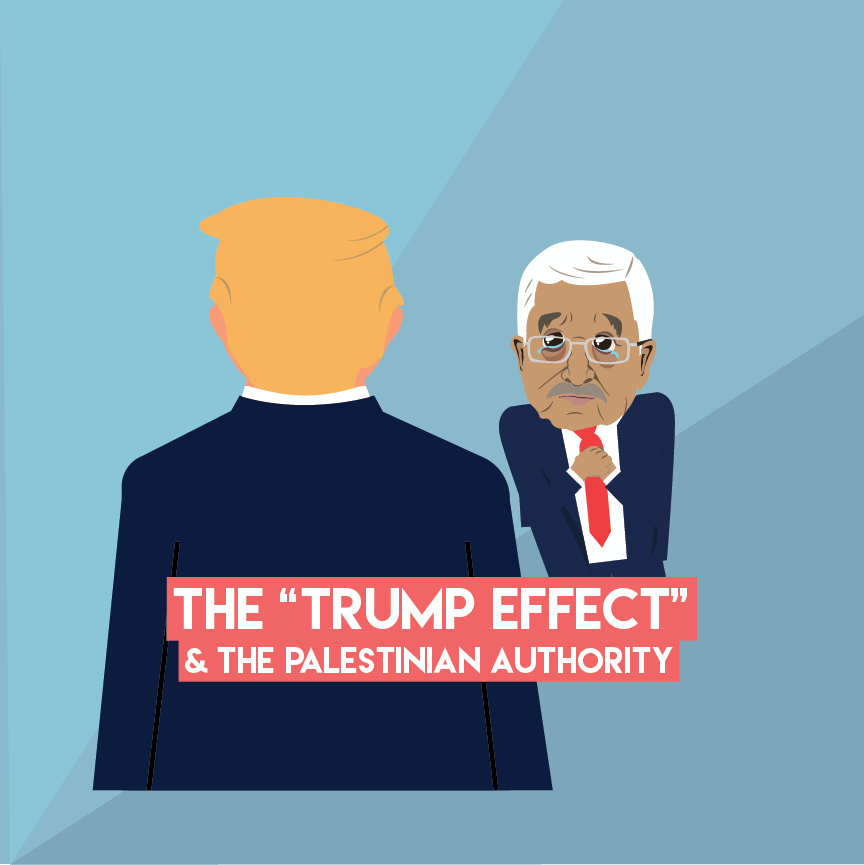
The "Trump Effect" and the Palestinian Authority
On April 27th, 2017, the Palestinian Authority announced that it would no longer be paying Israel to supply electricity to the Gaza strip. President Mahmoud Abbas’ stated rationale for this drastic decision was to increase pressure on Hamas by withholding finances and shake the terrorist group’s ten-year reign. The Gaza strip already only had six hours of electricity per day, but with this new lack of funding will be reduced to a mere 2-4 hours. This aggressive strategy is a result of years of failed attempts between the Palestinian Authority’s governing faction, Fatah, and Hamas to reconcile. But occurring only one week before his first face-to-face meeting with US president Donald Trump, the timing of Abbas’ decision calls into question the true purpose behind his actions.
Being dubbed the “Trump effect” by academics, the new US president’s rhetoric on cracking down on global terrorism and de-emphasis on human rights has influenced decisions of middle Eastern leaders. For Palestinian Authority President Mahmoud Abbas, cutting off funding for electricity in Gaza one week before his meeting with Trump was a strategic decision to gain the favor of the new United States president. Trump is eager to restart the peace process between the Israelis and Palestinians, and with his extremely pro-Israel sympathies and anti-Muslim rhetoric, the United States will likely side with the Israelis at the negotiating table. Abbas, aware of Trump’s “Israel bias” as well as claims by Netanyahu that there is no united voice of the Palestinian people to negotiate with or true partner for peace, needed to prove that he is a legitimate partner and committed to aiding the war on terror.
Abbas has been formulating a strategy to best approach Donald Trump since November. Shortly after the election, Abbas reportedly assembled a committee of experts on US policy and government to advise and aid him on the audacious and unpredictable president. With Trump announcing his intent to move the US embassy to Jerusalem, Abbas likely knew that were the peace process to restart between the Palestinians and Israelis, he could not count on the Trump administration to act as an unbiased mediator. In order to be considered a legitimate and equal partner in negotiations, the Palestinian Authority needed more than just idealistic rhetoric to gain favor with Donald Trump. Abbas had to take action tailored specifically to the policy goals of the new president.
Cracking down on global terrorism is a foremost prerogative of the Trump administration. Their “highest priority” is to to gain “peace through strength” by “defeating radical Islamic terror” by working with “international partners to cut off funding for terrorist groups.” As both the United States and the Israel condemn Hamas as a terrorist organization, Abbas cutting off funding for the Gaza strip follows directly from the Trump policy and works in accord with the outline set by the administration. Two weeks before his meeting with Trump, Abbas stated to the Arab Gulf States that he was “tired of funding the Hamas government in Gaza.” One week later, he put his words into action. The Palestinian Authority is attempting to exhibit to the Trump administration that they can be seen as a committed ally in the war on terror. By taking action against Hamas and further separating themselves from the radical organization, they are creating a foundation with the United States and Israel to combat a mutual enemy. This commonality may serve to gain them legitimacy and favor in the eyes of the Trump administration that will be helpful in future negotiations.
Not only did Abbas need to present the Palestinian Authority to Trump as committed to peace and eradicating terrorism, he needed to present a unified Palestinian front to the United States. Since the split between Fatah, the governing party of the Palestinian Authority and Hamas in Gaza in 2007, Israeli Prime Minister Netanyahu has claimed that peace negotiations with the Palestinians are futile because there is no united voice of their people. Abbas needs to regain control and power over Gaza in order to frustrate attempts by Hamas to carry out actions that may unravel any progress. He hopes that pressuring Hamas by worsening the humanitarian crisis in Gaza will loosen the organization’s hold on the territory and acquiesce back to the PA. With both territories back under his jurisdiction, Abbas can invalidate Israeli claims that there is no unified representative of the Palestinian people. Trump has also stated that “there cannot be lasting peace unless Palestinian leaders speak in a unified voice…against violence and hate.” Israel believes that “Abbas is trying to force Hamas into a move that would – a least symbolically – demonstrate Palestinian unity” in preparation for meeting with the United States. After yet another failure to create a unity government between Fatah and Hamas by the middle of April, Abbas consequently had to look for other ways to regain control over the Gaza strip to present a united front.
The different stances on human rights between Barak Obama and Donald Trump were another factor shaping the decision of Abbas to cut off electricity funding to Gaza. Obama’s foreign policy program Countering Violence Extremism emphasized the importance of recognizing human rights violations as the drivers of terrorism. In a 2011 speech on “Remarks by the President on the Middle East and Africa,” Barak Obama stated that support for human rights was not a secondary interest but a “top priority” in the war on terror. This policy marked his years in office with an “awkward balance” between condemning human rights violations in states such as Saudi Arabia, but allying with these nations to fight against terrorist organizations. Cutting off funding for electricity in Gaza would have likely been condemned by the Obama administration as a human rights violation. Abbas then would not have utilized such a strategy as it would not have been looked on favorably by the previous president. The PA’s actions to pressure Hamas would have likely been exceedingly different under the Obama administration.
Trump, however, is not so much concerned with the human rights consequences of policies that progress the war on terror. Trump stated in an interview that “first we have to confront and eradicate terrorism” and that the “way you address human rights issues… is to improve conditions in the region…human rights would improve as security and stability do.” Trump has been criticized for this stance by Democrats who argue that he is de-emphasizing human rights in favor of focusing solely on fighting terrorism. This is evident in his failure to discuss Saudi Arabia’s notorious human rights violations during his visit to the country. He told leaders that he wasn’t there to “lecture them” but instead to only discuss the mutual goal of fighting global terrorist groups such as ISIS and Hamas. Where the Palestinian Authority’s actions would have been condemned by the Obama Administration due to escalating the human rights crises in Gaza, the Trump administration would instead view this as proof that Abbas is committed to fighting against Hamas and gain legitimacy as peace partners.
The success of Abbas’ tactical decision comes at the cusp of Trump’s remarks at a press conference after the two leaders’ meeting. Trump stated that “President Abbas has spoken out against…terrorist groups, and we must continue to build our partnership with the Palestinian security forces to counter and defeat terrorism.” Abbas’ proximate actions against Hamas worked in his favor, as the Trump administration recognized his work against terrorism. Looking at the implications of Trump’s foreign policy on decisions of the Palestinian Authority is necessary to predicting as well as understanding the motivation behind future actions of President Mahmoud Abbas. With Trump committed to restarting the Israeli-Palestinian negotiations, Abbas needs to show the new administration the Palestinians are ready and wanting for peace. By carrying out action in accord with Trump’s harsh on terrorism policy, the PA hopes to butter up the new president. In the press conference after their meeting, Abbas regaled to Trump and the world that “we are endeavoring to bring about security, free and peace…we believe that we can be…true partner, to you to bring about a historic peace treaty.” With his actions against Hamas, Abbas now has substance to back up his words. Abbas will likely continue to cater his actions to appease Trump in the immediate future in preparation for the renewal of the peace process.

Hamas' "Sinking Business"
In the past two years, over 400,000 illegal individuals from from the Middle-East and North Africa to Europe by sea due to the oppressive conditions in these areas. One Gazan in reference to Hamas stated that "It's better to die at sea than to die of despair and frustration in Gaza."
Downloads
Suppression Palestinian Political Rights
The Palestinian people's political rights in the West Bank and Gaza are continually violated by the PA and Hamas. From the lack of free elections for almost a decade to the suppression of freedom of assembly, Palestinians in the West Bank and Gaza are denied their rights and these institutions are in violation of international humanitarian law.