
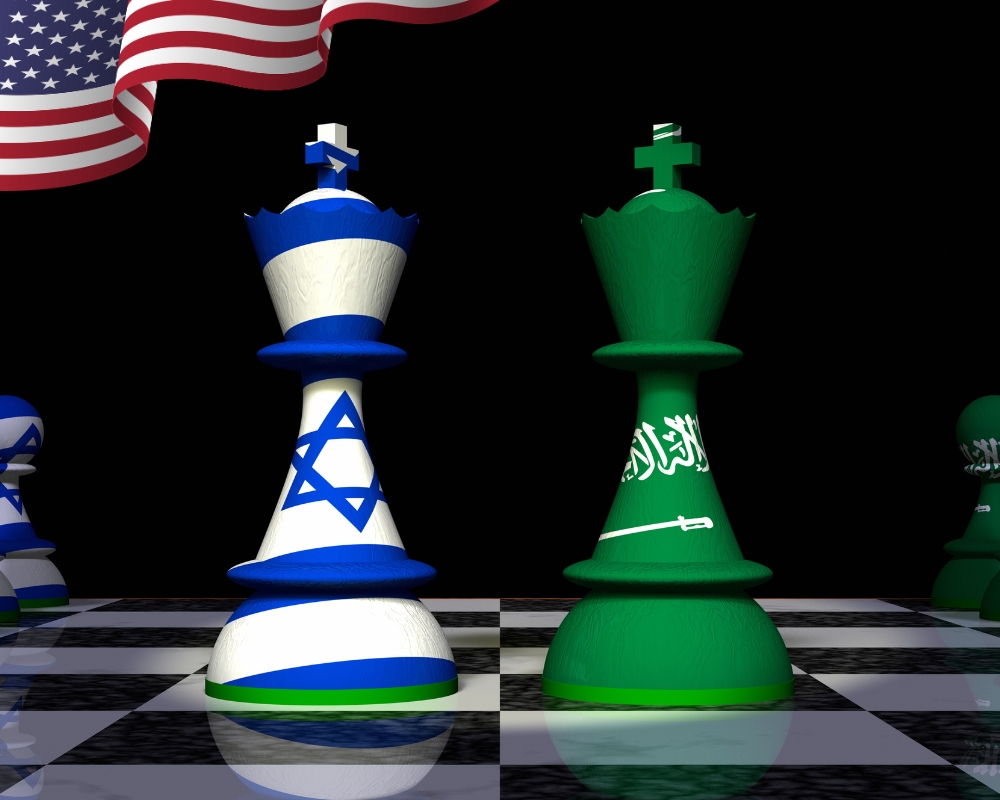
Unraveling the Trio: Understanding the Complexities of Saudi Arabia's Relationship with Israel, and the United States
When the Abraham Accords were signed in 2020, a key country was missing from the deal: the Kingdom of Saudi Arabia. By not signing the Accords, Saudi Arabia has kept its point of leverage in its negotiations with the United States and with the Israeli-Palestinian Conflict. Saudi Arabia recognizes the power they hold in the Middle East, and they want to get the most from both the United States and Israel before they agree to normalize relations with the Jewish state.
Each combination of the three-sided relationship between Israel, the United States, and Saudi Arabia must be understood to grasp what it will take for Saudi Arabia to normalize relations with Israel.
First, it is important to understand the relationship between Israel and Saudi Arabia. Historically, the two states have been enemies. The Saudis voted against the United Nations Resolution 181, also known as the Partition Plan for Palestine, they have sent troops to fight the Israelis in several wars, and they have consistently supported the Palestinians in their efforts against Israel.
For one, the Saudis support the Palestinians in their fight for the land that currently belongs to Israel. In order for Saudi Arabia to make peace with Israel, the Saudis want Israel to adopt the Arab Peace Initiative (API). The API calls for Israel to pull out of territories gained in the 1967 war, for Israel to recognize a sovereign Palestinian state with its capital in East Jerusalem, and for Israel to solve the Palestinian refugee issue (“Arab Peace Initiative”). In this regard, “solving” the Palestinian refugee issue would mean losing Israel’s identity as the only Jewish state.
If Israel agrees to these conditions, then Saudi Arabia may move to normalize relations with them. But Israel cannot adopt these conditions, for they would be ceding valuable defensive holdings and giving too much to the Palestinians. Saudi Arabia is using the Palestinians as leverage in the negotiations because they want an Arab-controlled Israel, and “the API regards the Arab-Israel normalization as the reward for solving the Israel-Palestinian dispute (Teller Abraham Accords: Saudi Arabia is still not budging).
Next, it is important to understand the relationship between the United States and Saudi Arabia. The Abraham Accords were mediated by the United States, and Saudi Arabia has not signed the peace treaty because they wanted more from the Americans. In order to achieve peace, Prince Mohammed bin Salman “has told both Israeli and American officials that he wants Washington to treat Saudi Arabia as the major regional force he believes it is by resuming arms sales halted last fall and by offering the kind of security commitment it extends to close allies” (Traub, Netanyahu Has Drawn a Saudi-U.S Road Map).
Saudi Arabia wants to be on the good side of the American military, and the Americans have their priorities as well. The United States is intent on preventing Iran from creating its own nuclear weapons, and it would also prefer Saudi Arabia to be the dominant Middle Eastern state over Iran. With this, Saudi Arabia laid their claims on the table in recent talks with America. They want the U.S to support Saudi Arabia’s goal of building their own nuclear weapons; they want an American promise to defend Saudi Arabia in times of war, and they want the U.S to grant them special status as a major non-NATO ally (Nissenbaum, et al., Saudi Arabia Seeks U.S Security Pledges).
Again, these are steep demands by the Saudis. The United States does not want to support a nuclear Saudi Arabia, as this would lead to a nuclear arms race between them and Iran, which would turn into a disastrous situation. They also do not want to formally recognize Saudi Arabia as an ally, which would rope them into any future Middle Eastern conflicts.
The last relationship to understand in this trio is between the United States and Israel. Israel wants the United States to create peace with Saudi Arabia to further protect its position as a stable state in the Middle East. Saudi Arabia is one of the most important countries not at peace with Israel, and an agreement between the two states would further solidify Israel’s place in the Middle East.
While the relationship between Saudi Arabia and Iran is not part of the trio negotiating peace, it is equally important as the others. For decades, the two states have battled over dominance in the Middle East. This has resulted in proxy warfare between the states, as in the Syrian Civil War and in the Yemeni Civil War. After years of tension, diplomacy between the states has become a recent possibility. In March, the leaders of the two states agreed to restore ties in agreement mediated by China. In this agreement, they said they will affirm “the respect for the sovereignty of states and the on-interference in internal affairs of states” (Gadzo, “Changing Global Order”). In a statement released by Saudi Arabia, Saudi Arabia and Iran reached “an agreement to resume diplomatic relations between them and re-open their embassies and missions” (“Joint Trilateral Statement”). While Saudi Arabia and Iran are still battling for Middle Eastern dominance, tensions between the two are softening while diplomacy is rising.
Despite Israel’s hope that the United States will strike peace with Saudi Arabia, the Saudi demands are too much for the Americans. The United States would not want to be forced to protect Saudi Arabia in times of war, and they certainly do not want the Saudis to have nuclear weapons. Israel and Saudi Arabia cannot achieve peace themselves, as well, because the Saudi claims for a sovereign Palestine are impossible for Israel to accept. As of now, the demands by the Saudis are too high, and unless they cede some of them, official peace will not be achieved.
By Ethan Wenger – JIJ Intern

Second Quarter 2023 Highlights
The Jerusalem Institute of Justice is making a substantial impact; read the quarterly highlights. Your continued support enables us to carry out our mission of protecting human rights, promoting the rule of law, and advocating on behalf of Israel.
Two weeks ago, JIJ urgently submitted a recommendation to the Office of the Prosecutor of the International Criminal Court regarding crucial policy changes related to crimes against or affecting children. Our unwavering aim is to drastically improve the current approach to addressing this critical issue and ensure that justice is served for all innocent victims. More details here.
JIJ has submitted a comprehensive report to the UN Human Rights Committee, revealing the stark discrepancies between the Palestinian government's claims of adhering to the International Covenant on Civil and Political Rights (ICCPR) and the disturbing reality of inadequate law enforcement, incitement to violence, and numerous instances of torture and inhumane treatment of the Palestinian people. Read more here.
The proposed judicial reform in Israel has been a source of significant controversy. We have closely followed this debate, understanding the potential ramifications on democracy, the principle of checks and balances, and human rights within Israel. Find out more.
The Interior Ministry's decision to halt the provision of visa services negatively impacts the lives of many of JIJ's free legal aid clients. We have filed a petition with the High Court of Justice, urging the restoration of these vital services for thousands of people. We firmly believe that addressing matters such as passport backlogs is important. However, it should be done in a manner that avoids the creation of further complications. Learn more.
The participants of our GDC Israel program are making headlines. This program is dedicated to nurturing future leaders who will advocate for justice. We're immensely proud of their achievements. Check out their stories.
Lastly, we invite you to watch and share our video celebrating Israel's 75th anniversary. This milestone is a testament to the resilience and spirit of the Israeli people. Watch the video here.
Thank you for being part of our journey. We look forward to keeping you informed about our ongoing efforts.
Click the button below if you wish to support our ongoing efforts like the ones listed above.
Second Quarter 2023 Highlights
The Jerusalem Institute of Justice is making a substantial impact; read the quarterly highlights. Your continued support enables us to carry out our mission of protecting human rights, promoting the rule of law, and advocating on behalf of Israel.
Two weeks ago, JIJ urgently submitted a recommendation to the Office of the Prosecutor of the International Criminal Court regarding crucial policy changes related to crimes against or affecting children. Our unwavering aim is to drastically improve the current approach to addressing this critical issue and ensure that justice is served for all innocent victims. More details here.
JIJ has submitted a comprehensive report to the UN Human Rights Committee, revealing the stark discrepancies between the Palestinian government's claims of adhering to the International Covenant on Civil and Political Rights (ICCPR) and the disturbing reality of inadequate law enforcement, incitement to violence, and numerous instances of torture and inhumane treatment of the Palestinian people. Read more here.
The proposed judicial reform in Israel has been a source of significant controversy. We have closely followed this debate, understanding the potential ramifications on democracy, the principle of checks and balances, and human rights within Israel. Find out more.
The Interior Ministry's decision to halt the provision of visa services negatively impacts the lives of many of JIJ's free legal aid clients. We have filed a petition with the High Court of Justice, urging the restoration of these vital services for thousands of people. We firmly believe that addressing matters such as passport backlogs is important. However, it should be done in a manner that avoids the creation of further complications. Learn more.
The participants of our GDC Israel program are making headlines. This program is dedicated to nurturing future leaders who will advocate for justice. We're immensely proud of their achievements. Check out their stories.
Lastly, we invite you to watch and share our video celebrating Israel's 75th anniversary. This milestone is a testament to the resilience and spirit of the Israeli people. Watch the video here.
Thank you for being part of our journey. We look forward to keeping you informed about our ongoing efforts.
Click the button below if you wish to support our ongoing efforts like the ones listed above.

Indoctrination of Children- Policy Proposal to the ICC
Summary of Input to the Office of the Prosecutor at the International Criminal Court
To Renew the Policy Paper on Crimes Against or Affecting Children
For the full report, press here
The Jerusalem Institute of Justice has submitted its substantive input to the Office of the Prosecutor of the International Criminal Court as part of their public consultation aimed at updating the policy paper concerning crimes against or affecting children. The primary objective of this public consultation, in which our organization actively engages, is to enhance the effectiveness of investigations and prosecutions pertaining to crimes committed against or adversely impacting children. JIJ actively works to raise awareness and combat the utilization of children in hostilities, highlighting the significance of addressing indoctrination as a means of exerting psychological pressure on children to join armed groups.
The Rome Statute of the International Criminal Court does not explicitly define the actions of conscripting, enlisting, or using children in hostilities. Instead, the scope of these activities is determined by referencing relevant treaties, principles of international law, and general legal principles derived from national legal systems, all in line with internationally recognized human rights standards. The ICC Trial Chamber I acknowledged that children under 15 are typically unable to give genuine and informed consent when enlisting. Given the interpretive nature of the Rome Statute, indoctrination can be considered within the purview of enlisting or conscripting as it involves imposing prescribed beliefs, inhibiting critical evaluation, and fostering violence normalization. Indoctrination plays a significant role in exerting psychological pressure on children to join armed groups or forces, and its methods can range from formal education to military-oriented summer camps, mass media, and online networks.
The involvement of children as combatants in conflict situations not only jeopardizes their own well-being and development but also poses a threat to the prospects of peace and stability in affected regions. Children exposed to violence during their formative years are at risk of becoming agents of violence themselves, hindering their potential as contributors to lasting peace. Conflict-affected children suffer enduring mental and physical trauma, with child soldiers experiencing even greater levels of violence as witnesses and perpetrators. This trauma can manifest in various disorders, impacting their mental health, behavior, and education. The consequences of children's trauma extend beyond their individual experiences, profoundly shaping communities and societies. Transgenerational effects are observed, with former child soldiers more likely to exhibit violent behavior and trauma potentially being passed down to their children, perpetuating a cycle of violence and contributing to ongoing conflicts. Recognizing the broader impact and intergenerational nature of child soldiering highlights the urgent need to address this issue as a means to break the cycle of violence and promote sustainable peace.
For the full report, press here
REPORT OF THE “STATE OF PALESTINE”
Jerusalem Institute of Justice written submission
TO THE UN HUMAN RIGHTS COMMITTEE
ON THE REPORT OF THE “STATE OF PALESTINE”
Executive Summary
Press this link for the full report
The Jerusalem Institute of Justice (JIJ) submitted a report to the Human Rights Committee of the UN regarding Palestinian adherence to the International Covenant on Civil and Political Rights (ICCPR). JIJ’s report exposes inadequate law enforcement, incitement to violence, and acts of torture and inhumane treatment by the Palestinian government, directly contradicting Palestinian claims of compliance with international law.
The Human Rights Committee is a United Nations treaty body comprised of 18 international law experts tasked with ensuring that countries adhere to the International Covenant on Civil and Political Rights (ICCPR). Countries self-report their adherence to the treaty to legitimize their sovereignty and prove their benevolence. The State of Palestine used its report to deceive the international community and attack the State of Israel while claiming they uphold International Law.
Article 2 of the ICCPR prohibits discrimination. However, the Palestinian educational curriculum promotes violence, excludes peace education, and fosters a biased narrative. Palestinian textbooks legitimize violence, glorify terrorists, erase Israel from maps, and demonize Israelis. This indoctrination of violence among children has long-lasting effects and obstructs peace initiatives, and it can manifest itself in acts of terror perpetrated by children and adults. In the State of Palestine, terrorists are rewarded with glory. Their families receive a payment if the terrorist dies or is arrested; the price increases corresponding to the severity of the crimes. Alongside monetary incentives, terrorists are treated like martyrs. Summer camps where Palestinian children are trained to fight Israel through acts of violence are named after killed terrorists.
Article 6 of the ICCPR safeguards the right to life. The use of human shields by the Palestinian authorities is a grave violation of international humanitarian law and breaches Article 6. This concerning practice has been observed in various conflicts, including Operation Protective Edge and the March of Return protests. Moreover, evidence suggests the concealment of rocket production facilities, armories, and combatants in or near residential areas, further jeopardizing civilians and disregarding international norms.
Article 7 of the ICCPR prohibits torture and cruel treatment. However, the Palestinian authorities have a significant gap between their legal framework and practical enforcement in preventing such acts. The Committee Against Torture (CAT) has expressed concerns over incidents of torture and mistreatment in custody, including the lack of confidentiality in complaint handling and the insufficient independence of investigation bodies. Former detainees’ testimonies provide clear evidence of inhumane treatment, torture, denial of rights, and various forms of abuse. Arbitrary arrests and torture are used against Palestinians exercising their fundamental rights, like peaceful protests or criticizing the regime. These abuses appear to stem from higher authorities’ directives. From 2016 to 2021, the Palestinian Independent Commission for Human Rights received 4,279 claims. Palestinians commit these acts of torture onto Palestinians.
Article 20 prohibits war propaganda and advocacy for hatred; JIJ’s report highlights the notable discrepancy between the legal measures established by the Palestinian authorities and their practical enforcement. Despite legal restrictions, instances of incitement and hate speech persist. Palestinian television broadcasts content, such as the series “The Path of Sacrifice,” glorifying terrorists and their acts of terror. Social media platforms like TikTok and Telegram are also utilized to spread messages of hate and incitement, including simulated attacks by young children against Israeli soldiers. Palestinian leaders publicly encourage lone-wolf attacks and the procurement of weapons, fostering hatred instead of promoting peace. School textbooks and cultural events are utilized to propagate hate, as seen in a musical production featuring dancers in military attire glorifying combat against the perceived “enemy.”
Lastly, Article 24 safeguards the rights of children. Despite international laws protecting children’s vulnerability, Palestinian children continue to be recruited and involved in violent acts, including clashes, shootings, and stabbings. Organizations like Hamas run summer camps that promote aggression and hostility, jeopardizing these children’s safety, rights, and development. This perpetuates a culture of violence with far-reaching consequences for individuals and society.
Based on the information provided, JIJ recommends that the Human Rights Committee issue the following calls to the “State of Palestine”: expunge textbooks advocating violence and terrorism, adopt an internationally accepted definition of terrorism, cease financial support to terrorism, refrain from using human shields or concealing military targets in civilian areas, end the use of torture and ensure thorough investigations, discontinue the promotion of hatred and violence through media and social media platforms, and take measures to prevent the recruitment of children in hostilities and protect their rights. These recommendations aim to promote peace, tolerance, and the protection of human rights.
REPORT OF THE “STATE OF PALESTINE”
Jerusalem Institute of Justice written submission
TO THE UN HUMAN RIGHTS COMMITTEE
ON THE REPORT OF THE “STATE OF PALESTINE”
Executive Summary
Press this link for the full report
The Jerusalem Institute of Justice (JIJ) submitted a report to the Human Rights Committee of the UN regarding Palestinian adherence to the International Covenant on Civil and Political Rights (ICCPR). JIJ’s report exposes inadequate law enforcement, incitement to violence, and acts of torture and inhumane treatment by the Palestinian government, directly contradicting Palestinian claims of compliance with international law.
The Human Rights Committee is a United Nations treaty body comprised of 18 international law experts tasked with ensuring that countries adhere to the International Covenant on Civil and Political Rights (ICCPR). Countries self-report their adherence to the treaty to legitimize their sovereignty and prove their benevolence. The State of Palestine used its report to deceive the international community and attack the State of Israel while claiming they uphold International Law.
Article 2 of the ICCPR prohibits discrimination. However, the Palestinian educational curriculum promotes violence, excludes peace education, and fosters a biased narrative. Palestinian textbooks legitimize violence, glorify terrorists, erase Israel from maps, and demonize Israelis. This indoctrination of violence among children has long-lasting effects and obstructs peace initiatives, and it can manifest itself in acts of terror perpetrated by children and adults. In the State of Palestine, terrorists are rewarded with glory. Their families receive a payment if the terrorist dies or is arrested; the price increases corresponding to the severity of the crimes. Alongside monetary incentives, terrorists are treated like martyrs. Summer camps where Palestinian children are trained to fight Israel through acts of violence are named after killed terrorists.
Article 6 of the ICCPR safeguards the right to life. The use of human shields by the Palestinian authorities is a grave violation of international humanitarian law and breaches Article 6. This concerning practice has been observed in various conflicts, including Operation Protective Edge and the March of Return protests. Moreover, evidence suggests the concealment of rocket production facilities, armories, and combatants in or near residential areas, further jeopardizing civilians and disregarding international norms.
Article 7 of the ICCPR prohibits torture and cruel treatment. However, the Palestinian authorities have a significant gap between their legal framework and practical enforcement in preventing such acts. The Committee Against Torture (CAT) has expressed concerns over incidents of torture and mistreatment in custody, including the lack of confidentiality in complaint handling and the insufficient independence of investigation bodies. Former detainees’ testimonies provide clear evidence of inhumane treatment, torture, denial of rights, and various forms of abuse. Arbitrary arrests and torture are used against Palestinians exercising their fundamental rights, like peaceful protests or criticizing the regime. These abuses appear to stem from higher authorities’ directives. From 2016 to 2021, the Palestinian Independent Commission for Human Rights received 4,279 claims. Palestinians commit these acts of torture onto Palestinians.
Article 20 prohibits war propaganda and advocacy for hatred; JIJ’s report highlights the notable discrepancy between the legal measures established by the Palestinian authorities and their practical enforcement. Despite legal restrictions, instances of incitement and hate speech persist. Palestinian television broadcasts content, such as the series “The Path of Sacrifice,” glorifying terrorists and their acts of terror. Social media platforms like TikTok and Telegram are also utilized to spread messages of hate and incitement, including simulated attacks by young children against Israeli soldiers. Palestinian leaders publicly encourage lone-wolf attacks and the procurement of weapons, fostering hatred instead of promoting peace. School textbooks and cultural events are utilized to propagate hate, as seen in a musical production featuring dancers in military attire glorifying combat against the perceived “enemy.”
Lastly, Article 24 safeguards the rights of children. Despite international laws protecting children’s vulnerability, Palestinian children continue to be recruited and involved in violent acts, including clashes, shootings, and stabbings. Organizations like Hamas run summer camps that promote aggression and hostility, jeopardizing these children’s safety, rights, and development. This perpetuates a culture of violence with far-reaching consequences for individuals and society.
Based on the information provided, JIJ recommends that the Human Rights Committee issue the following calls to the “State of Palestine”: expunge textbooks advocating violence and terrorism, adopt an internationally accepted definition of terrorism, cease financial support to terrorism, refrain from using human shields or concealing military targets in civilian areas, end the use of torture and ensure thorough investigations, discontinue the promotion of hatred and violence through media and social media platforms, and take measures to prevent the recruitment of children in hostilities and protect their rights. These recommendations aim to promote peace, tolerance, and the protection of human rights.
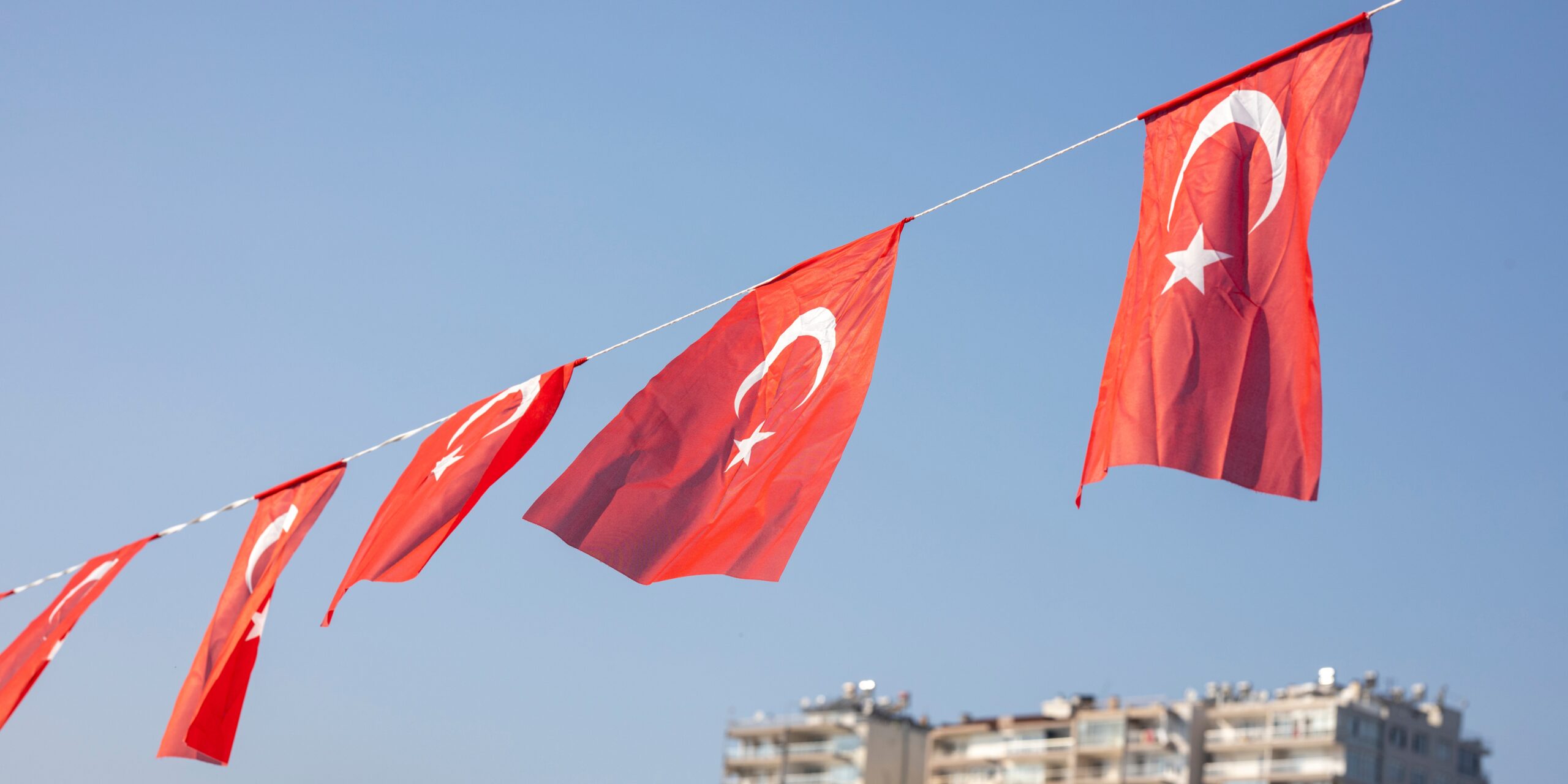
What Turkey’s Elections Mean for Israel
Turkey has elected Recep Tayyip Erdogan as their president in a runoff election. Erdogan, a member of the Justice and Development Party, or the AKP, ran on a promise to solve Turkey’s inflation problem, provide aid to those affected by the recent devastating earthquake, and solve the issue of Syrian refugees. Erdogan defeated Kemal Kılıçdaroğlu, a member of the Republican People’s Party, by 52% to 48%. Kılıçdaroğlu ran on a hardline promise to rid Turkey of the refugees.
The AKP, Erdogan’s party, describes itself as a democratic conservative party that does not adhere to any religion. It is considered right-wing, with some experts labeling it far-right recently. Despite the party’s claims that it is not Islamic, most of its support comes from conservatives and Islamic people.
Kılıçdaroğlu’s party, the Republican People’s Party, is the other large political party in Turkey and is social democratic and Kemalist. The party follows six foundational principles, represented in the six arrows on their logo: republicanism, reformism, laicism, populism, nationalism, and statism. The party is more left-leaning socially, supporting LGBT and Women’s rights, alongside being pro-European and pro-NATO.
With Erdogan winning the election, Turkey can be expected to become more nationalist, conservative, and right-wing. The Turkish people have proven loyal to Erdogan, continuing to support him despite his government’s slow reaction to the earthquake and extreme inflation. They are dedicated to the Turkish leader who makes them proud to be Turkish, even though his policies and actions may not be politically in their best interest.
Now, what does this mean for Israel? The Turkish-Israeli relationship has a rocky history, even though Turkey was the first Muslim country to formalize relations with Israel in 1949. In the 2000s, there were several moments where the relationship faltered, stemming from instability in the Middle East and because of the Israeli-Palestinian conflict. In 2017, Erdogan threatened to end its ties with Israel after the United States recognized Jerusalem as Israel’s capital. In 2022, Erdogan met with then-Israeli Prime Minister Yair Lapid, the first time the two state leaders had met in 14 years.
Even though Erdogan has been in power for many years, his stance on Israel has switched several times. Today, he has a realistic view of Israel's importance in the Middle East as a strong military and economic point. He views Israel in terms of what they can do for Turkey, and since Israel is prosperous today, he wants to maintain a good relationship with the state. Also, Erdogan may see Israel as a connection to the United States, which Turkey must keep strong.
Erdogan cannot be trusted to behave in any consistent way towards Israel. If a relationship with Israel is good for Turkey, Erdogan will continue establishing diplomatic ties. But if the tide turns and Turkey can no longer extract value from Israel, Erdogan is more than capable of cutting ties and ending the relationship.
By Ethan Wenger - JIJ Intern
What Turkey’s Elections Mean for Israel
Turkey has elected Recep Tayyip Erdogan as their president in a runoff election. Erdogan, a member of the Justice and Development Party, or the AKP, ran on a promise to solve Turkey’s inflation problem, provide aid to those affected by the recent devastating earthquake, and solve the issue of Syrian refugees. Erdogan defeated Kemal Kılıçdaroğlu, a member of the Republican People’s Party, by 52% to 48%. Kılıçdaroğlu ran on a hardline promise to rid Turkey of the refugees.
The AKP, Erdogan’s party, describes itself as a democratic conservative party that does not adhere to any religion. It is considered right-wing, with some experts labeling it far-right recently. Despite the party’s claims that it is not Islamic, most of its support comes from conservatives and Islamic people.
Kılıçdaroğlu’s party, the Republican People’s Party, is the other large political party in Turkey and is social democratic and Kemalist. The party follows six foundational principles, represented in the six arrows on their logo: republicanism, reformism, laicism, populism, nationalism, and statism. The party is more left-leaning socially, supporting LGBT and Women’s rights, alongside being pro-European and pro-NATO.
With Erdogan winning the election, Turkey can be expected to become more nationalist, conservative, and right-wing. The Turkish people have proven loyal to Erdogan, continuing to support him despite his government’s slow reaction to the earthquake and extreme inflation. They are dedicated to the Turkish leader who makes them proud to be Turkish, even though his policies and actions may not be politically in their best interest.
Now, what does this mean for Israel? The Turkish-Israeli relationship has a rocky history, even though Turkey was the first Muslim country to formalize relations with Israel in 1949. In the 2000s, there were several moments where the relationship faltered, stemming from instability in the Middle East and because of the Israeli-Palestinian conflict. In 2017, Erdogan threatened to end its ties with Israel after the United States recognized Jerusalem as Israel’s capital. In 2022, Erdogan met with then-Israeli Prime Minister Yair Lapid, the first time the two state leaders had met in 14 years.
Even though Erdogan has been in power for many years, his stance on Israel has switched several times. Today, he has a realistic view of Israel's importance in the Middle East as a strong military and economic point. He views Israel in terms of what they can do for Turkey, and since Israel is prosperous today, he wants to maintain a good relationship with the state. Also, Erdogan may see Israel as a connection to the United States, which Turkey must keep strong.
Erdogan cannot be trusted to behave in any consistent way towards Israel. If a relationship with Israel is good for Turkey, Erdogan will continue establishing diplomatic ties. But if the tide turns and Turkey can no longer extract value from Israel, Erdogan is more than capable of cutting ties and ending the relationship.
By Ethan Wenger - JIJ Intern
High Court of Justice, Challenging the Interior Ministry
|
|
|
High Court of Justice, Challenging the Interior Ministry
|
|
|