

JIJ Calls on Twitter to Adopt the IHRA Working Definition for AntiSemitism
The Jerusalem Institute of Justice has joined 180 non-profit organizations and civil rights organizations to write a public letter to Elon Musk and Twitter because we believe that exchanges of ideas on Twitter MUST NOT undermine the safety or well-being of users, especially those from vulnerable communities.
As mentioned in the letter, we believe that Twitter’s guidelines should afford protection to Jewish Twitter users from antisemitic content and harassment. This is particularly urgent given the record-breaking spike in antisemitic incidents over the last three years. For example, between 20-2021, antisemitic incidents surged by 78% in the United Kingdom and 75% in France, while the United States saw an all-time high with 2,717 recorded antisemitic incidents, a 34% increase from the previous year.
In order to fight antisemitism properly, it must be defined.
That is why we call on Elon Musk and Twitter’s management to update Twitter’s anti-hate policies by adopting the globally recognized IHRA Working Definition of Antisemitism as a guiding tool to stymie the spread of Jew hatred. If you wish to support this letter you can share this article and letter on your social media and use the hashtags: #AdoptIHRA #DefineItToFightIt
Click here to read the full letter.

The Perpetual Safety Struggle
ANTISEMITISM ON THE CAMPUS OF THE UNIVERSITY OF FLORIDA
From the Perspective of Ryan Marcus, a Jewish Student
The population of Jewish students at the University of Florida in 2019 was greater than 18% of the total campus population. That statistic has most likely increased over the past 3 years. The university needs to recognize and provide a safe environment for this group, which is almost one-fifth of the entire student population of the University of Florida. This Jewish group has created a deep-rooted community that desires to provide safety for its members as well as a rich education that can broaden minds, educate, challenge and refine opinions and allow them to develop to their highest potential. The opportunity for students to major in Jewish Studies and attend events at the local Hillel and Chabad centers creates a sense of safety and security that Jewish students rely on to thrive. These spaces aid in cultivating Jewish leadership on campus and amplify the voices of Jewish individuals in telling their authentic truths.
Deplorably, at the same time, antisemitic ideas and sentiments are filtering throughout the general population of the student body of the University of Florida, in the guise of political discourse. Antisemitism, according to the working definition framed by the International Holocaust Remembrance Alliance (“IHRA”), “is a certain perception of Jews, which may be expressed as hatred toward Jews. Rhetorical and physical manifestations of antisemitism are directed toward Jewish or non-Jewish individuals and/or their property, toward Jewish community institutions and religious facilities.”
In November of 2019, Yoni Michanie, a reserve member of the Israeli Defense Force (IDF), came to speak about his life experience as a soldier. Soon after he began his presentation, he was met with a vexing disruption as roughly one hundred protesting students stood up and walked out with signs to express antisemitic and anti-Zionist tropes (The Gainesville Sun). These students, members of a campus organization called Students for Justice in Palestine (SJP), sought to derail the dialogue and undermine Yoni’s lived experiences. According to the Gainesville article, the slurs such as “war criminal” and “colonist” were used to target Yoni. These slurs fall well within the IHRA definition of antisemitism by demonizing all Israeli citizens who moved to the land of Israel to seek refuge in a time of persecution, as well as applying a double standard to the IDF’s actions.
As a Jewish student on a college campus, the sentiments expressed in this protest effectively popped the secure bubble that I, Ryan Marcus, had convinced myself I existed in. It served as an alarming reminder that antisemitism continues to guide collective narratives which isolate Jewish students through both verbal attacks and written statements. In demonizing and attacking Yoni Michanie, not just for his participation in the IDF but against all Jews, I myself felt attacked and vulnerable. The attacks were not just directed towards Yoni but against all Jews at the University of Florida who sympathized with him.
In the ensuing weeks, I became more alert and aware of my surroundings, coming to terms with the fact that the place I believed to be a safe haven was merely an extension of the depraved world around me. Later that year I found myself taking a relatively mundane walk to class through campus when I encountered an older man sitting on a bench and holding a cardboard sign, which read something to the effect of “Free Palestine” and included a reference to the Jewish people as being to blame for the conflict. Thrown utterly off guard and unable to process what I was witnessing, I immediately and unconsciously reached for my hamsa necklace to ensure it was not visible to the man in front of me. At that moment I helplessly walked past the bench, hoping nothing would give away my Jewish identity.
A university which is supposed to engender dispassionate discussion of differing opinions failed me at that moment. I did not feel I could sit in this man’s presence and discuss our differing opinion; instead I felt threatened and at a loss for words. While the university was quick to issue a statement condemning the antisemitic remarks uttered during the SJP protest, that institutional step did not go far enough; it did not address the real issue of antisemitism on the campus of the University of Florida, and thus failed at what could have been a powerful teaching opportunity between expressing a political opinion and an out-and-out attack against an entire people group. Demonstrations which target Israel, the home of the Jewish people, and call for the elimination of a space for Jewish people on the globe have become endemic on college campuses. As a result of these organized protests, curricula in Jewish Studies has become more defensive. Courses focusing on Israeli society have shifted over the years to emphasize the ongoing conflict in the Middle East through a lens which subtly demonizes the Jewish people for their existence in the region. By using educational spaces to reframe the establishment of Israel and to paint the Jewish people as greedy colonizers, the entire history of the Jewish people is being rewritten with a new narrative. As a result, I can personally attest that to be Jewish on college campuses where this narrative has become the norm is extremely frightening.
In conclusion, how then should the University of Florida respond to this increasing wave of antisemitism? First, it needs to be recognized. There is a difference between the free and open communication of diverse opinions and blatant antisemitic acts which lead to violence. University authorities need to understand what that difference is. Concrete steps must be taken to create a campus where ignorant and prejudicial statements targeting entire groups of people are called out and corrected. Actions must be identified for what they are in order to recognize their true repercussions. That is the point of a teaching institution. In each of the events I experienced, the antisemitism expressed created an increasingly more distressing environment for myself and other Jewish students to exist. The next step for the University of Florida would be to learn and adopt the IHRA working definition of antisemitism in order to create a safer, more inclusive campus for all students, where Jewish students are not alienated or left feeling paralyzed with fear because of their cultural identity and unique connection to their religion, and where non-Jewish students can learn the difference between a differing opinion and an antisemitic threat.
Grethel Aguila Special to The Sun. (2019, November 26). UF group wants apology after post-protest email. Gainesville Sun. https://www.gainesville.com/news/20191126/uf-group-wants-apology-after-post-protest-email.
Working Definition of Antisemitism. IHRA. https://www.holocaustremembrance.com/resources/working-definitions-charters/working-definition-antisemitism.

Evicting Zionism
By Emma Rosenau.
In April of 2019, I visited Emory University in Atlanta, Georgia. I had committed to go to school there and was going for accepted students’ day to meet my future classmates. Sitting in the hotel with my mom, we saw a post in an Emory Facebook group. Jewish and non-Jewish students alike had woken up to flyers posted on the doors of their dorm rooms. They read “EVICTION NOTICE. We regret to inform you that your suite is scheduled for demolition in three days.” (Emory Students for Justice in Palestine, 2019) At the bottom of the notice in small print the flyer states, “THIS IS NOT A REAL EVICTION NOTICE. This is intended to draw attention to the reality that Palestinians confront on a regular basis” (Emory Students for Justice in Palestine, 2019). I was shocked, I had thought that Emory was an open-minded, welcoming community with a large Jewish population (a little less than 20% of students at Emory are Jewish). Now, my first experience on campus was witnessing the Jewish community protest the flyers that were a part of Students for Justice in Palestine’s (SJP) ‘Israeli Apartheid Week.’
The university’s response was bleak. They had approved the posting of the flyers in communal spaces but said that the only rule that had been broken was that they were hung in unapproved areas (on students’ doors). The flyers were viewed as a form of free expression; despite the mental toll it took on Jewish students. SJP’s “free expression of ideas” quickly crossed into the realm of antisemitism. The flyer demonizes Israel when writing that “Palestinian homes are destroyed as a part of the state of Israel’s ongoing attempts to ethnically cleanse the region of its Arab inhabitants and maintain an exclusively ‘Jewish’ character of the state” (Students for Justice in Palestine, 2019)
There is a fine line between legitimate criticism of Israel and antisemitism, and it can be distinguished by using the 3D test, a guide created by Israeli politician, Natan Sharansky. The 3D’s are demonization, delegitimization and double standards. These flyers perfectly fit into demonization of Israel: they imply that Israel is an evil state trying to accomplish ethnic cleansing of Arab citizens. A claim like this is not only wildly inaccurate, but it is also dangerous to the Jewish community. Israel has never engaged in mass-murder or ethnic cleansing and its Arab neighbors have always been the one to initiate conflict. Immediately upon the creation of Israel in 1948, neighboring Arab states began a war in an effort to destroy Israel, and hostilities have continued ever since. Since its founding, Israel has never been motivated by the destruction of the Palestinian people, rather its goal has been simple: defend its existence.
To imply that Israel is ethnically cleansing Palestinians puts Jews around the world in danger. Many people are unable to separate the Jewish people from the Israeli government, thus resulting in an increase in antisemitism worldwide when fighting breaks out in the Middle East involving Israel. In May of 2021, Europe saw an almost 500% increase in antisemitic attacks as a result of many people claiming that Israel was ethnically cleansing Palestinians during the unrest between Israel and the terrorist organization, Hamas (Community Security Trust). The false claims of ethnic cleansing demonizes Israel in the eyes of the rest of the world, thus putting all Jews at risk.
Emory University does not have a working definition of antisemitism and as a result, SJP was not held accountable for their harmful and antisemitic flyers. The university even told Jewish leaders on campus that they agreed the demonization on the flyers was antisemitic, but without a working definition of antisemitism, there was no path towards disciplining the creators of the flyers.
Two years later, Emory still has not adopted any working definition of antisemitism, but not for lack of trying from Jewish student leaders. Members of EIPAC (Emory Israel Public Affairs Committee – the university chapter of AIPAC) and other student leaders have spent the last two years working on proposals to urge the university to adopt the IHRA working definition of antisemitism, which states:
“Antisemitism is a certain perception of Jews, which may be expressed as hatred toward Jews. Rhetorical and physical manifestations of antisemitism are directed toward Jewish or non-Jewish individuals and/or their property, toward Jewish community institutions and religious facilities” (IHRA).
These flyers are not the only act of antisemitism that has occurred on Emory’s campus in the last two years. Many Jewish students face antisemitism on a regular basis and until Emory University adopts the IHRA definition of antisemitism, its Jewish students will remain susceptible to normalized acts of antisemitism similar to these eviction notices.
Works Cited
“CST Stands against Anti-Jewish Hate – Blog.” CST, cst.org.uk/news/blog/2021/05/19/cst-stands-against-anti-jewish-hate.
Emory Students for Justice in Palestine. Eviction Notice. 2019
“Working Definition of Antisemitism.” IHRA, www.holocaustremembrance.com/resources/working-definitions-charters/working-definition-antisemitism.
The Transparent Jew
In 2018, just a few days after my arrival to Europe from Israel, I sat in my teenage bedroom and recalled the countless incidents overseas in which I had lied about my nationality. I started laughing at myself, mildly concerned by how I easily conformed to a different culture, and even more surprised by how quickly my chameleon identity was accepted. I thought to myself, it’s better to laugh than to cry. For the first time, I was able to acknowledge that I had been raised to hide my heritage when I was outside my safe space. Doing so, I decided to no longer conceal my Jewish-Israeli identity.
In my new country, I had hoped to perfect my response to the simple question “where are you from?”. My ideal reply would be short and succinct, one I could pull off and use to secure a harassment-free encounter - nevertheless, it was impossible, and every attempt was to be located somewhere between awkward to disingenuous.
King Solomon was right when he declared, “There is nothing new under the sun”. Unfortunate as it may be, the Jewish necessity to cover its ethno-religious identity dates back in time to the Roman exile - when Jews suffered huge losses and humiliation as their ancestral homeland was colonized, erasing the Jewish identity of the land. Consciously or unconsciously, the destruction of the Jewish temple and the renaming of the land had severe repercussions on the Jewish identity, remaining until today.
Since then, two thousand years of Jewish people “pray[s] to be back in Zion, for the messiah to come and rebuild the temple.”- The eagerness to return to the homeland they came from has never diminished. This is the essence of Zionism, the liberation and restoration of the Jewish identity, that was severely colonized and morphed by countless foreign entities throughout history.
Does this Zionism, (which would later become a political movement) represent the solution our ancestors yearned for - an independent Jewish nation that is capable of both rediscovering its identity while eliminating the inherent hatred within those that had colonized it? In a utopian world - indeed, but not within the society I witnessed.
The creation of Israel is the most successful indigenous liberation in history; it is the hammer that broke the famous, self-tailored, “comfortable” Jewish character - weak and quiet Jews that are easily trampled and find themselves at the mercy of the majority. The founding of the State of Israel generated strong and empowered Jews that pursued their indigenous right to self-determination in their ancestral homeland.
Paradoxically, the United Nations is the organization which defines indigenous rights, along with the unofficial-leadership of the P5 - which are collectively known for enjoying a colonial history. The UN consistently fails to preserve Jewish rights as they don’t address the contemporary rise of Antisemitism on both sides of the political map. Nor has it brought justice to the hundreds of thousands of Mizrahi Jews, whose assets were confiscated by Arab governments while they were persecuted and forced to exile(1). It routinely
promotes state-based resolutions against Israel (18 in 2019) while ignoring the actions of China, Hamas, Venezuela, Qatar, Pakistan, and others(2). It continues popularizing anti-Israel propaganda, mainly without any concrete data - just like its false accusations against Israel for promoting gender-based violence in the Palestinian territories.
This flourishing prejudice fostered by the UN and many of its members, comes into practice in different expressions. These range from anti-Semitic attacks, to harassment on the street and to various forms of discrimination. But all roads lead to Rome, or as I stated previously, to the Jewish identity crisis in the diaspora. As part of my personal decolonization process I had to get rid of my habit of lying about my nationality. So, I faced three words that unfold western prejudice: “I am Israeli”. Very quickly I realized that not only are Jews a target, but so are Israelis. This raises the question: in their eyes, what does it even mean to be Israeli?
In Europe, I‘ve been spat on, barked at, questioned, boycotted, and discriminated against - only for exposing one, if not the most essential component of my identity: my nationality. In fact, most people decided for themselves that I am a Jew, a Zionist, a baby-killer, an ex-military officer, and a murderer based on my passport. I wish this was an over-exaggeration. During my time in Europe, almost every reference to the Holocaust or to Judaism was hijacked by political debates and comparisons, mostly based on media-information and history revisionists – even in the academic sphere.
Many Europeans are swept by the anti-Zionist narratives, and I can easily sort them into two groups (which have a tendency to overlap): those that stand against Israel’s actions, and those who deny it’s right to exist. Therefore, not everything about anti-Zionism is anti-Semitic. Israel is not a perfect country and its Jewish characteristic doesn’t grant it immunity from criticism. However, why are Israel’s current political actions equated with the ancient Zionist movement? We can clearly see that many of the modern anti-Zionist narratives are based on anti-Semitic assumptions and prejudices. The border between legitimate political criticism and anti-Semitism is very thin. But claims that consciously erase, or at least ignore, the origins of Judaism and the indigenous status of the Judeans in the land of Israel are inherently anti-Semitic. We can conclude that every type of delegitimization of Israel’s right to exist is anti-Semitic, regardless of how it manifests, and it is the basic premise of this article.
Anti-Zionism creates the dichotomy between “the good Jews” – the minority that doesn’t believe in Israel’s right to exist (e.g “Neturei Karta”) and “the bad Jews” – which are the 95% of Jews that do believe in Israel’s right to exist(3). Europeans (and quite frankly, far too many people in general) are taught that Zionism is “evil and racist”, without being informed that Jews are Zionists because of the violent racism they have survived. I have no desire or intention to be the “good Jew” these anti-Semites like to tokenize for their own agenda. It is no wonder that the majority of anti-Zionists I have met were from the left side of the political map. They identify themselves with the progressive social values of the left: supporting gender equality and other liberal values that the “good Jews” publicly stand against. This is not a coincidence, it is a known counterfeit tactic used by the left to legitimize anti-Semitism in the name of anti-Zionism.
It is important to highlight that Israel is not a perfect state, nor does it claim to be one - but its roots date back more than 3700 years of Judean civilization and so, it is time that the world abandon the myth of Jews with trembling knees. “We paid for it. We fought for it. We died for it. We will stand by our principles. We will defend them. And, when necessary, we will die for them again” (Prime Minister Menachem Begin Z”L, 1982)
My journey in Europe, which has yet to end, has brought me to the conclusion that I am a transparent Jew. Solely based on my Israeli nationality, everyone thinks they know everything about me, from the grocer to my professors. I have no other identity behind which to hide. I promised myself and my Jewish ancestors that I will not adopt a false identity just to fit the European world. And now, I pay the price. This decision to proudly stand as an Israeli woman has already affected my friendships. I’ve faced academic discrimination and I’ve experienced tremendous fear about publicly displaying any Jewish symbols, whether it be speaking Hebrew in the metro or wearing my Star of David necklace.
It was George Steiner in his book “In Bluebeard’s Castle” who argued that the image of Western culture as self-evidently superior and as the embodiment of almost the sum total of intellectual and moral power is a racially tinged absurdity(4). Maybe, just maybe, western powers should redirect their attention in discussions about the Middle East and Judean indigenous history. Instead of assuming to know all of the complexities and conflicts of the region, my European neighbors should not embrace their deeply inherited superior essence nor should they forget their thriving colonial history, in which they exploited indigenous people.
I am sitting in my teenage bedroom again, recalling my personal decolonization odyssey and the identity liberation we as a community embark upon, and I don’t regret any passage of it.
By Shai Emanuel Yamin
------------------------------------------
1 "One Year Later — The Answer To "Where Are Your Jews?" - UN Watch". UN Watch, 2018,
https://unwatch.org/one-year-later-answer-jews/.
2 "2019-2020 UN General Assembly Resolutions Singling Out Israel – Texts, Votes, Analysis - UN
Watch". UN Watch, 2019, https://unwatch.org/2019-un-general-assembly-resolutions-singling-outisrael-
texts-votes-analysis/.
3 Weiss, Barri. "American Liberalism In Danger". Tablet Magazine, 2020, https://www.tabletmag.com/sections/news/articles/stop-being-shocked
4 Steiner, George. In Bluebeard's Castle. YALE UNIVERSITY PRESS: NEW HAVEN , 1971
Irredeemable and Flawed
By Rachel Rosen.
"There is no doubt that we [UNRWA] have contributed to one of the most remarkable human development processes and significantly advanced several key sustainable development goals for Palestine refugees...”
The United Nations Relief Works Agency for Palestinians, or UNRWA, is a UN agency that purports to provide humanitarian aid to Palestinian refugees. A simple click on their website will bring forth an array of quotes and pictures of children happily reaping the benefits of UNRWA services, such as engaging in art projects and sports competitions at UNRWA schools. According to UNRWA Commissioner-General Pierre Krahenbuhl, "There is no doubt that we [UNRWA] have contributed to one of the most remarkable human development processes and significantly advanced several key sustainable development goals for Palestine refugees...” If UNRWA is in fact providing essential humanitarian aid to refugees however, then what are the issues with this agency that have caused the US to stop funding it?
Unlike the United Nations High Commissioner on Refugees (UNHCR), the UN program which gives aid to refugees from all over the world, UNRWA is dedicated to helping Palestinians alone. Even more striking is the fact that UNRWA created a new definition of refugees that applies only to Palestinians, including not only those who were displaced after the 1948 and 1967 wars, but also their descendants. While UNRWA is commonly depicted as a humanitarian agency that provides educational, health, and welfare services to displaced Palestinians across the Middle East, it is in fact stewing a false hope among Palestinians that they will return to an Arab State of Palestine, and thus erase the State of Israel.
What does UNRWA accomplish? What are the issues it causes?
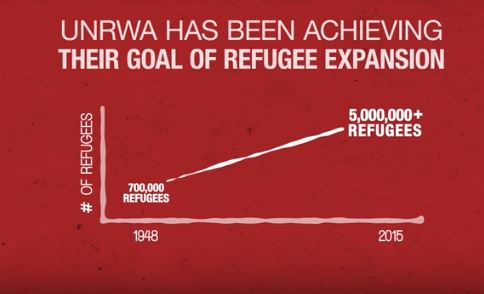
UNRWA’s definition of refugee has exponentially increased the Palestinian refugee population. While it originally aided 750,000 people, today UNRWA serves 5 million people. Consequently, many Palestinians, have acquired citizenship in other states, in Jordan in particular. Only the return of refugees and their descendants to their homes could remove their refugee status. Several Arab states, such as Lebanon and Syria, do not want to fully integrate Palestinians in an effort to not deny them their right to return to modern-day Israel. According to Einat Wilf, UNRWA expert and former Member of Kennest, this has focused Palestinian national identity on the right of return and on eliminating the modern State of Israel.
The educational system funded by UNRWA is especially problematic. UNRWA schools indoctrinate students in the West Bank and Gaza with violent, hateful ideologies. Students are taught that Israel has no right to exist, that Palestine and Israel cannot coexist, and that the Land of Israel should only contain an Arab Palestinian state. The Center for Near East Policy Research found that textbooks in UNRWA schools were filled with anti-Semitic and anti-Israel statements. These instructional materials promote the deligitmization and demonization of Israel and Jews and advocate for a violent struggle for liberation of 1948 Palestinian borders.
The UNRWA definition of Palestinian refugee status and its support for a biased education system does not contribute to peace efforts between Palestinians and Israelis, but rather, perpetuates the conflict. Refugee status is passed on from generation to generation. This ensures that many Palestinian children attend UNRWA schools where they are indoctrinated with hateful, anti-Israel, anti-peace beliefs. Hamas leaders put these beliefs into practice in UNRWA facilities by training children to become terrorists and by using these spaces for terrorist operations- such as digging tunnels under schools or storing weapons in hospitals.
Why has the US stopped funding it?
The defunding of UNRWA is one out of several steps the Trump Administration is taking to strengthen Israel. The US was the largest single donor to UNRWA, giving more than $350 million in 2017. After, however, Palestinian Authority President Mahmoud Abbas refused to enter US-led peace talks with Israel, the US froze $125 million in aid. The decision was made at a meeting between Jared Kusher and Mike Pompeo, however, many other leaders- including President Trump and National Security Advisor John Bolton- were supportive. Trump stated, “...With Palestinians no longer willing to talk peace, why should we make any of these massive future payments to them?” Abbas’s refusal to engage in peace talks stems from the fact that Palestinians do not see the US as a fair, peace-making body. In moving the US embassy from Tel Aviv to Jerusalem, he claims that the Trump administration alienated Palestinians from the peace process.
Both US and Israeli leaders view UNRWA as a means of deepening Palestinian problems. Their alienation from the peace process is not the fault of the US, but rather can largely be attributed to their own neglect to work towards coexistence. US leaders tend to point to the issue of how UNRWA defines refugee, while their Israeli counterparts discuss the existential threat that UNRWA poses to Israel. According to National Security Advisor John Bolton,
“UNRWA is a failed mechanism. It violates standard international law on the status of refugees. UNRWA’s program is the only one in history based on the assumption that refugee status is hereditary... it is long overdue that we have taken steps to reduce funding.”
US Ambassador to the UN, Nikki Haley, affirmed Bolton’s point, claiming that in order for UNRWA to receive US dollars, the number of refugees will need to be changed to an accurate count. Heather Nauert, State Department spokeswoman, called on Israeli Prime Minister Benjamin Netanyahu to support the US decision to withdraw funding from UNRWA, describing the program as an “irredeemably flawed operation” that is based on an “unsustainable” business model. The Prime Minister’s office affirmed Netanyahu’s support for the US’s “critical attitude towards UNRWA” and claimed that “practical steps need to be taken in order to change the fact that UNRWA is being used to entrench the Palestinian refugee problem instead of solving it.” The hawkish view of Israeli leaders is reflected in statements made by former and current Israeli ambassador to the UN, Ron Proser and Danny Danon, in which they describe how UNRWA-funded facilities are used for terrorist activities. Proser describes UNRWA schools as a “hotbed of incitement” against Israel, Jews, and the West, while Danon points to UNRWA’s adoption of a unilateral political position and the anti-peace rhetoric in course materials taught at UNRWA schools.
What are the solutions to UNRWA?
The largest problem with abolishing UNRWA is addressing who would provide humanitarian aid to poor Palestinians in Gaza and the West Bank. Several solutions have been suggested that seek to reform who controls UNRWA and who oversees where funds get allocated. One solution would be to transfer UNRWA’s responsibilities to the UNHCR. If UNRWA operated under the UNHCR, it would to adopt the UNHCR rules and regulations, ensuring that Palestinian refugees were treated the same as all other refugees around the world. This would revoke the unique refugee status of Palestinians. Another solution would be to put UNRWA under the sole control of the Palestinian Authority, thus terminating its affiliation with the UN and UN funding. A third solution on the table is increasing UNRWA’s transparency in order to ensure that its budget and equipment are used for the correct purposes and to ensure that educational programs are supervised. In a statement to the Foundation for the Defense of Democracies, Haley stated, “UNRWA can stay there, and we will be a donor if it reforms what is does... If it goes and makes sure that they’re not doing those teachings in textbooks, if they actually change the number of refugees to an accurate account. We will look back partnering with them.” She noted that the administration is seeking to bring resolutions to the UN that will hold Hamas accountable for human rights abuses in Gaza, such as the use of children as human shields.
Getting BDS Right
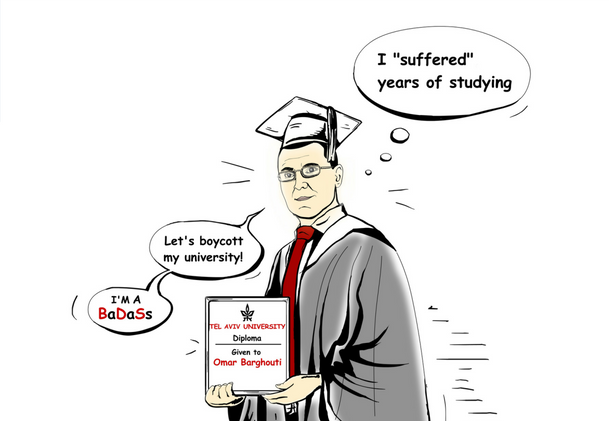
This past week, the founder of the BDS movement, Omar Barghouti, was denied entrance into the United States.
Barghouti’s chief allies claimed this amounted to a gross human rights violation. Others charge the Trump administration for failing to uphold press freedoms. Some American Jewish leaders, notably Peter Beinart, argued that providing a platform for Barghouti’s views would have demonstrated the maturity and vitality of Judaism.
Here is how Barghouti himself characterized the move: “Israel is not merely continuing its decades-old system of military occupation, apartheid, and ethnic cleansing. It is increasingly outsourcing its outrageous McCarthyite repression to the U.S., and to xenophobic, far right cohorts across the world.”
To weigh their criticisms, right or wrong, we have to get BDS itself right.
Omar Barghouti is a Qatari who grew up in Egypt, moved to Israel, and then styled himself a Palestinian. He belongs to a wealthy, politically connected Arab clan that includes two cousins active in explicit anti-Israel terrorism.
Barghouti has written books in Arabic which deny any ancient Jewish claims to the Land; repudiate decades of international law which gave sovereignty to Israel alongside similar grants of sovereignty for other Arab states; and ignore the absolute rejection by Palestinians of multiple Israeli offers to share peace within the Land. He believes Jews in Israel never had, and so do not have, even today, any rights to collective self-determination, and has often stated that “no Palestinian can ever accept a Jewish state in Palestine.” Interviewed after the visa denial, Barghouti repeated the baseless charge on which he founded BDS: “Since its creation, Israel has always been an apartheid state.”
The American action may well have arisen from conviction that Barghouti is, at root, an anti-Semite working slyly by stages towards the elimination of Israel. This accords with his life history, BDS strategy and numerous public statements. It would hardly represent a novel interpretation by the Trump administration. Many have charged Barghouti with antisemitism over the years. His scheduled NYC workshop included one main speaker recently fired by CNN, hardly a conservative outlet, as an anti-Semite. The other has stalwartly defended Ilhan Omar against all-too-credible charges of antisemitism.
The novelty, even shock that Barghouti experienced over his rejection, comes from this President’s continued determination to act upon pronouncements which have often served as mere diplomatic posturing for past administrations. This decision may also be connected with the recent appointment of Elan Carr as the face of U.S. opposition to BDS and growing antisemitism world-wide.
Some have suggested another reason the American government has refused comment on Barghouti’s visa denial. They, as well as the Israelis, may suspect he planned other activities along the way similar to the ones which led to criminal tax evasion charges in 2017.
In any case, the visa denial could not have stemmed from the obvious delusion that this would somehow suppress, successfully, the speech rights of Omar Barghouti, let alone from some absurd, hypocritical right-wing ‘fear’ of free speech. Undoubtedly, and this must have been anticipated, his trip has received far more public attention, even sympathy, than if he had traveled physically. Notably, those condemning the American position have not commented on Barghouti’s virtual presence at the same panels for which he was scheduled. Some of these critics have been central participants to these discussions.
For Barghouti, this could become a case of ‘be careful what you wish for, lest it happen’. He has always craved the media spotlight, which has now been turned up brighter than ever before. Naturally, he has wasted no time in reframing his finely-honed narrative to include this unexpected embarrassment. However, first Israel, and now America, has put Barghouti on public notice that they are also watching his actions, on- and off-stage, with ever-increasing attention. The latter may finally be getting BDS right.
Boycotting the Boycotters
By Nikki Golomb.
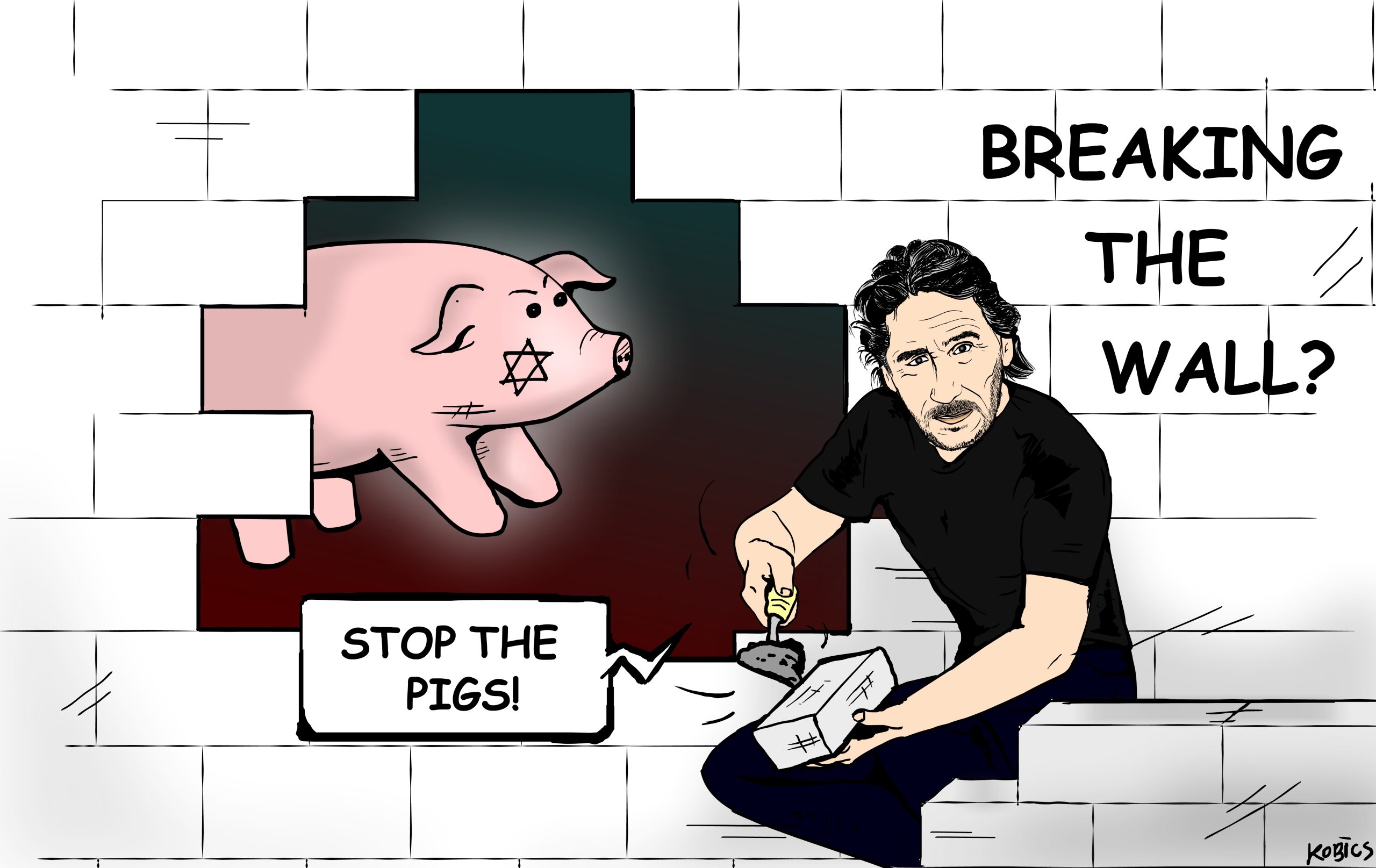
Former Pink Floyd musician Roger Waters is facing severe backlash from the German Jewish community for his open support for the BDS (boycott, divest, and sanction) movement and for anti-Semitic accusations.
Sound familiar? It should. The same events transpired in 2013, when the Dusseldorf Jewish community advocated a boycott of Waters’ concert following anti-Semitic incidents in his Brussels concert. Those included such things as floating a giant pig balloon with a Jewish star on it, accusing Israel of apartheid, and urging other artists to join him in his boycott until Israel complies with the double standards held against it by much of the international order.
Recently, Roger Waters released a recital of Mohammed Darwish's poem, "The Penultimate Speech of the 'Red Indian' to the White Man," recited to the background of an oud playing traditional Palestinian music. The poem, and the timing of its release - soon after Trump's declaration of Jerusalem as the capital of Israel - was a deliberate attempt to equate Israel and the United States with white colonialists, and the Palestinians with the helpless Indians who are defenseless against the "erection of the 'white man's' world on their remains." The poem finishes with the question: "Where, oh white master, are you taking my people... and yours?" Waters’ implication, that in recognizing Jewish history Trump was the white master forcing Palestinians out of Jerusalem, is a distortion. Firstly, it is implying American sovereignty over Jerusalem, which is not the case. Secondly, Trump’s statement did nothing to diminish the rights of Palestinians in Jerusalem. Furthermore, equating the plight of Palestinians to that of the First Nations people in the Americas is a problematic analogy, particularly in light of the hundreds of years of difference between the cases.
The Anti-Defamation League (ADL), which previously supported Waters’ seemingly innocent criticism of Israel, reexamined his words and actions in 2013. In an open letter to Waters they expressed the conclusion that his views “are in fact colored by offensive and dangerous undercurrents of anti-Jewish sentiment.” The letter ended with the hope that he would use his fame and talent instead to promote peace in a constructive and positive way.
In the four years that have passed, however, not much seems to have changed. Still a vocal supporter of BDS and still accused of public anti-Semitism, Waters is once again facing a boycott of his concert from Germany’s Jewish community. In addition to the boycott, Cologne citizen Malca Goldstein-Wolf wrote a petition – signed by over 1,300 people – requesting public broadcasting services to cancel their plans to air his concerts. As a result of the petition and accusations of anti-Semitism against him, “five state television and radio affiliates of the national ARD network” have complied with the requests of the petition and will not be airing his concert.
In an attempt to distance themselves from the horror of the Holocaust and the anti-Semitism preceding it, the German government implemented strict laws outlawing the spread of anti-Semitic ideologies. Various forms are illegal in Germany, including Holocaust denial, approval of Nazism, the use of Nazi symbols, and the sale of Hitler’s autobiography Mein Kampf. Anti-Semitism, however, remains relatively high in the region. Twenty-seven percent of adults in Germany harbor anti-Semitic views, according to a variety of indicators related to the perception of Jewish national loyalty, control of the economy and media, etc. This dichotomy highlights the ideological distance between the government and the people with regard to their perception of Jews. The success of this boycott, however, marks an important change in which German society and government are working together to fight against anti-Semitism in the country.
But what is the integrity of responding to a boycott with a boycott? While it is important to stop hate speech before it happens, is it not a bit problematic to use their own tactics against them? Marek Lieberberg is both Waters’ tour director and the son of Holocaust survivors. While he rejects BDS, he also does not want to deny Waters his freedom of opinion. On the other hand, boycotting a BDS supporter sends a direct message to the movement regarding the meaning behind its actions. Organizing a boycott of Waters’ show in Germany serves the dual purpose of rejecting anti-Semitism and anti-Zionism, while also encouraging BDS supporters to think about what exactly they are boycotting.
In an incident that reflects the flip side of the same coin, Australian rock star Nick Cave made the decision to perform in Israel because of BDS. After being presented with a petition calling for artists to boycott Israel and refusing to sign it, Cave stated, “I like Israel and Israelis, and it’s important for me to do something of substance about it.” He booked a tour in Israel in direct response to the BDS movement gaining traction among artists, thus bringing light to the effects the movement has on many facets of society.
There is a very fine line between legitimate criticism of Israeli policies and anti-Semitism. However, Waters’ support for BDS, while using anti-Semitic imagery in his concerts and publicly accusing Israel of apartheid, leaves no doubt that his actions are truly anti-Semitic. Staging a boycott of his tour in Germany sends the message to BDS supporters that anti-Semitism has no place in public art. Hopefully, awareness of the cause and the boycott itself will encourage others to question the purpose of the BDS movement and its effects on both Israel and the international order.

Terrorism Deserves a Red Card
How Terror Plays its Game
On June 5th the BDS movement (Boycott, Divest, Sanction) celebrated a supposed victory through threats and manipulation by the PACBI, the cultural boycott branch of the BDS movement. In early June, the PACBI launched a campaign to pressure the Argentina National Team to cancel their friendly match in Israel, which was to take place on June 9th in Jerusalem. The PACBI posted a photo on twitter of an Argentine player celebrating a win, and stated that the team cancelled the friendly match with Israel due to “creative campaigning from fans around the world.” This “creative campaigning” that the PACBI refers to, in actuality, consisted of violent, targeted threats directed at Argentine players and their family members.[1]
The Argentina National Football Team cancelled their preparatory game, not as a political rejection of the State of Israel, but rather in response to horrific threats placed upon the lives of Argentine players and their families. News sources framed the team saying that the cancelled game was “the Argentina National Soccer Team saying no to the Israeli state,” but this is simply not true.[2]
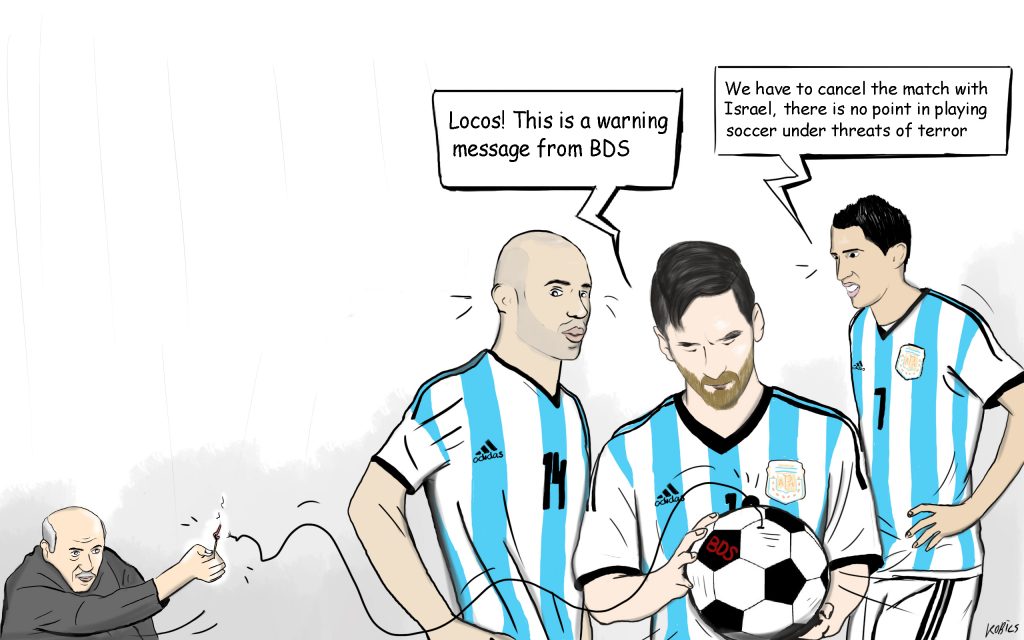
Along with an “extensive public relations campaign led by senior Palestinian Authority official Jibril Rajoub,” which placed pressure on the Argentina team, several terrorist organizations sent “death threats to the Argentine players and their families,” targeting the world-renowned player Messi and his family members as well. Additionally, throughout the PACBI campaign, fans were encouraged to threaten Messi by burning posters of the player if he participated in the match, and to threaten the Argentina National Team members by covering their jerseys with red paint, resembling blood.[3] Gonzalo Higuain, striker for Argentina, told ESPN, “health and common sense come[s] first. We felt that it wasn’t right to go.”[4]
Miri Regev, the Israeli culture and sports minister, stated that the cancelled game was due to Palestinian terrorism,[5] describing that the alarming Palestinian threats directed at the Argentina National Football Team included “video clips of dead children.”[6] Regev stated, "This is the same terrorism that led to the murder of eleven slain athletes in Munich. This is not BDS, but a terrorist incident that intimidates the athletes themselves."[7]
Jorge Faurie, Argentina’s foreign minister, confirmed this report by saying that the threats that the Argentine players were bombarded with were worse than ISIS’s terrorist threats.[8] He also said that there were alarming protests outside the team’s practice facility in Barcelona on Tuesday, with protestors holding Argentine jerseys stained with red paint depicting blood.[9] The head of the Argentine Football Association, Chichi Tapia also confirmed that the players “faced serious threats, which forced them to cancel,” and the team would plan to “play in Israel at another time.”[10]
The Israeli Embassy in Argentina tweeted about the event: “The threats and provocations directed at Lionel Messi, which logically aroused the solidarity of his colleagues and fear of playing the friendly [game] are no strangers to the daily life of Israel's civilian population whose sporting stars, to put it simply, have been on numerous occasions the targets of violence and attacks.”[11]
By celebrating the cancelled game as a win for their agenda, the BDS showed its true colors—the BDS plays an unfair match, and only wins with manipulation and terrorism.
Article by Hannah Fruh
[1] https://www.timesofisrael.com/soccer-friendly-nixed-after-argentina-players-threatened-officials-confirm/
[2] www.thenation.com/article/victory-boycott-movement-argentinas-national-soccer-team-cancels-game-israel/.
[3] https://www.nbcnews.com/news/world/argentina-cancels-soccer-game-against-israel-amid-bds-campaign-n880431
[4] https://www.timesofisrael.com/soccer-friendly-nixed-after-argentina-players-threatened-officials-confirm/
[5] https://www.haaretz.com/israel-news/it-s-not-bds-it-s-terrorism-israel-says-death-threats-against-argentina-s-messi-led-to-game-s-cancellation-israel-news-1.6155447
[6] http://www1.cbn.com/cbnnews/2018/june/pa-elated-at-soccer-match-cancellation-in-israel
[7] https://www.haaretz.com/israel-news/it-s-not-bds-it-s-terrorism-israel-says-death-threats-against-argentina-s-messi-led-to-game-s-cancellation-israel-news-1.6155447
[8] https://marcelolongobardi.cienradios.com/faurie-aseguro-habian-advertido-afa-sobre-jugar-jerusalen/?utm_source=Twitter&utm_medium=nota&utm_campaign=twitter-marcelolongobardi
[9] https://www.timesofisrael.com/soccer-friendly-nixed-after-argentina-players-threatened-officials-confirm/
[10] https://www.washingtonpost.com/news/worldviews/wp/2018/06/06/in-win-for-boycott-movement-argentine-soccer-team-cancels-match-in-israel/?noredirect=on&utm_term=.de7a0ff959b8
[11] http://www1.cbn.com/cbnnews/2018/june/pa-elated-at-soccer-match-cancellation-in-israel
My Encounter with Hatred: A Student in London
The first time the BDS movement caught my attention was on April 27, 2017. The date is etched into my mind because up until that day, I’d always thought of anti-Zionism as the ‘pet hate’ of the Jewish community, the enemy that we need in order to justify ourselves and to make excuses for ‘security measures’. Like Jews of many generations, I preferred to focus on the challenges of day-to-day living and not look at the totally irrational hatred being spread against me and my people. The basic rationale of my thinking was that Jew-hatred and Zionist-hatred doesn’t make sense, therefore it can’t be such a big problem.
On April 27, 2017 that changed.
I had been accepted to start studying in one of the major London universities and was at the university to make inquiries regarding my enrollment. My head was held high because I was proud to have the opportunity to be educated in this well-reputed institution. As I walked through the campus, I was intrigued to hear the sound of drums and people shouting. Slightly surprised but being compulsively inquisitive, I drew near to see the meaning of the rowdiness in civilized London. It didn’t take long to recognize – the Palestinian flags and chants immediately flooded my mind with memories of having stones hurled at me while on duty in the West Bank and pictures of one of my soldiers who got hit by a massive rock in the chest while overseeing a demonstration.
Taken by surprise, I walked amongst the protestors. Seeing people from a whole range of ethnic backgrounds, I attempted to fathom what was going on behind the aggressive shouts. “From the river to the sea, Palestine will be free!” and “Israel is a fascist state!” were chanted by the sea of protestors. What was the meaning of all this? It turned out that the protest was against the Israeli Ambassador’s speaking on the university campus – as this invitation was seen to be ‘provocative’. They wanted the university to boycott the speaker because the speaker represented Israel, which they saw as being an evil occupier. It was chilling to think that in the middle of London, people were openly advocating for the end of the State of Israel, ‘from the river to the sea’.
Even though I found it difficult to hold my resolve together amidst those who were in essence denying my identity as an Israeli, I have always been taught of the importance of listening to the other side and to be willing to admit when I am wrong. So, I stuck around and wandered between the protestors, asking them what they knew about the conflict and trying to understand why they were so worked up. Most of the answers I got were that the Palestinians are being butchered by the Israelis and that we all need to do everything we can to fight the ‘evil occupation’. These 19 and 20-year-olds who had been educated that Israel is an evil-colonialist venture, seemed surprised when I told them I had just finished my service in the IDF as an Officer in a Combat Unit and that I was a relatively normal human being, not thirsty for Palestinian blood. When asked if I’d given my testimony to “Breaking the Silence” – an organization of former IDF soldiers who testify to having been forced to commit violations against Palestinians – I responded that I hadn’t because I didn’t have any violations to report: my commanders were men of integrity, amongst the most moral people I know, and I had always taught my troops to have value for all human life – Jew, Arab and everyone else.
Sadly, the protestors didn’t seem to care very much for talking, the atmosphere wasn’t one for talking or thinking – rather, one of being joined together in the anti-Israel mob. As I politely approached individuals to ask them questions about the implications of their demands on the Jewish people, I was angrily brushed aside. It reminded me of drunk fans cursing a referee at a football match or scenes from Gladiator at the Colosseum – the chants and drum beats working up ‘anti-emotion’ against Israel and her Ambassador.
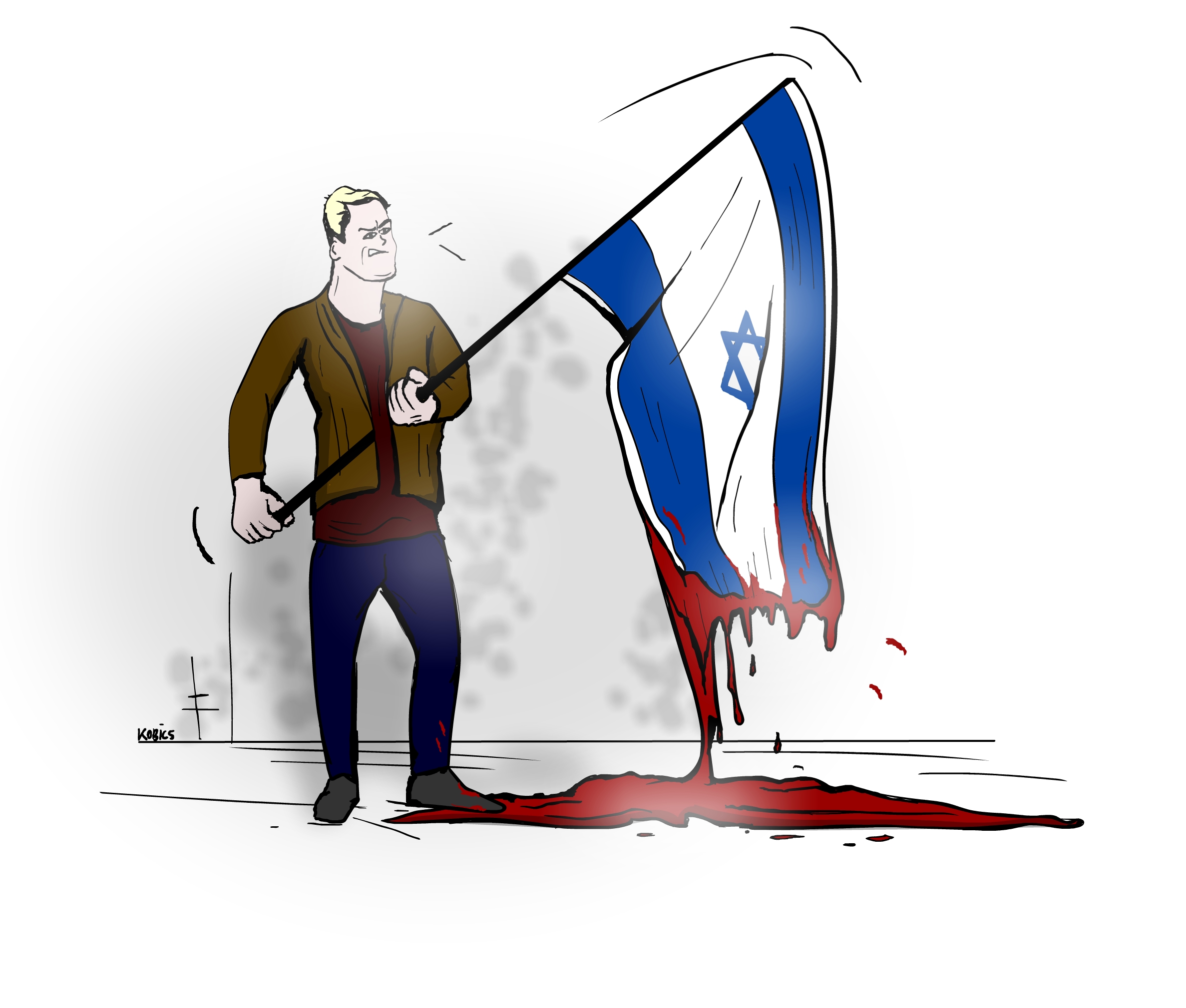
The hardest part of the protest for me was seeing the protestors take an Israeli flag, dipping it in red paint and waving it around. The Israeli flag is designed to remind one of the Jewish prayer shawl, and to me it represents the hope of the Jewish people for sovereignty. This blatant desecration of the flag cut me to the heart. I don’t hate Palestinians, and I would never desecrate a Palestinian flag. I don’t agree with all of the policies of the Israeli government, and I sincerely desire peace. When people I know in Israel try to delegitimize the rights of the Palestinian people, I speak up. What good can come of desecrating my flag – making it look like it’s dipped in blood? I wanted to scream and shout and let out all the scorn and insult that this caused me, but I realized that I was helpless. I could do nothing. Letting out my anger would only be adding gasoline to the flame of hatred against me and my nation.
After the protest, I was left with a lot to process. Emotionally and mentally drained, I left the campus to do some serious soul-searching. Why so much hatred? Why is the BDS movement so intent on drowning out other voices (my voice)? They say that I’ve been brainwashed, even though I’m willing to try and listen to them. Could it be that they are brainwashed? Should determining who is right or wrong in a conflict be decided in a shouting match? Is the populistic mob-like behavior I experienced in London the way forward?
After these experiences I was challenged to read a book by Ilan Pappe and Noam Chomsky explaining the BDS movement claims, and as a result I have become more aware than before of the need for personal and Israeli self-criticism. But alongside this, I have become concerned about the BDS movement, the amount of irrational hatred it is spreading, and its means of achieving it. Two wrongs do not make a right. Trying to prevent dialogue and attempting to drown out voices is not going to bring justice, reconciliation, or hope – it is merely going to make people hate more. I’m only 26, but I’ve seen enough hatred in my life. I hope most people will agree with me that we don’t need any more hatred in our world.
When Does Criticism of Israel Become Anti-Semitism?
By Nikki Golomb.
As a Jewish-American university student, I have been faced with the impossible task of determining when a professor, a student group, or an event has gone too far in criticism of Israel as a Jewish democracy. Is this legitimate criticism of Israel as an imperfect state, or is it holding Israel to an unfair standard of perfection? Is this criticism of Israel as a Jewish nation, or a political state? Is this anti-Semitism masked as anti-Zionism, a more “acceptable” form of criticism? And if so, where do we draw the line?
Anti-Israel rhetoric is often referred to as the “new anti-Semitism.” Classical anti-Semitism – such as the blood libel, Nazi symbolism and graffiti, and destruction of Jewish tombstones – are easy to identify, illegal, and largely socially unacceptable. Anti-Israel speech, on the other hand, is much more palatable to the public. However, anti-Israel rhetoric is often used as a more “acceptable” form of anti-Jewish sentiment, as the only Jewish state is held to a higher standard than any other country in the world.
There is a very fine line between legitimate political criticism of Israel and anti-Semitism. Many of us know all too well that recognizing the line is not only very difficult, but also vital in order to not infringe upon free speech while also condemning hate speech. However, Israel is not perfect, and thus denouncing any criticism of Israel as anti-Semitism ignores the political challenges faced within Israel and also holds Israel to a different standard than other countries. So how do we know when to speak up against anti-Semitism?
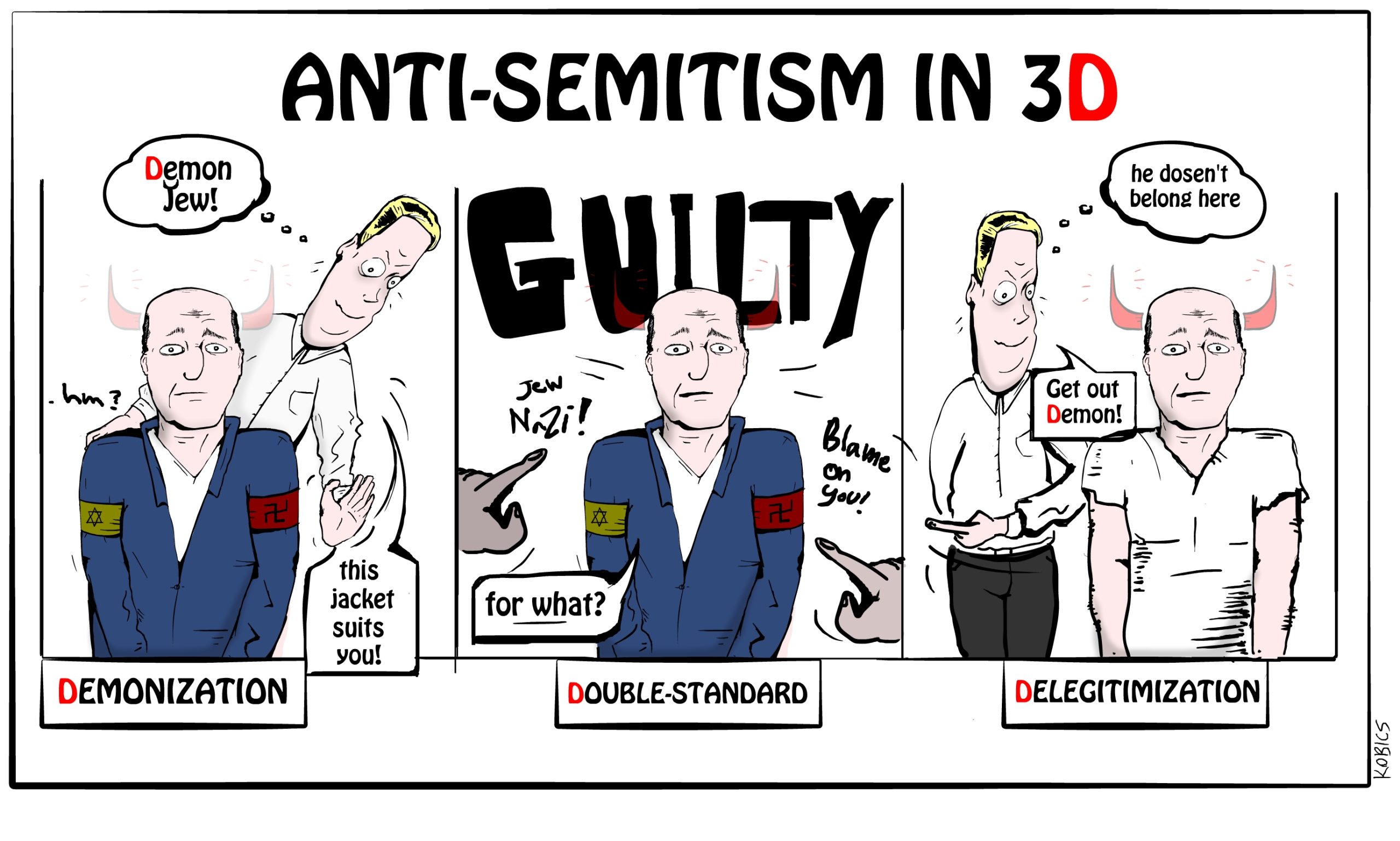
Natan Sharansky, Chairman of the Executive for the Jewish Agency for Israel and human rights activist, proposed what he calls the “3-D test” to differentiate between legitimate criticism of Israel and anti-Semitism. This test dictates that if a statement or action demonizes Israel, holds Israel to a double standard, or delegitimizes Israel (the “3 Ds”), it is in fact anti-Semitic.
Demonization
Demonization, the first of the 3 Ds, is relatively easy to identify as it has been a marker of anti-Semitism for centuries. Depicting Jews as the embodiment of evil (i.e. “Jews have horns” or “Jews are the devil”) is one of the oldest forms of anti-Semitism. Today, demonization of Israel includes comparing Israel to Nazi Germany, equating Palestinian refugee camps with concentration camps, or depicting Israeli political leaders as the devil.
Demonization of Israel is clear anti-Semitism, with a shift of focus from Jews as individuals to the Jewish nation. When criticism of Israel is focused on its nature as a Jewish state, when its policies are blown out of proportion, and when criticism reflects anti-Jewish sentiment that has persisted for centuries, anti-Semitism is the culprit.
Double Standard
Discriminatory laws holding Jews to a different standard than other citizens have also existed for centuries. From empires imposing additional taxes on Jews, to outright denying the right to Jewish practice, to more recent ghettoization, Jews have been subject to different laws than their neighbors.
The same is happening today, at the international level. Of the 2017-2018 UNGA resolutions condemning countries, 20 of the resolutions were against Israel – and six against the rest of the world combined. Furthermore, since the establishment of the UN Human Rights Council, about 50% of its resolutions concerning specific countries have been against Israel. No other country has received such treatment. Singling out Israel for condemnation while ignoring massive human rights abuses in other parts of the world is holding Israel to a double standard. Expecting Israel and Israeli organizations to adhere to a higher standard of human rights singles out Israel as the only Jewish state, and is thus an expression of anti-Semitism.
Delegitimization
Delegitimization is slightly harder to identify, but just as important. It refers to any action or comment delegitimizing Israel as a Jewish democracy, or denying Israel’s right to exist as one. It can be accusing Israel of colonialism, ethnic cleansing, and apartheid; or it can be claiming that Israel was established illegally and on lands that it has no right to own, thus delegitimizing Israel’s very right to exist at all.
Dozens of Muslim states and Christian states exist, yet there is only one Jewish state. Denying its right to exist is inherently anti-Semitic because it discriminates against Israel based on its nature as a Jewish state. Making false claims of ethnic cleansing or apartheid delegitimizes Israel by implying that it is founded on racism and discrimination and thus has no right to sovereignty. The same argument can be made of the claim that Israel has no legal, historical, or cultural right to the land; however, making these claims is anti-Semitic because it nullifies Jewish history, nationalism, and right to self-determination.
Discussion and Conclusion
Expressing disapproval for specific Israeli policies is a legitimate form of criticism. Arguing against political action, the way one does with regards to other countries, is not only acceptable but also healthy – no positive progress can be made without open dialogue and political discussion. However, when one (or more) of the “3 Ds” become present and that criticism crosses the line into anti-Semitism, nothing productive can happen. No positive change can happen when the criticism is based on anti-Jewish arguments. When someone demonizes Israel, holds it to a double standard, or delegitimizes it, their tactics must be called out for what they are. This is the only way to ensure that anti-Semitism is recognized and stopped, and legitimate criticism is taken seriously so as to promote progress.