ECHOES OF DENIAL - OCT. 7TH ATROCITIES & RISING ANTISEMITISM- Report
“Denial of atrocity crimes is a warning sign of societal fragility and the enduring presence of
the conditions that allowed this large-scale hatred and violence to erupt in the past.”
Alice Wairimu Nderitu, Under-Secretary General and Special
Adviser on Prevention of Genocide to the United Nations
Secretary General
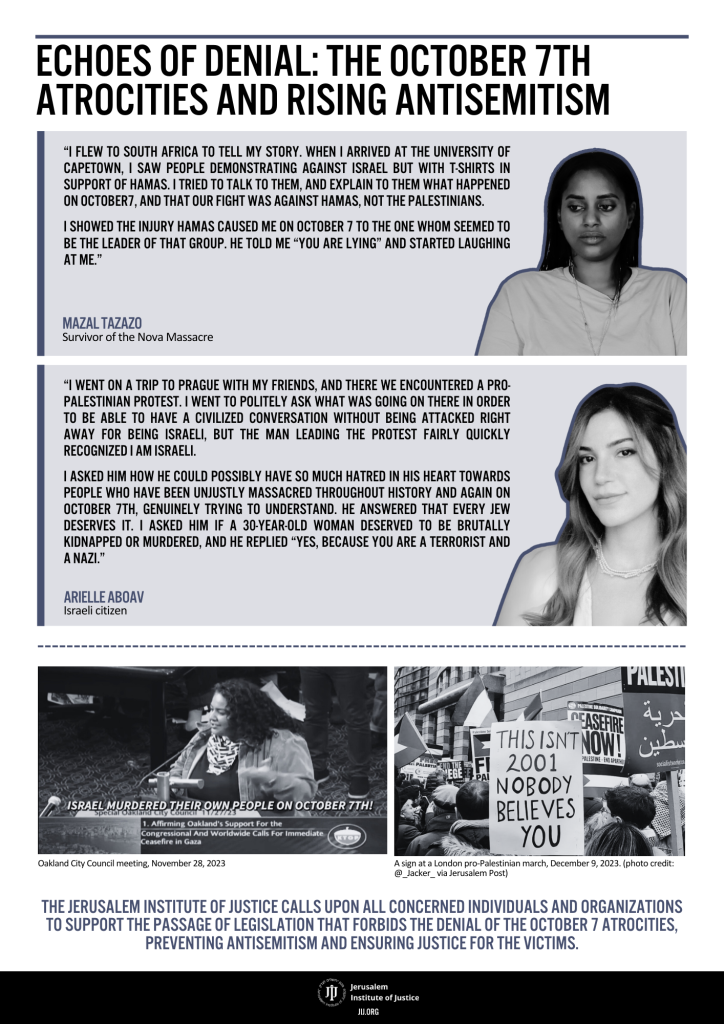
The October 7, 2023, atrocities committed by Hamas against Israeli civilians were among the most documented terror attacks in history. Despite overwhelming evidence, including livestreamed videos and numerous survivor testimonies, a disturbing pattern of distortion and denial of these events has emerged. This report examines the denial of the October 7 atrocities, links such denial to rising antisemitism, and reviews the current legal frameworks addressing atrocity denial. It also discusses the necessity and promotes the adoption of new legislation against such denial and provides recommendations for international cooperation to combat this dangerous phenomenon.

Echoes of Denial - FactSheet
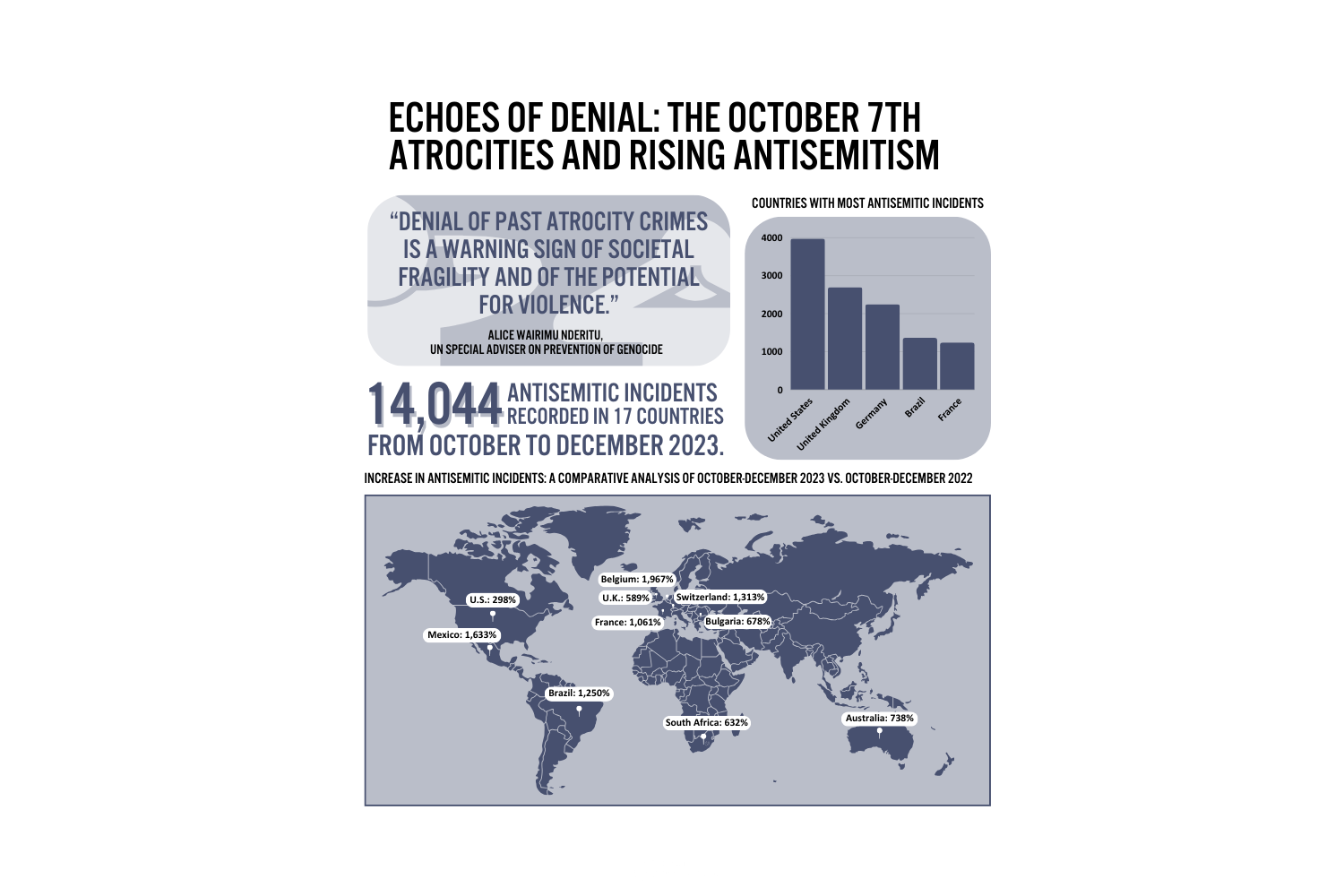
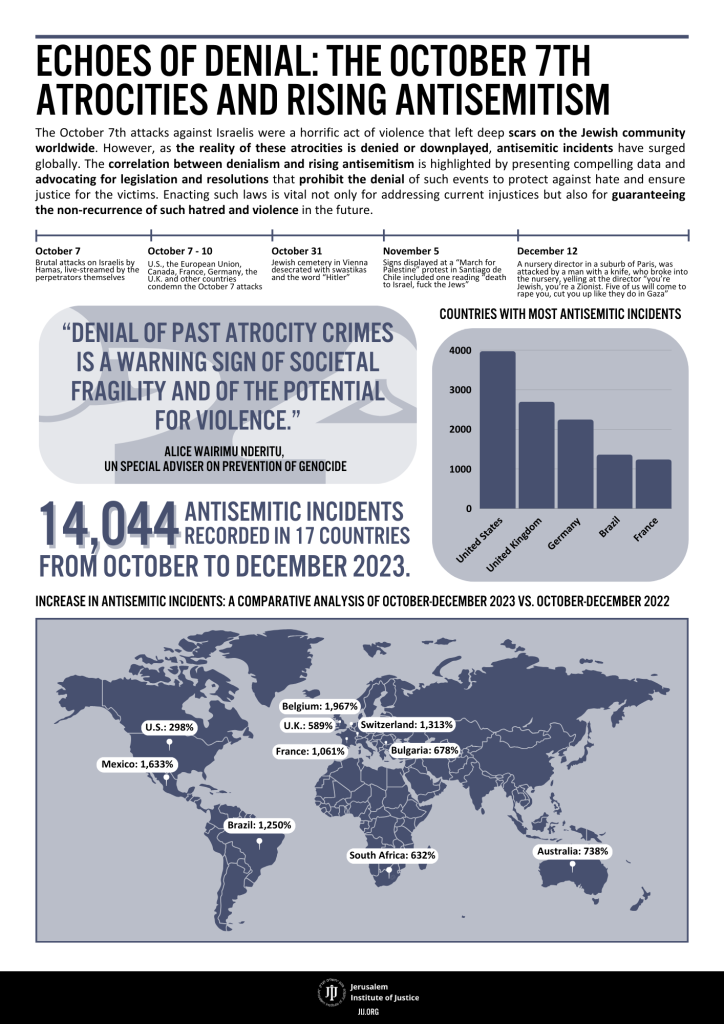
The October 7th Atrocities and Rising Antisemitism
The October 7th attacks against Israelis were a horrific act of violence that left deep scars on the Jewish community worldwide. However, as the reality of these atrocities is denied or downplayed, antisemitic incidents have surged globally. The correlation between denialism and rising antisemitism is highlighted by presenting compelling data and advocating for legislation and resolutions that prohibit the denial of such events to protect against hate and ensure justice for the victims. Enacting such laws is vital not only for addressing current injustices but also for guaranteeing the non-recurrence of such hatred and violence in the future. Download factsheet here.
Response to ICC Prosecutor’s Request for Arrest Warrants for Hamas & Israeli Leaders
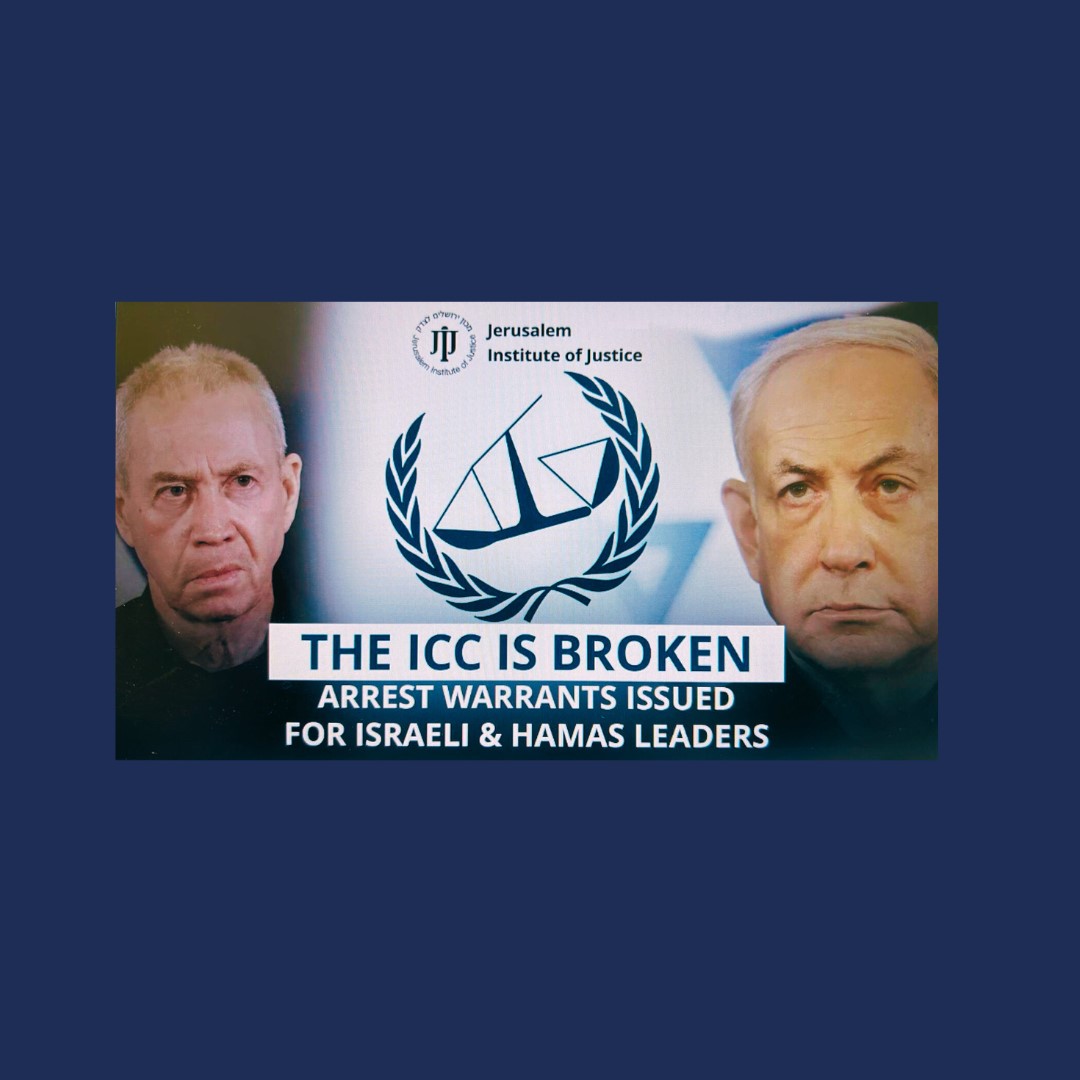
The Jerusalem Institute of Justice welcomes the ICC Prosecutor’s request for the issuance of
arrest warrants for Hamas’ leaders Yahya Sinwar, Mohamed Deif, and Ismail Haniyeh. We
are disappointed that Hamas’ leaders were not charged with the crime of genocide, despite
constantly expressing their fervent intent to exterminate all Israeli nationals and Jews, and
live streaming the evidence of how they brought this intent to action on October 7th.
We are appalled that the Prosecutor intentionally delayed this maneuver, seeking to pair it
with a request for arrest warrants for Israeli leaders Benjamin Netanyahu and Yoav Gallant.
If the Pre-Trial Chamber approves of this linkage, it will draw a false moral equivalence
between the parties to this conflict.
Since its establishment, the ICC has refrained from pursuing democratically elected officials
whose armies are engaged in wars of self-defense. It is fundamentally reckless to break from
this precedent for the first time when the democratic officials in question are the leaders of
the world’s only Jewish state, and at a time of rising global antisemitism. This development
will only serve to validate the claims of Hamas’ sympathizers across the globe, inspiring
more frequent and more violent attacks on Jewish people across the Diaspora.
The State of Israel has demonstrated that it is able and willing to investigate its own soldiers
and officials for any alleged violations of international law, including international
humanitarian law. Consequently, and in accordance with the principle of complementarity,
one of the most basic principles of the ICC, the Court should refrain from interfering.
The Prosecutor’s case against Israel rests on charges of “starvation” in seeming ignorance of
the fact that unprecedented levels of aid have entered Gaza since October 7th, including
400,000 tons of donated food.
Jerusalem Institute of Justice has sought the arrest of Hamas’ leaders through repeated
requests to the ICC’s Office of the Prosecutor since 2017, highlighting their systematic use of
torture, indoctrination of children, recruitment of child soldiers, and the abuse of civilians as
human shields. If they had been arrested for those crimes years ago, perhaps October 7th
never would have happened.
Despite today’s disappointing developments, we remain committed to pursuing justice for the
survivors and victims of Hamas’ atrocities, including through continued engagement with the
Office of the Prosecutor.
United Nations admits Hamas committed sexual violence on and after Oct. 7
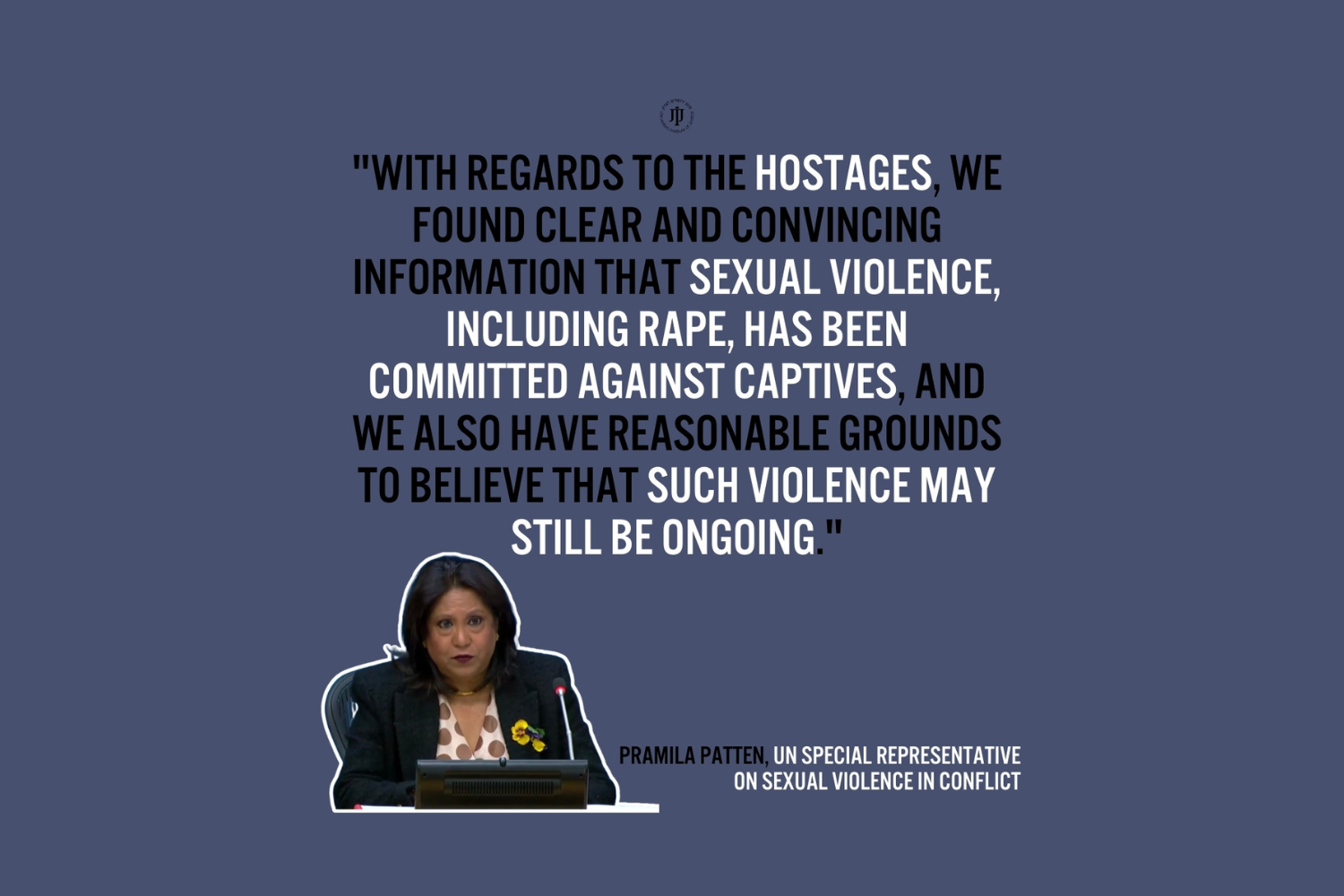
Pramila Patten, a senior UN official, came to Israel a month ago with a mandate to gather information on claims that Hamas terrorists had committed rape and other acts of sexual violence against Israeli women and men on October 7th. Her trip came after months of conspicuous silence on the matter from UN Women, and appalling statements from other UN officials that amounted to gaslighting and atrocity denial.
JIJ’s team of human rights lawyers and researchers met with Patten's team on February 8th. We presented detailed testimony and gruesome photographs taken by first responders who had handled the bodies of the October 7th victims. Watch their public testimony HERE.
JIJ has UN consultative status, which gives us access to senior U.N. officials at critical moments like this. We chose to bring forth the evidence we had collected, for the sake of the murdered victims and living survivors who are still too traumatized for an invasive interrogation.
On Monday, Ms. Patten published her report, finding:
- “Reasonable grounds to believe that sexual violence occurred in multiple locations during the October 7th attacks, including rape and gang rape”
- “The recurring pattern of female victims found undressed, bound, and shot”
- “Clear and convincing information that sexual violence, including rape, sexualized torture, and cruel, inhuman and degrading treatment occurred against some women and children during their time in captivity and … that this violence may be ongoing."
Read the full report HERE.
This is a rare and valuable admission from a senior UN official, that Hamas intentionally used sexual violence as a weapon of war. This rare moment of truth-telling wouldn’t have come without your support.
JIJ does the painstaking work of collecting, interpreting, and presenting the evidence of human rights abuses in Israel and the Middle East. Our goal is to combat atrocity denial, fight for justice for the victims, validate the memories of the living survivors, and hold the perpetrators accountable.
We do this work within the UN, which has utterly failed so far to contend with reality:
- The UN General Assembly has refused to condemn Hamas.
- The UN Security Council still hasn’t recognized Hamas as a terrorist organization.
- The UN "Human Rights Council" was in session on October 7th and chose silence.
- Despite overwhelming evidence, most UN officials still refuse to acknowledge the atrocities committed on Oct 7.
With your support, we’ll continue standing up for Israel inside the UN system, fighting to release the captives, defund Hamas, and secure justice for all of Hamas’ victims.
Letter to ICRC - On Social Media Biased Reporting
LETTER TO THE PRESIDENT OF THE INTERNATIONAL COMMITTEE OF THE RED CROSS
November 16, 2023
To: Ms. Mirjana Spoljaric Egger,
President of the International Committee of the Red Cross
19 Avenue de la Paix 1202 Geneva Switzerland
Date: November 15, 2023
We are writing to bring to your attention a pressing issue concerning the use of social media by the
International Committee of the Red Cross (ICRC) in the context of the ongoing Hamas-Israel conflict.
In today's world, social media has an immense influence on the perception of conflicts, shaping
narratives and inadvertently affecting conflict dynamics. Recent events have underscored the critical
importance of the ICRC's response in this domain.
The central concern at hand revolves around the balance and neutrality of the content disseminated
through ICRC's social media channels. As an independent and neutral organization dedicated to
upholding humanitarian protection for conflict victims and the principles of international
humanitarian law (IHL), it is imperative that ICRC's social media communications maintain a high
standard of neutrality, balance, and accuracy in portraying conflicts.
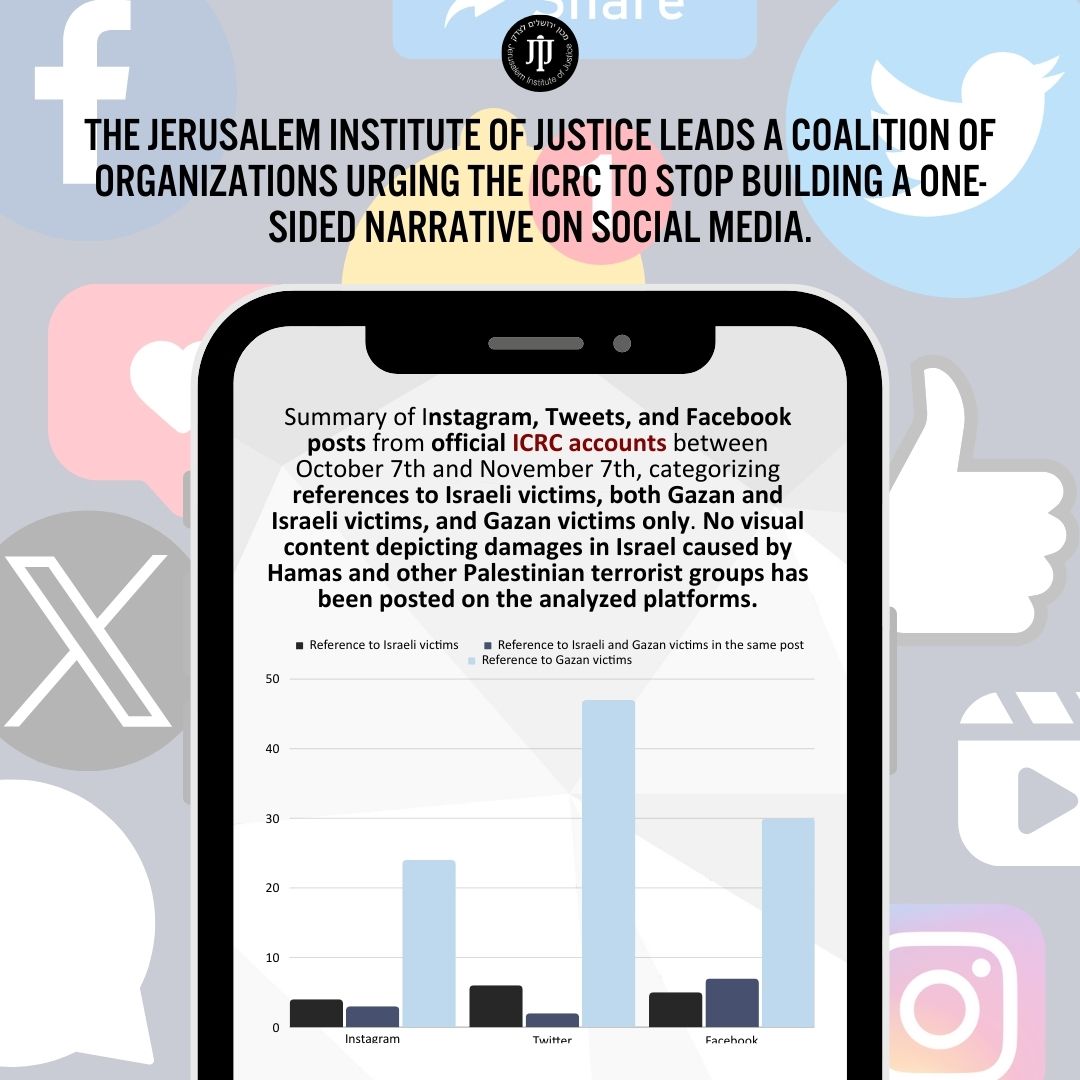
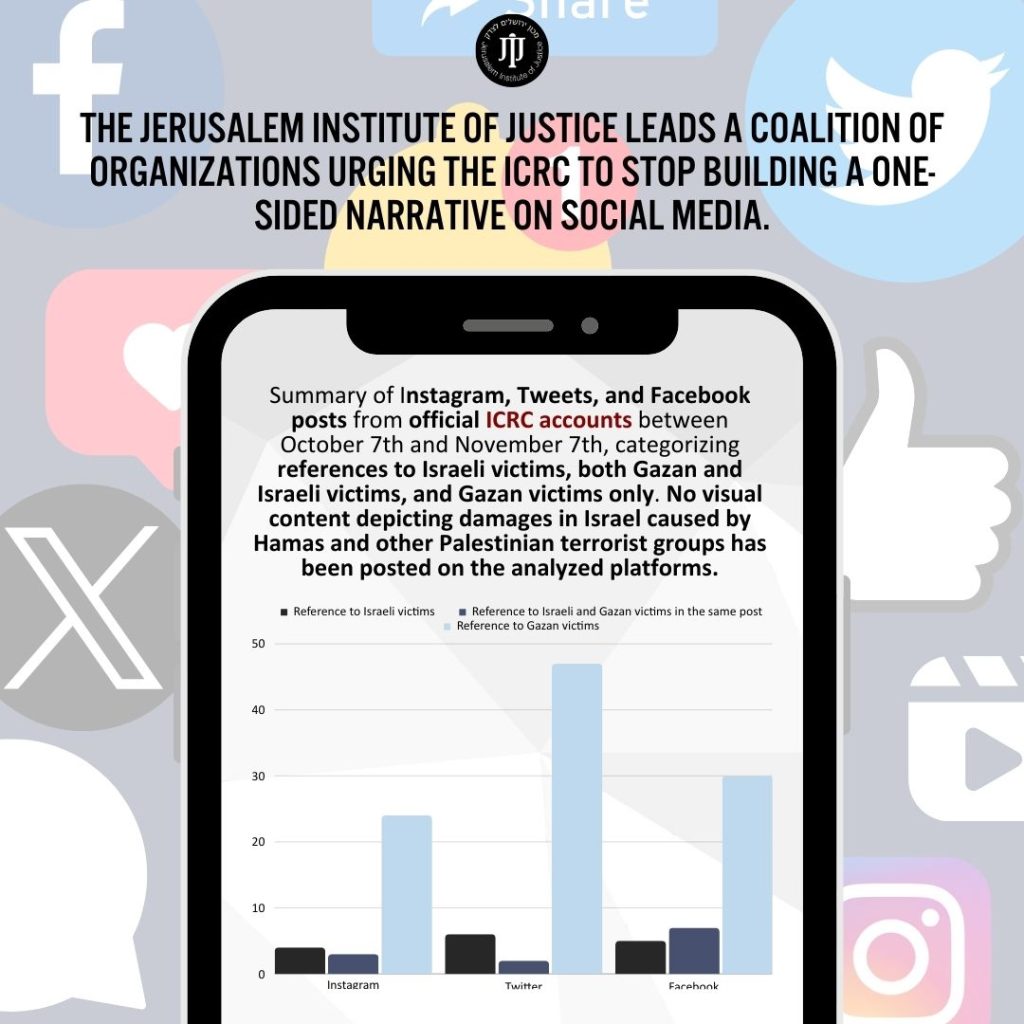
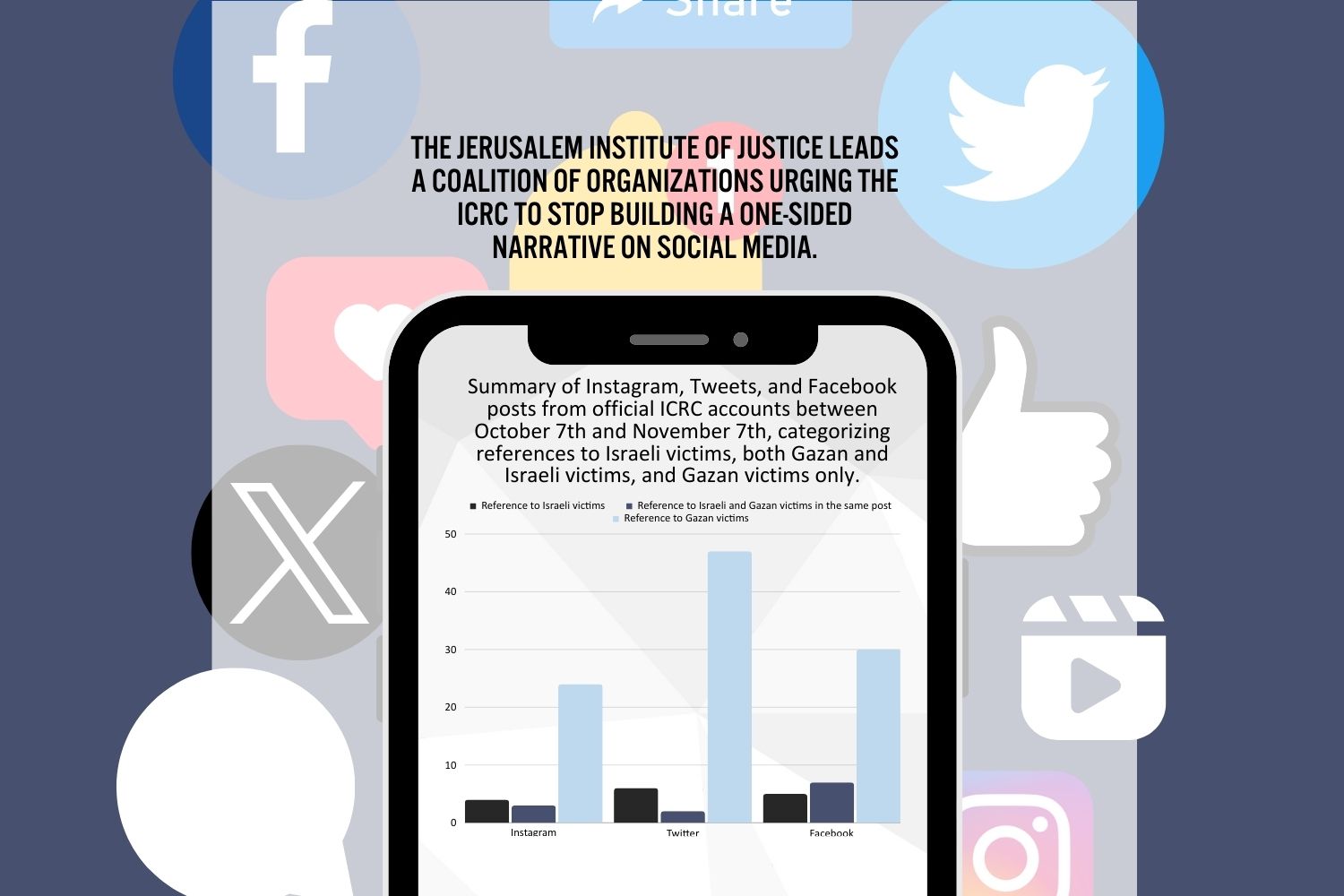
Of particular concern is the apparent disproportion in the content's focus. A noticeable emphasis on
the Gaza Strip is evident in the content shared by ICRC on its social media platforms (see Annex 1).
This is evident in depictions of scenes from Gaza, casualty statistics, and information about victims
within Gaza. However, a significant absence exists concerning content depicting the atrocities
committed by Hamas on October 7 and the impact on communities in Israel near the Gaza Strip.
Furthermore, a notable gap in communication on ICRC's Instagram account was observed following
the October 7 attack. While references were made to hostage-taking and the importance of adhering
to international humanitarian law, a more robust stance against the violations of international
humanitarian law committed by Hamas on October 7, including acts of sexual violence and genocide,
was expected.
Equally concerning is the absence of any posts, whether images, graphics, or videos, addressing the
damages suffered on Israeli soil. This encompasses distressing scenes of houses reduced to rubble,
charred walls, mass destruction, and the devastating harms caused by rocket hits on civilian
infrastructure in Tel Aviv, Ashkelon, and other locations.
The consequences of this content disproportion are significant, as it affects the overall narrative,
public perception, and understanding of the conflict. Given the ICRC's influential role in providing
information, it is essential to adopt a more balanced and nuanced approach in social media
communications.
From October 7 until October 25, there has been a 500% increase in the volume of antisemitic events
compared to the same period last year. Specifically in social networks, the increase of online
antisemitic discourse was, between October 7-23, 400% compared to the 17 days prior to the war and
340% compared to the same dates in the previous months (The State of Antisemitism in the World A
Summary of the First Three Weeks of the 'Swords of Iron' War, 2023).
This alarming surge in online antisemitism has had dire real-world consequences. Instances of
antisemitic violence and vandalism have occurred globally, with private houses and apartments in
cities like Berlin, Paris, and others being marked with Stars of David. Synagogues, Holocaust
memorials, Jewish schools, Jewish cemeteries, and historic Jewish sites in locations such as Girona,
Berlin, Vienna, Rome, and Thessaloniki have been targets of attacks, often accompanied by anti-Israel
and antisemitic graffiti, including swastikas. A particularly distressing incident took place on
November 4 when a 30-year-old Jewish woman was stabbed in her home in Lyon, and her attacker
defaced her door with a swastika symbol. Tragically, on November 6, a pro-Palestinian protestor killed
Paul Kessler, a 65-year-old Jewish man, further underscoring the devastating real-world impact of
rising antisemitism.
The perilous connection between online antisemitism and tangible acts of violence against Jewish
individuals, communities, and institutions underscores the pressing need for fair and responsible
communication on social media platforms. This is why we firmly believe that the ICRC should maintain
balance and neutrality in the content shared on social media platforms.
Our request is not to remove existing content but to enhance it with a more comprehensive portrayal
of the situation, one that encompasses the atrocities committed in Israel by Hamas and other
Palestinian terrorist groups. Your proactive response to this matter will contribute to a more informed
and balanced public discourse on these critical issues.
Sincerely,
 CC: Fabrizio Carboni, ICRC regional director for the Near and Middle East
Alessandra Menegon, Head of the Delegation of the ICRC in Israel and the Occupied Territories
Ewan Watson, Head of Public Relations
Biased Narratives on Red Cross Social Media
THE JERUSALEM INSTITUTE OF JUSTICE LEADS A COALITION OF ORGANIZATIONS URGING
THE ICRC TO STOP BUILDING ONE-SIDED NARRATIVES ON SOCIAL MEDIA
To: Ms. Mirjana Spoljaric Egger,
President of the International Committee of the Red Cross
19 Avenue de la Paix 1202 Geneva Switzerland
Date: November 15, 2023
We are writing to bring to your attention a pressing issue concerning the use of social media by the
International Committee of the Red Cross (ICRC) in the context of the ongoing Hamas-Israel conflict.
In today's world, social media has an immense influence on the perception of conflicts, shaping
narratives and inadvertently affecting conflict dynamics. Recent events have underscored the critical
importance of the ICRC's response in this domain.
The central concern at hand revolves around the balance and neutrality of the content disseminated
through ICRC's social media channels. As an independent and neutral organization dedicated to
upholding humanitarian protection for conflict victims and the principles of international
humanitarian law (IHL), it is imperative that ICRC's social media communications maintain a high
standard of neutrality, balance, and accuracy in portraying conflicts.
Of particular concern is the apparent disproportion in the content's focus. A noticeable emphasis on
the Gaza Strip is evident in the content shared by ICRC on its social media platforms (see Annex 1).
This is evident in depictions of scenes from Gaza, casualty statistics, and information about victims
within Gaza. However, a significant absence exists concerning content depicting the atrocities
committed by Hamas on October 7 and the impact on communities in Israel near the Gaza Strip.
Furthermore, a notable gap in communication on ICRC's Instagram account was observed following
the October 7 attack. While references were made to hostage-taking and the importance of adhering
to international humanitarian law, a more robust stance against the violations of international
humanitarian law committed by Hamas on October 7, including acts of sexual violence and genocide,
was expected.
Equally concerning is the absence of any posts, whether images, graphics, or videos, addressing the
damages suffered on Israeli soil. This encompasses distressing scenes of houses reduced to rubble,
charred walls, mass destruction, and the devastating harms caused by rocket hits on civilian
infrastructure in Tel Aviv, Ashkelon, and other locations.
The consequences of this content disproportion are significant, as it affects the overall narrative,
public perception, and understanding of the conflict. Given the ICRC's influential role in providing
information, it is essential to adopt a more balanced and nuanced approach in social media
communications.
From October 7 until October 25, there has been a 500% increase in the volume of antisemitic events
compared to the same period last year. Specifically in social networks, the increase of online
antisemitic discourse was, between October 7-23, 400% compared to the 17 days prior to the war and
340% compared to the same dates in the previous months (The State of Antisemitism in the World A
Summary of the First Three Weeks of the 'Swords of Iron' War, 2023).
This alarming surge in online antisemitism has had dire real-world consequences. Instances of
antisemitic violence and vandalism have occurred globally, with private houses and apartments in
cities like Berlin, Paris, and others being marked with Stars of David. Synagogues, Holocaust
memorials, Jewish schools, Jewish cemeteries, and historic Jewish sites in locations such as Girona,
Berlin, Vienna, Rome, and Thessaloniki have been targets of attacks, often accompanied by anti-Israel
and antisemitic graffiti, including swastikas. A particularly distressing incident took place on
November 4 when a 30-year-old Jewish woman was stabbed in her home in Lyon, and her attacker
defaced her door with a swastika symbol. Tragically, on November 6, a pro-Palestinian protestor killed
Paul Kessler, a 65-year-old Jewish man, further underscoring the devastating real-world impact of
rising antisemitism.
The perilous connection between online antisemitism and tangible acts of violence against Jewish
individuals, communities, and institutions underscores the pressing need for fair and responsible
communication on social media platforms. This is why we firmly believe that the ICRC should maintain
balance and neutrality in the content shared on social media platforms.
Our request is not to remove existing content but to enhance it with a more comprehensive portrayal
of the situation, one that encompasses the atrocities committed in Israel by Hamas and other
Palestinian terrorist groups. Your proactive response to this matter will contribute to a more informed
and balanced public discourse on these critical issues.
Sincerely,
CC: Fabrizio Carboni, ICRC regional director for the Near and Middle East
Alessandra Menegon, Head of the Delegation of the ICRC in Israel and the Occupied Territories
Ewan Watson, Head of Public Relations
Biased Narratives on Red Cross Social Media
THE JERUSALEM INSTITUTE OF JUSTICE LEADS A COALITION OF ORGANIZATIONS URGING
THE ICRC TO STOP BUILDING ONE-SIDED NARRATIVES ON SOCIAL MEDIA
To: Ms. Mirjana Spoljaric Egger,
President of the International Committee of the Red Cross
19 Avenue de la Paix 1202 Geneva Switzerland
Date: November 15, 2023
We are writing to bring to your attention a pressing issue concerning the use of social media by the
International Committee of the Red Cross (ICRC) in the context of the ongoing Hamas-Israel conflict.
In today's world, social media has an immense influence on the perception of conflicts, shaping
narratives and inadvertently affecting conflict dynamics. Recent events have underscored the critical
importance of the ICRC's response in this domain.
The central concern at hand revolves around the balance and neutrality of the content disseminated
through ICRC's social media channels. As an independent and neutral organization dedicated to
upholding humanitarian protection for conflict victims and the principles of international
humanitarian law (IHL), it is imperative that ICRC's social media communications maintain a high
standard of neutrality, balance, and accuracy in portraying conflicts.
Of particular concern is the apparent disproportion in the content's focus. A noticeable emphasis on
the Gaza Strip is evident in the content shared by ICRC on its social media platforms (see Annex 1).
This is evident in depictions of scenes from Gaza, casualty statistics, and information about victims
within Gaza. However, a significant absence exists concerning content depicting the atrocities
committed by Hamas on October 7 and the impact on communities in Israel near the Gaza Strip.
Furthermore, a notable gap in communication on ICRC's Instagram account was observed following
the October 7 attack. While references were made to hostage-taking and the importance of adhering
to international humanitarian law, a more robust stance against the violations of international
humanitarian law committed by Hamas on October 7, including acts of sexual violence and genocide,
was expected.
Equally concerning is the absence of any posts, whether images, graphics, or videos, addressing the
damages suffered on Israeli soil. This encompasses distressing scenes of houses reduced to rubble,
charred walls, mass destruction, and the devastating harms caused by rocket hits on civilian
infrastructure in Tel Aviv, Ashkelon, and other locations.
The consequences of this content disproportion are significant, as it affects the overall narrative,
public perception, and understanding of the conflict. Given the ICRC's influential role in providing
information, it is essential to adopt a more balanced and nuanced approach in social media
communications.
From October 7 until October 25, there has been a 500% increase in the volume of antisemitic events
compared to the same period last year. Specifically in social networks, the increase of online
antisemitic discourse was, between October 7-23, 400% compared to the 17 days prior to the war and
340% compared to the same dates in the previous months (The State of Antisemitism in the World A
Summary of the First Three Weeks of the 'Swords of Iron' War, 2023).
This alarming surge in online antisemitism has had dire real-world consequences. Instances of
antisemitic violence and vandalism have occurred globally, with private houses and apartments in
cities like Berlin, Paris, and others being marked with Stars of David. Synagogues, Holocaust
memorials, Jewish schools, Jewish cemeteries, and historic Jewish sites in locations such as Girona,
Berlin, Vienna, Rome, and Thessaloniki have been targets of attacks, often accompanied by anti-Israel
and antisemitic graffiti, including swastikas. A particularly distressing incident took place on
November 4 when a 30-year-old Jewish woman was stabbed in her home in Lyon, and her attacker
defaced her door with a swastika symbol. Tragically, on November 6, a pro-Palestinian protestor killed
Paul Kessler, a 65-year-old Jewish man, further underscoring the devastating real-world impact of
rising antisemitism.
The perilous connection between online antisemitism and tangible acts of violence against Jewish
individuals, communities, and institutions underscores the pressing need for fair and responsible
communication on social media platforms. This is why we firmly believe that the ICRC should maintain
balance and neutrality in the content shared on social media platforms.
Our request is not to remove existing content but to enhance it with a more comprehensive portrayal
of the situation, one that encompasses the atrocities committed in Israel by Hamas and other
Palestinian terrorist groups. Your proactive response to this matter will contribute to a more informed
and balanced public discourse on these critical issues.
Sincerely,
CC: Fabrizio Carboni, ICRC regional director for the Near and Middle East
Alessandra Menegon, Head of the Delegation of the ICRC in Israel and the Occupied Territories
Ewan Watson, Head of Public Relations
A Step Too Far: The UN Human Rights Council COI Report on Israel
After clashes between Israel and Hamas in May 2021, the UN Human Rights Council opened a Commission of Inquiry (COI) to investigate human rights abuses in Israel. Over the course of the past two years, the COI has produced three reports detailing one-sided, biased information about the events on the ground, falsely portraying reality for so many Israelis and Palestinians. In its latest report, the COI focused on “Israel’s attacks, restrictions, and harassment of civil society actors” and revealed numerous concerning human rights violations in the Palestinian Territories and East Jerusalem. However, the UN fell into its biased routine of disproportionate representation once again.
Although unequal treatment is expected with the UN’s long history of anti-Israel sentiment, the most recent proceedings took matters to new heights. Throughout the report and live session, the COI explicitly supported BDS and similar Israel-boycott organizations and categorized them as legitimate forms of protest. The COI also ignored terrorism enacted by both Palestinian leadership and civilians and called on UN member states to support the Palestinian resistance. These actions not only fail to uphold the COI’s mission to “establish the facts and circumstances” and “identify those responsible,” but it glorifies antisemitism in the world’s most prominent human rights organization, setting a precedent that poses a serious threat to Jews around the world (the UN Independent International COI on the OPT Mandate, 2021).
In the COI report’s section detailing Israel’s delegitimization of Palestinian civil society, the COI claims that Israel instituted various measures to limit BDS, such as removing their funding and cutting business deals. By preventing BDS from acting freely, Israeli authorities were denying their supporters the right to freedom of expression, which is considered a human rights violation. As a response, the COI asserts that:
“Everyone shall have the right to freedom of expression; this right shall include freedom to seek, receive and impart information and ideas of all kinds, regardless of frontiers, either orally, in writing or in print, in the form of art, or through any other media of his choice,” (Human Rights Council 53rd Session Report, pp 11)
Such statements blatantly support accounts of institutionalized antisemitism and violent resistance espoused by BDS leaders. There are numerous cases in which the BDS has voiced its antisemitic views. BDS co-founder and leader Omar Barghouti freely admits that BDS “opposes a Jewish state in any part of Palestine.” In another, a BDS leader in South Africa stated, “BDS [...] will help bring about the defeat of Zionist Israel and victory for Palestine.” Lastly, Barghouti claimed that “B.D.S. treats resistance to what it sees as Israeli oppression, including by armed struggle, as a legitimate right. Asked if B.D.S. condemned the violence that targeted Israeli soldiers, he declined to comment” (Halbfinger et. al, Is B.D.S. Anti-Semitic? A Closer Look at the Boycott Israel Campaign).
BDS’ opposition to a Jewish state in Israel’s borders is not hidden. They openly deny the Jewish people’s right to self-determination in the land of Israel and advocate against a peaceful solution. While every individual should have the right to criticize any institution and exercise his or her freedom of expression, there is a difference between disagreement and encouraging human rights crimes. BDS clearly legitimizes terrorism and harm to innocent Israeli civilians as a means to wipe Israel off the face of the Earth.
To add fuel to the fire, the COI commissioners have explicitly shared similar views in interviews and sessions. Navi Pillay, the chief commissioner, has spent a large portion of her career fighting Israel, from lobbying governments to boycott Israel to creating the “Sanction Apartheid Israel” petition. On numerous occasions, Pillay has affirmed her support for BDS, such as “I hope that the Palestinian struggle to end colonization gains this kind of momentum, especially in the civilian campaign of BDS, Boycott, Divestment, and Sanctions” at a conference in South Africa (November 29, 2017). Furthermore, Miloon Kothari, one of three commissioners of the COI, stated outright in the session, “States want to [...] correctly uphold the rights of the Ukrainians to resist, and we want to see the same standards applied to the case of Israel and Palestine.” In short, just as the Ukrainians use armed resistance and violence against Russia, so should the Palestinians. Violence is an encouraged response (3rd Meeting 53rd Session of Human Rights Council).
By confirming BDS as a legitimate protest organization, the UNHRC supports both human rights violations and violence as a means to an end. They support the continuation of conflict, not peace, and are actively making the world a more dangerous place for the Jewish people.
As a Jewish student studying human rights in university, I am deeply disappointed in the COI’s report and frightened by its precedent. Firstly, one of the most important lessons of higher education is to never rely on one narrative. Every conflict has multiple angles, but ignoring basic facts detracts from the truth. Highlighting the Israeli perspective is just as crucial to progress as highlighting the Palestinian one, and peace can only emerge through mutual recognition.
Secondly, this statement arrives at a dangerous time for the Jewish people, as antisemitism has slowly crept back into all sectors of our society. Many of my peers have been alienated for their assumed pro-Israel opinions after simply expressing their Jewish identities. Not only do individuals fear expressing their opinions on Israel, but the environment no longer allows them to be open about being Jewish. By giving the green light to BDS, the COI contributes to “removing [...] civil-society actors from the public space to stop their activities, silencing their voices and punishing them, and often also deterring others,” the exact environment the UNHRC claims Israeli authorities wrongfully create for Palestinians (Human Rights Council 53rd Session Report pp 20).
As a path forward, the UNHRC COI must condemn BDS for crossing the line from free speech to antisemitism. By drawing this line, the UNHRC can simultaneously protect the freedom of expression, as well as the Jewish people. Second, the UNHRC must recognize the terrorism enacted by Palestinian civilians and leadership. If they assert that Israeli violence is a human rights crime, they must at least recognize that it exists on the other side, let alone criticize it.
The only path to upholding human rights is to escape emotional narrative, present challenging issues from either side and hold both sides accountable for their actions. It is crucial to call out Israel when they commit crimes, just as criticism is warranted for any democracy, but displaying biased, one-sided evidence only inhibits progress and perpetuates the harmful, decades-long conflict. Every innocent Palestinian and Israeli equally deserves fair treatment from their governments and international institutions, and hiding the truth prevents human rights for all.
By Molly Goldstein - JIJ Intern
A Step Too Far: The UN Human Rights Council COI Report on Israel
After clashes between Israel and Hamas in May 2021, the UN Human Rights Council opened a Commission of Inquiry (COI) to investigate human rights abuses in Israel. Over the course of the past two years, the COI has produced three reports detailing one-sided, biased information about the events on the ground, falsely portraying reality for so many Israelis and Palestinians. In its latest report, the COI focused on “Israel’s attacks, restrictions, and harassment of civil society actors” and revealed numerous concerning human rights violations in the Palestinian Territories and East Jerusalem. However, the UN fell into its biased routine of disproportionate representation once again.
Although unequal treatment is expected with the UN’s long history of anti-Israel sentiment, the most recent proceedings took matters to new heights. Throughout the report and live session, the COI explicitly supported BDS and similar Israel-boycott organizations and categorized them as legitimate forms of protest. The COI also ignored terrorism enacted by both Palestinian leadership and civilians and called on UN member states to support the Palestinian resistance. These actions not only fail to uphold the COI’s mission to “establish the facts and circumstances” and “identify those responsible,” but it glorifies antisemitism in the world’s most prominent human rights organization, setting a precedent that poses a serious threat to Jews around the world (the UN Independent International COI on the OPT Mandate, 2021).
In the COI report’s section detailing Israel’s delegitimization of Palestinian civil society, the COI claims that Israel instituted various measures to limit BDS, such as removing their funding and cutting business deals. By preventing BDS from acting freely, Israeli authorities were denying their supporters the right to freedom of expression, which is considered a human rights violation. As a response, the COI asserts that:
“Everyone shall have the right to freedom of expression; this right shall include freedom to seek, receive and impart information and ideas of all kinds, regardless of frontiers, either orally, in writing or in print, in the form of art, or through any other media of his choice,” (Human Rights Council 53rd Session Report, pp 11)
Such statements blatantly support accounts of institutionalized antisemitism and violent resistance espoused by BDS leaders. There are numerous cases in which the BDS has voiced its antisemitic views. BDS co-founder and leader Omar Barghouti freely admits that BDS “opposes a Jewish state in any part of Palestine.” In another, a BDS leader in South Africa stated, “BDS [...] will help bring about the defeat of Zionist Israel and victory for Palestine.” Lastly, Barghouti claimed that “B.D.S. treats resistance to what it sees as Israeli oppression, including by armed struggle, as a legitimate right. Asked if B.D.S. condemned the violence that targeted Israeli soldiers, he declined to comment” (Halbfinger et. al, Is B.D.S. Anti-Semitic? A Closer Look at the Boycott Israel Campaign).
BDS’ opposition to a Jewish state in Israel’s borders is not hidden. They openly deny the Jewish people’s right to self-determination in the land of Israel and advocate against a peaceful solution. While every individual should have the right to criticize any institution and exercise his or her freedom of expression, there is a difference between disagreement and encouraging human rights crimes. BDS clearly legitimizes terrorism and harm to innocent Israeli civilians as a means to wipe Israel off the face of the Earth.
To add fuel to the fire, the COI commissioners have explicitly shared similar views in interviews and sessions. Navi Pillay, the chief commissioner, has spent a large portion of her career fighting Israel, from lobbying governments to boycott Israel to creating the “Sanction Apartheid Israel” petition. On numerous occasions, Pillay has affirmed her support for BDS, such as “I hope that the Palestinian struggle to end colonization gains this kind of momentum, especially in the civilian campaign of BDS, Boycott, Divestment, and Sanctions” at a conference in South Africa (November 29, 2017). Furthermore, Miloon Kothari, one of three commissioners of the COI, stated outright in the session, “States want to [...] correctly uphold the rights of the Ukrainians to resist, and we want to see the same standards applied to the case of Israel and Palestine.” In short, just as the Ukrainians use armed resistance and violence against Russia, so should the Palestinians. Violence is an encouraged response (3rd Meeting 53rd Session of Human Rights Council).
By confirming BDS as a legitimate protest organization, the UNHRC supports both human rights violations and violence as a means to an end. They support the continuation of conflict, not peace, and are actively making the world a more dangerous place for the Jewish people.
As a Jewish student studying human rights in university, I am deeply disappointed in the COI’s report and frightened by its precedent. Firstly, one of the most important lessons of higher education is to never rely on one narrative. Every conflict has multiple angles, but ignoring basic facts detracts from the truth. Highlighting the Israeli perspective is just as crucial to progress as highlighting the Palestinian one, and peace can only emerge through mutual recognition.
Secondly, this statement arrives at a dangerous time for the Jewish people, as antisemitism has slowly crept back into all sectors of our society. Many of my peers have been alienated for their assumed pro-Israel opinions after simply expressing their Jewish identities. Not only do individuals fear expressing their opinions on Israel, but the environment no longer allows them to be open about being Jewish. By giving the green light to BDS, the COI contributes to “removing [...] civil-society actors from the public space to stop their activities, silencing their voices and punishing them, and often also deterring others,” the exact environment the UNHRC claims Israeli authorities wrongfully create for Palestinians (Human Rights Council 53rd Session Report pp 20).
As a path forward, the UNHRC COI must condemn BDS for crossing the line from free speech to antisemitism. By drawing this line, the UNHRC can simultaneously protect the freedom of expression, as well as the Jewish people. Second, the UNHRC must recognize the terrorism enacted by Palestinian civilians and leadership. If they assert that Israeli violence is a human rights crime, they must at least recognize that it exists on the other side, let alone criticize it.
The only path to upholding human rights is to escape emotional narrative, present challenging issues from either side and hold both sides accountable for their actions. It is crucial to call out Israel when they commit crimes, just as criticism is warranted for any democracy, but displaying biased, one-sided evidence only inhibits progress and perpetuates the harmful, decades-long conflict. Every innocent Palestinian and Israeli equally deserves fair treatment from their governments and international institutions, and hiding the truth prevents human rights for all.
By Molly Goldstein - JIJ Intern
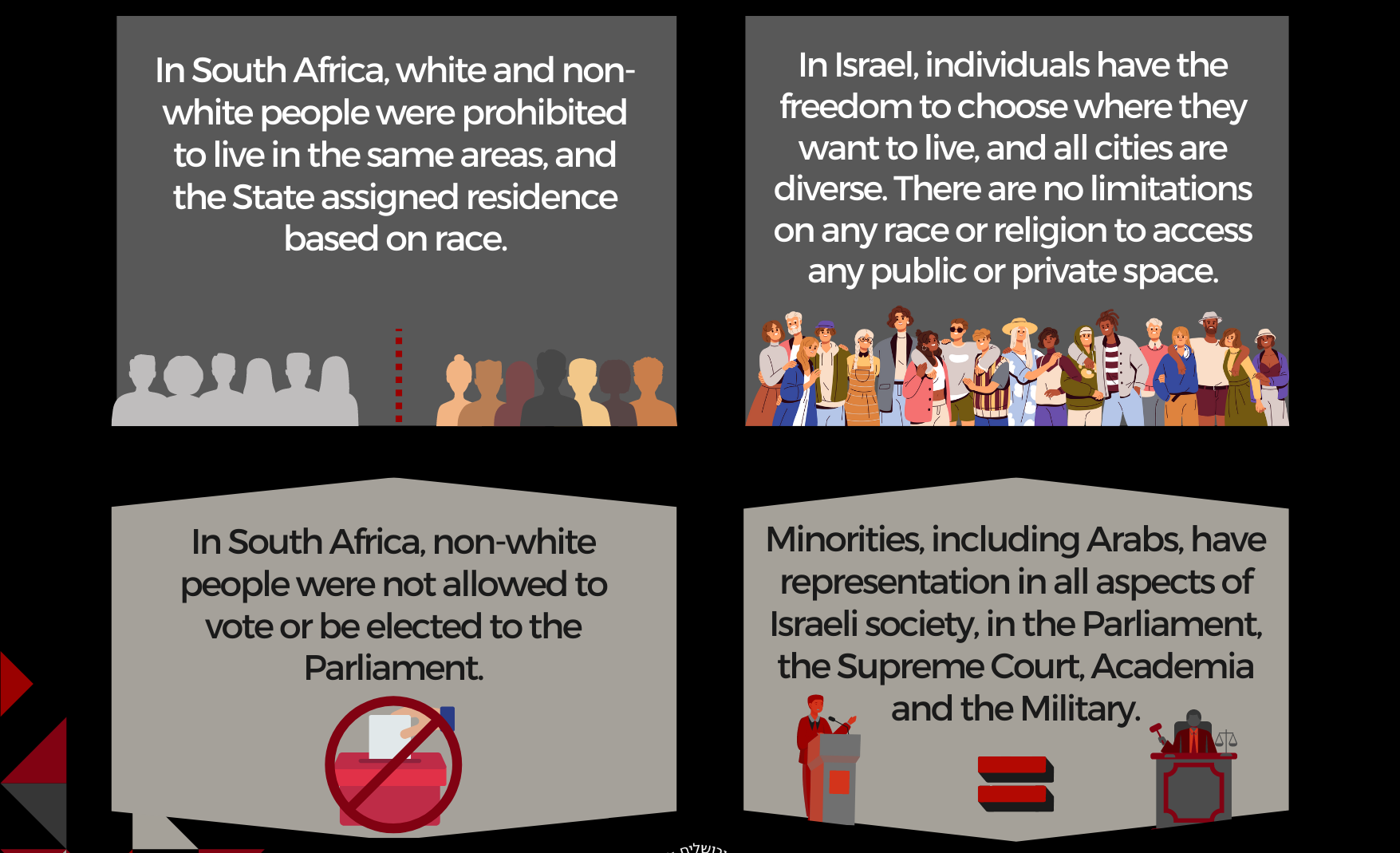
Not Apartheid
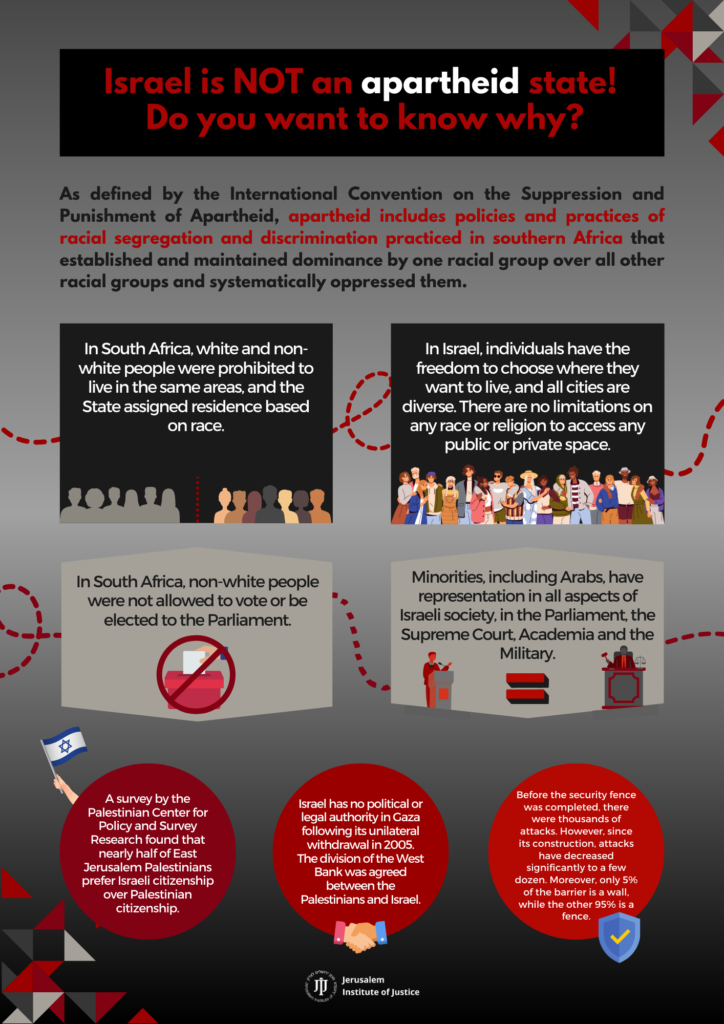
As defined by the International Convention on the Suppression and Punishment of Apartheid, apartheid includes policies and practices of racial segregation and discrimination practiced in southern Africa that established and maintained dominance by one racial group over all other racial groups and systematically oppressed them.