



Terror Tunnels: An International Legal Perspective
Perhaps the most significant feature of 2014’s Operation Protective Edge was the emergence of the terror tunnel phenomenon. Unlike Hamas’ traditional modus operandi of rocket attacks from Gaza, the tunnel phenomenon showcased the alarming ability of Hamas militants to burrow behind enemy lines into Israeli territory and launch attacks on towns and kibbutzim.
Amid reports that Israel might need to consider a threat of Hezbollah tunnels in northern Israel, we analyze the applicability of international law to these tunnels.
Given the recent emergence of the tunnels, their limited use around the world, and their ineffectiveness to state actors, international law does not specifically outline prohibitions on their use. Such is the view of Israeli international legal expert Professor Daphne Richemond-Barak, who noted ‘there is no legal literature’ on the issue and even ‘very little military theory and strategy’. Instead, we are forced to rely on relevant international humanitarian treaty and customary law.
The most obvious contravention of international law relates to the tunnels’ ability to assist in aggression against both Israeli targets and its territorial integrity. Although self-defense is guaranteed to member states of the United Nations by Article 51 of the UN Charter, Hamas’ claims of the tunnel’s ‘defensive’ nature are dubious at best. Many of the now-destroyed tunnels extended into areas of Israel without military targets, such as those with exit points close to the kibbutzim of Kerem Shalom, Holit and Nir Oz. Thus, the tunnels are understood to pose an intentional threat toward civilian targets within Israeli territory – well beyond the pretext of self-defense.
The exit points of these tunnels are not the only areas in violation of international law. The positioning of these tunnels’ entry points is also of significance, particularly as it relates to the Geneva Convention Relative to the Protection of Civilian Persons in Time of War (IV). The central theme of this treaty is the separation of civilians from military personnel to safeguard the wellbeing of non-combatants. Alarmingly, many of the tunnels’ entry points emanate from civilian areas and infrastructure such as mosques, schools and apartment blocks. This is in contravention of the following international laws:
- Article 28 of the 1949 Geneva Convention IV
- Articles 12(4) and 51(7) of the 1977 Additional Protocol 1 to the Geneva Conventions
- Article 8(2)(b)(xxiii) of the 1998 International Criminal Court Statute
- Customary International Law
Richemond-Barak also notes the significant risk posed to children in the construction of the tunnels. As argued in a Journal of Palestine Studies article of 2012, by Hamas’ own admission at least 160 individuals had died in constructing the tunnels at the time of the article’s publishing. Alarmingly, an extremely high number of these are believed to be children as they are ‘prized for their nimble bodies’.
Furthermore, the way in which these tunnels must be eliminated also makes Hamas liable for violations of international law. The aforementioned access points of the tunnels (in mosques, schools, apartment blocks etc.) inevitably means that their dismantlement will result in damage to civilian infrastructure and endanger the lives of civilians themselves. Mapping the paths and structural integrity of the tunnels is extremely difficult and rarely accurate. For those tasked with destroying the tunnels, there is a substantial element of ‘unknown’ in doing so; increasing the likelihood of unforeseen damage to Gazan civilians and their infrastructure.
Thus, in the absence of international law that deals specifically with the phenomenon of terror tunnels, one must apply existing relevant international humanitarian laws and norms to the issue. In doing so, one can establish that the use of underground terror tunnels is undeniably contrary to international law and a war crime.


The Protocols of the Elders of Zion
A Case Study in Bigotry
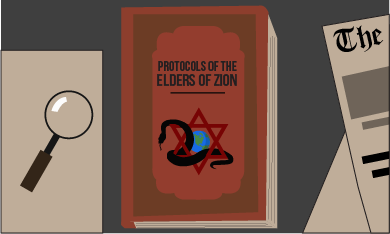
Often referenced by those who are paranoid of a global cabal of Jewish bankers, the Protocols of the Elders of Zion remains the most important text in the arsenal of anti-Semitism. How did such a book emerge? How did its prejudices and conspiracy theories garner traction in societies around the world? And how does it inform opinion today?
Much like the conspiracy itself, the history of the book is based upon plagiarism and a patch-work of anti-revolutionary angst. Its conceptual inspiration can be traced back to the time of the French Revolution at the end of the 18th Century. Seizing upon the paranoia of reactionary elements who were opposed to the revolution, a French Jesuit priest named Abbe Barruel published a dossier in 1797 which attributed the revolution to the actions of the Freemason Order[1]. In 1806, he elaborated on his earlier work by circulating a forged letter by the state police alleging Jewish involvement in the conspiracy of the Masons.
Although making no mention of the Jews, the theme of clandestine meetings reappeared in 1864 with French satirist Maurice Joly. Joly published a pamphlet named Dialogues in Hell Between Machiavelli and Montesquieu which jokingly accused the emperor Napoleon III of convening a meeting in Hell[2]. Although made in jest to prove a political point, the theme was recycled by a German author named Hermann Goedsche – a man known both for his strident anti-Semitism and fraudulence. He routinely forged letters and documents that discredited left-wing politicians[3], which eventually cost him his job in the German postal service[4]. Goedsche adapted Joly’s satirical work into a series titled Biarritz, although the theme of this work was Jewish conspiracy rather than allegations against Napoleon.
In the late 19th and early 20th Century, the Russian Empire was gripped by a strong wave of antisemitism. Economic hardships created space for a scapegoat and growing dissatisfaction with the Imperial government created fissures between loyalists and revolutionaries. When Goedsche’s work found its way to Russia, it was not critically examined for its accuracy or objectivity. Rather, it was translated into Russian in 1872, and enabled the Okhrana (Russian secret police) to strengthen the position of the unpopular Czar and discredit the liberals who were more hospitable to the Jews. Events such as the Dreyfus Affair that began in 1894 and the first Zionist Congress in Basel in 1897 exacerbated the anti-Semitic sentiment of the time and fueled the myth of Jewish attempts to subvert the culture and authority of European states. Evidence suggests that the book as we know it today, The Protocols of the Elders of Zion, was cobbled together from pre-existing sources by agents of the Okhrana working in Paris during the years of the Dreyfus Affair[5]. Published by the mystic Russian priest Sergei Nilus in 1905, they helped inspire the pogroms of 1905 with the help of the Okhrana. Furthermore, in the midst of an attempted revolution by communist revolutionaries that same year, the Russian ultra-nationalist Black Hundreds organization used the book as a precursor to blame the Jews for the installation of a new constitution and the Duma (parliament)[6].
After its emergence in Imperial times, the document has been used extensively by fascist movements and governments around the world. Most infamously, it was propagated by Adolf Hitler to justify the persecution and genocide of Europe’s Jewish community. In his manifesto Mein Kampf, he wrote:
‘[The Protocols] are based on a forgery, the Frankfurter Zeitung moans [ ] every week . . . [which is] the best proof that they are authentic. ... the important thing is that with positively terrifying certainty they reveal the nature and activity of the Jewish people and expose their inner contexts as well as their ultimate final aims’[7].
In the contemporary world, the document continues to inform opinion among people who do not question its authenticity. It remains available in some book stores in countries such as Egypt, Iraq and Saudi Arabia. Furthermore, the Charter of Hamas makes reference to the document in what it says is the embodiment of Jewish and Zionist aspirations:
‘When they [the Zionists] will have digested the region they overtook, they will aspire to further expansion, and so on. Their plan is embodied in the “Protocols of the Elders of Zion”, and their present conduct is the best proof of what we are saying[8]’.
Aside from people’s ignorance to the document’s fraudulence, its success and reach is derived from well-established stereotypes and myths about Jewish people. Historian Daniel Pipes notes that it effectively reinforces the recurring themes of conspiratorial anti-Semitism:
- Jews always scheme
- Jews are everywhere
- Jews are behind every institution
- Jews obey a central authority, the shadowy ‘Elders’
- Jews are close to success
These perceptions of Jews still exist today in some circles. They are understood to be a highly-organized, secretive sect – more reminiscent of a satanic cult than an ethnic or religious group. They resemble people concerned only with control and resource accumulation, rather than engaging in tikun olam (repairing the world) or adhering to a covenant with an omniscient Creator. Thus, the next time one encounters vilification of Jewish people or the Jewish State, it behooves us to analyze the criticism. If it is based upon an assumption of a well-financed effort to exert global influence, the propagators may be – either knowingly or subconsciously – paying homage to the famous fraudulent manifesto.
[1] Jewish Virtual Library, ‘Anti-Semitism: History of the “Protocols of the Elders of Zion”’, viewed 9 April 2017, http://www.jewishvirtuallibrary.org/the-ldquo-protocols-of-the-elders-of-zion-rdquo
[2] Ibid.
[3] McLeod, K. 2014, Pranksters: Making Mischief in the Modern World’, New York University Press, United States of America, p. 105
[4] Jewish Virtual Library . op. cit.
[5] Webman, E. 2011, The Global Impact of the Protocols of the Elders of Zion: A Century-Old Myth, Routledge, New York, p. 2
[6] Jewish Virtual Library, op. cit.
[7] Hitler, A. 1933, ‘XI: Nation and Race’, in Mein Kampf, Eher Verlag, Germany, pp. 307-308
[8] Yale Law School, ‘Hamas Covenant 1988’, viewed 9 April 2017, http://avalon.law.yale.edu/20th_century/hamas.asp
[1] Jewish Virtual Library, ‘Anti-Semitism: History of the “Protocols of the Elders of Zion”’, viewed 9 April 2017, http://www.jewishvirtuallibrary.org/the-ldquo-protocols-of-the-elders-of-zion-rdquo
[1] Ibid.
[1] McLeod, K. 2014, Pranksters: Making Mischief in the Modern World’, New York University Press, United States of America, p. 105
[1] Jewish Virtual Library . op. cit.
[1] Webman, E. 2011, The Global Impact of the Protocols of the Elders of Zion: A Century-Old Myth, Routledge, New York, p. 2
[1] Jewish Virtual Library, op. cit.
[1] Hitler, A. 1933, ‘XI: Nation and Race’, in Mein Kampf, Eher Verlag, Germany, pp. 307-308
[1] Yale Law School, ‘Hamas Covenant 1988’, viewed 9 April 2017, http://avalon.law.yale.edu/20th_century/hamas.asp



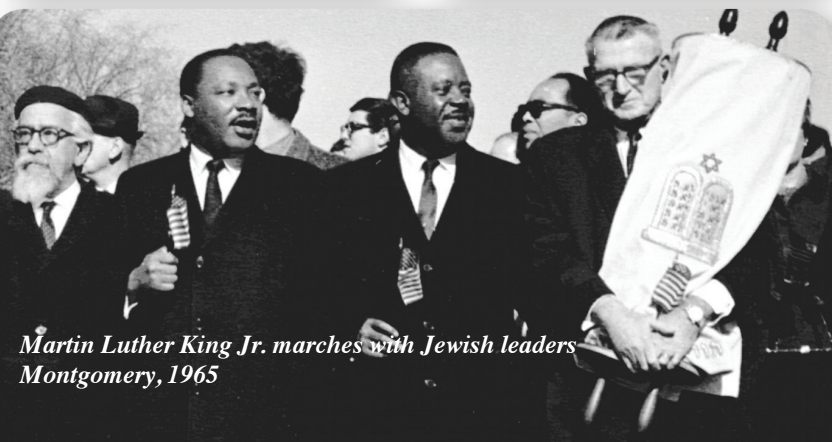
Jews and African Americans: The Civil Rights Movement
Jewish and African Americans have a long history of standing in solidarity with one another. Â As both cultures are victims of discrimination, oppression, stereotyping, etc. in America and globally, Jews in the United States were prominent allies of the civil rights movement.
Download

Violations of Freedom of Expression and Freedom of the Press Under the Palestinian Authority and Hamas
This report exposes the censorship on freedom of expression and freedom of press in the Palestinian territories. Journalists and citizens are restricted from speaking out on many topics, and areas such as politics and corruption are red line (forbidden) issues. The consequences of criticizing the reigning government can range on a spectrum from arbitrary arrest, torture and other abuses. Journalists are not protected by any body and therefore are constantly at risk.
While free press and speech are suppressed, hate speech and incitement of violence are common occurrences by Palestinian individuals and officials. Palestinian public bodies do not work to quell such actions, and in some ways political institutions encourage and sanction them. Even more so, journalists, religious leaders and government officials are at the core of spreading and promoting hate, antisemitism, and anti-Israel propaganda. With the rise in popularity of social media, the internet has become a main forum with which hate speech is circulated throughout the Palestinian community and disseminated world-wide.