
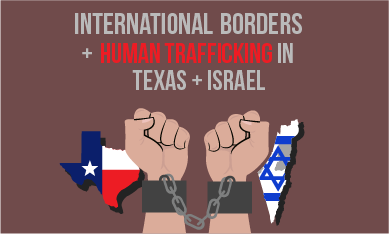
International Borders and Human Trafficking in Israel and Texas
Israel and Texas may not seem to have much in common upon initial thought. After all, the State of Texas is approximately 33 times the size of Israel, yet, both lands face human trafficking concerns due to their international borders. The Trafficking Victims Protection Act (TVPA) defines “severe human trafficking” as:
“sex trafficking in which a commercial sex act is induced by force, fraud, or coercion, or in which the person ... has not attained 18 years of age; or the recruitment, harboring, transportation, provision, or obtaining of a person for labor or services, through the use of force, fraud, or coercion ... A victim need not be physically transported from one location to another for the crime to fall within this definition.”
In Texas, the border with Mexico spans 1254 miles (2018 km) comprising the longest stretch of border with Mexico when compared to any other state. In comparison, Israel has 664 miles (1068 km) of border with 6 different border countries. Specifically, the Israel-Egypt border has a long history of human trafficking. This article explores both governments’ approaches to human trafficking and border security.
Texas
The State of Texas has battled with human trafficking across the Mexico border for decades. In fact, the U.S. Department of Justice estimates as many as one-quarter of all human trafficking victims pass through Texas. A University of Texas study found that there are 313,000 victims of human trafficking in Texas. Texas also houses the metroplex of Houston, which the Department of Justice has called the “most intense jurisdiction for trafficking in the U.S.”.
There are two primary factors that contribute to the issue of trafficking in Texas. The Mexico border, along with the major thoroughfares in Houston, the 4th largest city in the U.S., creates a prime environment for traffickers to smuggle humans into the United States. However, Texas has proven to be proactive in seeking to prosecute, prevent, and punish the crime of human trafficking. The U.S. Attorney Office for the Southern District of Texas, encompassing 44,000 square miles and 8.3 million people, “prosecutes more cases against defendants than any other United States Attorney Office nationwide.” Additionally, Texas has received a score of 94 and an “A” from Shared Hope International’s Protected Innocence Project report in 2016. Not surprisingly, Texas is not the only land faced with human trafficking concerns due to an international border.
Israel
Israel also experienced a major problem with human trafficking, especially in the 1990s when sex trafficking was rampant. Most victims of the sex trafficking epidemic were women from the Former Soviet Union who were exploited because of their poverty. A wake-up call came when the U.S. State Department placed Israel alongside Pakistan and Bahrain in Tier 3 of the annual Trafficking in Persons (TIP) Report in 2001. Tier 3 is the lowest possible level in the TIP Report and is an indication that a country is doing close to nothing to combat human trafficking within its borders. This spurred the Israeli authorities, along with anti-trafficking NGOs and advocates, to begin addressing the problem of trafficking. Between 2003 and 2005, Israel amended several laws to provide more support for trafficking victims, including legal representation and access to shelters. Israeli authorities also began to crack down on traffickers. As a result of their significant efforts to prevent and prosecute human trafficking, Israel was moved to Tier 2 of the TIP Report in 2002. The Knesset subcommittee on Combatting Human Trafficking and Prostitution chairwoman, Aliza Lavie, celebrated the improvements in the fight against modern-day slavery, however she noted that the progress “does not mean we can stop fighting.” Accordingly, a breakthrough in the fight against trafficking came with the construction of the southern border fence with Egypt.
Border Security by The Numbers
In 2013, Israel completed construction of a 150-mile (245 km) fence along its border with Egypt. The number of illegal crossers on the Israel-Egypt border dropped 99 percent after the construction of the fence, from more than 16,000 in 2011 to less than 20 in 2016. Israel spent $415 million ($2.9 million per mile) to construct the southern border fence and spends approximately $8.3 million annually ($58,000 per mile) to maintain the fence. For every 1.2 miles of fencing, Israel stations one person along its border with Egypt.
Although the United States does not have a complete border fence with Mexico, the U.S. has spent $2.3 billion to construct 654 miles of pedestrian and vehicle barrier fencing along the U.S.-Mexico border. Further, it costs the U.S. $50 to $55 million annually ($77,000 per mile) to maintain its 650 miles of fencing along the border with Mexico. This cost of maintenance is 33 percent more than Israel. Manpower is not neglected either, with approximately one person stationed for every 2.2 miles of the Mexico border. With these numbers in mind, a comparison of human trafficking in Texas and Israel is more easily understood.
Human Trafficking Today in Texas and Israel
In 2017, both the United States and Israel received a Tier 1 ranking in the U.S. Department of State’s TIP Report. Although Tier 1 is the highest level on the tier system, it does not mean there is no human trafficking in that country. Unfortunately, according to the Texas Department of Public Safety, the issue of trafficking is not going away any time soon. Notably, in the 2017 Texas Public Safety Threat Overview, trafficking is the fastest growing organized crime in Texas. Although Israel may no longer be a haven for sex traffickers, trafficking still exists. With the closed borders, traffickers now bring victims into Israel through the Ben Gurion International Airport in Tel Aviv. According to the Border Control Commissioner, over the past year and a half, 372 women have been stopped from entering through Ben Gurion Airport. Michal Yusupov, head of the Population Control Division, noted that the number of women attempting to enter Israel has increased in the past year. Even though all 372 women were prohibited from entering, it is likely that others have entered under the guise of tourism without being stopped. Even still, the 2017 TIP Report noted Israel’s “serious and sustained” efforts to eliminate trafficking. Some countries are now looking to Israel’s successful fight against trafficking to learn what strategies are most effective.
What Can Texas Learn From Israel
Reports supporting the building of a fence on the United States-Mexico border often use Israel’s success with the Israel-Egypt border fence as an example. Although the U.S., and especially Texas, can learn many important border security lessons from Israel due to the similarities in human trafficking, there are complications that are often forgotten in these reports. Take, for example, the sheer length of the U.S.-Mexico border which is drastic in comparison to the Israel-Egypt border. As previously mentioned, Israel’s border stretches approximately 150 miles, while just the Texas-Mexico border is over 1200 miles. Another complication arises from the fact that the U.S.-Mexico border runs alongside four states, all with varying opinions on border security. The bordering states of New Mexico and California both have laws that limit how local police interact with federal immigration agents—also known as sanctuary cities. The two other border states, Arizona and Texas, do not have such laws. This discrepancy makes a unified plan for border security difficult to draft and implement.
Despite the challenges, much progress can be made in U.S. border security based on Israel’s success when the beforementioned nuances are taken into consideration. For instance, technology has proven to be key in monitoring and capturing traffickers in Israel. Israel uses an array of technology including seismic sensors, radars, and balloons with cameras to reinforce its southern border fence. The Port Authority of Texas has taken note of Israel’s use of technology. In 2014, Texas contracted with an Israeli company, RADWIN, to use advanced cameras to monitor ports-of-entry into the United States. The modern tactic to combat human trafficking is combined governmental efforts and advanced technology. Texas may not be able to copy-cat Israel’s border fence; however, this does not mean the U.S. cannot use Israel as an example to find the most effective border security strategy unique to the Texas-Mexico border.

Petition to the International Association of Prosecutors
Petition to the International Association of Prosecutors
The Hague, September 2017
Dear members of the IAP Executive Committee and the Senate, dear members of the IAP,
In the run-up to the annual conference and general meeting of the International Association of Prosecutors (IAP) in Beijing, China, the undersigned civil society organisations urge the IAP to live up to its vision and bolster its efforts to preserve the integrity of the profession.
Increasingly, in many regions of the world, in clear breach of professional integrity and fair trial standards, public prosecutors use their powers to suppress critical voices.
In China, over the last two years, dozens of prominent lawyers, labour rights advocates and activists have been targeted by the prosecution service[1]. Many remain behind bars, convicted or in prolonged detention for legal and peaceful activities protected by international human rights standards, including the Universal Declaration of Human Rights. Azerbaijan is in the midst of a major crackdown on civil rights defenders, bloggers and journalists, imposing hefty sentences on fabricated charges in trials that make a mockery of justice[2]. In Kazakhstan, Russia and Turkey many prosecutors play an active role in the repression of human rights defenders, and in committing, covering up or condoning other grave human rights abuses[3].
Patterns of abusive practices by prosecutors in these and other countries ought to be of grave concern to the professional associations they belong to, such as the IAP. Upholding the rule of law and human rights is a key aspect of the profession of a prosecutor, as is certified by the IAP’s Standards of Professional Responsibility and Statement of the Essential Duties and Rights of Prosecutors, that explicitly refer to the importance of observing and protecting the right to a fair trial and other human rights at all stages of work[4].
Maintaining the credibility of the profession should be a key concern for the IAP. This requires explicit steps by the IAP to introduce a meaningful human rights policy. Such steps will help to counter devaluation of ethical standards in the profession, revamp public trust in justice professionals and protect the organisation and its members from damaging reputational impact and allegations of whitewashing or complicity in human rights abuses.
For the second year in a row, civil society appeals to the IAP to honour its human rights responsibilities by introducing a tangible human rights policy. In particular:
We urge the IAP Executive Committee and the Senate to:
- introduce human rights due diligence and compliance procedures for new and current members, including scope for complaint mechanisms with respect to institutional and individual members, making information public about its institutional members and creating openings for stakeholder engagement from the side of civil society and victims of human rights abuses[5].
We call on individual members of the IAP to:
- raise the problem of a lack of human rights compliance mechanisms at the IAP and thoroughly discuss the human rights implications before making decisions about hosting IAP meetings;
- identify relevant human rights concerns before travelling to IAP conferences and meetings and raise these issues with their counterparts from countries where politically-motivated prosecution and human rights abuses by prosecution authorities are reported by intergovernmental organisations and internationally renowned human rights groups.
Supporting organisations:
Africa Network for Environment and Economic Justice, Benin
Anti-Corruption Trust of Southern Africa, Kwekwe
Asian Forum for Human Rights and Development (FORUM-ASIA)
Asia Justice and Rights, Jakarta
Asia Indigenous Peoples Pact, Chiang Mai
Asian Human Rights Commission, Hong Kong SAR
Asia Monitor Resource Centre, Hong Kong SAR
Association for Legal Intervention, Warsaw
Association Humanrights.ch, Bern
Association Malienne des Droits de l'Homme, Bamako
Association of Ukrainian Human Rights Monitors on Law Enforcement, Kyiv
Associazione Antigone, Rome
Barys Zvozskau Belarusian Human Rights House in exile, Vilnius
Belarusian Helsinki Committee, Minsk
Bulgarian Helsinki Committee, Sofia
Canadian Human Rights International Organisation, Toronto
Center for Civil Liberties, Kyiv
Centre for Development and Democratization of Institutions, Tirana
Centre for the Development of Democracy and Human Rights, Moscow
Center for the Judiciary Watch of the People’s Solidarity for Participatory Democracy (PSPD), Seoul
China Human Rights Lawyers Concern Group, Hong Kong SAR
Civil Rights Defenders, Stockholm
Civil Society Institute, Yerevan
Citizen Watch, St. Petersburg
Collective Human Rights Defenders “Laura Acosta” International Organization COHURIDELA, Toronto
Comunidad de Derechos Humanos, La Paz
Coordinadora Nacional de Derechos Humanos, Lima
Destination Justice, Phnom Penh
East and Horn of Africa Human Rights Defenders Project, Kampala
Equality Myanmar, Yangon
Faculty of Law - University of Indonesia, Depok
Fair Trials, London
Federation of Equal Journalists, Almaty
Former Vietnamese Prisoners of Conscience, Hanoi
Free Press Unlimited, Amsterdam
Front Line Defenders, Dublin
Foundation ADRA Poland, Wroclaw
German-Russian Exchange, Berlin
Gram Bharati Samiti, Jaipur
Helsinki Citizens' Assembly Vanadzor, Yerevan
Helsinki Association of Armenia, Yerevan
Helsinki Foundation for Human Rights, Warsaw
Human Rights Center Azerbaijan, Baku
Human Rights Center Georgia, Tbilisi
Human Rights Embassy, Chisinau
Human Rights House Foundation, Oslo
Human Rights Information Center, Kyiv
Human Rights Matter, Berlin
Human Rights Monitoring Institute, Vilnius
Human Rights Now, Tokyo
Human Rights Without Frontiers International, Brussels
Hungarian Civil Liberties Union, Budapest
IDP Women Association "Consent", Tbilisi
IMPARSIAL, the Indonesian Human Rights Monitor, Jakarta
Index on Censorship, London
Indonesian Legal Roundtable, Jakarta
Institute for Criminal Justice Reform, Jakarta
Institute for Democracy and Mediation, Tirana
Institute for Development of Freedom of Information, Tbilisi
International Federation for Human Rights (FIDH)
International Partnership for Human Rights, Brussels
International Service for Human Rights, Geneva
International Youth Human Rights Movement
Jerusalem Institute of Justice, Jerusalem
Jordan Transparency Center, Amman
Justiça Global, Rio de Janeiro
Justice and Peace Netherlands, The Hague
Kazakhstan International Bureau for Human Rights and Rule of Law, Almaty
Kharkiv Regional Foundation Public Alternative, Kharkiv
Kosovo Center for Transparency, Accountability and Anti-Corruption - KUND 16, Prishtina
Kosova Rehabilitation Center for Torture Victims, Prishtina
Lawyers for Lawyers, Amsterdam
Lawyers for Liberty, Kuala Lumpur
League of Human Rights, Brno
Macedonian Helsinki Committee, Skopje
Masyarakat Pemantau Peradilan Indonesia (Mappi FH-UI), Depok
National Coalition of Human Rights Defenders, Kampala
Netherlands Helsinki Committee, The Hague
Netherlands Institute of Human Rights (SIM), Utrecht University, Utrecht
NGO "Aru ana", Aktobe
Pakistan Rural Workers Social Welfare Organization (PRWSWO), Bahawalpur
Pen International, London
Philippine Human Rights Advocates (PAHRA), Manila
Promo-LEX Association, Chisinau
Protection International, Brussels
Protection of Rights Without Borders, Yerevan
Public Association Dignity, Astana
Public Association "Our Right", Kokshetau
Public Fund "Ar.Ruh.Hak", Almaty
Public Fund "Ulagatty Zhanaya", Almaty
Public Verdict Foundation, Moscow
Regional Center for Strategic Studies, Baku/ Tbilisi
Socio-Economic Rights and Accountability Project (SERAP), Lagos
Stefan Batory Foundation, Warsaw
Suara Rakyat Malaysia (SUARAM), Petaling Jaya
Swiss Helsinki Association, Lenzburg
Transparency International Anti-corruption Center, Yerevan
Transparency International Austrian chapter, Vienna
Transparency International Česká republika, Prague
Transparency International Deutschland, Berlin
Transparency International EU Office, Brussels
Transparency International France, Paris
Transparency International Greece, Athens
Transparency International Greenland, Nuuk
Transparency International Hungary, Budapest
Transparency International Ireland, Dublin
Transparency International Italia, Milan
Transparency International Moldova, Chisinau
Transparency International Nederland, Amsterdam
Transparency International Norway, Oslo
Transparency International Portugal, Lisbon
Transparency International Romania, Bucharest
Transparency International Secretariat, Berlin
Transparency International Slovenia, Ljubljana
Transparency International España, Madrid
Transparency International Sverige, Stockholm
Transparency International Switzerland, Bern
Transparency International UK, London
UNITED for Intercultural Action the European network against nationalism, racism, fascism and in support of migrants, refugees and minorities, Budapest
United Nations Convention against Corruption Civil Society Coalition
Villa Decius Association, Krakow
Vietnam's Defend the Defenders, Hanoi
Vietnamese Women for Human Rights, Saigon
World Organisation Against Torture (OMCT)
Zimbabwe Lawyers for Human Rights, Harare
[1] As documented by a number of internationally renowned human rights organisations, including Human Rights Watch and the ICJ. See, for example, the HRW World Report 2017, China and Tibet, available at: https://www.hrw.org/world-report/2017/country-chapters/china-and-tibet; China: call for action at UN on lawyers and other human rights defenders, available at: https://www.icj.org/wp-content/uploads/2017/02/UN-HRC34-China-JointLetter-Advocacy-2017.pdf
[2] The Functioning of the Judicial System in Azerbaijan and its Impact on the Fair Trial of Human Rights Defenders, Helsinki Foundation for Human Rights and Netherlands Helsinki Committee 2016, available at: http://www.defendersorviolators.info/judiciary-in-azerbaijan.
[3] See, for example: Human Rights and the Professional Responsibility of Judges and Prosecutors in the Work of CCJE and CCPE. Observations to the CCJE-CCPE Joint Report on “Challenges for Judicial Independence and Impartiality in the Member States of the Council of Europe”, Netherlands Helsinki Committee and Helsinki Foundation for Human Rights 2017, available at: https://www.nhc.nl/assets/uploads/2017/06/20170331-Observations-to-CCJE-CCPE-Report.pdf
[4] Standards of Professional Responsibility and Statement of the Essential Duties and Rights of Prosecutors adopted by the International Association of Prosecutors on 23 April 1999.
[5] See, for example, Options for Promoting Human Rights Compliance by the International Association of Prosecutors, policy brief, October 2016.

Nikki Haley's for Human Rights!
How Nikki Haley’s Background and Beliefs Helped Foster Her Zionist Spirit
In the midst of the continuous storm of anti-Semitism and anti-Israel resolutions that have been produced by the United Nations over the last few decades, there is a light that is shining more brightly now than ever before. Nimrata “Nikki” Haley, the 29th US Ambassador to the UN, is the strong voice advocating for Israel and demanding the bias and hatred towards Israel from other countries must stop immediately. Born to Sikh Indian parents in South Carolina, Haley credits them with first instilling in her a sense of pride and gratitude about living in America. “Well, I am the daughter of Indian parents who reminded my brothers, my sister and me every day how blessed we were to live in this country,” said Haley in an interview at the 2017 AIPAC Convention.
After graduating Clemson University with a BA in Accounting, Haley went to work for her mother’s clothing company, Exotica International. After being involved in numerous executive boards in her community and town, Haley was elected to the South Carolina House of Representatives in January of 2005. She continued this role until January 2011, where she was elected the first female governor of South Carolina. In November of 2016, she was appointed by president-elect Donald Trump to be the 29th United States Ambassador to the UN; she was confirmed in January 2017.
During her career in politics, Haley’s strong Zionistic and pro-Israel stance have been a major focus of hers. While Haley was governor of South Carolina, she signed into law a bill to stop efforts of the Boycott, Divestment and Sanctions (BDS) movement. This legislation was the first of its kind on a statewide level. Haley also stated during the announcement of that bill, that "nowhere has the UN’s failure been more consistent and more outrageous than in its bias against our close ally Israel". As Ambassador, Haley has been extremely outspoken about the UN’s blatant bias against Israel and has been extremely vocal in her personal support and her representing the United States supporting Israel. This is a welcome change for many from the stance of former US Ambassador, Samantha Power, and the US’ decision to abstain from the voting of Resolution 2334.
Samantha Power, who was the 28th US Ambassador under the Obama administration, famously abstained from voting on Resolution 2334 in December 2016, which declared that the Israeli settlement building in the West Bank and East Jerusalem was illegal and violated international law. Power told the 15-member U.N. Security Council, “Israeli settlement activity in territories occupied in 1967 undermines Israel’s security, harms the viability of a negotiated two-state outcome, and erodes prospects for peace and stability in the region." It came as a surprise to many that the US would seemingly go against an ally by refusing to vote against the resolution, especially coming from the woman who said “I will stand up for Israel and work tirelessly to defend it” in her Senate confirmation hearing; the resolution passed with 14 votes for and one abstention, the US. Haley later called the decision to abstain “one of the lowest points in our country….when [Power] abstained, the entire Security Council, and the entire audience, got up and applauded, and Israel was sitting there….watching that. Think about what we just did to a friend. You don’t ever applaud in the Security Council. That never happens. It happened that day.”
Haley has unequivocally and steadfastly supported Israel as the voice of the United States to the UN; she has called the UN out on their bias towards Israel dozens of times, especially when the UN named Israel the country with the most human rights violations in March 2017, beating out Iran, Syria, Libya and North Korea. “You know, basically what it comes down to is I'm not there to play,” said Haley during the 2017 AIPAC Conference. “And what I wanted to make sure of was that the United States started leading again. And leading isn't saying and doing things when it's comfortable. Leading is saying and doing things when it's not comfortable.”
When pressed about how she came to have such a strong stance on Israel and how she became so outspoken about defending Israel, Haley said, “[T]he truth is, I have seen so many similarities between the Israeli culture and the Indian culture. We're very close-knit. We love our families. We have a strong work ethic. We believe in professionalism and philanthropy and giving back. It's very true. So that's all the good things.” India and Israel have shared many similarities in values and members of each country frequently visit the other. Around 40,000 Israelis, many of whom have just finished their required military service visit India annually and around 34,000 Indians visit Israel annually. According to a 2009 international study commissioned by the Israeli Foreign Ministry, the greatest level of sympathy towards Israel from a member of the international community can be found in India, with 58% of Indian respondents showing sympathy towards Israel. In 2015, opinion polls showed 70% of Indians had favorable views of Israel.
Others wonder if perhaps Haley’s conversion to Christianity helped further foster her Zionist feelings. When Haley wed her husband, Michael Haley, who was a Christian, they did both a Sikh and Christian ceremony. Haley said about her choice to convert to Christianity, “We chose Christianity because of the way we wanted to live our life and raise our children — it had nothing to do with me thinking there was anything wrong with the way I was raised, and everything to do with the fact that I am moving forward in my life and had to find a path I felt was right for me.” Many Christians do believe in Israel’s right to exist; these Christians are called “Christian Zionists.” Some Christian Zionists believe that the gathering of the Jews in Israel is a prerequisite for the Second Coming of Jesus. Christian Zionists interpret the prophetic texts as describing inevitable future events, and these events primarily involve Israel, meaning the descendants of Jacob, which are the Jewish people. These prophecies are seen as requiring the presence of Jewish people in the Holy Land; this requirement is sometimes interpreted as being fulfilled by the contemporary state of Israel.
Haley has not made a public comment on whether her Christian views have helped cultivate her support for Israel even more, but whatever Haley’s reasoning, there is no doubt Israel and the American Jews are thankful for Haley’s voice and for tossing her hat into the UN’s ring. “For anyone that says you can't get anything done at the U.N.,” Haley says, “they need to know there's a new sheriff in town.”
IDF Lone Soldiers
In Israel, whether you are sitting on a bus, waiting on line to buy a falafel, or simply walking down the street, you will almost always see men or women dressed in an olive green, tan or a blue uniform. These are the soldiers of the Israel Defense Forces. With about 177,000 soldiers on active duty, the IDF is comprised of a myriad of young men and women. About 6,300 of those are considered “lone soldiers,” or soldiers serving in the IDF that have no support or family ties in Israel. About 45% of “lone soldiers” come from other countries, and leave family and countless friends behind to serve the Jewish state. The other 50% of those lone soldiers are comprised of orphans, are from low-socioeconomic status, or least common, come from ultra-orthodox and Haredi backgrounds. These religious men and women volunteer to serve in the IDF and are then shunned and disowned by their families and communities.
It is a common belief amongst the ultra-Orthodox and Haredi sects of Judaism, that the state of Israel should not exist until the Messiah comes. Due to this belief, do not support an Israeli army. In their communities, the mentality is that men must rigorously study the Torah and religious texts all day while the women must support the men by working and taking care of the family. The leaders of the communities believe that going to the army stops the men from studying all day, which they believe is their obligation to God. Some Haredi’s go as far to say that joining the army is an “assault” on the Torah by the Israeli government. In addition to this view, some Haredim also claim that being in the army exposes ultra-Orthodox members to the “negative influences” of the secular world. In June of 2017, over 20,000 anti-Zionist Jews, mainly members of the Hasidic sect of Judaism, gathered in Brooklyn to express their outrage of the conscription of Haredi yeshiva students. Protestors spoke out against Israel’s arresting of individuals who resisted the compulsory draft mandate, claiming that their “brethren in Israel” were being persecuted and oppressed.
Those from the ultra-Orthodox community that do end up joining the IDF are often kicked out of their houses and are shunned by their families. One example of this is a young man, who spoke to Al-Monitor and asked not to divulge his name, revealed that six weeks before his draft date, his mother told him that if he did indeed choose to serve, he would have to leave the house. “When she understood that I was determined, he said, ‘Take your things and don’t ever come back.’ That’s what I did. I left with nothing and not knowing where I was going.” The young man tried to contact his mother during basic training, but she refused to answer him. During his basic training in the Givati Brigade, he continued to study Gemara and finished an entire treatise by the time he was inducted into the IDF. The fact he studied Gemara while in the army made his community even angrier.
The Lone Soldier Center in Memory of Michael Levin share more of these kinds of stories and tell the testimonies of the lone soldiers they have helped. Another story is of a young man, A., decided not go to yeshiva anymore when he was 12 years old and was taken in by a grandfather after being kicked out by his family. When his grandfather passed away, the only place for A. was on the street. Since he came from a long line of great rabbis, A. received some interaction while he was living on the streets; however, once he joined the army, the community cut off all communication with him.
About 400-600 Haredi or former Haredi soldiers who have no family ties come to the Lone Soldier Center yearly, needing help in various areas. “Many of these soldiers don’t know how to budget their money in the army, since they weren’t taught math beyond grade level,” says Lizzie Noach, the Project Coordinator for the Lone Soldier Center. “They don’t have a formal education; many come to see Tziki (Aud, the coordinator for at risk soldiers at the Lone Soldier Center) for help pre-army. They don’t really speak English and have poor Hebrew, as they only speak Yiddish at home and in yeshiva.” Additionally, Noach says the Ministry of Defense does not always give Israeli lone soldiers, “lone soldier” status to receive even the general funds and benefits that are given to all lone soldiers. To prove lone soldier status, one must provide paperwork proving that they have either have no family support in Israel, contact with any family members or that they are not receiving money from family members. However, for soldiers who either left home in their teens or were living on the streets before joining the army, this paperwork is non-existent, as there is no record of where they had been living prior.
It is common, coming from a religious background and religious education, that many of these ultra-Orthodox soldiers do not have general knowledge of basics of math, science, and technology among other things. Tens of thousands of men in the Haredi school system are not educated in math or science past a fourth grade level. Moshe Shenfeld, the head of Out for Change, an organization which assists former members of the Haredi community in educational and vocational training, reports that just 3-5% of boys who study in Haredi schools receive a full matriculation degree.
According to Out for Change, the government sets aside NIS 500 million a year to assist students from the ultra-Orthodox yeshivas, who are a part Haredi community, that want to further their education after their formal schooling is completed. These funds are used to set up courses from the Education Ministry to help such students fill the gaps in their education and receive a matriculation certificate, provide vocational training, and job training during their army service. However, this money is only for soldiers and those who are still a part of the Haredi community, who serve in religious units. The Netzah Yehuda Battalion, part of the Kfir Infantry Brigade, is one of the two strictly Haredi units in the IDF. Today, it is the largest battalion in the IDF with over 700 soldiers in four different companies and one elite counterterror squadron. Haredi soldiers typically spend two years serving and then one year completing high school completion exams and acquiring skills for a profession once they reentered civilian life. Netzah Yehuda offers resources to help these soldiers complete matriculation and pre-college studies. For soldiers who do not qualify for government tuition assistance, “Friends of Nahal Haredi” helps to subsidize costs of tuition for schools and programs that help Haredi soldiers complete their core education. However, they only help soldiers within that specific unit who do not qualify for assistance, and not infantry soldiers in general.
Soldiers who come from an ultra-Orthodox background who join other units that are designated to be religious or Haredi units, are also given financial assistance from the Ministry of Defense to complete their matriculation, as many of these soldiers do not have the requisite level of core education necessary to either enter university or become a member of the workforce post army service. Unfortunately, there are many other Haredi and ex-Haredi soldiers who do not get assistance at all, simply because they are not members of religious units.
Yossi Klar from, Out for Change says, “What the army does with Haredi soldiers is it gives them two things depending on age and route they take. If you’re younger than 21 and fit, then you are integrated into a Haredi infantry unit; there, the last eight months of your 2 year and 8 month service, are spent in school, completing your education, while if you are non-Haredi, or you used to be, you won’t get those 8 months for education. You have to serve those 8 months in full army service.”
The second route for Haredi soldiers, if you are over the age of 21, is integration into non-infantry units, where they are given jobs such as electricians and other technical jobs. “The army puts an emphasis on making sure every job they integrate to, they will find a job when they leave the army,” Klar says. “We used to call it ‘creditation.’ This is the credit you get from serving in the army, you come out with a job. To getting into a job in the Intelligence community, you need to have very high ratings in your tests before you go into the army, and ex-Orthodox people usually don’t have those ratings like non-Orthodox people because they did not have basic studies and those tests test basic studies in Israeli curriculum so they usually get very low grades. Haredi people are integrated even though they have low grades into any unit they want, and ex-Haredi people cannot do that, so the discrimination goes both ways.”
Soldiers who come from an ultra-Orthodox background who join other units that are deemed religious or Haredi, are given financial assistance from the Ministry of Defense to complete their matriculation, as many of these soldiers do not have the requisite level of core education necessary to either enter university or become a member of the workforce post army service. Unfortunately, there are many other Haredi and ex-Haredi soldiers who do not get assistance at all, simply because they are not members of religious units. The Ministry of Defense does not give the same financial assistance to religious soldiers in regular units as they would to religious soldiers in Haredi units due to the individual soldiers’ choice to not continue along the learning path, as many religious units set aside time for Torah learning.
It is an absolute travesty that the Ministry of Defense does not allot the same financial aid to the Haredi or former Haredi lone soldiers as they do to the ones serving in the religious units of the IDF, simply because they aren’t following the religious path of learning. They still lack the same core education as their religious unit counterparts and deserve the same kind of financial assistance to help them complete their high school matriculation after their army service is finished. JIJ is lobbying the government to help those who are no longer members of the Haredi community, but still suffer the same educational and vocational detriments as those who are still members. Nob profit organizations such as the Lone Soldier Center and Out for Change can only do so much; it is up to the government and the people to help make a change to help those that give up so much to help.

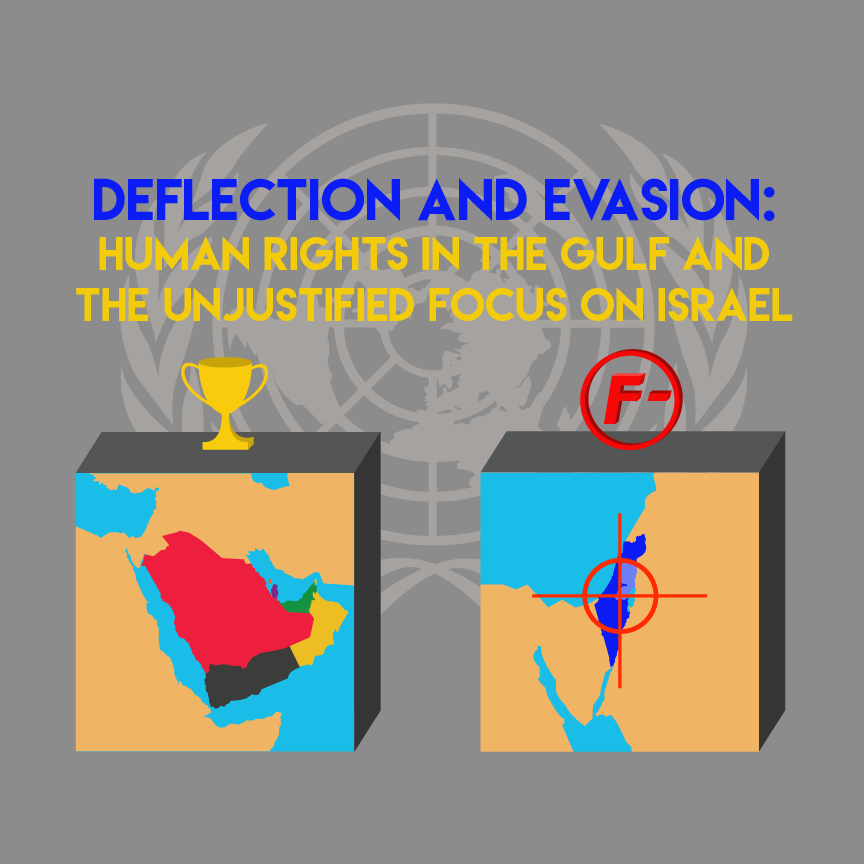
Deflection and Evasion: Human Rights in the Gulf
On March 15, 2006, the United Nations General Assembly established the United Nations Human Rights Council (hereafter UNHRC). This would replace the United Nations Commission on Human Rights, which had been heavily criticized for admitting to its membership the repressive regimes of countries such as China, Zimbabwe, Syria and Saudi Arabia.
So how far has the Council progressed? Surely after the upheaval and rebranding of an institution that had stood since 1946, a new wave of human rights advocacy and legitimacy would sweep the 193-member state organization.
Along with Qatar and the United Arab Emirates, the trusted old guard Saudi Arabia continues to enjoy a seat at the table.
At a time where the US is reportedly considering withdrawing its membership of the UNHRC due to its criticism of Israel, it behooves one to consider how Israel’s human rights record compares to that of Saudi Arabia, Qatar, and the UAE.
In regard to civil and political rights, otherwise termed as ‘the first wave' or 'first generation' of human rights, Israel boasts a significantly better record than that of its Gulf state counterparts. It does not practice the death penalty, with the last execution being that of Adolf Eichmann – the notorious Nazi convicted of war crimes, genocide, and crimes against humanity – in 1962. It is home to a diverse group of competing political parties, ranging from religious Zionist parties such as the Jewish Home Party to explicitly anti-Zionist parties such as Balad.
By contrast, due to the varying degrees to which their legal systems incorporate Sharia Law, these three Gulf nations all retain the practice of the death penalty for crimes as serious as murder to those as minor and dubious as apostasy, adultery and sodomy (homosexuality). Between January 1 2016 and July 27 2016, Saudi Arabia executed 108 people. In 2016, Freedom House rated the Kingdom’s political rights a score of 3/40 and their civil liberties a score of 7/60. Saudi citizens face criminal prosecution for political dissent, and the ban on political parties has virtually eliminated any opposition to the monarchy’s decrees. The most notable case is that of Saudi blogger Raif Badawi, who was sentenced to a flogging of 1000 lashes in 2014 for ‘insulting Islam’.
LGBT rights have rightly emerged as a preeminent concern for human rights activists. The Israeli legal system maintains strong protections for the rights of LGBT people. Consensual same-sex acts have been de facto legal since 1963 and formally legal since 1988. The concept of ‘sodomy’ has no legal validity or relevance within Israeli legal system. LGBT people are protected under the law from discrimination within society and the military, with violent crimes motivated by sexual orientation considered hate crimes and requiring double the punishment of regular violent crimes. Furthermore, same-sex couples are afforded extensive adoption rights.
The Gulf nations paint a very different picture of livability for LGBT people. Article 177 of the Dubai Penal Code states that consensual sodomy is punishable by up to 10 years in prison. Along with the near-identical Qatari policy, these procedures almost seem lenient when compared to that of Saudi Arabia. The Kingdom’s wahhabist ultra-conservatism views homosexuality as the ultimate deviancy, as well as what are perceived to be the related issues of transgender citizens and cross-dressing. The legal punishments for homosexual sex in Saudi Arabia include fines, prison sentences, floggings, chemical castration, torture and execution – often by beheading.
The Israeli-Gulf divide also occurs along the lines of women’s rights. Israel ranks 18th in the world in terms of gender equality according to the United Nations Development Program. Women are protected from discrimination under the law and have enjoyed prominent positions within Israeli society such as Prime Minister, President of the Supreme Court, Chairperson of the Reserve Bank and Major General. The Knesset’s Committee on the Status of Women has as its stated objectives: the prevention of discrimination, combatting violence against women, and promoting equality in politics, lifecycle events and education.
Conversely, women’s rights in Saudi Arabia are abysmal by international standards. The country ranked 134th globally in the World Economic Forum’s Global Gender Gap Report of 2015. Saudi law requires all women to have a male guardian in public and as such are not permitted to shop, conduct business or drive without a male companion. Saudi authorities also mandate draconian laws regarding the modesty of women’s clothing. Failure to comply with these laws can incur harassment from the Mutaween (religious police). Polygamy remains legal as does the marrying of child brides. In court, the testimony of one man equals that of two women. Domestic violence is a common occurrence, as is the denial of property and employment rights to women.
Although Israel defines itself as a Jewish and democratic state, it also guarantees freedom of religion to all its citizens. Christian, Muslim and Baha’i communities have jurisdiction over their own adherents in matters of marriage, divorce and burial. Synagogues, mosques, churches and khalwats (Druze prayer houses) can operate without fear of government intrusion or closure. Importantly, Israeli law does not prohibit leaving a religious group, otherwise known as ‘apostasy’.
In Qatar, the idea of religious freedom is at best illusory for its Muslim population. Under Articles 245-260 of the Qatari Law 11 of 2004, blasphemy and other insults or challenges to the doctrines of Islam are punishable by prison sentences, whilst the offence of apostasy is punishable by the death penalty. Apostasy is similarly punished in the UAE and Saudi Arabia. Saudi Arabia retains the more archaic beliefs of the Gulf trio, by prosecuting people for sorcery and witchcraft. It also tasks the Mutaween with enforcing Sharia law throughout the country. This involves reporting unrelated males and females who socialize, enforcing strict Islamic dress codes, enforcing Muslim dietary requirements, prohibiting people from proselytizing other religions and banning consumer products deemed to be un-Islamic.
As the nations of the world vote on 15 new members to the UNHRC at the convening of the General Assembly in September, two concerns should be at the forefront of their minds. Firstly, human rights are important and adherence to their norms requires constant introspection and critical self-examination. Their inalienability is an equalizer for people across the globe, be they rich or poor, black or white. They serve to allow people, among other things, the freedom to speak their mind and guard the dignity and liberty to which they are naturally entitled. Secondly, having a UNHRC characterized by hypocrisy ultimately undermines their principled mandate. Allowing repressive regimes like Qatar, the UAE and Saudi Arabia to deflect their horrendous records onto Israel is an exercise in evasion. Israel is an imperfect democracy; elevated by morality yet burdened with deficiencies. Nonetheless, we should set the bar higher than floggings, chemical castrations and beheadings.
A Sweet Victory Against BDS
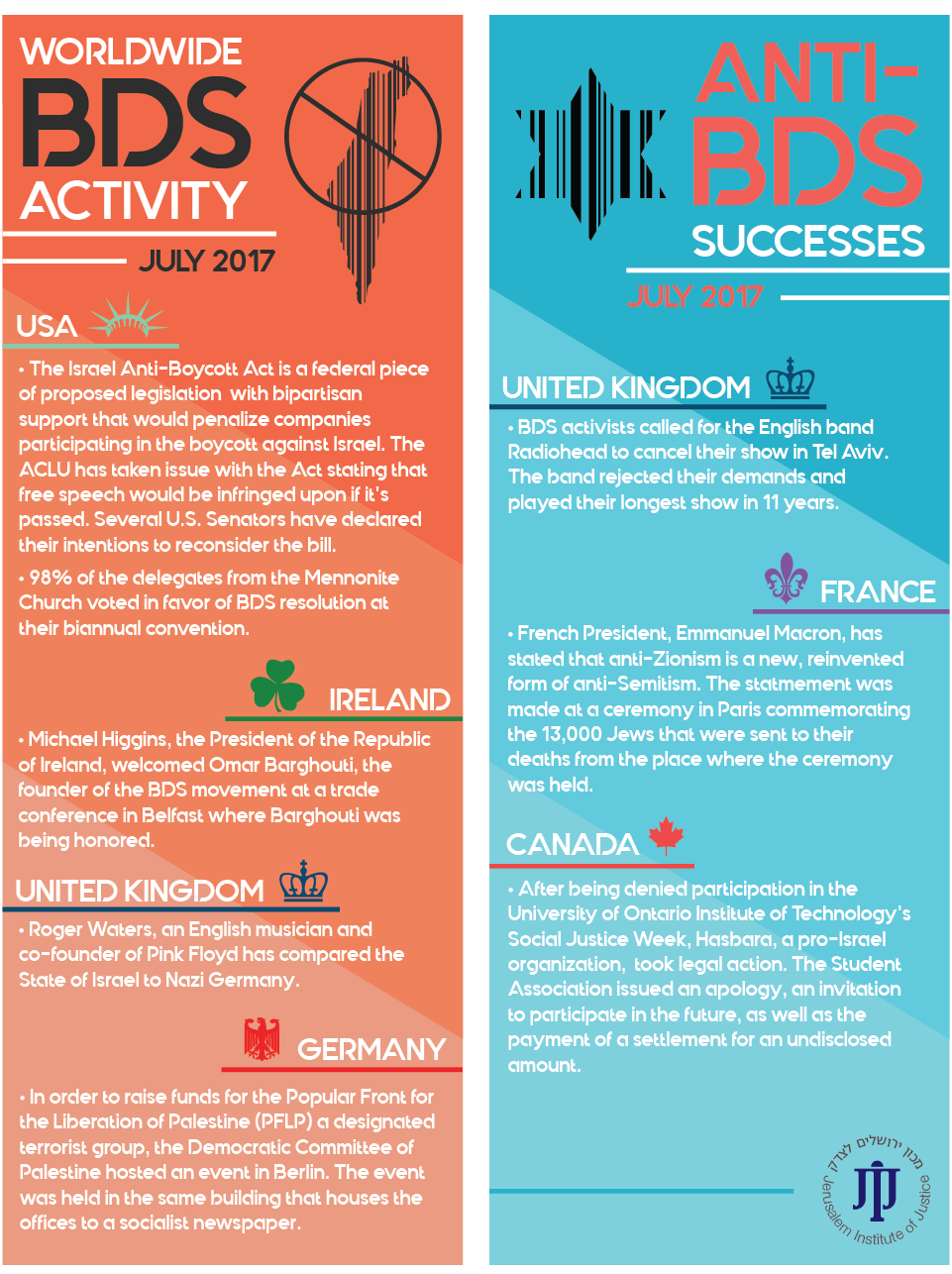
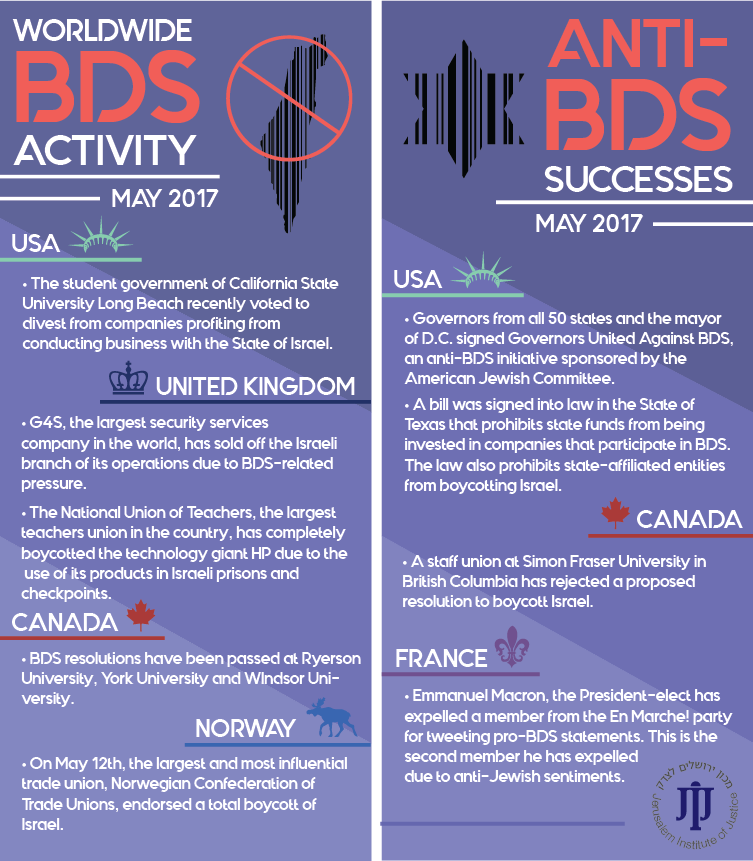
I would like to believe that most churches and Christian organizations, who buy into the BDS (Boycott, Divest, Sanction) movement against Israel, do not understand that they are embracing a campaign, which is driven by Islamic extremist ideology. The BDS campaign explicitly opposes the peace process and any dialogue with Israel. Anything short of the elimination of Jewish sovereignty in the Middle East is unacceptable to its leaders. They have been saying for over a decade that until 5.5 million descendants of Palestinian refugees are allowed to return to Israel, causing the Jews to become a minority and Muslims to become the majority, thus annulling Jewish government; until 450,000 Jewish citizens are expelled from their homes in Judea and Samaria, the heartland of Israel; and until a one-state solution called "Palestine" is created, the world should divest from Israeli companies, boycott Israeli professors and sanction Israel in every way.
The BDS movement consistently portrays Israel as worse than Hamas. When an extreme Islamic dictatorial terrorist organization is constantly portrayed as better than a Jewish democracy, you can be sure that anti-Semitism, rather than Palestinian human rights, is actually driving the agenda. When Israeli Jewish professors are boycotted by European universities and Israeli Arab professors are not, you can be sure that anti-Semitism, rather than Palestinian human rights, is actually driving the agenda. When companies owned by Jewish Israelis undergo divestment and companies owned by Arab Israelis do not, you can be sure that anti-Semitism, rather than Palestinian human rights, is actually driving the agenda.
It is nothing less than a fiasco that major Christian movements around the world, including the World Council of Churches, the United Methodist Church in the US, the Methodist Church of Great Britain, the United Church of Canada, the Presbyterian Church, the Episcopal Church, the Church of England and the United Church of Christ, have endorsed BDS, at least to the extent of boycotting products from companies active in Judea and Samaria. The Jerusalem Post published an article in April 2015 titled, "Israelis who Hate Israel and the Christians who Fund Them", covering two Israeli organizations, BADIL and Zochrot, which actively delegitimize the Jewish state and promote the complete right of return for all descendants of Palestinian refugees. These organizations have multi-million dollar budgets, 93% of which are funded by Christian organizations.
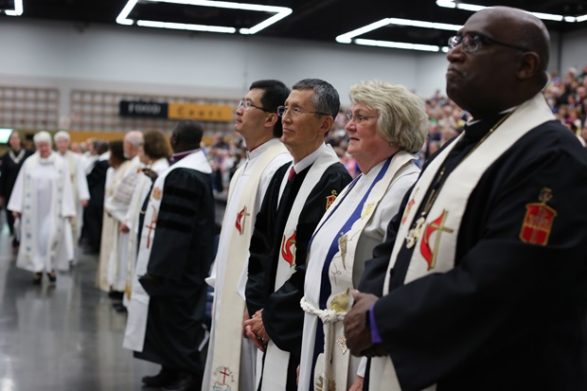
Two months ago, on the 17th of March, I had the privilege to share this perspective with a group of leaders from the United Methodist Church (UMC) in African nations. These African church leaders, who represent a significant voting bloc in the General Conference of the UMC, came to Israel to gather information and learn first-hand from people advancing human rights in our region, what is actually happening on the ground. After I spoke with this group in Jerusalem and had a very lively Q&A session, they unanimously promised me that they would squash the initiative of their General Conference to support BDS. I am thrilled to see that these honorable leaders fulfilled their promise. In an historic reversal, the UMC General Conference decided last week to reject four BDS resolutions. Apparently, for the time being, the UMC’s pension fund will not invest in Israeli banks, a direct result of a 2012 decision to support BDS; nevertheless, the decision last week was a step in the right direction.
Photo by Kathleen Barry, United Methodist News Service