

Joint kinetic operation - USA & Israel
Legal Justification for Preemptive Self-Defense: The February 28, 2026, Joint Operation
This position paper examines the February 28, 2026, joint kinetic operation conducted by Israel and the United States. It sets out the legal case for treating the operation as a lawful exercise of preemptive self-defense under Article 51 of the UN Charter in response to an imminent threat posed by Iran. Grounded in the Caroline test, ICJ jurisprudence, and relevant principles of international law, the paper argues that the operation was a measure of last resort, not an act of aggression
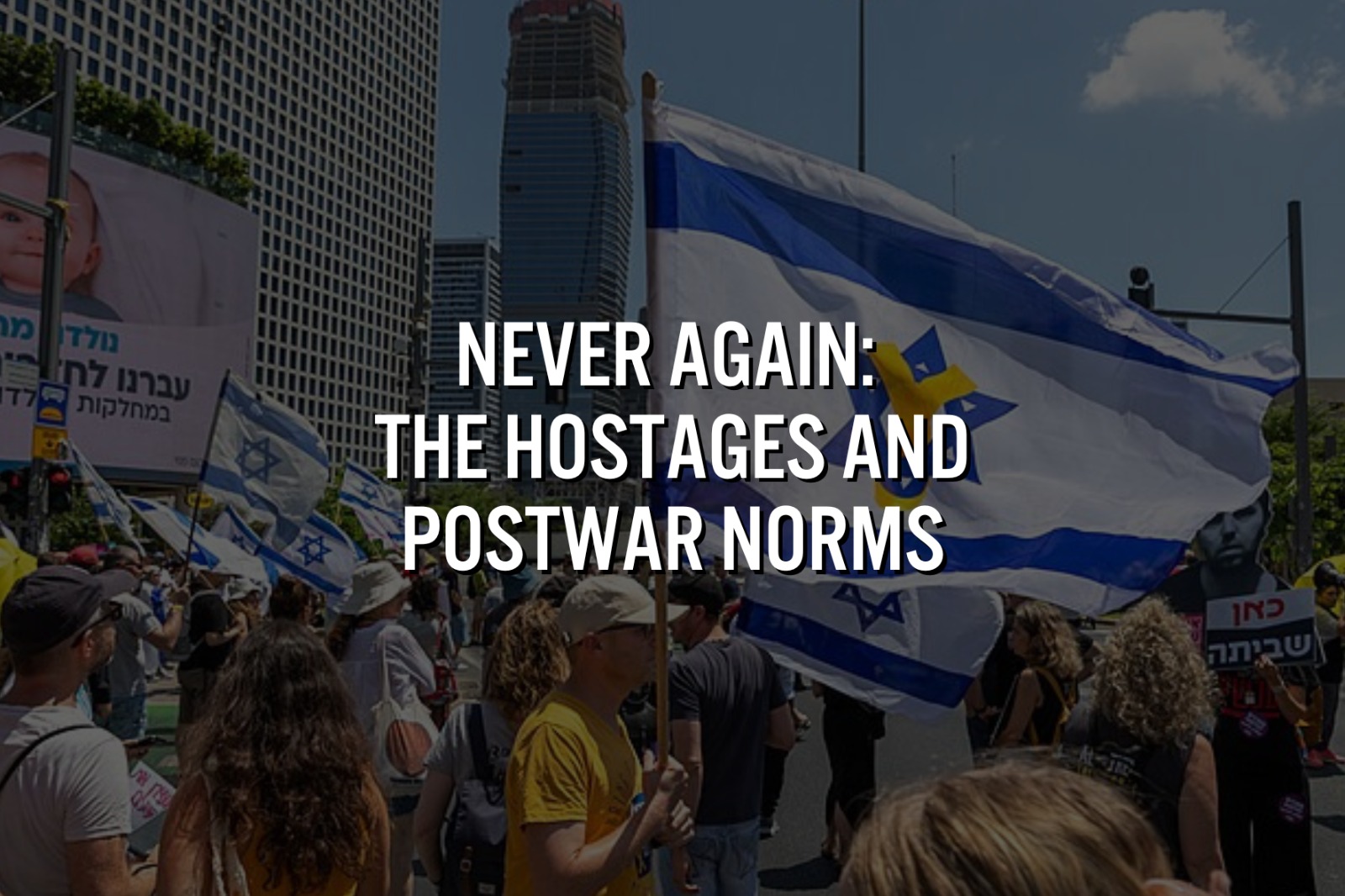
Never Again: The Hostages and Postwar Norms
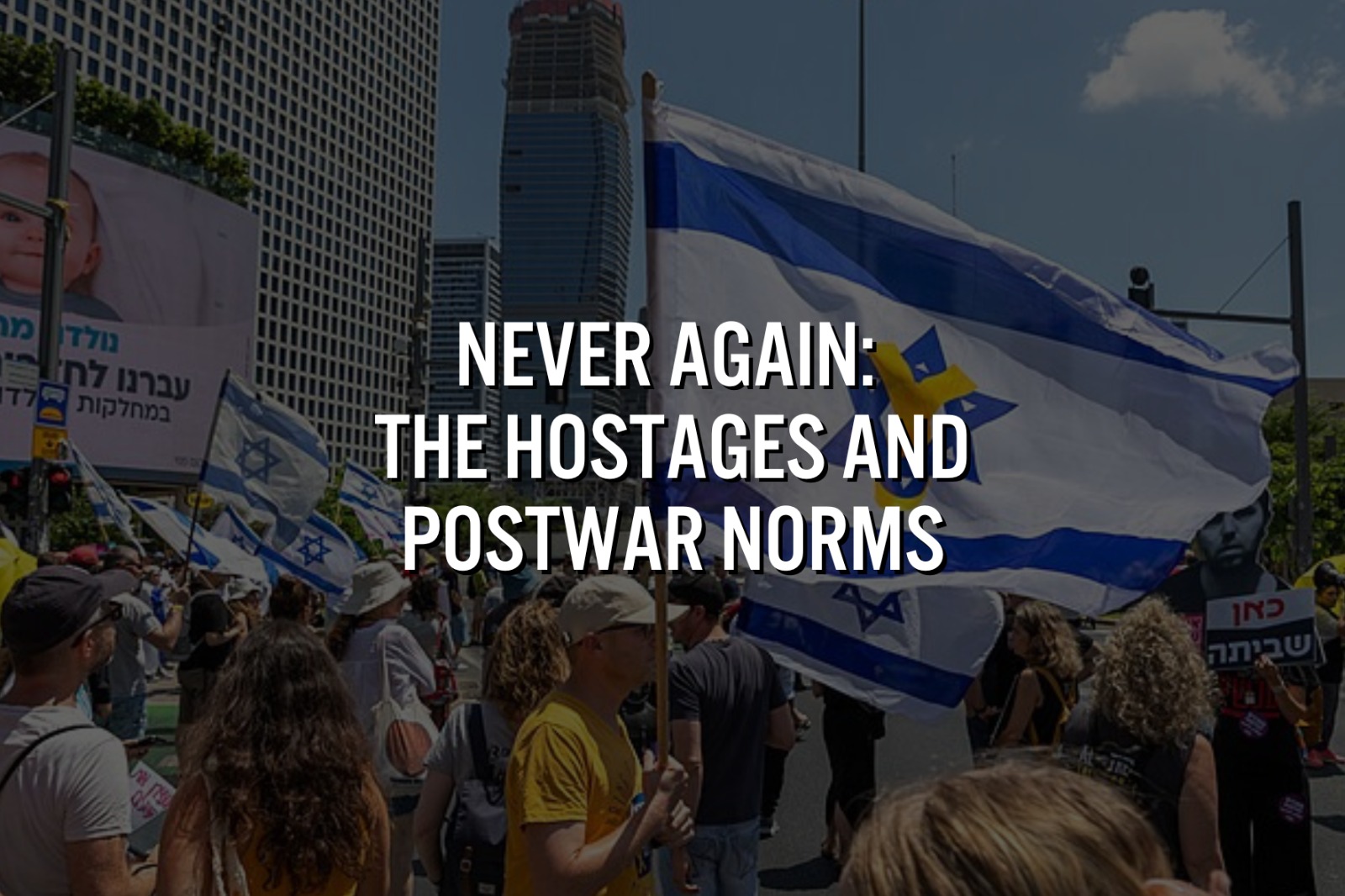
Gasps echoed through the aisles as the plane touched down in Tel Aviv, and passengers opened their phones for the first time in 12 hours. A man in front of me prayed. The first of the last twenty hostages had been freed! As we stood to exit the plane, all words were of the good news. You didn’t need to know Hebrew, French, or English to hear the exuberant joy and disbelieving relief in the voices.
Waiting for passport control, travelers stood in incredulous awe before the ubiquitous posters of hostages. In front of me in line, an African American tourist turned back to say, “I just feel Israeli today! Who wouldn’t, with a mood like this?” There were no taxis available as the visit by President Trump had shut the highway, but no one seemed to mind. I stopped to buy a train ticket, but an attendant batted me away. “No tickets today! No one should need tickets today!” He lifted the gate and waved me through.
Exiting the train in Tel Aviv, I was surrounded by people singing and dancing in the streets. The skyscrapers were covered in messages of thanksgiving. Hamas had, in their usual cruelty, stretched out the release of the hostages over the whole day, which meant that with each passing moment, there was new good news. Pushed along by the great crowd, I walked towards Hostage Square.
For the last two years, the question of the hostages– the two hundred and fifty-one innocent civilians of thirteen nations, kidnapped and tortured to instill fear in and extract concessions from a democratic state– has dominated Israel. But what nation would not be concerned with a hostage crisis of its own citizens on its own borders?
Significant international attention has been paid to the hostages, especially by Jews of the diaspora, including those with few or no ties to Israel. The horrific antisemitic attack on Boulder Jews this past summer highlighted a remarkable fact: in a small Colorado town, almost two years after the hostages were kidnapped, dozens were still marching weekly to raise awareness of their plight. Posters of the hostages hang across major American cities, patiently reposted after every antisemitic defacement. I met a man in rural New Hampshire who wore a dog tag reading “All of the hostages – now!” in Hebrew and English. He could not read Hebrew and had not attended a synagogue since his bar mitzvah fifty years before, but he felt compelled to keep raising awareness of the plight of the hostages.
It is tempting to argue that this sustained wave of activism by American Jews is nothing new. The majority of American Jews have always been supportive of both Israel and the plight of international Jews. But the attention and empathy paid by American Jews to the hostage crisis represent something deeper.
The postwar international order has been predicated on the mantra: ‘never again.’ Never again must civilians live in fear of kidnapping, torture, and abuse. We have not fully lived up to that dream, yet it persists, especially in Jews who have often been the victims of lawless regimes and irrational hate. Hamas’s kidnapping of the hostages represents a direct blow to that postwar order. Standing for the hostages was not just an act of solidarity by diaspora Jews. It was a defense of the rule of law, state authority, and democratic responsibility. If Hamas could take Jews in Israel hostage, civilians everywhere were at risk. But if the hostages were safe, all civilians of all nations would be safe.
Back in Hostage Square in Tel Aviv, hundreds of thousands had pressed into the square and the surrounding streets. Many were weeping. Others knelt on the ground, unable to stand from emotion. They were celebrating the return of twenty innocent human beings made to endure horrors. But they were also celebrating the return of a sense of dignity and justice that Hamas had robbed not just Israel, but the world of. Back in America, I am sure, they are celebrating the same thing.
By a JIJ Intern
Never Again: The Hostages and Postwar Norms
Gasps echoed through the aisles as the plane touched down in Tel Aviv, and passengers opened their phones for the first time in 12 hours. A man in front of me prayed. The first of the last twenty hostages had been freed! As we stood to exit the plane, all words were of the good news. You didn’t need to know Hebrew, French, or English to hear the exuberant joy and disbelieving relief in the voices.
Waiting for passport control, travelers stood in incredulous awe before the ubiquitous posters of hostages. In front of me in line, an African American tourist turned back to say, “I just feel Israeli today! Who wouldn’t, with a mood like this?” There were no taxis available as the visit by President Trump had shut the highway, but no one seemed to mind. I stopped to buy a train ticket, but an attendant batted me away. “No tickets today! No one should need tickets today!” He lifted the gate and waved me through.
Exiting the train in Tel Aviv, I was surrounded by people singing and dancing in the streets. The skyscrapers were covered in messages of thanksgiving. Hamas had, in their usual cruelty, stretched out the release of the hostages over the whole day, which meant that with each passing moment, there was new good news. Pushed along by the great crowd, I walked towards Hostage Square.
For the last two years, the question of the hostages– the two hundred and fifty-one innocent civilians of thirteen nations, kidnapped and tortured to instill fear in and extract concessions from a democratic state– has dominated Israel. But what nation would not be concerned with a hostage crisis of its own citizens on its own borders?
Significant international attention has been paid to the hostages, especially by Jews of the diaspora, including those with few or no ties to Israel. The horrific antisemitic attack on Boulder Jews this past summer highlighted a remarkable fact: in a small Colorado town, almost two years after the hostages were kidnapped, dozens were still marching weekly to raise awareness of their plight. Posters of the hostages hang across major American cities, patiently reposted after every antisemitic defacement. I met a man in rural New Hampshire who wore a dog tag reading “All of the hostages – now!” in Hebrew and English. He could not read Hebrew and had not attended a synagogue since his bar mitzvah fifty years before, but he felt compelled to keep raising awareness of the plight of the hostages.
It is tempting to argue that this sustained wave of activism by American Jews is nothing new. The majority of American Jews have always been supportive of both Israel and the plight of international Jews. But the attention and empathy paid by American Jews to the hostage crisis represent something deeper.
The postwar international order has been predicated on the mantra: ‘never again.’ Never again must civilians live in fear of kidnapping, torture, and abuse. We have not fully lived up to that dream, yet it persists, especially in Jews who have often been the victims of lawless regimes and irrational hate. Hamas’s kidnapping of the hostages represents a direct blow to that postwar order. Standing for the hostages was not just an act of solidarity by diaspora Jews. It was a defense of the rule of law, state authority, and democratic responsibility. If Hamas could take Jews in Israel hostage, civilians everywhere were at risk. But if the hostages were safe, all civilians of all nations would be safe.
Back in Hostage Square in Tel Aviv, hundreds of thousands had pressed into the square and the surrounding streets. Many were weeping. Others knelt on the ground, unable to stand from emotion. They were celebrating the return of twenty innocent human beings made to endure horrors. But they were also celebrating the return of a sense of dignity and justice that Hamas had robbed not just Israel, but the world of. Back in America, I am sure, they are celebrating the same thing.
By a JIJ Intern
Navigating Rehabilitation Benefits: Israel’s Ministry of Defense
How to Properly Prepare Your Claim to the Rehabilitation Department of Israel’s Ministry of Defense
When applying to the Rehabilitation Department of Israel’s Ministry of Defense, the first steps are critical. Even a small mistake at the outset can jeopardize recognition of your injury — and with it, access to treatment, rehabilitation, and compensation.
At the Jerusalem Institute of Justice, our legal team has extensive experience guiding veterans, reservists, and their families through this complex process. Below, we outline the key principles every applicant should know.
1. Prepare Your Medical Documentation
Israeli law requires anyone injured during military service or reserve duty to provide up-to-date medical documentation that clearly describes the condition.
For psychological injuries such as post-traumatic stress disorder (PTSD), this means obtaining an official diagnosis from a psychiatrist that explicitly states PTSD as a recognized medical condition. Without this documentation, the recognition process cannot even begin.
2. Injury Recognition – The Foundation of the Process
The first stage of filing a claim is injury recognition. At this stage, the Ministry of Defense decides whether your injury will be acknowledged as service-related.
If recognition is denied, the case will not advance to the medical board, blocking any chance of further evaluation. Because of this, precision and legal accuracy at this stage are essential.
3. Preparing for a PTSD Evaluation
PTSD must be recognized as an independent medical condition under Israeli law. Not every complaint will result in recognition.
Your symptoms must be presented in line with clinical diagnostic criteria. Knowing which symptoms matter, and how to describe them, is critical. Consulting both a lawyer and a PTSD specialist can make the difference between approval and rejection.
4. Professional Guidance Is the Key to Success
Every Israeli citizen has the right to apply for rehabilitation if the injury is service-related. However, the outcome depends largely on how the case is presented.
At JIJ, our lawyers provide full guidance at every step — from gathering medical records to preparing for the medical board. Our mission is to ensure your claim is submitted with clarity, accuracy, and confidence.
Conclusion
The recognition process is as much legal as it is medical. Proper preparation and professional guidance often determine whether a claim succeeds or fails.
At JIJ, we provide this legal support completely free of charge, ensuring that every soldier and veteran can access the rehabilitation and justice they deserve.
Navigating Rehabilitation Benefits: Israel’s Ministry of Defense
How to Properly Prepare Your Claim to the Rehabilitation Department of Israel’s Ministry of Defense
When applying to the Rehabilitation Department of Israel’s Ministry of Defense, the first steps are critical. Even a small mistake at the outset can jeopardize recognition of your injury — and with it, access to treatment, rehabilitation, and compensation.
At the Jerusalem Institute of Justice, our legal team has extensive experience guiding veterans, reservists, and their families through this complex process. Below, we outline the key principles every applicant should know.
1. Prepare Your Medical Documentation
Israeli law requires anyone injured during military service or reserve duty to provide up-to-date medical documentation that clearly describes the condition.
For psychological injuries such as post-traumatic stress disorder (PTSD), this means obtaining an official diagnosis from a psychiatrist that explicitly states PTSD as a recognized medical condition. Without this documentation, the recognition process cannot even begin.
2. Injury Recognition – The Foundation of the Process
The first stage of filing a claim is injury recognition. At this stage, the Ministry of Defense decides whether your injury will be acknowledged as service-related.
If recognition is denied, the case will not advance to the medical board, blocking any chance of further evaluation. Because of this, precision and legal accuracy at this stage are essential.
3. Preparing for a PTSD Evaluation
PTSD must be recognized as an independent medical condition under Israeli law. Not every complaint will result in recognition.
Your symptoms must be presented in line with clinical diagnostic criteria. Knowing which symptoms matter, and how to describe them, is critical. Consulting both a lawyer and a PTSD specialist can make the difference between approval and rejection.
4. Professional Guidance Is the Key to Success
Every Israeli citizen has the right to apply for rehabilitation if the injury is service-related. However, the outcome depends largely on how the case is presented.
At JIJ, our lawyers provide full guidance at every step — from gathering medical records to preparing for the medical board. Our mission is to ensure your claim is submitted with clarity, accuracy, and confidence.
Conclusion
The recognition process is as much legal as it is medical. Proper preparation and professional guidance often determine whether a claim succeeds or fails.
At JIJ, we provide this legal support completely free of charge, ensuring that every soldier and veteran can access the rehabilitation and justice they deserve.
Fighting for Families of Children with Severe Disabilities
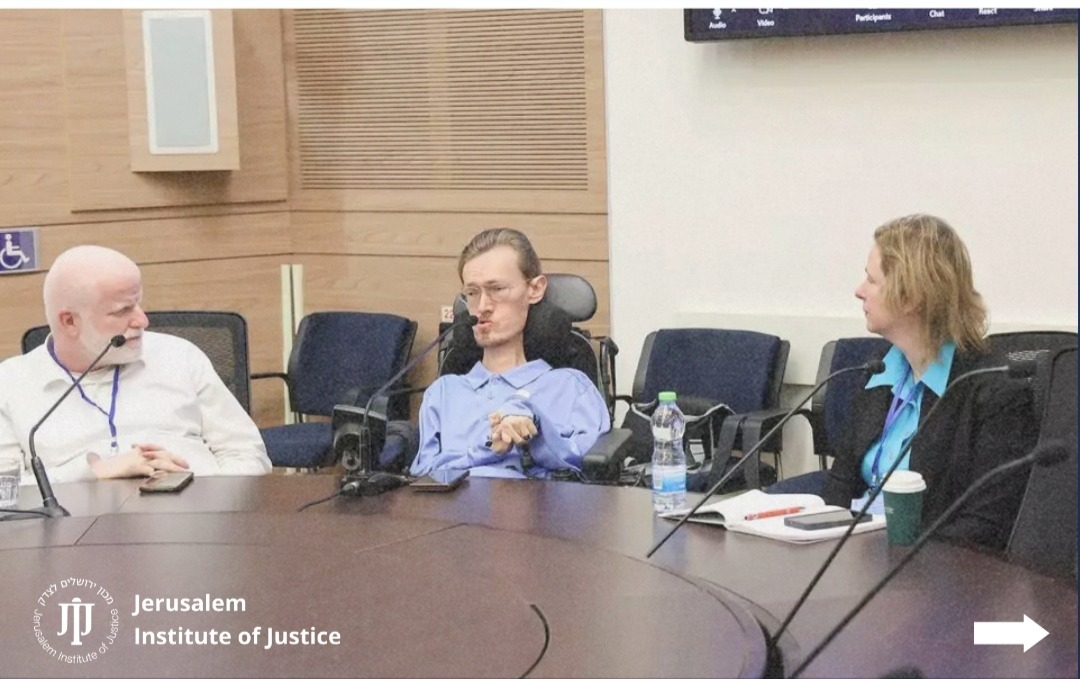
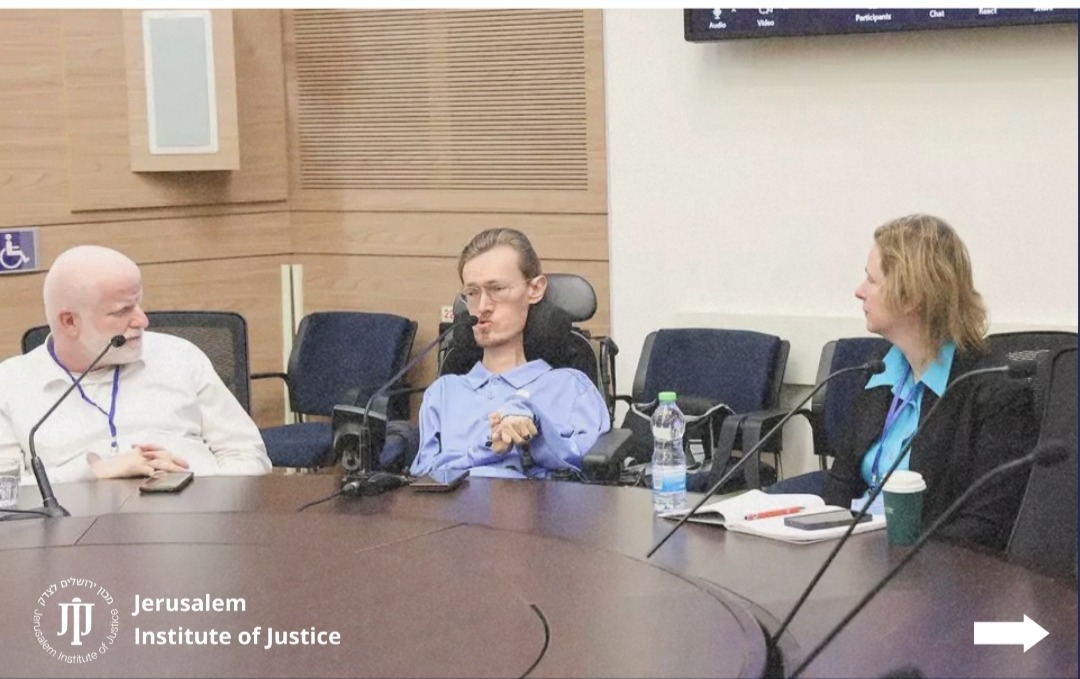
One of Israel’s most urgent social crises: the struggles facing families of children with severe disabilities. JIJ attorneys recently took part in a special Knesset committee addressing this issue. The discussion, chaired by MK Hava Eti Atia, revealed the depth of the problem—parents left without essential state support, battling every day to provide around-the-clock care.
Testimonies from parents were heartbreaking. Many spoke of foreign caregivers suddenly resigning, stipends that do not cover even basic needs, and a complete lack of a backup system when help disappears overnight. Despite years of promised reforms, families continue to face impossible choices, carrying alone the weight of responsibility that should be shared by society and the state.
JIJ’s Legal Aid Department is now preparing a petition to Israel’s High Court of Justice, demanding structural change. Our goal is clear: to secure lasting solutions so that no family raising a child with severe disabilities is left abandoned.
As Adv. Gai Akoka of JIJ emphasized: “Protecting these families is not a matter of charity — it is a matter of rights, justice, and human dignity.”
Through our legal advocacy, we aim not only to highlight this crisis but to ensure that the voices of these families lead to real reform. Justice cannot wait.
Fighting for Families of Children with Severe Disabilities
One of Israel’s most urgent social crises: the struggles facing families of children with severe disabilities. JIJ attorneys recently took part in a special Knesset committee addressing this issue. The discussion, chaired by MK Hava Eti Atia, revealed the depth of the problem—parents left without essential state support, battling every day to provide around-the-clock care.
Testimonies from parents were heartbreaking. Many spoke of foreign caregivers suddenly resigning, stipends that do not cover even basic needs, and a complete lack of a backup system when help disappears overnight. Despite years of promised reforms, families continue to face impossible choices, carrying alone the weight of responsibility that should be shared by society and the state.
JIJ’s Legal Aid Department is now preparing a petition to Israel’s High Court of Justice, demanding structural change. Our goal is clear: to secure lasting solutions so that no family raising a child with severe disabilities is left abandoned.
As Adv. Gai Akoka of JIJ emphasized: “Protecting these families is not a matter of charity — it is a matter of rights, justice, and human dignity.”
Through our legal advocacy, we aim not only to highlight this crisis but to ensure that the voices of these families lead to real reform. Justice cannot wait.
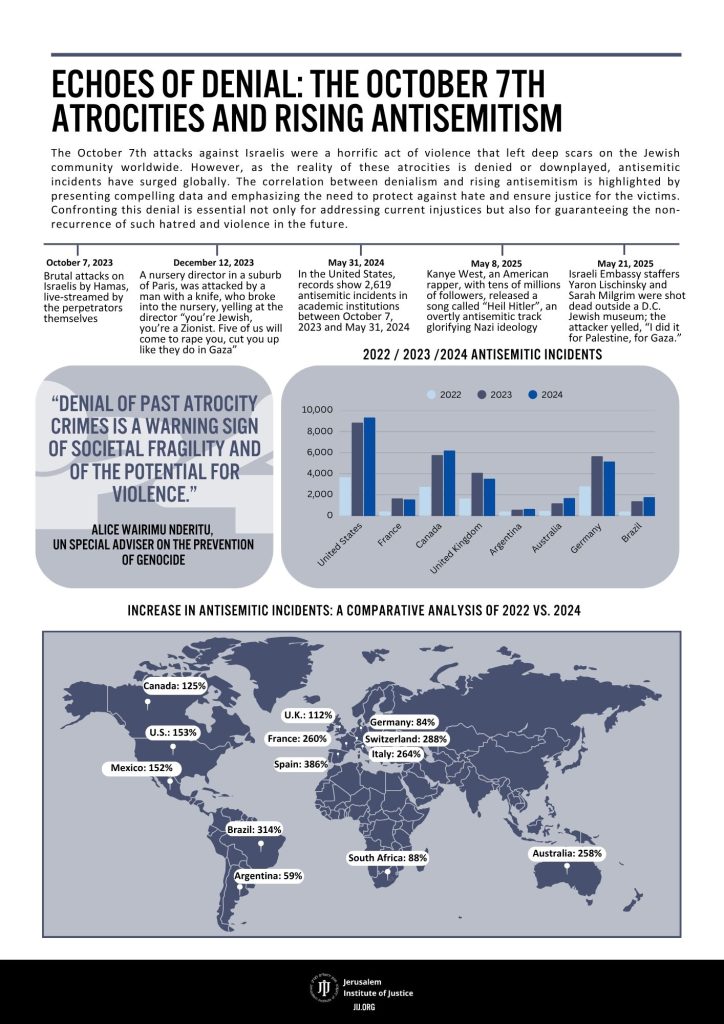
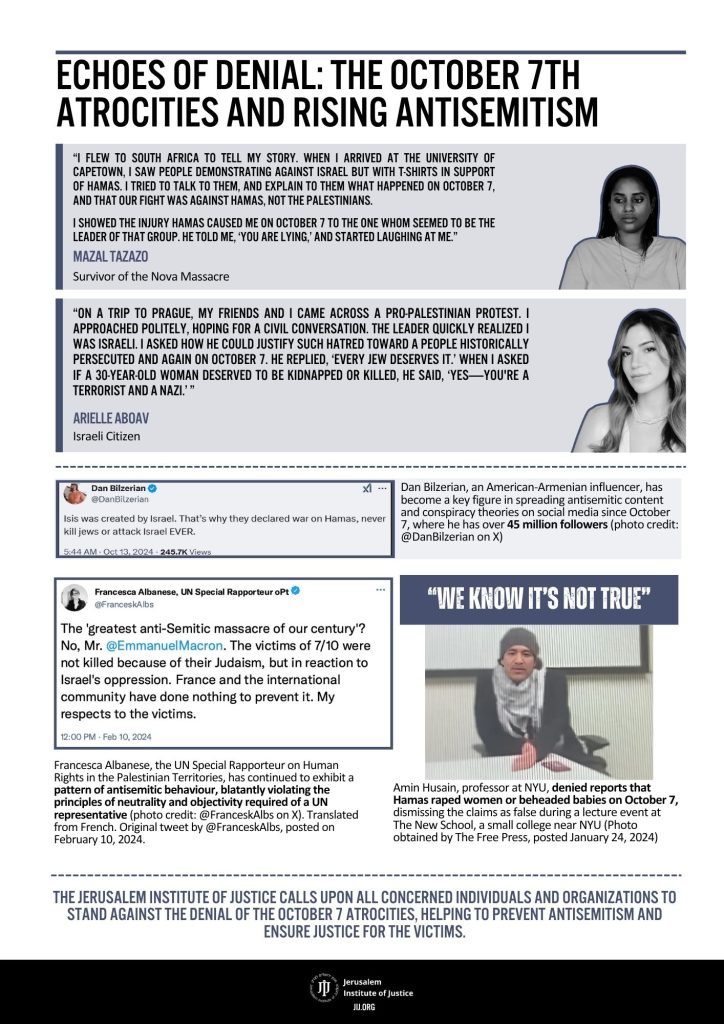
2025 - Echoes of Denial - FactSheet
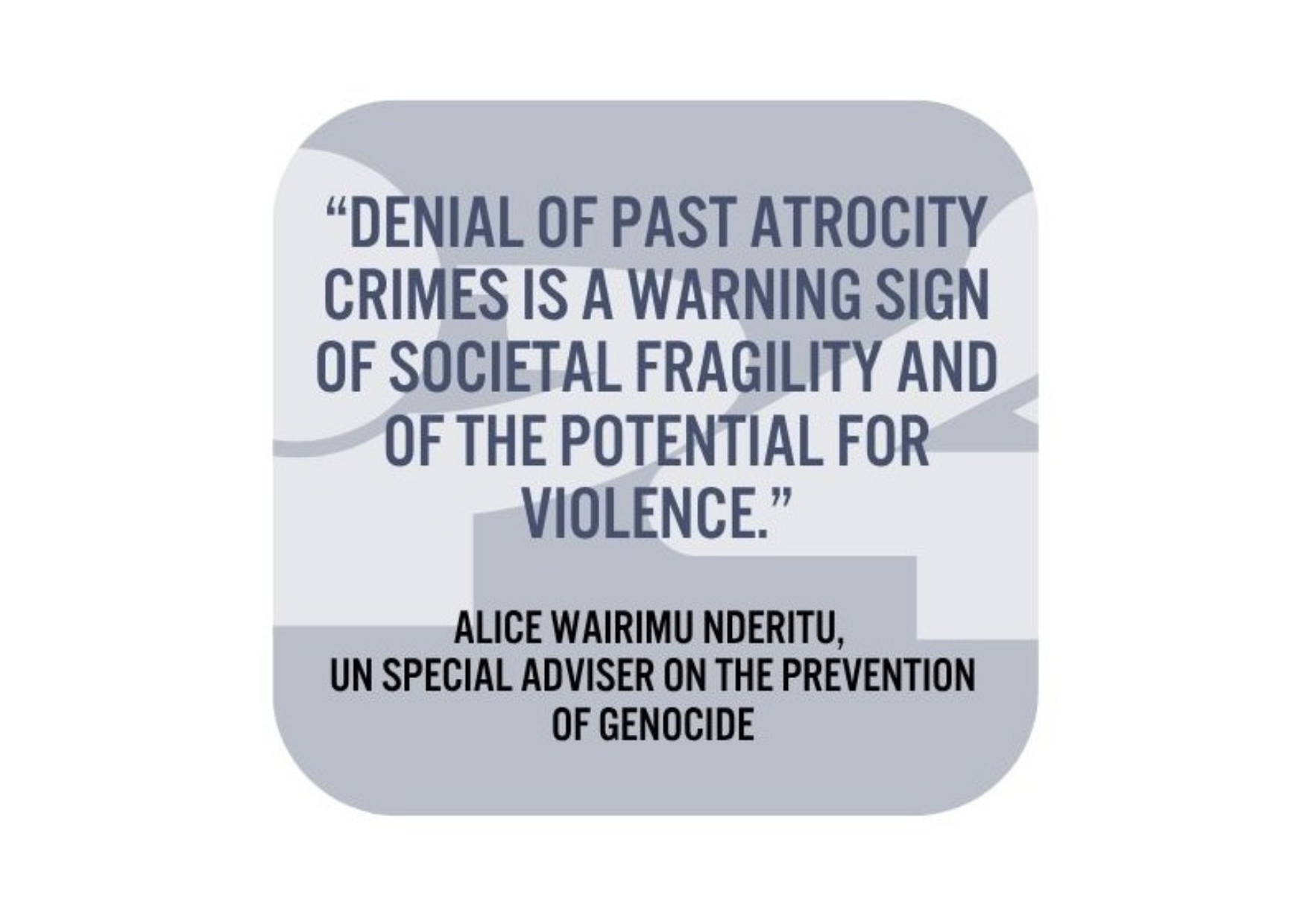
The October 7th Atrocities and Rising Antisemitism
The October 7th attacks against Israelis were a horrific act of violence that left deep scars on the Jewish community worldwide. However, as the reality of these atrocities is denied or downplayed, antisemitic incidents have surged globally. The correlation between denialism and rising antisemitism is highlighted by presenting compelling data and advocating for legislation and resolutions that prohibit the denial of such events to protect against hate and ensure justice for the victims. Enacting such laws is vital not only for addressing current injustices but also for guaranteeing the non-recurrence of such hatred and violence in the future. Download factsheet here.