
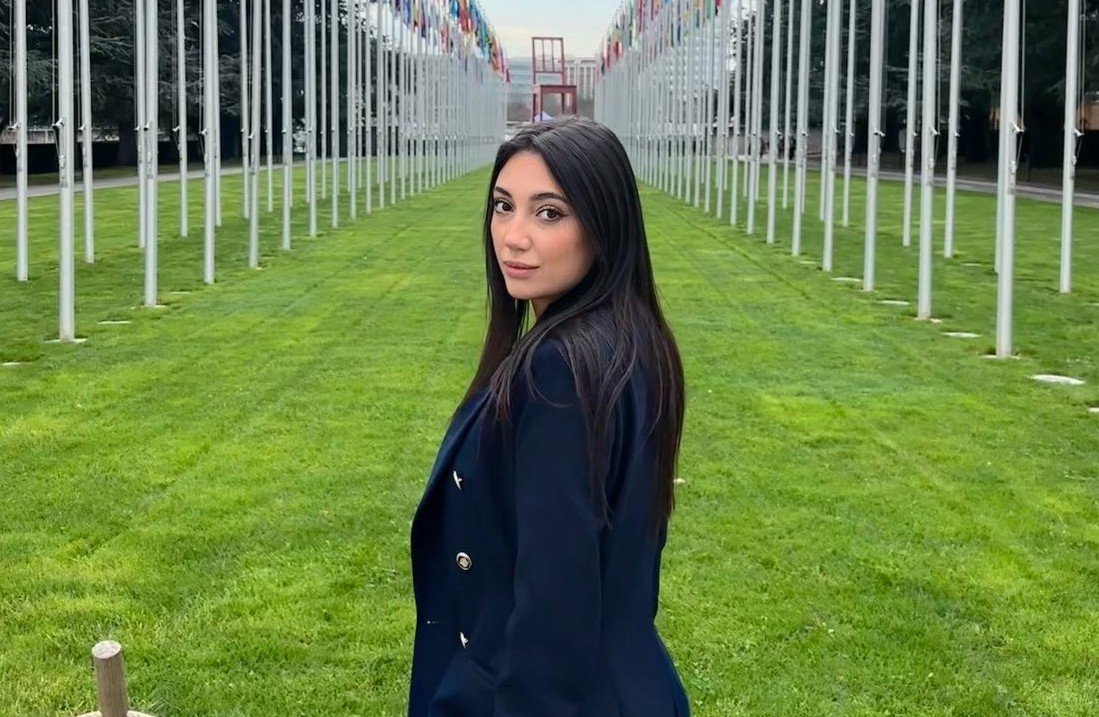
From Terror to Triumph: Nova Festival Survivor Yuval Raphael to Represent Israel at Eurovision 2025
https://www.youtube.com/watch?v=Q3BELu4z6-U&t=184s
https://youtu.be/kaYR8o8uoXs
In a powerful testament to resilience and healing through art, Yuval Raphael, one of the survivors featured in the upcoming documentary SATURDAY October 7, has been selected to represent Israel at Eurovision 2025.
Many know Yuval's harrowing story from October 7th, 2023. That morning, she and her friends attended the Nova Music Festival near Re'im, Israel. When Hamas terrorists attacked, Yuval found herself trapped in a roadside bomb shelter with dozens of others. For eight horrifying hours, she had to play dead among the deceased as terrorists repeatedly returned to spray the shelter with gunfire and grenades.
Only 11 people in that shelter survived.
In the documentary, Yuval shares the devastating details of that day - the initial confusion as rockets filled the sky, the moment they realized terrorists had infiltrated the festival grounds, and the unbearable hours spent in silence, wondering if each breath would be her last.
Her testimony provides crucial firsthand evidence of the events of October 7th.
What makes her Eurovision selection particularly moving is that prior to competing on HaKokhav HaBa (The Next Star), Yuval had never performed professionally.
The 24-year-old from Ra'anana was known for being shy about her voice. Yet somehow, in the aftermath of unimaginable trauma, she found the courage not only to speak out about what happened, but to sing.
Yuval will perform a song featuring Hebrew lyrics, to be selected internally and announced in March 2025. The decision to reveal her selection early allows songwriters to create music that resonates with both her voice and her powerful story.
Her journey from surviving one of Israel's darkest days to representing her country on Europe's biggest musical stage serves as an inspiration. It reminds us that even in the wake of horror, the human spirit can find its voice - sometimes quite literally.
We look forward to supporting Yuval as she shares her artistry with the world at Eurovision 2025.
Her presence on that stage will represent not just Israel, but the triumph of hope over hatred, and the enduring power of music to heal. To learn more about the documentary SATURDAY October 7, visit https://saturdayoct7.com or click the button below.
Note: SATURDAY October 7 is currently being selected for film festivals all around the world and will then be released to the public later this year. The documentary features testimonies from seven survivors of the October 7th attacks, including Yuval Raphael, as they seek justice and work to ensure such atrocities never happen again.

A New Rivalry?
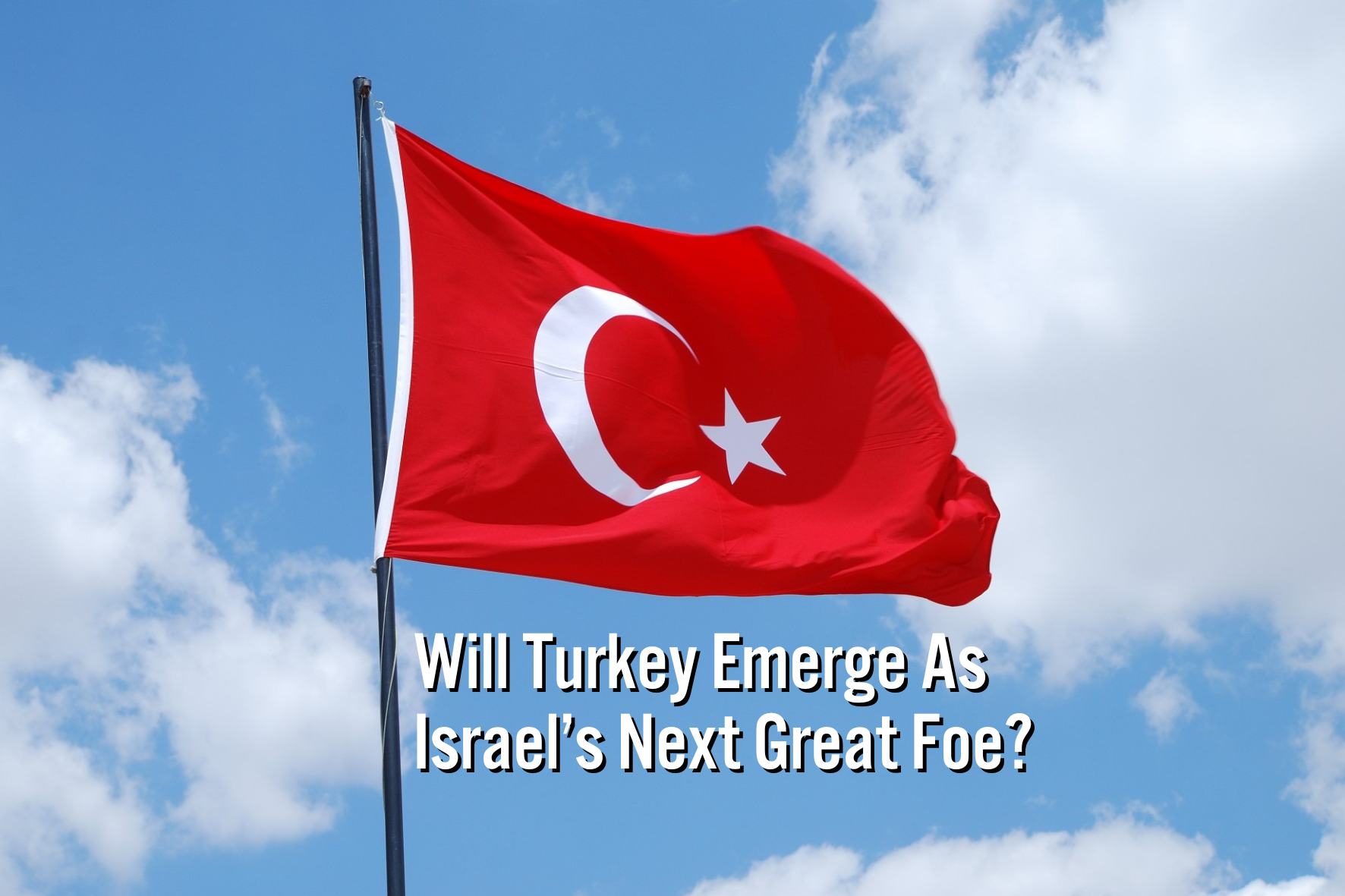
Will Turkey Emerge As Israel’s Next Great Foe?
Turkish-Israeli relations have always been in flux. Turkey was the first Muslim-majority country to recognise Israel, and the 1990s were characterised by strengthening relations[1]. However, relations began to deteriorate at the beginning of the 21st century, coinciding with the election of Erdogan and Turkey’s shift towards Islam and championing of the Palestinian issue. This deterioration reached its zenith after the 2010 Gaza Flotilla incident[2], with full diplomatic relations only restored over a decade later[3]. Following the 7th October, Turkish-Israeli relations have returned to rock-bottom, with Erdogan exclaiming that Turkey has “severed all relations with Israel”[4].
Concurrently, Bashar al-Asssad’s regime in Syria has fallen to Turkish-backed rebels, providing Erdogan the opportunity to reassert Turkish influence across a classical Ottoman region. This resembles Iran’s opportunities to restore influence across former Persian regions following the fall of Saddam in Iraq, which led to increased tensions with Israel. Given sunken Turkish-Israel relations, and Turkey’s newfound regional opportunities, will Turkey tread in Iran’s footsteps and emerge as Israel’s next great foe, a possibility hypothesised by the recent Nagel committee report[5], or is there reason to be optimistic about the future of the Turkish-Israeli relationship?
Mirroring Iran
Both Turkey and Iran envision a self-aggrandising destiny as a regional and global power, derived from nostalgia for their former empires. As such Turkey has strong contemporary interest in Syria. Turkey holds 3.2 million Syrian refugees[6] that Erdogan wishes to return as soon as possible due to the economic burden they have placed on Turkey. Erdogan also wants to eradicate Kurdish resistance in Syria, in contrast to Israel’s alignment with the Kurds, used to counter Iraqi and Iranian interests[7]. The Kurdish issue in Syria could become one point of contention between Israel and Turkey.
Another point of contention is Turkey’s strong relationship with the new Syrian regime, demonstrated by Turkish diplomats being the first foreign dignitaries to meet with the new Syrian leaders[8]. If Turkey begins to provide weapons to Syria, and Syria enters into a conflict with Israel, a possibility given the new Syrian regime’s Islamic terrorist origins and unresolved Syria-Israel border disputes, then Israel would be required to strike Turkish assets in Syria, analogous to Israel’s strikes against Islamic Revolutionary Guard Corps (IRGC) assets in Syria prior to Assad’s defeat, which led to direct Israel-Iran conflict. Hence, Turkey’s growing influence in Syria could precipitate a conflict between Israel and Turkey, mirroring the development of the Israel-Iran conflict.
Turkey’s domestic politics produces strong anti-Israel rhetoric. 84% of Turks, including 92% who voted for Erdogan, support Hamas in the current war[9], demonstrating strong domestic incentive for hostility towards Israel. Additionally, Erdogan is a strong supporter of the Muslim Brotherhood movement[10], of which Hamas is an offshoot, leading to strong Turkish support for Hamas, causing friction in Turkish-Israeli relations. Turkey’s domestic and ideological considerations have led to a deterioration in Turkish rhetoric regarding Israel, mirroring Iran’s anti-Israel hostility, which became a multiplier for Israel-Iran tensions, suggesting Turkish-Israeli relations may go the same way.
Moderating factors
Despite some of the similarities between Turkey and Iran, there are differences which can moderate Turkish-Israeli tensions. Unlike Iran, which is over 90% Shia[11], Turkey is 88% Sunni[12]. Therefore, whilst Iran, the centre of Shia thought, can exert influence across all Shia populations in the region, Turkey has to compete with other centres of Sunni power for regional influence, limiting Turkey’s ability to emulate Iran’s Shia crescent.
Unlike Iran, Turkey remains in the US security sphere and is a member of NATO. Thus, the US has incentive to moderate Turkish-Israeli tensions. Additionally, Israel and Turkey remain strategic partners to Azerbaijan, another country that can moderate Turkish-Israeli tensions.
In contrast to Iran’s consistent hostility towards Israel, Erdogan’s Israel policy has been characterised by flip-flopping, with periods of good and bad relations. Though, during periods of bad relations, trade relations have still been able to flourish. Hence, Turkey’s Israel policy could be interpreted more as short-term opportunism than a long-term anti-Israel plan that characterises Iranian policy.
Conclusion
Turkey has all the requisite attributes for mirroring Iran and becoming Israel’s next major foe. Turkey, like Iran, has ambitions to cultivate a sphere of influence across their former imperial regions, whilst spouting extreme anti-Israel rhetoric, and supporting Palestinian terrorist groups. Hence, Israel must prepare the necessary military capabilities in case a direct confrontation with Turkey does break out, as recommended by the Nagel committee report. However, unlike Iran, there are significant forces capable of moderating Turkish belligerence before Turkey reaches foe status. Erdogan has not committed to a consistent Israel policy through the years and has significant economic interest in maintaining a cordial relationship with Israel. Additionally, Israel has plenty of diplomatic avenues to shape Turkey’s behaviour in Israel’s favour. Israel can leverage its relationship with the US, NATO, and Azerbaijan, all partners of Turkey, in moderating tensions, as well as pursue ties with traditional Turkish adversaries like Greece and Cyprus to balance against Turkish power. The future of Turkish-Israel relations is not set in stone, but there is plenty of reason to be hopeful.
By: Eitan Litvin, JIJ Intern
[1] Tür, Ozlem. “Turkey and Israel in the 2000s-from cooperation to conflict.” Israel Studies, vol. 17, no. 3, 2012, pp. 45-66.
[2] “Timeline: Main Events in the Gaza Flotilla Affair.” Reuters, 2010, https://www.reuters.com/article/world/timeline-main-events-in-the-gaza-flotilla-affair-idUSTRE6562BN/. Accessed 21/01/2025.
[3] Obel, Ash. “Israel and Turkey to Restore Ambassadors in Full Renewal of Diplomatic Ties.” timesofisrael.com, 2022, https://www.timesofisrael.com/israel-and-turkey-to-restore-ambassadors-in-full-renewal-of-diplomatic-ties/. Accessed 21/01/2025.
[4] Soylu, Ragip. “Turkey Severs All Relations with Israel, Says Erdogan.” Middle East Eye, 2024, https://www.middleeasteye.net/news/turkey-severs-all-relations-israel-says-erdogan. Accessed 19/01/2025.
[5] Etzion, Udi. “Nagel Committee Warns Israel Must Prepare For Potential War with Turkey” The Jerusalem Post, 2025, https://www.jpost.com/israel-news/article-83636. Accessed 19/01/2025.
[6] “Overview | UNHCR Turkey.” UNHCR Turkey, 2025, www.unhcr.org/tr/en/ne-yapiyoruz/overview. Accessed 21/01/2025.
[7] Quitaz, Suzan. “The Historic Ties Between Israel and the Kurds of Iraq Will Continue.” Jerusalem Center for Public Affairs, 2023, https://jcpa.org/article/the-historic-ties-between-israel-and-the-kurds-of-iraq-will-continue/. Accessed 19/01/2025
[8] “Leader of New Syrian Government to Make First Foreign Visit to Türkiye.” Report News Agency, 2025, https://report.az/en/region/leader-of-new-syrian-government-to-make-first-foreign-visit-to-turkiye/. Accessed 19/01/2025.
[9] Dalmis, Ibrahim. “Public Opinion and Reaction to Israel’s War on Gaza after October 7 in Türkiye.” Insight Turkey, 2024, https://www.insightturkey.com/articles/public-opinion-and-reaction-to-israels-war-on-gaza-after-october-7-in-turkiye. Accessed 19/01/2025.
[10] Kenez, Levent. “Erdogan Still Maintains Close Ties with Muslim Brotherhood despite Reproachement with Sisi” Nordic Monitor, 2024, https://nordicmonitor.com/2024/09/erdogan-still-maintains-close-ties-with-muslim-brotherhood-despite-rapprochement-with-sisi/. Accessed 19/01/2025.
[11] “Iran - United State Department of State.” United States Department of State, 2023, https://www.state.gov/reports/2022-report-on-international-religious-freedom/iran/. Accessed 21/01/2025.
[12] “Turkey - United States Department of State.” United States Department of State, 2023, https://www.state.gov/reports/2022-report-on-international-religious-freedom/turkey/. Accessed 21/01/2025.
A New Rivalry?
Will Turkey Emerge As Israel’s Next Great Foe?
Turkish-Israeli relations have always been in flux. Turkey was the first Muslim-majority country to recognise Israel, and the 1990s were characterised by strengthening relations[1]. However, relations began to deteriorate at the beginning of the 21st century, coinciding with the election of Erdogan and Turkey’s shift towards Islam and championing of the Palestinian issue. This deterioration reached its zenith after the 2010 Gaza Flotilla incident[2], with full diplomatic relations only restored over a decade later[3]. Following the 7th October, Turkish-Israeli relations have returned to rock-bottom, with Erdogan exclaiming that Turkey has “severed all relations with Israel”[4].
Concurrently, Bashar al-Asssad’s regime in Syria has fallen to Turkish-backed rebels, providing Erdogan the opportunity to reassert Turkish influence across a classical Ottoman region. This resembles Iran’s opportunities to restore influence across former Persian regions following the fall of Saddam in Iraq, which led to increased tensions with Israel. Given sunken Turkish-Israel relations, and Turkey’s newfound regional opportunities, will Turkey tread in Iran’s footsteps and emerge as Israel’s next great foe, a possibility hypothesised by the recent Nagel committee report[5], or is there reason to be optimistic about the future of the Turkish-Israeli relationship?
Mirroring Iran
Both Turkey and Iran envision a self-aggrandising destiny as a regional and global power, derived from nostalgia for their former empires. As such Turkey has strong contemporary interest in Syria. Turkey holds 3.2 million Syrian refugees[6] that Erdogan wishes to return as soon as possible due to the economic burden they have placed on Turkey. Erdogan also wants to eradicate Kurdish resistance in Syria, in contrast to Israel’s alignment with the Kurds, used to counter Iraqi and Iranian interests[7]. The Kurdish issue in Syria could become one point of contention between Israel and Turkey.
Another point of contention is Turkey’s strong relationship with the new Syrian regime, demonstrated by Turkish diplomats being the first foreign dignitaries to meet with the new Syrian leaders[8]. If Turkey begins to provide weapons to Syria, and Syria enters into a conflict with Israel, a possibility given the new Syrian regime’s Islamic terrorist origins and unresolved Syria-Israel border disputes, then Israel would be required to strike Turkish assets in Syria, analogous to Israel’s strikes against Islamic Revolutionary Guard Corps (IRGC) assets in Syria prior to Assad’s defeat, which led to direct Israel-Iran conflict. Hence, Turkey’s growing influence in Syria could precipitate a conflict between Israel and Turkey, mirroring the development of the Israel-Iran conflict.
Turkey’s domestic politics produces strong anti-Israel rhetoric. 84% of Turks, including 92% who voted for Erdogan, support Hamas in the current war[9], demonstrating strong domestic incentive for hostility towards Israel. Additionally, Erdogan is a strong supporter of the Muslim Brotherhood movement[10], of which Hamas is an offshoot, leading to strong Turkish support for Hamas, causing friction in Turkish-Israeli relations. Turkey’s domestic and ideological considerations have led to a deterioration in Turkish rhetoric regarding Israel, mirroring Iran’s anti-Israel hostility, which became a multiplier for Israel-Iran tensions, suggesting Turkish-Israeli relations may go the same way.
Moderating factors
Despite some of the similarities between Turkey and Iran, there are differences which can moderate Turkish-Israeli tensions. Unlike Iran, which is over 90% Shia[11], Turkey is 88% Sunni[12]. Therefore, whilst Iran, the centre of Shia thought, can exert influence across all Shia populations in the region, Turkey has to compete with other centres of Sunni power for regional influence, limiting Turkey’s ability to emulate Iran’s Shia crescent.
Unlike Iran, Turkey remains in the US security sphere and is a member of NATO. Thus, the US has incentive to moderate Turkish-Israeli tensions. Additionally, Israel and Turkey remain strategic partners to Azerbaijan, another country that can moderate Turkish-Israeli tensions.
In contrast to Iran’s consistent hostility towards Israel, Erdogan’s Israel policy has been characterised by flip-flopping, with periods of good and bad relations. Though, during periods of bad relations, trade relations have still been able to flourish. Hence, Turkey’s Israel policy could be interpreted more as short-term opportunism than a long-term anti-Israel plan that characterises Iranian policy.
Conclusion
Turkey has all the requisite attributes for mirroring Iran and becoming Israel’s next major foe. Turkey, like Iran, has ambitions to cultivate a sphere of influence across their former imperial regions, whilst spouting extreme anti-Israel rhetoric, and supporting Palestinian terrorist groups. Hence, Israel must prepare the necessary military capabilities in case a direct confrontation with Turkey does break out, as recommended by the Nagel committee report. However, unlike Iran, there are significant forces capable of moderating Turkish belligerence before Turkey reaches foe status. Erdogan has not committed to a consistent Israel policy through the years and has significant economic interest in maintaining a cordial relationship with Israel. Additionally, Israel has plenty of diplomatic avenues to shape Turkey’s behaviour in Israel’s favour. Israel can leverage its relationship with the US, NATO, and Azerbaijan, all partners of Turkey, in moderating tensions, as well as pursue ties with traditional Turkish adversaries like Greece and Cyprus to balance against Turkish power. The future of Turkish-Israel relations is not set in stone, but there is plenty of reason to be hopeful.
By: Eitan Litvin, JIJ Intern
[1] Tür, Ozlem. “Turkey and Israel in the 2000s-from cooperation to conflict.” Israel Studies, vol. 17, no. 3, 2012, pp. 45-66.
[2] “Timeline: Main Events in the Gaza Flotilla Affair.” Reuters, 2010, https://www.reuters.com/article/world/timeline-main-events-in-the-gaza-flotilla-affair-idUSTRE6562BN/. Accessed 21/01/2025.
[3] Obel, Ash. “Israel and Turkey to Restore Ambassadors in Full Renewal of Diplomatic Ties.” timesofisrael.com, 2022, https://www.timesofisrael.com/israel-and-turkey-to-restore-ambassadors-in-full-renewal-of-diplomatic-ties/. Accessed 21/01/2025.
[4] Soylu, Ragip. “Turkey Severs All Relations with Israel, Says Erdogan.” Middle East Eye, 2024, https://www.middleeasteye.net/news/turkey-severs-all-relations-israel-says-erdogan. Accessed 19/01/2025.
[5] Etzion, Udi. “Nagel Committee Warns Israel Must Prepare For Potential War with Turkey” The Jerusalem Post, 2025, https://www.jpost.com/israel-news/article-83636. Accessed 19/01/2025.
[6] “Overview | UNHCR Turkey.” UNHCR Turkey, 2025, www.unhcr.org/tr/en/ne-yapiyoruz/overview. Accessed 21/01/2025.
[7] Quitaz, Suzan. “The Historic Ties Between Israel and the Kurds of Iraq Will Continue.” Jerusalem Center for Public Affairs, 2023, https://jcpa.org/article/the-historic-ties-between-israel-and-the-kurds-of-iraq-will-continue/. Accessed 19/01/2025
[8] “Leader of New Syrian Government to Make First Foreign Visit to Türkiye.” Report News Agency, 2025, https://report.az/en/region/leader-of-new-syrian-government-to-make-first-foreign-visit-to-turkiye/. Accessed 19/01/2025.
[9] Dalmis, Ibrahim. “Public Opinion and Reaction to Israel’s War on Gaza after October 7 in Türkiye.” Insight Turkey, 2024, https://www.insightturkey.com/articles/public-opinion-and-reaction-to-israels-war-on-gaza-after-october-7-in-turkiye. Accessed 19/01/2025.
[10] Kenez, Levent. “Erdogan Still Maintains Close Ties with Muslim Brotherhood despite Reproachement with Sisi” Nordic Monitor, 2024, https://nordicmonitor.com/2024/09/erdogan-still-maintains-close-ties-with-muslim-brotherhood-despite-rapprochement-with-sisi/. Accessed 19/01/2025.
[11] “Iran - United State Department of State.” United States Department of State, 2023, https://www.state.gov/reports/2022-report-on-international-religious-freedom/iran/. Accessed 21/01/2025.
[12] “Turkey - United States Department of State.” United States Department of State, 2023, https://www.state.gov/reports/2022-report-on-international-religious-freedom/turkey/. Accessed 21/01/2025.
What can JIJ do in a year?
2024 was our busiest and most impactful year since our founding 20 years ago
With your help, in 2024, JIJ provided FREE legal aid to 2,733 survivors of terrorism, human trafficking, and discrimination, including:
- 32 wounded Israeli soldiers
- 40 survivors of human trafficking
- 17 survivors of the October 7th massacre
- 68 families seeking Israeli citizenship or residency
- 112 refugees from Ukraine, Russia, and Eritrea
- 120 Israeli families displaced from their homes on the Gaza & Lebanon borders
How does JIJ do all of this in one year? With you, our amazing supporters. Thank you!
Our media presence grew & our team appeared on:




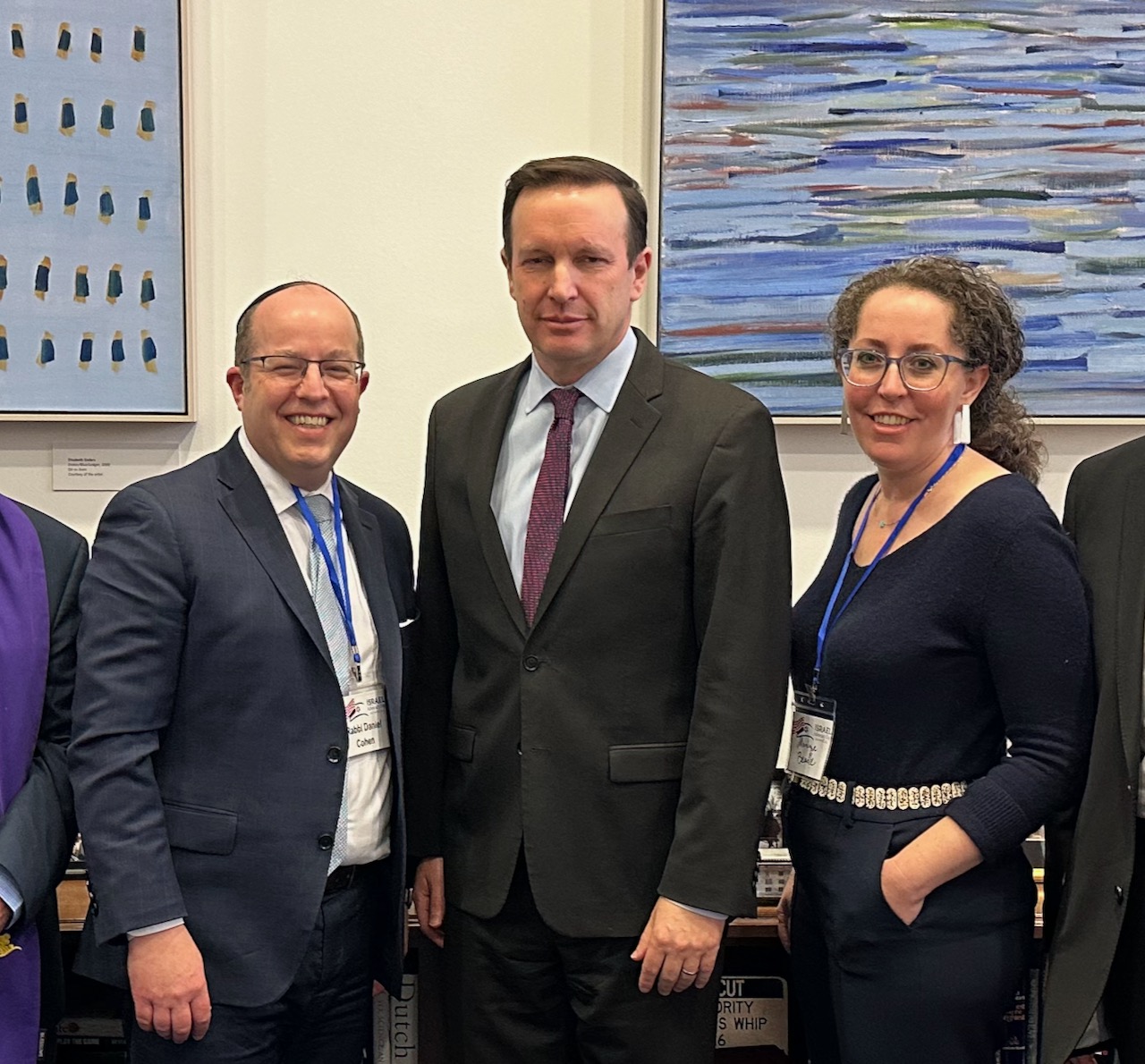
We met personally with dozens of global leaders, including Israel’s First Lady Michal Herzog, United Nations SRSG Pramila Patten, & US Senators Chris Murphy, Richard Blumenthal, & John Fetterman.
We shared our research, forensic evidence, and legal analysis with diplomats from 30 countries.
January - June
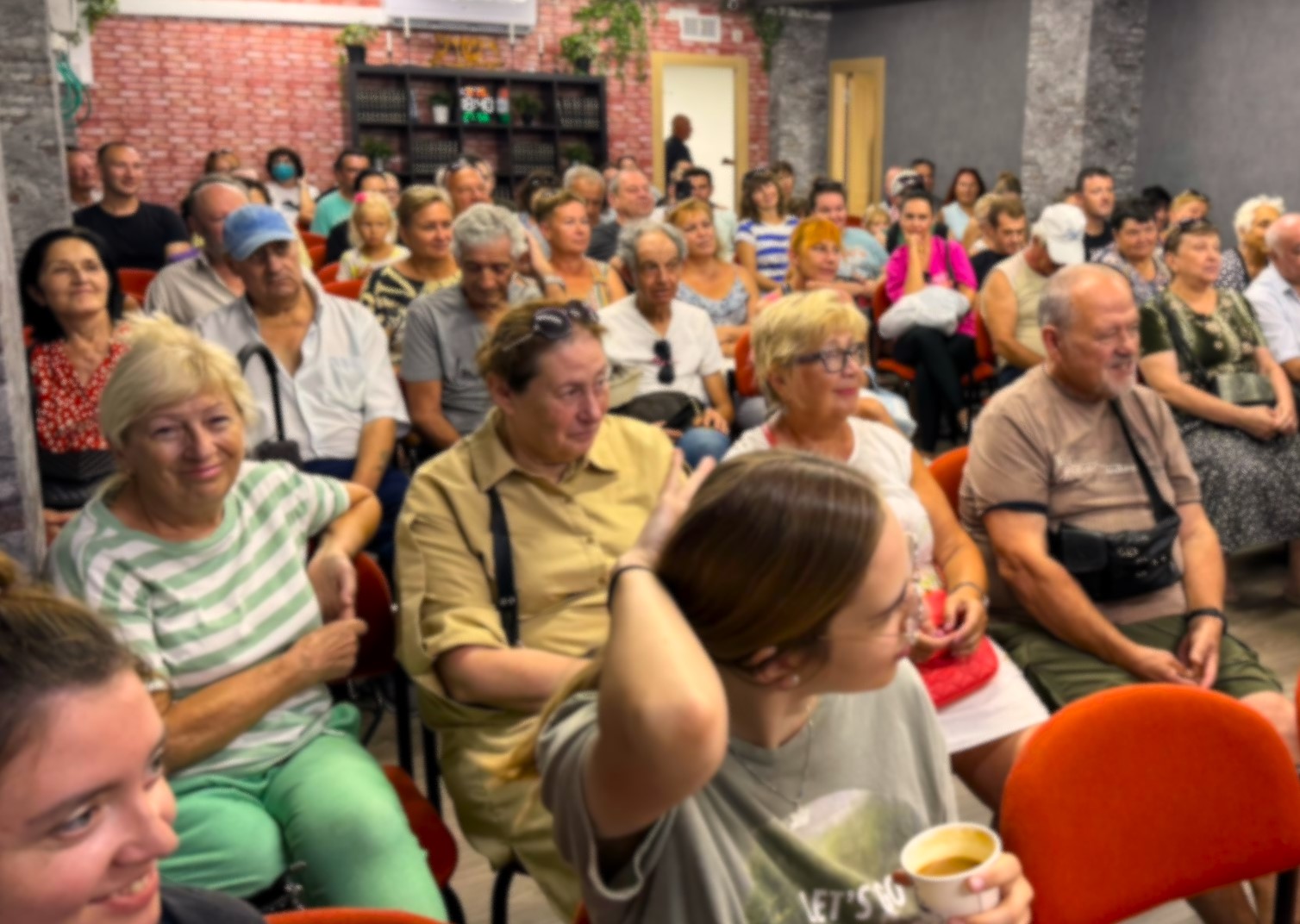
JIJ held a series of free “ Know Your Rights” seminars for:
- 120 Israeli families who became suddenly homeless, unemployed, or disabled as a result of the war
- 57 Ukrainian & Russian refugee families
- 9 of these families receive Israeli citizenship through the Law of Return
- 500 wounded soldiers
Gathered 84 political & religious leaders in the U.S. for a private screening of unedited, uncensored footage of the October 7th massacre recovered from the bodies of Hamas terrorists and compiled by the IDF.
Drafted an urgent petition to Stop Funding UNRWA & persuaded key members of the Senate Foreign Relations Committees to enact a 1-year ban on US funding to UNRWA.
Hosted UN diplomats from 18 countries to hear testimony from Yuval Raphael a survivor of the Oct. 7th massacre. Yuval went to the Nova Festival to dance all night with her friends. At dawn, Hamas invaded, and she sought refuge in a roadside bomb shelter, which became a tomb when terrorists found them.
Launched the Survivors Seeking Justice project, and filmed detailed video testimonies of 17 survivors of the Oct. 7th massacre.
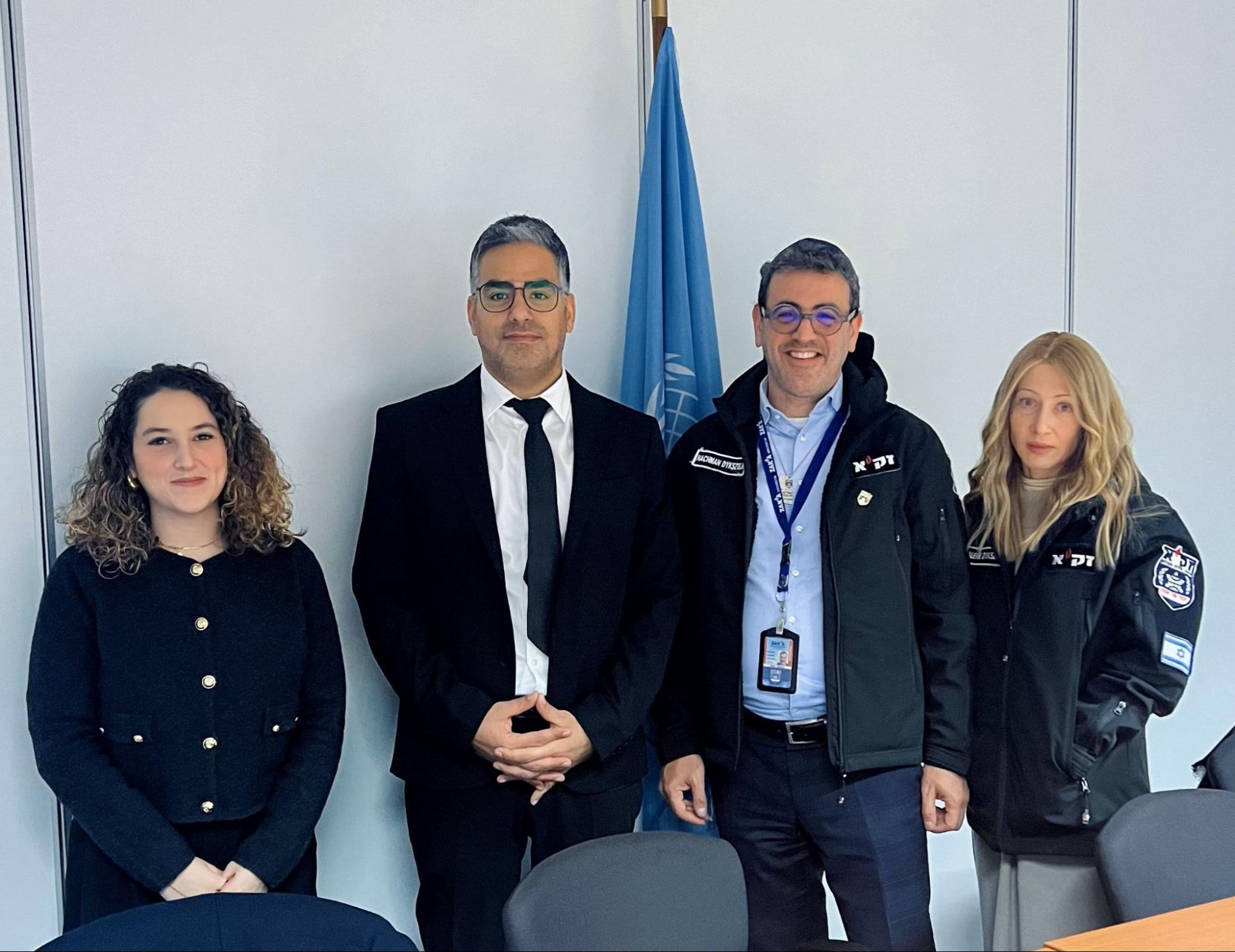
JIJ lawyers presented forensic evidence & first responder testimony to senior UN officials. This proof confirmed a pattern of sexual violence perpetrated by Hamas on Oct. 7th and stopped the rape deniers in their tracks.
July-December
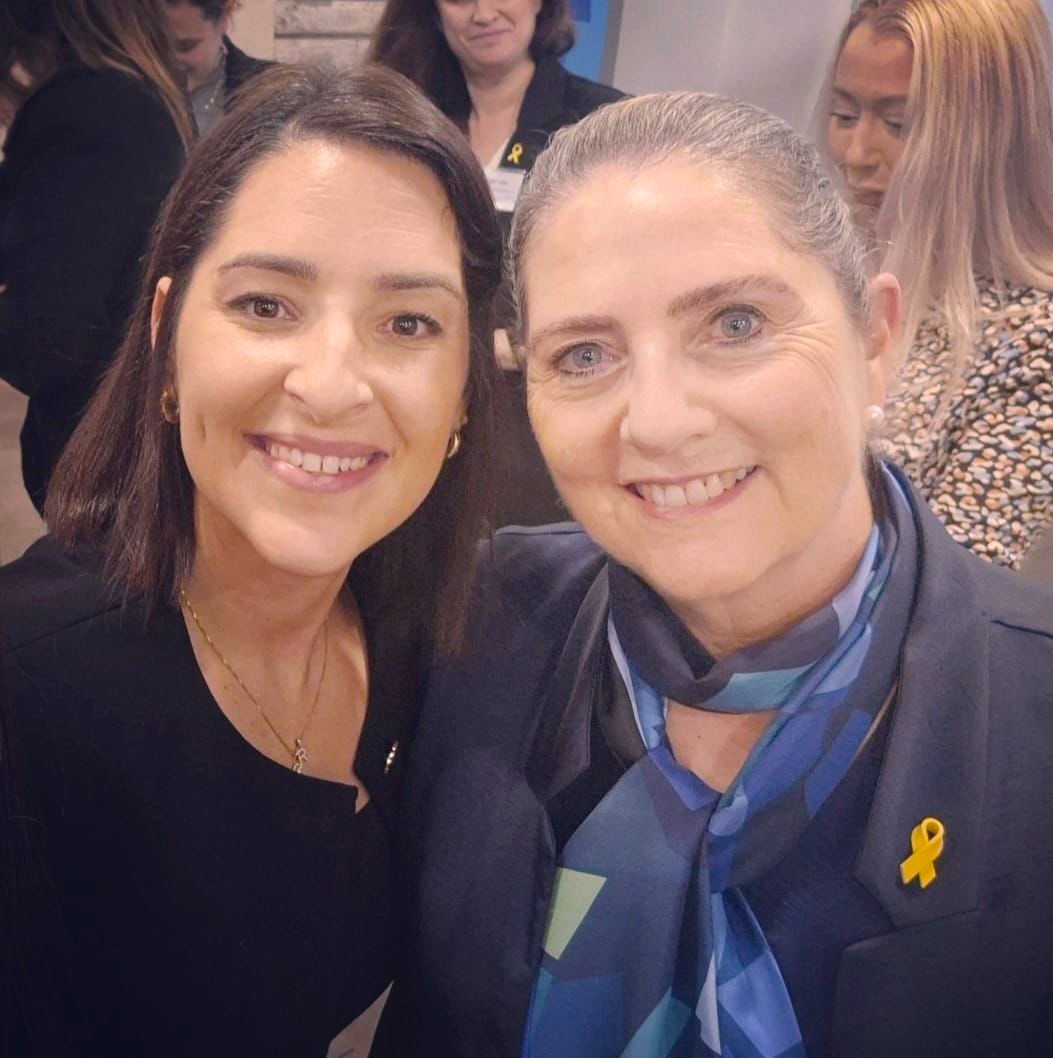
Discussed Israel’s anti-trafficking law with First Lady Michal Herzog. In 2018, JIJ persuaded the
Knesset to adopt a 5-year pilot program that treats women in the sex industry as victims of abuse, & the pimps as criminals. We’re advocating to make the law permanent!
JIJ assisted Israeli police in busting a major human trafficking ring - resulting in the arrest of 14 human traffickers, which was only possible through the testimony of our brave client.
We gave free seminars to soldiers recuperating at Ichilov & Tel Hashomer Hospitals. While private lawyers take 30-50% of a wounded soldier’s disability benefit as payment, JIJ is the only organization providing FREE legal aid to wounded Israeli soldiers, with 32 new soldier clients in 2024.
Intervened at the International Criminal Court with an amicus brief making it clear that the Court lacks jurisdiction over Israeli leaders.
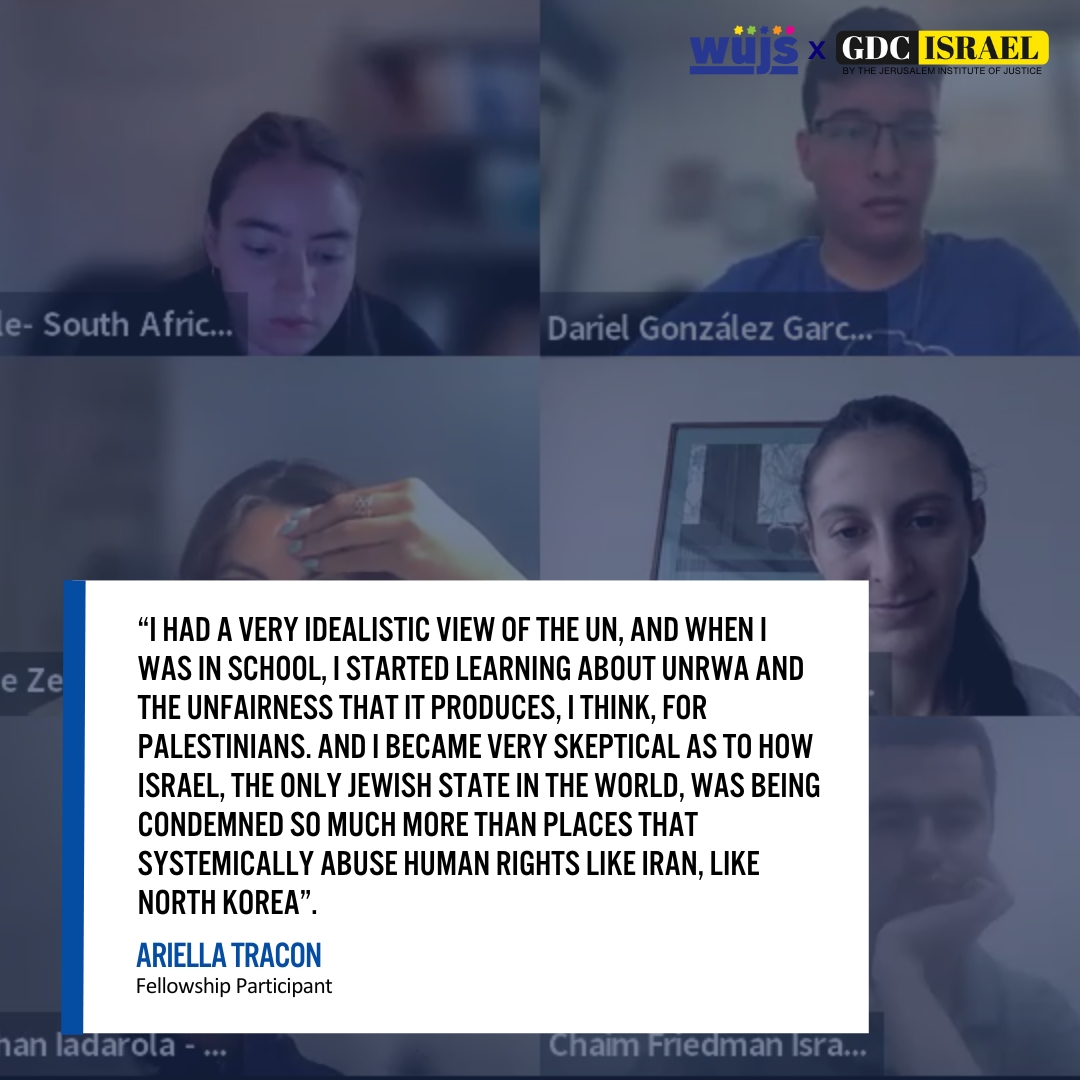
Partnered with the World Union of Jewish Students to train & empower student leaders. Over 8 weeks, we trained 23 Jewish university students from 16 countries to combat antisemitism on their campuses.
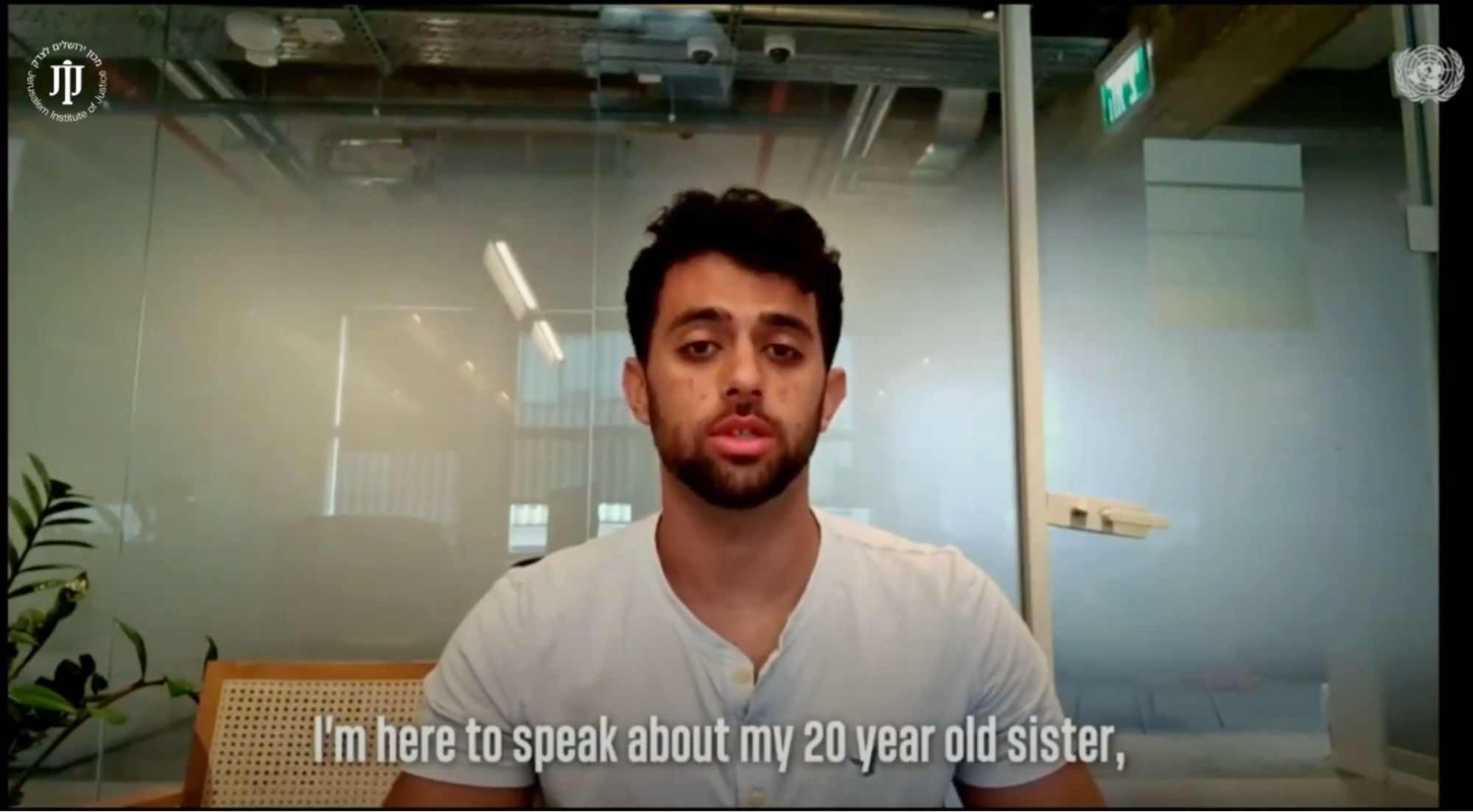
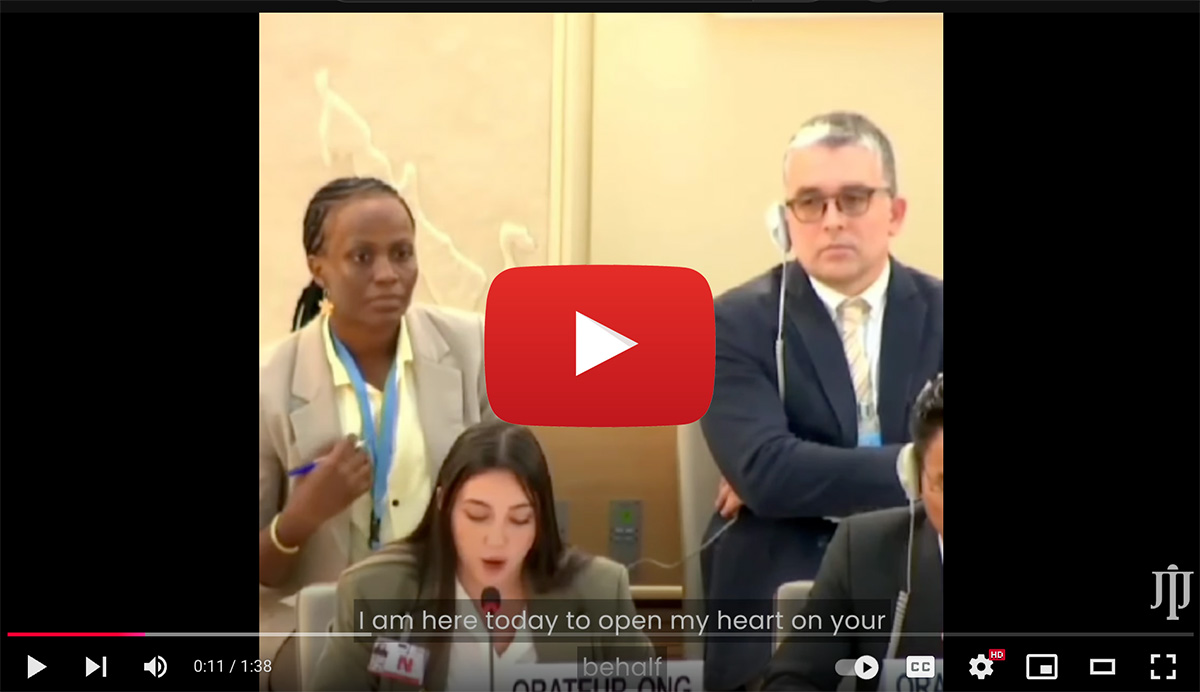
The UN Human Rights Council convened a special gathering on the Jewish New Year, to condemn Israel. The timing was intentional - to prevent opposition. In response, we gave our General Assembly floor time to Amit Levy, brother of Naama Levy, who was kidnapped by Hamas on Oct. 7th. Amit gave powerful testimony on the need to free all of the hostages.
Every single donation you give, whether it’s $1000 or $10, changes lives!
What can JIJ do in a year?
2024 was our busiest and most impactful year since our founding 20 years ago
With your help, in 2024, JIJ provided FREE legal aid to 2,733 survivors of terrorism, human trafficking, and discrimination, including:
- 32 wounded Israeli soldiers
- 40 survivors of human trafficking
- 17 survivors of the October 7th massacre
- 68 families seeking Israeli citizenship or residency
- 112 refugees from Ukraine, Russia, and Eritrea
- 120 Israeli families displaced from their homes on the Gaza & Lebanon borders
How does JIJ do all of this in one year? With you, our amazing supporters. Thank you!
Our media presence grew & our team appeared on:
We met personally with dozens of global leaders, including Israel’s First Lady Michal Herzog, United Nations SRSG Pramila Patten, & US Senators Chris Murphy, Richard Blumenthal, & John Fetterman.
We shared our research, forensic evidence, and legal analysis with diplomats from 30 countries.
January - June
JIJ held a series of free “ Know Your Rights” seminars for:
- 120 Israeli families who became suddenly homeless, unemployed, or disabled as a result of the war
- 57 Ukrainian & Russian refugee families
- 9 of these families receive Israeli citizenship through the Law of Return
- 500 wounded soldiers
Gathered 84 political & religious leaders in the U.S. for a private screening of unedited, uncensored footage of the October 7th massacre recovered from the bodies of Hamas terrorists and compiled by the IDF.
Drafted an urgent petition to Stop Funding UNRWA & persuaded key members of the Senate Foreign Relations Committees to enact a 1-year ban on US funding to UNRWA.
Hosted UN diplomats from 18 countries to hear testimony from Yuval Raphael a survivor of the Oct. 7th massacre. Yuval went to the Nova Festival to dance all night with her friends. At dawn, Hamas invaded, and she sought refuge in a roadside bomb shelter, which became a tomb when terrorists found them.
Launched the Survivors Seeking Justice project, and filmed detailed video testimonies of 17 survivors of the Oct. 7th massacre.
JIJ lawyers presented forensic evidence & first responder testimony to senior UN officials. This proof confirmed a pattern of sexual violence perpetrated by Hamas on Oct. 7th and stopped the rape deniers in their tracks.
July-December
Discussed Israel’s anti-trafficking law with First Lady Michal Herzog. In 2018, JIJ persuaded the
Knesset to adopt a 5-year pilot program that treats women in the sex industry as victims of abuse, & the pimps as criminals. We’re advocating to make the law permanent!
JIJ assisted Israeli police in busting a major human trafficking ring - resulting in the arrest of 14 human traffickers, which was only possible through the testimony of our brave client.
We gave free seminars to soldiers recuperating at Ichilov & Tel Hashomer Hospitals. While private lawyers take 30-50% of a wounded soldier’s disability benefit as payment, JIJ is the only organization providing FREE legal aid to wounded Israeli soldiers, with 32 new soldier clients in 2024.
Intervened at the International Criminal Court with an amicus brief making it clear that the Court lacks jurisdiction over Israeli leaders.
Partnered with the World Union of Jewish Students to train & empower student leaders. Over 8 weeks, we trained 23 Jewish university students from 16 countries to combat antisemitism on their campuses.
The UN Human Rights Council convened a special gathering on the Jewish New Year, to condemn Israel. The timing was intentional - to prevent opposition. In response, we gave our General Assembly floor time to Amit Levy, brother of Naama Levy, who was kidnapped by Hamas on Oct. 7th. Amit gave powerful testimony on the need to free all of the hostages.
Every single donation you give, whether it’s $1000 or $10, changes lives!
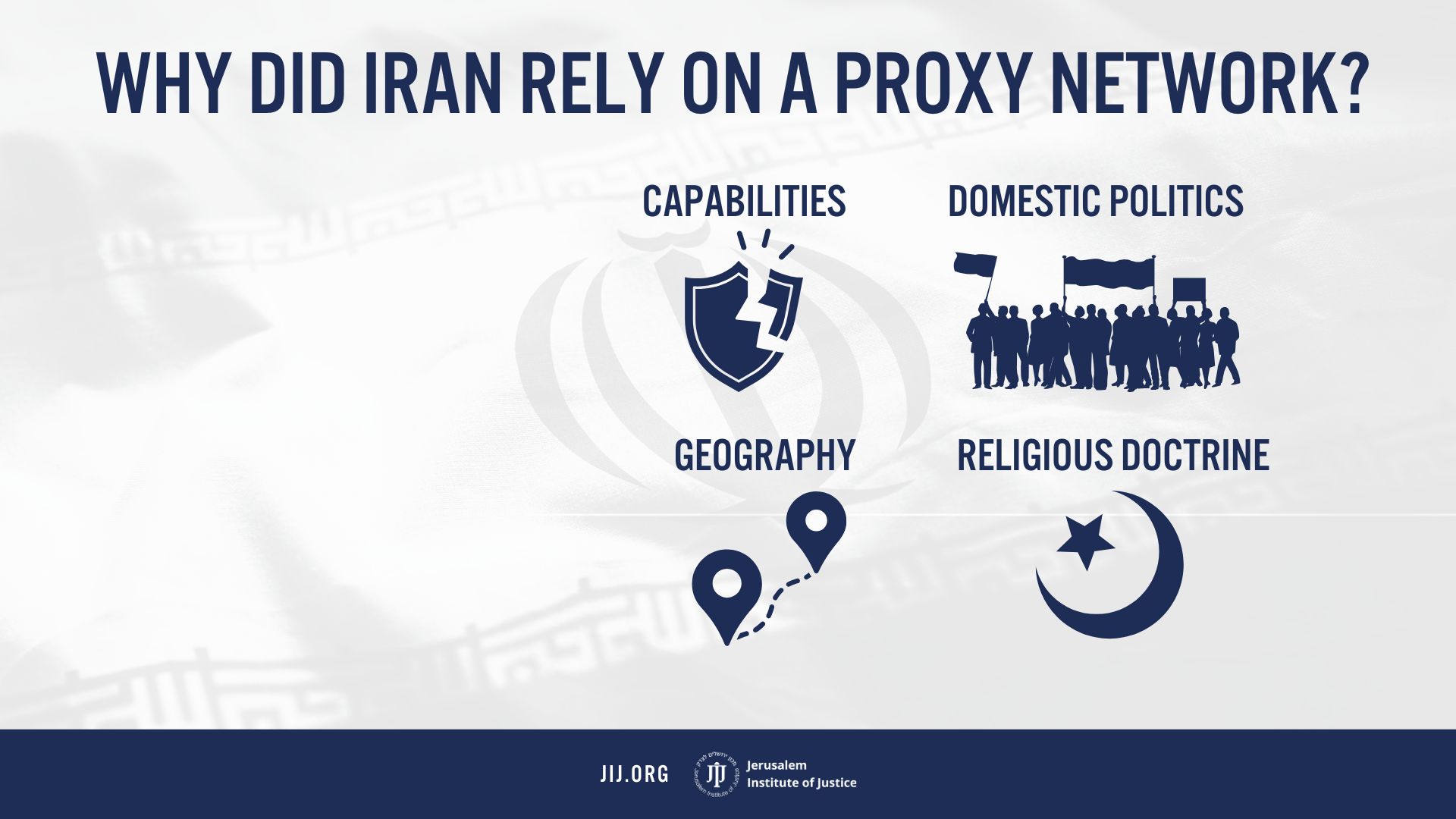
Iran’s Proxies and Their Seven Fronts Against Israel
https://www.youtube.com/watch?v=s6Vmiq_VHg0
Did you know Iran is waging a multi-front war against Israel through its network of proxies? From Hezbollah in Lebanon to Hamas in Gaza, and beyond, these seven fronts pose constant threats to Israel’s security and stability.
In our latest JIJ & GDC Israel Virtual Classroom Series, we unpack each front, revealing how Iran’s strategy works—and how Israel is responding. 💡🛡️
Don’t miss this essential breakdown of the threats facing Israel today. Follow us for updates and insights!
JIJ's Statement on The ICC Ruling
JIJ's Statement on The ICC Ruling to Issue of Arrest Warrant Against Prime Minister Benjamin Netanyahu and Defense Minister Yoav Galant
The Jerusalem Institute for Justice vehemently condemns the International Criminal Court’s (ICC) ruling to issue arrest warrants against Prime Minister Benjamin Netanyahu and Defense Minister Yoav Galant. This ruling is a purely political decision that not only flagrantly violates legal and moral standards but also shamefully capitulates to the pressures of anti-Israeli factions.
The ICC, established to protect genuine victims and hold accountable leaders responsible for the gravest crimes, has, for the first time in its history, chosen to target a democratic nation with a robust, independent judiciary fully dedicated to upholding the principles and rules of international law. This is a deplorable and calculated attempt to undermine the State of Israel and the IDF as they take decisive actions to defend the very existence of the world’s only Jewish state against an attempt to eradicate it. These efforts come in response to the most extensively documented barbaric massacre of modern times, orchestrated by Hamas and other terror groups.
We are deeply disappointed by the court’s decision to dismiss JIJ’s arguments, as outlined in our recently submitted legal observation. The court has chosen to disregard our strong legal arguments and overreach by asserting jurisdiction it does not possess. In doing so, it has acted in violation of the binding agreement between the parties to this ruling, wrongly recognized Palestine as a state despite its failure to meet the established threshold conditions, and blatantly ignored the existence of a robust, independent judicial system within a democratic state. Even more troubling, the court has created a false moral equivalence between the leaders of a democratic state and the arch-terrorists of Hamas. To further undermine its credibility, the court also decided to issue an arrest warrant against the dead terror mastermind, Mohammed Deif.
This ruling targets our leaders in the immediate term, but the repercussions are far more profound and far-reaching. It delivers a severe blow to the court's integrity, inflicting irreparable harm on public trust and the very concept of international justice. What should serve as a safeguard against atrocities has been twisted into a political weapon wielded against moral, law-abiding nations. The Jerusalem Institute for Justice urgently calls on the international community to stand against this outrageous ruling. Only by taking a firm stand can we begin to restore faith in the mechanisms of international accountability and uphold the principles of true justice.
Restoring Deterrence: Israel's Strikes and Strategic Offensives Against Hezbollah
https://www.youtube.com/watch?v=f2tfsbRfy-g
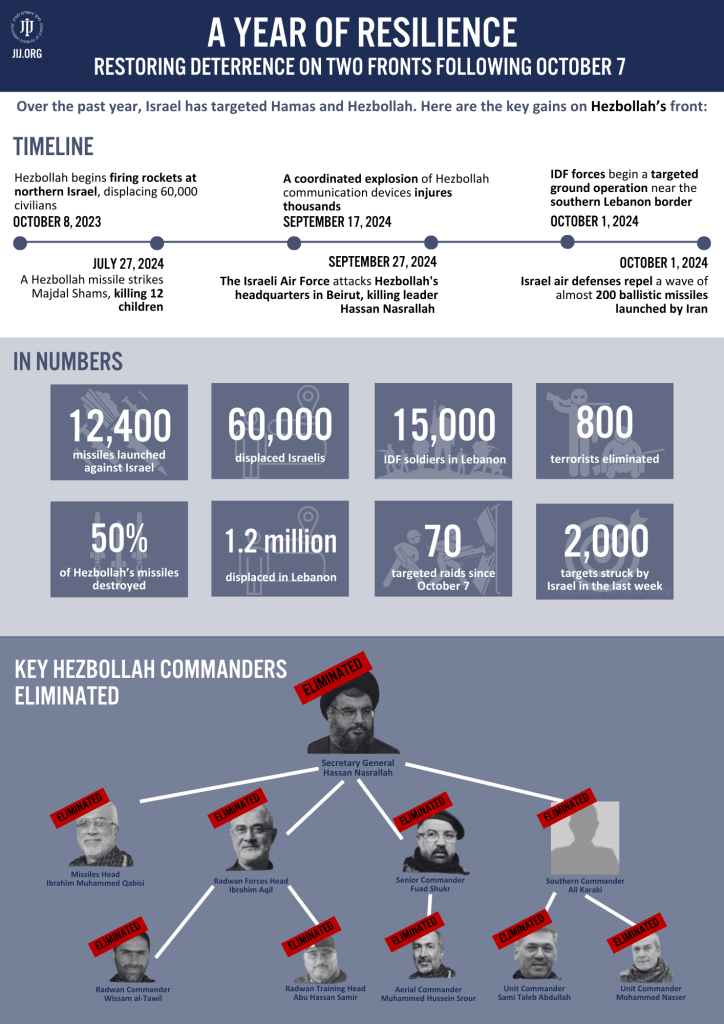
In this lecture, from our GDC Virtual Classroom series, we’ll take you behind the scenes of Israel’s bold and strategic fight against Hezbollah. You’ll discover how the IDF executed daring operations, including the remote detonation of thousands of Hezbollah's explosives, crippling their rocket capabilities. We’ll explore how Israel systematically dismantled Hezbollah’s leadership, including the assassination of its leader, Hassan Nasrallah, and launched a ground operation in southern Lebanon. If you’re ready to uncover the gripping details of Israel’s game-changing military tactics, this is a lecture you won’t want to miss.
A Year of Resilience
Three Strikes for Starmer
Three Strikes for Starmer
When Sir Keir Starmer ascended to the leadership of the UK Labour Party in 2020, he promised a decisive break from Jeremy Corbyn. Hamas and Hezbollah would no longer be considered ‘friends’, anti-Semitism would no longer be tolerated, and Israel would no longer be demonized.
Over the last four years, Starmer made significant progress on these fronts. He purged Corbyn from the Labor Party, adopted the recommendations of the Equality and Human Rights Commission’s investigation into anti-Semitism,[1] and affirmed Israel’s right to self-defense.
The Anglo-Jewish community responded constructively to these changes. Where British Jews voted for the Conservatives over Corbyn by a six-to-one margin in 2017, Starmer attracted support from a plurality of Anglo-Jewish voters.[2] This reflected voting patterns across the British electorate, enabling Labour to return to power after 14 years in opposition.
Since Labour assumed power in July, however, the Party has taken three troubling decisions on Israel. In isolation, any one of these decisions could be dismissed as a blip on the radar. In their totality, they suggest a failure to root out the ideological undercurrents of Corbynism.
UNRWA
The first warning sign appeared on July 19, when Foreign Secretary Danny Lammy agreed to restore £21 million in funding for the United Nations Relief and Works Agency (UNRWA). In announcing this decision, Lammy parroted UNRWA’s assertion that they ‘meet the highest standards of neutrality.’[3]
Such a claim is not credible. Israel has produced substantive evidence showing that UNRWA facilities have been systematically used as command centers and storage facilities for Hamas.[4] It has identified 42 employees of UNRWA who assisted Hamas on October 7, and it has alleged that over 10% of their workers are affiliated with terrorist groups.[5] Last month, UNRWA fired nine of its employees for their involvement in the October 7 massacre.
Lammy sidestepped this evidence by focusing on the UN-commissioned Colonna report from April 2024. But this report did not support the Foreign Secretary’s claim of neutrality. Instead, it found that alleged breaches of neutrality by UNRWA ‘escalated significantly’ after October 7. Referring to anti-Semitic educational content as a ‘grave violation of neutrality’, it noted that 3.85% of textbook pages in Palestinian schools contain concerning material.[6]
ICC
On July 26, the Labour Government made its second move against Israel. It dropped a pre-trial submission challenging the International Criminal Court’s (ICC) jurisdiction over Israeli Prime Minister Benjamin Netanyahu and Defence Minister Yoav Gallant.
In June, the Sunak Government had responded to ICC Prosecutor Karim Khan’s application for arrest warrants against Israel’s leaders by requesting permission to comment on ‘outstanding jurisdictional issues.’ The Government wanted the Court to address the implications of the Oslo Accords, which deny criminal jurisdiction to the Palestinian Authority over Israeli nationals.[7] The Court agreed to accept submissions from the UK and other interested parties until August 6.
By dropping the UK’s request for comment, the Starmer Government weakens pressure on the Court to address an important pre-trial question. It advances Prosecutor Khan’s unprecedented attempt to target the elected leaders of a democratic state, and it signals moral cowardice in the face of the ICC’s efforts to equate Hamas terrorists with leaders bound by the rule of law.
Export Licenses
On September 2, Labour completed its trifecta of measures against Israel. Secretary Lammy announced that the UK would suspend 30 of its 350 arms export licenses to Israel.[8] Coming on the same day as the funerals of six murdered hostages, the announcement provoked opposition in Israel and America.
Though the Foreign Secretary emphasized that ‘this is not an arms embargo’, his decision to block export licenses represents a clear departure from his predecessor. In December 2023, then Foreign Secretary Lord David Cameron concluded that Israel is ‘committed to comply with International Humanitarian Law.’ Following five legal assessments, Cameron reiterated his stance in April 2024, rejecting calls to suspend export licenses.[9]
Though Britain does not account for a large share of Israel’s arms imports, these restrictions will affect the supply of drones, jets, and other aircraft. Coming just weeks after the UK dropped its challenge to the ICC, the decision reflects a troubling pattern of one-sided measures against Israel’s legitimate right to self-defense.
Conclusion
Starmer deserves credit for confronting rampant anti-Semitism in the Labour Party. He has repudiated the sordid legacy of Corbyn and worked to regain the trust of British Jews.
It seems, however, that his foreign policy has privileged the concerns of a loud left flank over the defense of a democratic ally. In just two months, Labour has departed from the Conservatives on three issues. Each of these actions has hurt Israel’s security while exacerbating the divide between British and American policy. To maintain good will at home and abroad, Starmer is due for a course correction.
Written by Ben Solomon
JIJ Intern
Click Here To read the full article including notes