
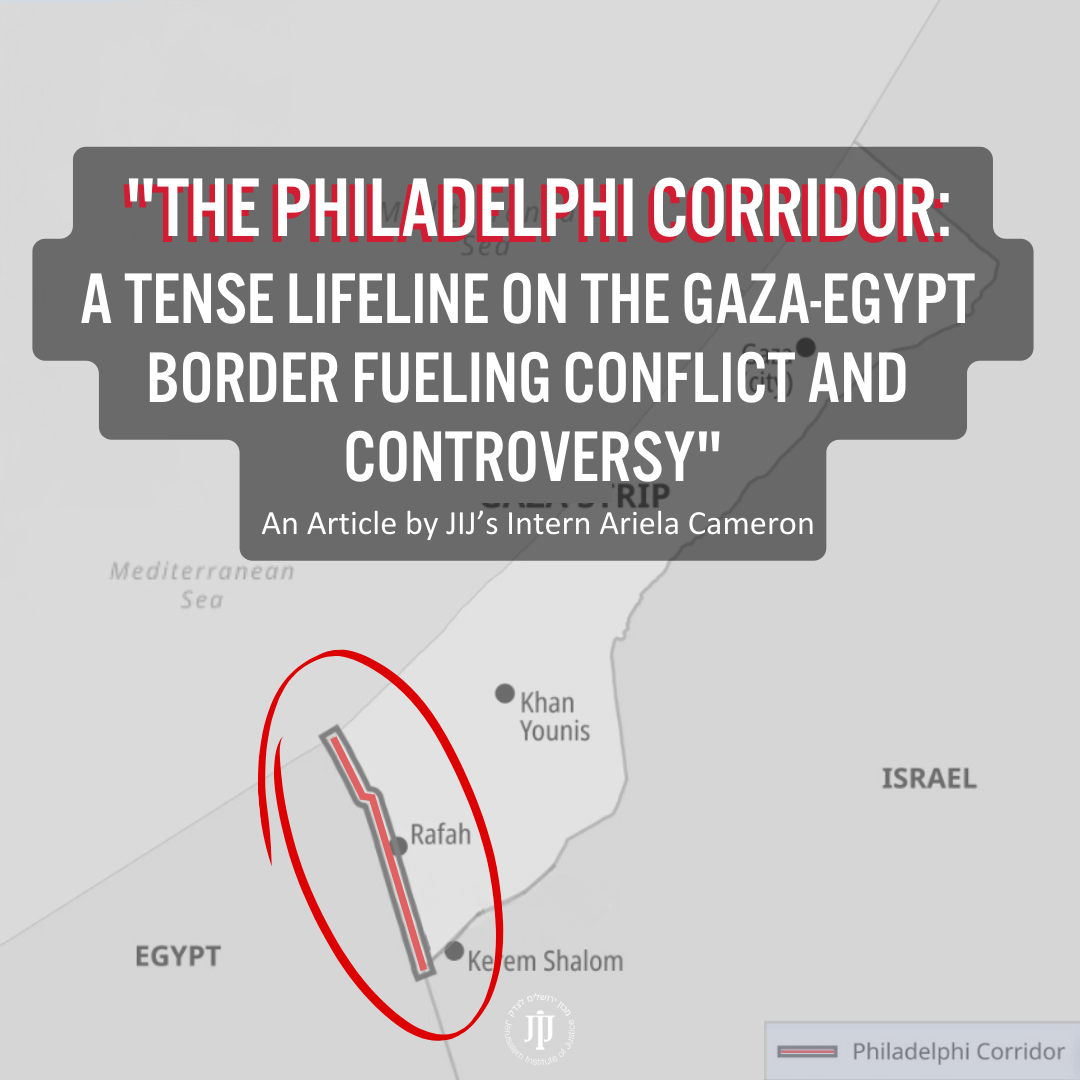
Philadelphi Corridor: The Critical Strip Shaping Gaza's Future Amid Tensions and Negotiations
The Philadelphi Corridor, running along the Gaza-Egypt border, is a focal point of intense
debate. It plays a critical role as a vital conduit for essential supplies and materials into Gaza,
acting both as an air bridge for resupply and a checkpoint for movement in and out of the
territory. During the Swords of Iron War, Israel's control of this corridor has been viewed by
the Western world as worsening the isolation of Gazans, who are already displaced for their
safety.
The corridor’s significance is underscored1 by its’ role in transporting essential supplies,
including food and weapons. Currently controlled by the Israeli Defence Forces (IDF), its
management raises concerns about its effects on aid from Iran and Iraq and its role in
smuggling. "That control is critical … some areas are wide enough for trucks, which have been
used to smuggle weapons and personnel into Gaza."2 This corridor can significantly impact the
humanitarian situation and potentially cause chaos if used for smuggling. If controlled by
Hamas, it remains a persistent issue for Israel.
Hamas, elected to the Palestinian Parliament in 2006, has clashed with Fatah and the
Palestinian Authority (PA), which both support a two-state solution that Hamas opposes. The
corridor's control limits Hamas' access to weapons and supplies from Egypt, giving Israel
leverage to weaken Hamas and influence negotiations. However, the Western world
disapproves of this control and is urging Israeli leaders and the IDF to withdraw military
personnel before finalizing a deal.
Egypt has cautioned Israel against taking actions that could drive Gazans to cross the border or
jeopardise the significant peace agreement between the two nations established in 19793. In
response, Israel plans to relinquish partial control of the corridor as part of a hostage deal with
Hamas, aiming to preserve its alliance with Egypt. This move alleviates pressure on Prime
Minister Netanyahu and shifts responsibility to Hamas leaders like Yahya Sinwar. By agreeing
to the terms set out by the US, Israel disrupts Hamas’s supply chain and affects Western
perceptions of the situation.
Recently, the US has been facilitating talks for a ceasefire and hostage return, focusing on “how
to advance hostage negotiations”4. Netanyahu has indicated that the IDF will stay within the
corridor. The US supports the IDF’s strategic aims due to its alliance with Israel, but
maintaining control of the corridor does not help in retrieving hostages. Despite public pressure
for a quick resolution, Israel views the corridor as vital for strategy and negotiations, rejecting
a full military withdrawal. Prominent figures like Antony Blinken advocate for a swift
resolution to ensure safety. As of August 24th, 2024, President Biden and Prime Minister
Netanyahu have reached an agreement on the corridor. Despite differing views, they have
informally agreed to a military withdrawal as per request from Egypt and Hamas6.
Written by Ariela Cameron
Jerusalem Institute of Justice Intern
To Read the Article with the notes- Click Here

Philadelphi Corridor: The Critical Strip Shaping Gaza's Future Amid Tensions and Negotiations
The Philadelphi Corridor, running along the Gaza-Egypt border, is a focal point of intense
debate. It plays a critical role as a vital conduit for essential supplies and materials into Gaza,
acting both as an air bridge for resupply and a checkpoint for movement in and out of the
territory. During the Swords of Iron War, Israel's control of this corridor has been viewed by
the Western world as worsening the isolation of Gazans, who are already displaced for their
safety.
The corridor’s significance is underscored1 by its’ role in transporting essential supplies,
including food and weapons. Currently controlled by the Israeli Defence Forces (IDF), its
management raises concerns about its effects on aid from Iran and Iraq and its role in
smuggling. "That control is critical … some areas are wide enough for trucks, which have been
used to smuggle weapons and personnel into Gaza."2 This corridor can significantly impact the
humanitarian situation and potentially cause chaos if used for smuggling. If controlled by
Hamas, it remains a persistent issue for Israel.
Hamas, elected to the Palestinian Parliament in 2006, has clashed with Fatah and the
Palestinian Authority (PA), which both support a two-state solution that Hamas opposes. The
corridor's control limits Hamas' access to weapons and supplies from Egypt, giving Israel
leverage to weaken Hamas and influence negotiations. However, the Western world
disapproves of this control and is urging Israeli leaders and the IDF to withdraw military
personnel before finalizing a deal.
Egypt has cautioned Israel against taking actions that could drive Gazans to cross the border or
jeopardise the significant peace agreement between the two nations established in 19793. In
response, Israel plans to relinquish partial control of the corridor as part of a hostage deal with
Hamas, aiming to preserve its alliance with Egypt. This move alleviates pressure on Prime
Minister Netanyahu and shifts responsibility to Hamas leaders like Yahya Sinwar. By agreeing
to the terms set out by the US, Israel disrupts Hamas’s supply chain and affects Western
perceptions of the situation.
Recently, the US has been facilitating talks for a ceasefire and hostage return, focusing on “how
to advance hostage negotiations”4. Netanyahu has indicated that the IDF will stay within the
corridor. The US supports the IDF’s strategic aims due to its alliance with Israel, but
maintaining control of the corridor does not help in retrieving hostages. Despite public pressure
for a quick resolution, Israel views the corridor as vital for strategy and negotiations, rejecting
a full military withdrawal. Prominent figures like Antony Blinken advocate for a swift
resolution to ensure safety. As of August 24th, 2024, President Biden and Prime Minister
Netanyahu have reached an agreement on the corridor. Despite differing views, they have
informally agreed to a military withdrawal as per request from Egypt and Hamas6.
Written by Ariela Cameron
Jerusalem Institute of Justice Intern
To Read the Article with the notes- Click Here
Echoes of Denial - FactSheet
The October 7th Atrocities and Rising Antisemitism
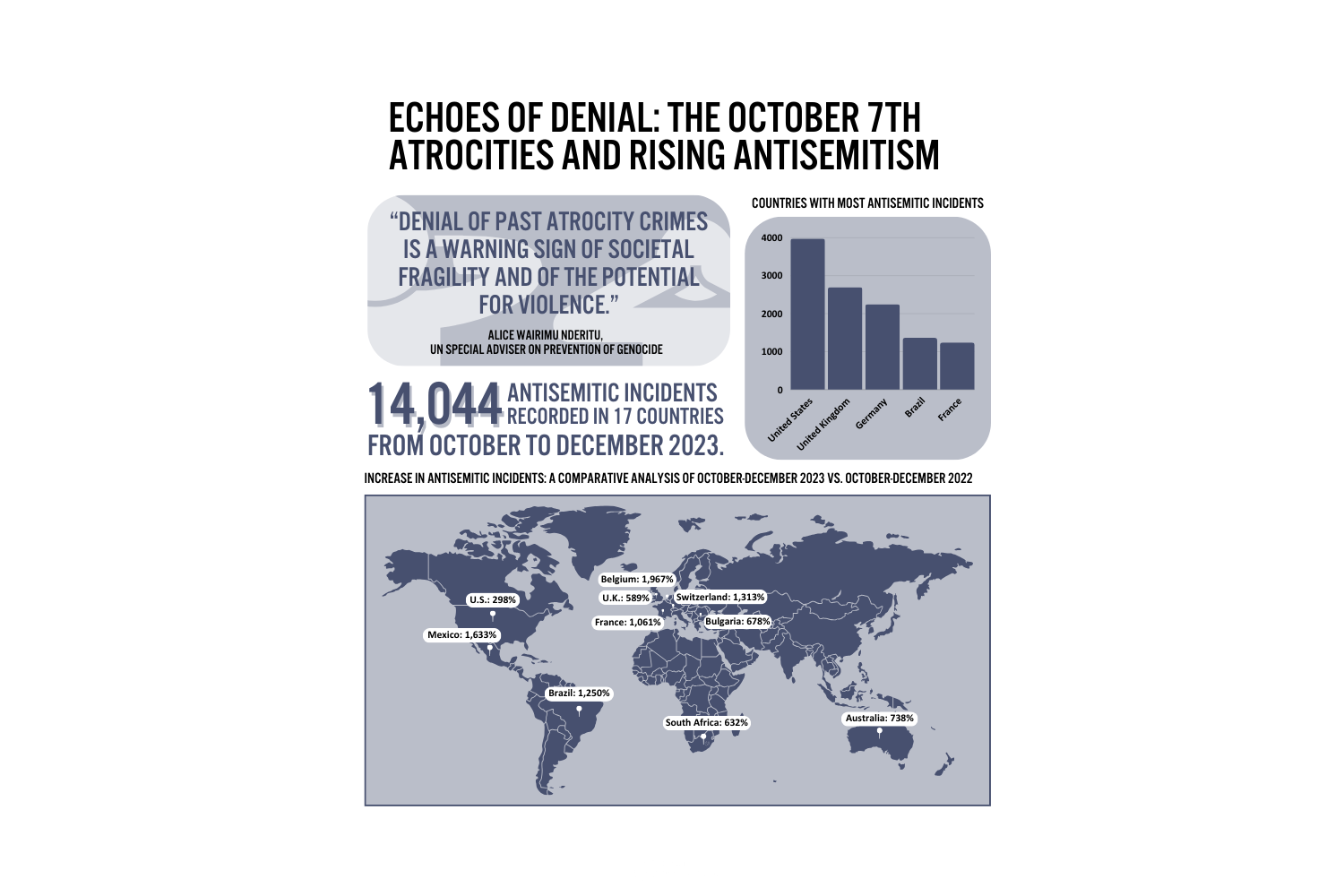
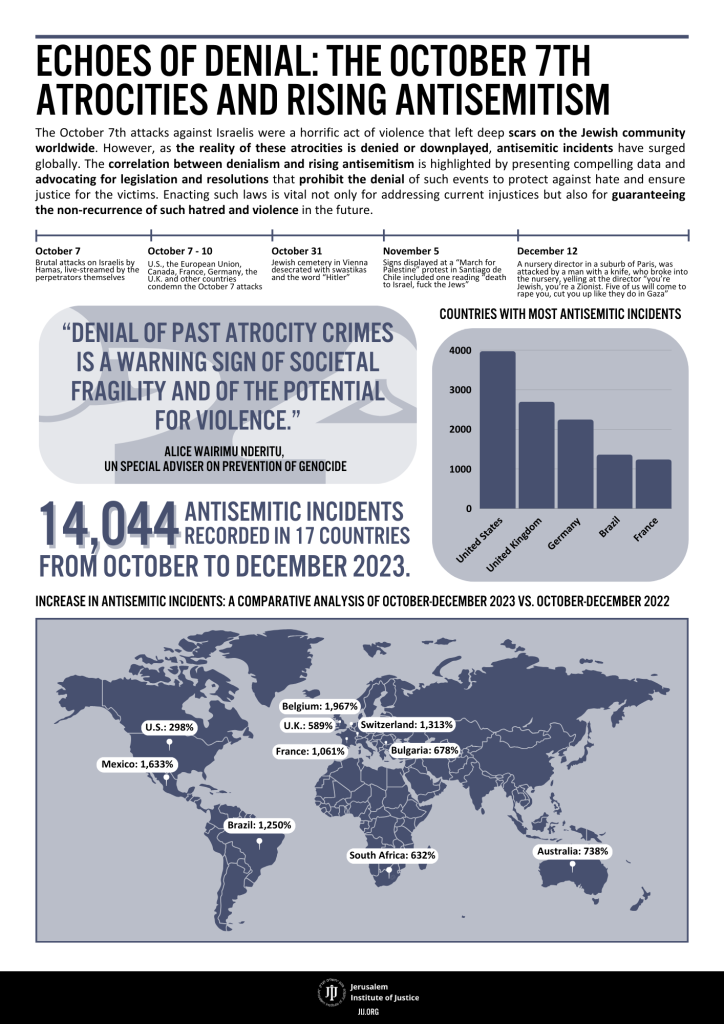
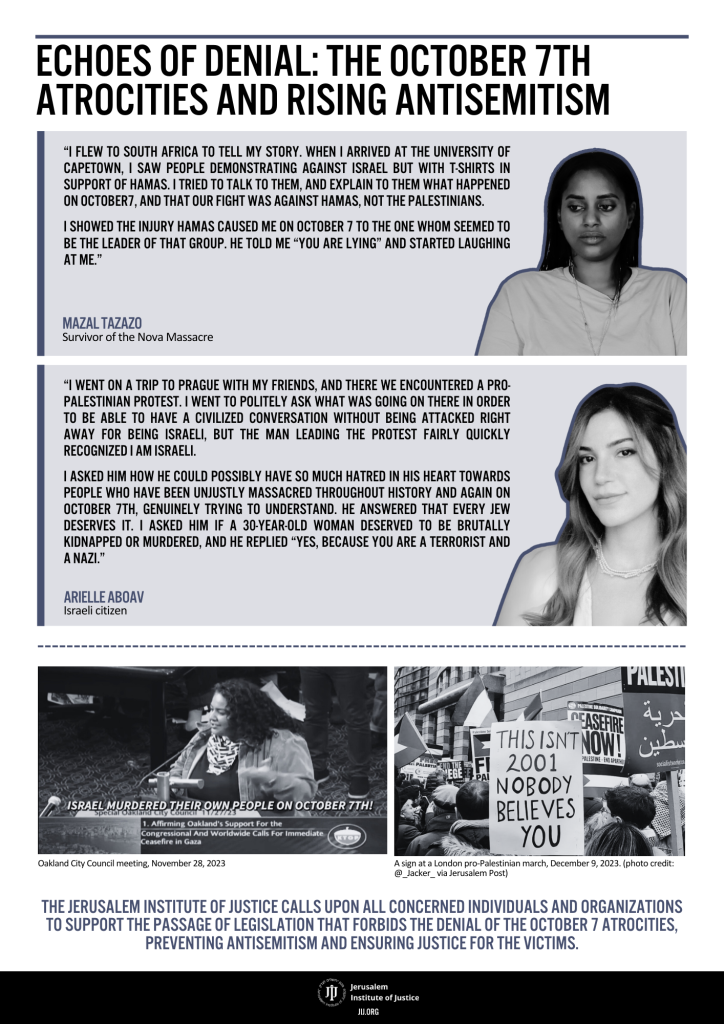
The October 7th attacks against Israelis were a horrific act of violence that left deep scars on the Jewish community worldwide. However, as the reality of these atrocities is denied or downplayed, antisemitic incidents have surged globally. The correlation between denialism and rising antisemitism is highlighted by presenting compelling data and advocating for legislation and resolutions that prohibit the denial of such events to protect against hate and ensure justice for the victims. Enacting such laws is vital not only for addressing current injustices but also for guaranteeing the non-recurrence of such hatred and violence in the future. Download factsheet here.
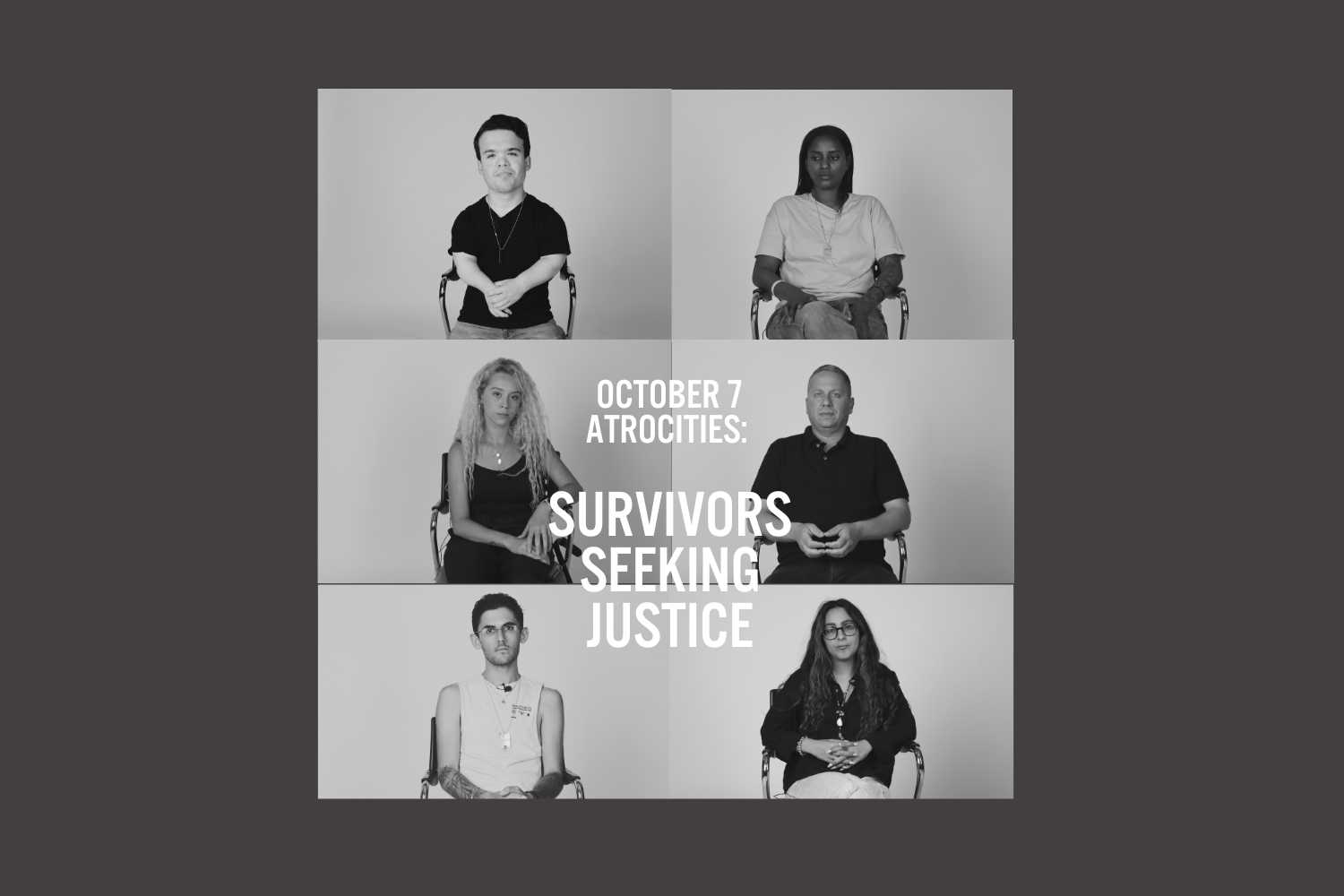
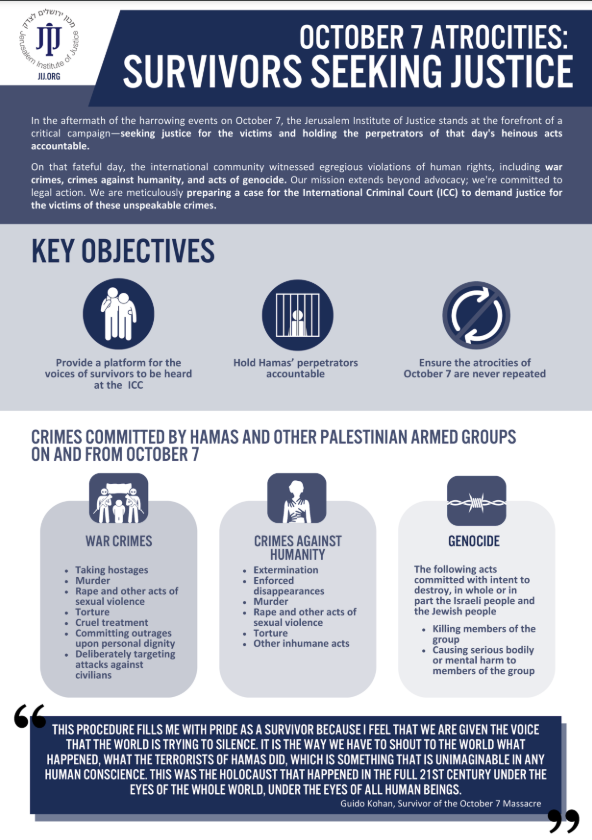
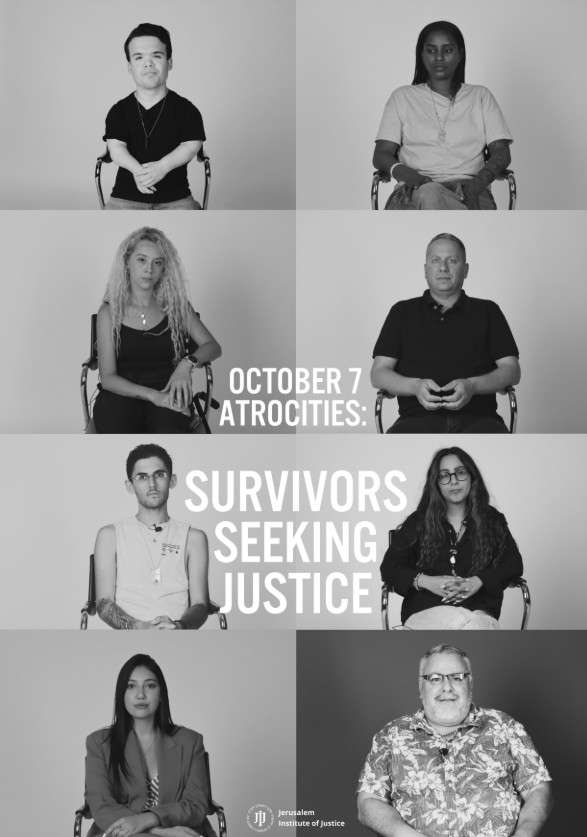
Survivors Seeking Justice
In the afthermath of the harrowing events on October 7, the Jerusalem Institute of Justice stands at the forefront of a campaign to seek justice for the survivors and to hold the perpetrators of that day's heniouse acts accountable. Here are the facts.
Download
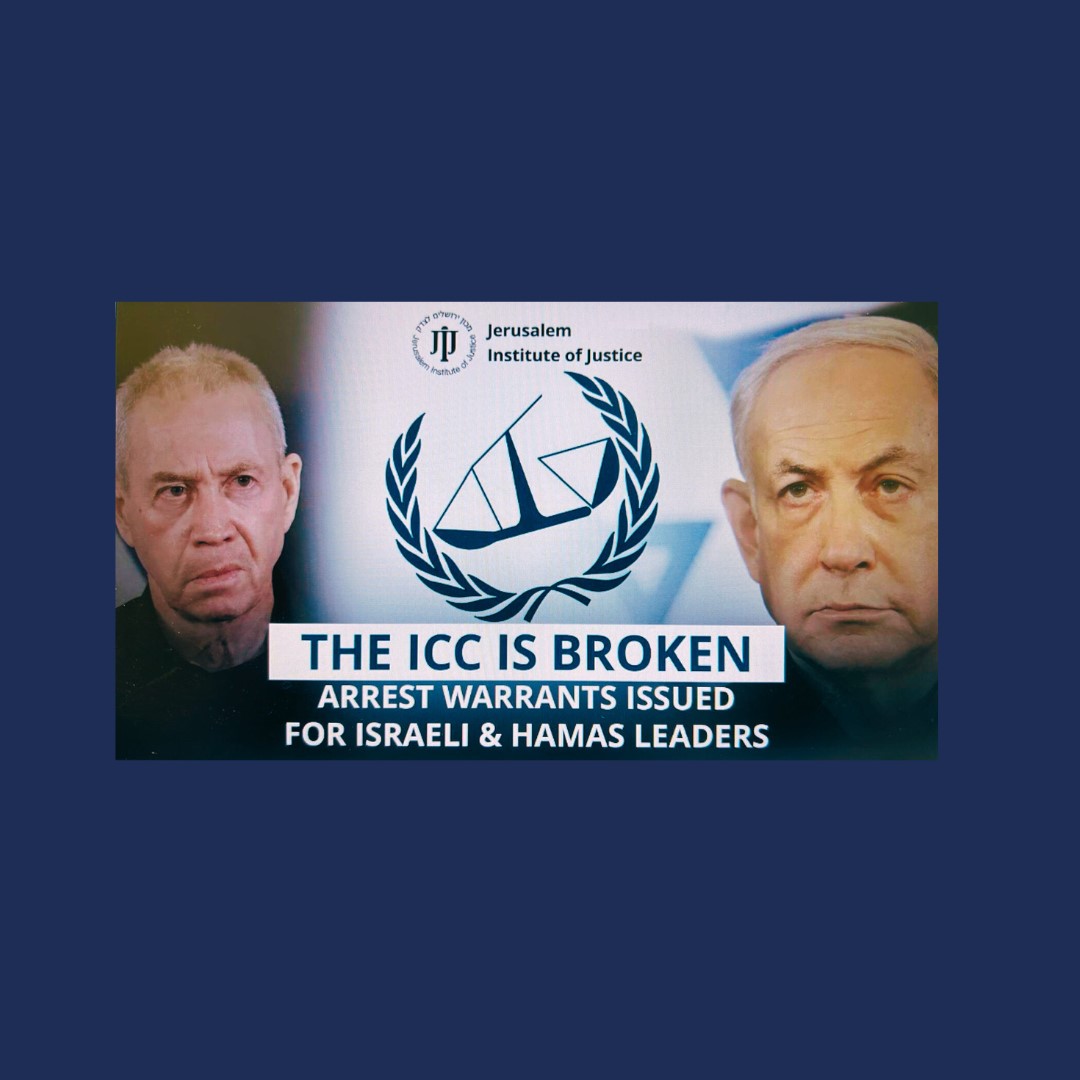
Response to ICC Prosecutor’s Request for Arrest Warrants for Hamas & Israeli Leaders
The Jerusalem Institute of Justice welcomes the ICC Prosecutor’s request for the issuance of
arrest warrants for Hamas’ leaders Yahya Sinwar, Mohamed Deif, and Ismail Haniyeh. We
are disappointed that Hamas’ leaders were not charged with the crime of genocide, despite
constantly expressing their fervent intent to exterminate all Israeli nationals and Jews, and
live streaming the evidence of how they brought this intent to action on October 7th.
We are appalled that the Prosecutor intentionally delayed this maneuver, seeking to pair it
with a request for arrest warrants for Israeli leaders Benjamin Netanyahu and Yoav Gallant.
If the Pre-Trial Chamber approves of this linkage, it will draw a false moral equivalence
between the parties to this conflict.
Since its establishment, the ICC has refrained from pursuing democratically elected officials
whose armies are engaged in wars of self-defense. It is fundamentally reckless to break from
this precedent for the first time when the democratic officials in question are the leaders of
the world’s only Jewish state, and at a time of rising global antisemitism. This development
will only serve to validate the claims of Hamas’ sympathizers across the globe, inspiring
more frequent and more violent attacks on Jewish people across the Diaspora.
The State of Israel has demonstrated that it is able and willing to investigate its own soldiers
and officials for any alleged violations of international law, including international
humanitarian law. Consequently, and in accordance with the principle of complementarity,
one of the most basic principles of the ICC, the Court should refrain from interfering.
The Prosecutor’s case against Israel rests on charges of “starvation” in seeming ignorance of
the fact that unprecedented levels of aid have entered Gaza since October 7th, including
400,000 tons of donated food.
Jerusalem Institute of Justice has sought the arrest of Hamas’ leaders through repeated
requests to the ICC’s Office of the Prosecutor since 2017, highlighting their systematic use of
torture, indoctrination of children, recruitment of child soldiers, and the abuse of civilians as
human shields. If they had been arrested for those crimes years ago, perhaps October 7th
never would have happened.
Despite today’s disappointing developments, we remain committed to pursuing justice for the
survivors and victims of Hamas’ atrocities, including through continued engagement with the
Office of the Prosecutor.
Effects and impacts on the latest UN Human Rights Council resolution
Two weeks ago, the United Nations Human Rights Council (UNHRC) adopted the resolution A/HRC/55/L.30, marking the first official position of the top UN human rights body on the war that started on October 7 atrocities. With a historical background of struggles against Israel by the Council, what does this resolution in particular say and omit? What are the direct effects and impacts on the Jewish State? Let's go deep in.
The UNHRC is the principal intergovernmental body responsible for the promotion and protection of human rights. Since its creation in 2006, the Council has worked to address and take action on human rights violations around the globe. It is composed of 47 member States who are elected by the UN General Assembly for three-year terms. Even though the UNHRC mission is relevant and necessary with the vast number of gory conflicts in the world, its exclusive 'preference' with Israel calls into question the Council's prestige and reputation.
In 2007, when the UNHRC's members were discussing the working methods of the body, they determined that Israel would be the only country whose human rights record is examined under a special agenda item (No. 7), while all other countries’ records are examined in the general debate. From the beginning of its activities, Israel has been by far the biggest target of the Council's resolutions, with 104[1] condemnatory resolutions. Next on the list is Syria with 43, North Korea with 16, and Iran with 14. Not enough, it adopted zero resolutions on gross human rights abuses perpetrated in countries like Saudi Arabia, China, Turkey or Zimbabwe. The open bias of the Council was once again proven during its previous session, which concluded on October 13, when it failed to condemn the terror attacks carried out by Hamas.
The recently approved resolution was brought forward by Pakistan on behalf of the members of the Organization of Islamic Cooperation in the 55th Regular Session of the UNHRC. It calls upon all States to cease the sale, transfer, and diversion of arms to Israel and calls all States to ensure that the United Nations Relief and Works Agency for Palestine Refugees in the Near East (UNRWA) receives predictable, sustained, and sufficient funding, and calls for an immediate ceasefire in Gaza. It was approved by 28 state members, with 13 abstentions, and only 6 countries rejected the resolution, including Argentina, Germany, and the United States.
From a long list of questionable condemnations of Israel that are part of the document, two of them draw attention. First, the call for an arms embargo certainly puts into question Israel's right to self-defense, as it is an explicit attempt to influence the Israel Defense Forces' capacity. This request not only publicly benefits Hamas but also tries to affect the balance of power in the Middle East and the bilateral economic and military relations of Israel. Once an arms embargo is put in place, it can affect major agreements and alliances that are fundamental for Israel's defense against Hamas and other enemies in the region, primarily Iran.
Secondly, it endorses UNRWA and urges its continued funding, despite all evidence[2] that their employees participated in the October 7 massacres and that Hamas has completely infiltrated UNRWA’s staff and exploited its facilities for terrorist purposes. Thus, an open call for the continuity of this agency is a clear message that the UNHRC is blinded about the structural failure of UNRWA, putting at risk both Israelis and Palestinian lives.
As the 'guardian' of global human rights protection, the Council drastically failed (once again) when it didn't comment on the October 7 atrocities committed by Hamas, marked as the darkest day of the Jewish People since the Holocaust with 1,200 murdered. The resolution refuses to describe Hamas’s atrocities for genocidal threats against Israeli civilians, including mass rape and sexual violence against women, or torture and sexual violence against hostages in Gaza, which is still ongoing and has already gone public.[3] Additionally, the resolution is very slight when referring to the remaining 133 hostages taken by Hamas, dedicating 2 sentences from the 8-page document to it.
Approved on the eve of the mark of 180 days of war, the text is clearly one-sided against Israel, as Hamas is not even mentioned once. Meirav Eilon Shahar, Israel’s ambassador to the UN in Geneva, accused the UNHRC of having “long abandoned the Israeli people and long defended Hamas." This resolution is a moral stain on the Council, as it fails to acknowledge Hamas' responsibilities and undermines Israel’s right to self-defense.
Does the A/HRC/55/L.30 resolution have feasible implications? Amid its possible effects and impacts, it can strengthen the political pressure of the international community on Israel or even influence the diplomatic relations with the countries who took an active part in the resolution. But its most visible effect is the symbolic value of the Council's condemnation, although it isn't the first UN institution to state on the current Israel-Gaza War[4][5][6]. The main question is if the resolution will lead the countries to join the arms embargo. Until now, Canada[7] and The Netherlands[8] have announced their intention to halt the sales of weapons to Israel, nevertheless it looks challenging that this international pressure will speak louder than the nation's military interests.
The UNHRC's recent resolution seems to have a low direct impact on Israel, but it turns on another yellow light about further implications. Yet, this resolution not only disclaims Hamas' responsibility for the horrific atrocities it committed but also denies what happened on October 7 and doesn't call in a clear and forceful way for the immediate return of the 133 hostages taken in captivity in inhuman conditions.
Moreover, in the side-event[9] promoted by the Jerusalem Institute of Justice during the 55th regular session of the UNHRC, Dr Sigall Horovitz precisely cleared out: "The Israeli-Palestinian Conflict has reached the bottom of the pit, we are in the heart of darkness. Do we want to stay there? Or do we want to finally address the causes of the violence? Without it, we will never be safe from atrocities".
Article by: Ionatan Gottfried
[1] UN Watch Database. https://unwatch.org/database/
[2] Israel reveals 12 UNRWA staffers it says took part in Oct. 7, says 30 more assisted. (2024, February 16). The Times of Israel. https://www.timesofisrael.com/israel-reveals-12-unrwa-staffers-it-says-took-part-in-oct-7-says-30-more-assisted/
[3] Israeli hostage says she was sexually assaulted and tortured in Gaza. (2024, March 26). The New York Times. https://www.nytimes.com/2024/03/26/world/middleeast/hamas-hostage-sexual-assault.html
[4] U.N. Security Council passes resolution demanding immediate Hamas-Israel war cease-fire, release of hostages. (2024, March 25). CBS News. https://www.cbsnews.com/news/israel-hamas-war-cease-fire-gaza-un-security-council-resolution-ramadan/
[5] General Assembly Adopts Resolution Demanding Immediate Humanitarian Ceasefire in Gaza, Parties’ Compliance with International Law, Release of All Hostages | Meetings Coverage and Press Releases. (2023, December 12). https://press.un.org/en/2023/ga12572.doc.htm
[6] Order of 26 January 2024 | INTERNATIONAL COURT OF JUSTICE. https://www.icj-cij.org/node/203447
[7] Lazaroff, B. T. (2024, March 20). Canada to stop arms sale to Israel, FM Joly says. The Jerusalem Post | JPost.com. https://www.jpost.com/breaking-news/article-792782
[8] Reuters, B. (2024, February 12). Dutch court orders halt to export of F-35 jet parts to Israel. The Jerusalem Post | JPost.com. https://www.jpost.com/breaking-news/article-786463
[9] Jerusalem Institute of Justice (2024, March 28). Preventing Genocide: Legal Perspectives on Oct. 7th [Video]. YouTube. https://www.youtube.com/watch?v=82TPJzTPXHM
Effects and impacts on the latest UN Human Rights Council resolution
Two weeks ago, the United Nations Human Rights Council (UNHRC) adopted the resolution A/HRC/55/L.30, marking the first official position of the top UN human rights body on the war that started on October 7 atrocities. With a historical background of struggles against Israel by the Council, what does this resolution in particular say and omit? What are the direct effects and impacts on the Jewish State? Let's go deep in.
The UNHRC is the principal intergovernmental body responsible for the promotion and protection of human rights. Since its creation in 2006, the Council has worked to address and take action on human rights violations around the globe. It is composed of 47 member States who are elected by the UN General Assembly for three-year terms. Even though the UNHRC mission is relevant and necessary with the vast number of gory conflicts in the world, its exclusive 'preference' with Israel calls into question the Council's prestige and reputation.
In 2007, when the UNHRC's members were discussing the working methods of the body, they determined that Israel would be the only country whose human rights record is examined under a special agenda item (No. 7), while all other countries’ records are examined in the general debate. From the beginning of its activities, Israel has been by far the biggest target of the Council's resolutions, with 104[1] condemnatory resolutions. Next on the list is Syria with 43, North Korea with 16, and Iran with 14. Not enough, it adopted zero resolutions on gross human rights abuses perpetrated in countries like Saudi Arabia, China, Turkey or Zimbabwe. The open bias of the Council was once again proven during its previous session, which concluded on October 13, when it failed to condemn the terror attacks carried out by Hamas.
The recently approved resolution was brought forward by Pakistan on behalf of the members of the Organization of Islamic Cooperation in the 55th Regular Session of the UNHRC. It calls upon all States to cease the sale, transfer, and diversion of arms to Israel and calls all States to ensure that the United Nations Relief and Works Agency for Palestine Refugees in the Near East (UNRWA) receives predictable, sustained, and sufficient funding, and calls for an immediate ceasefire in Gaza. It was approved by 28 state members, with 13 abstentions, and only 6 countries rejected the resolution, including Argentina, Germany, and the United States.
From a long list of questionable condemnations of Israel that are part of the document, two of them draw attention. First, the call for an arms embargo certainly puts into question Israel's right to self-defense, as it is an explicit attempt to influence the Israel Defense Forces' capacity. This request not only publicly benefits Hamas but also tries to affect the balance of power in the Middle East and the bilateral economic and military relations of Israel. Once an arms embargo is put in place, it can affect major agreements and alliances that are fundamental for Israel's defense against Hamas and other enemies in the region, primarily Iran.
Secondly, it endorses UNRWA and urges its continued funding, despite all evidence[2] that their employees participated in the October 7 massacres and that Hamas has completely infiltrated UNRWA’s staff and exploited its facilities for terrorist purposes. Thus, an open call for the continuity of this agency is a clear message that the UNHRC is blinded about the structural failure of UNRWA, putting at risk both Israelis and Palestinian lives.
As the 'guardian' of global human rights protection, the Council drastically failed (once again) when it didn't comment on the October 7 atrocities committed by Hamas, marked as the darkest day of the Jewish People since the Holocaust with 1,200 murdered. The resolution refuses to describe Hamas’s atrocities for genocidal threats against Israeli civilians, including mass rape and sexual violence against women, or torture and sexual violence against hostages in Gaza, which is still ongoing and has already gone public.[3] Additionally, the resolution is very slight when referring to the remaining 133 hostages taken by Hamas, dedicating 2 sentences from the 8-page document to it.
Approved on the eve of the mark of 180 days of war, the text is clearly one-sided against Israel, as Hamas is not even mentioned once. Meirav Eilon Shahar, Israel’s ambassador to the UN in Geneva, accused the UNHRC of having “long abandoned the Israeli people and long defended Hamas." This resolution is a moral stain on the Council, as it fails to acknowledge Hamas' responsibilities and undermines Israel’s right to self-defense.
Does the A/HRC/55/L.30 resolution have feasible implications? Amid its possible effects and impacts, it can strengthen the political pressure of the international community on Israel or even influence the diplomatic relations with the countries who took an active part in the resolution. But its most visible effect is the symbolic value of the Council's condemnation, although it isn't the first UN institution to state on the current Israel-Gaza War[4][5][6]. The main question is if the resolution will lead the countries to join the arms embargo. Until now, Canada[7] and The Netherlands[8] have announced their intention to halt the sales of weapons to Israel, nevertheless it looks challenging that this international pressure will speak louder than the nation's military interests.
The UNHRC's recent resolution seems to have a low direct impact on Israel, but it turns on another yellow light about further implications. Yet, this resolution not only disclaims Hamas' responsibility for the horrific atrocities it committed but also denies what happened on October 7 and doesn't call in a clear and forceful way for the immediate return of the 133 hostages taken in captivity in inhuman conditions.
Moreover, in the side-event[9] promoted by the Jerusalem Institute of Justice during the 55th regular session of the UNHRC, Dr Sigall Horovitz precisely cleared out: "The Israeli-Palestinian Conflict has reached the bottom of the pit, we are in the heart of darkness. Do we want to stay there? Or do we want to finally address the causes of the violence? Without it, we will never be safe from atrocities".
Article by: Ionatan Gottfried
[1] UN Watch Database. https://unwatch.org/database/
[2] Israel reveals 12 UNRWA staffers it says took part in Oct. 7, says 30 more assisted. (2024, February 16). The Times of Israel. https://www.timesofisrael.com/israel-reveals-12-unrwa-staffers-it-says-took-part-in-oct-7-says-30-more-assisted/
[3] Israeli hostage says she was sexually assaulted and tortured in Gaza. (2024, March 26). The New York Times. https://www.nytimes.com/2024/03/26/world/middleeast/hamas-hostage-sexual-assault.html
[4] U.N. Security Council passes resolution demanding immediate Hamas-Israel war cease-fire, release of hostages. (2024, March 25). CBS News. https://www.cbsnews.com/news/israel-hamas-war-cease-fire-gaza-un-security-council-resolution-ramadan/
[5] General Assembly Adopts Resolution Demanding Immediate Humanitarian Ceasefire in Gaza, Parties’ Compliance with International Law, Release of All Hostages | Meetings Coverage and Press Releases. (2023, December 12). https://press.un.org/en/2023/ga12572.doc.htm
[6] Order of 26 January 2024 | INTERNATIONAL COURT OF JUSTICE. https://www.icj-cij.org/node/203447
[7] Lazaroff, B. T. (2024, March 20). Canada to stop arms sale to Israel, FM Joly says. The Jerusalem Post | JPost.com. https://www.jpost.com/breaking-news/article-792782
[8] Reuters, B. (2024, February 12). Dutch court orders halt to export of F-35 jet parts to Israel. The Jerusalem Post | JPost.com. https://www.jpost.com/breaking-news/article-786463
[9] Jerusalem Institute of Justice (2024, March 28). Preventing Genocide: Legal Perspectives on Oct. 7th [Video]. YouTube. https://www.youtube.com/watch?v=82TPJzTPXHM
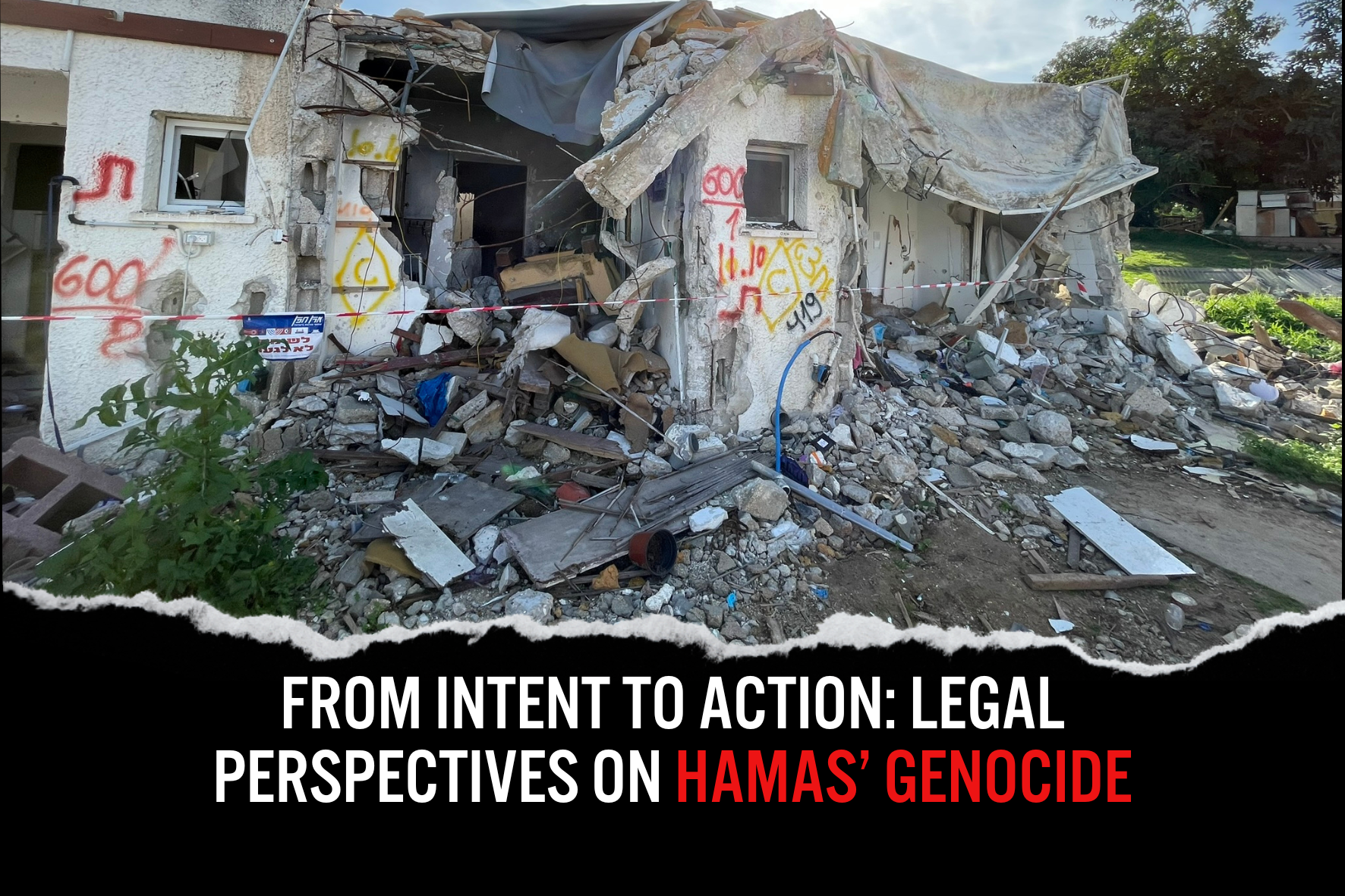
From Intent to Action: Legal Perspectives on Hamas’ Genocide
CONTENT WARNING: THIS REPORT CONTAINS EXPLICIT GRAPHIC CONTENT, INCLUDING IMAGES AND DESCRIPTIONS OF KILLINGS, SEXUAL VIOLENCE, AND OTHER FORMS OF EXTREME VIOLENCE, WHICH MAY BE DISTURBING OR TRIGGERING TO SOME READERS
This report provides a comprehensive analysis of the October 7, 2023, attacks perpetrated by Hamas and other terrorist organizations, arguing that these acts fulfill the criteria to be considered genocide under international law. The document outlines the historical context of the Genocide Convention of 1948, emphasizing the legal definition of genocide and its codification in international law, particularly under the Rome Statute of the International Criminal Court (ICC).
In this report meticulously details the background, entities involved, and the horrifying acts of October 7, focusing on the systematic attacks by Hamas and other Palestinian armed groups against Israeli nationals, resulting in over 1,200 deaths and numerous acts of violence, including rape, mutilation, and kidnapping. It argues that these acts satisfy the physical element (actus reus) of genocide, including killing members of a group, causing serious harm, and imposing measures intended to prevent births within the group.
Furthermore, it elaborates on the mental component (dolus specialis) required for genocide, highlighting how speeches and actions by Hamas’ most influential leaders before and after the attacks evidence genocidal intent. The report discusses individual and state responsibility for genocide, noting the role of the ICC, the International Court of Justice (ICJ), and the application of universal jurisdiction in prosecuting such crimes. It also addresses the Palestinian Authority's complicity through financial incentives for terrorists (the "Pay for Slay" policy) and public endorsements of the attacks.
The report concludes by underscoring the necessity of recognizing and naming the crime committed on October 7 as genocide in accordance with legal standards and the evidence presented. It calls for accountability through international legal mechanisms to address and prevent such atrocities in the future.
Responding to the ICC - New Reports
Watch the following interviews of JIJ's team
Interview with JIJ Director of US Policy & Diplomacy, Monique Beadle on i24 News.
Interview with JIJ Human Rights Lawyer, Carolina Gimberg on Kan En Espanol.
Interview with JIJ Attorney, Uri Morad on Radio 103FM.
Interview with JIJ Attorney, Uri Morad on Radio Kan Moreshet
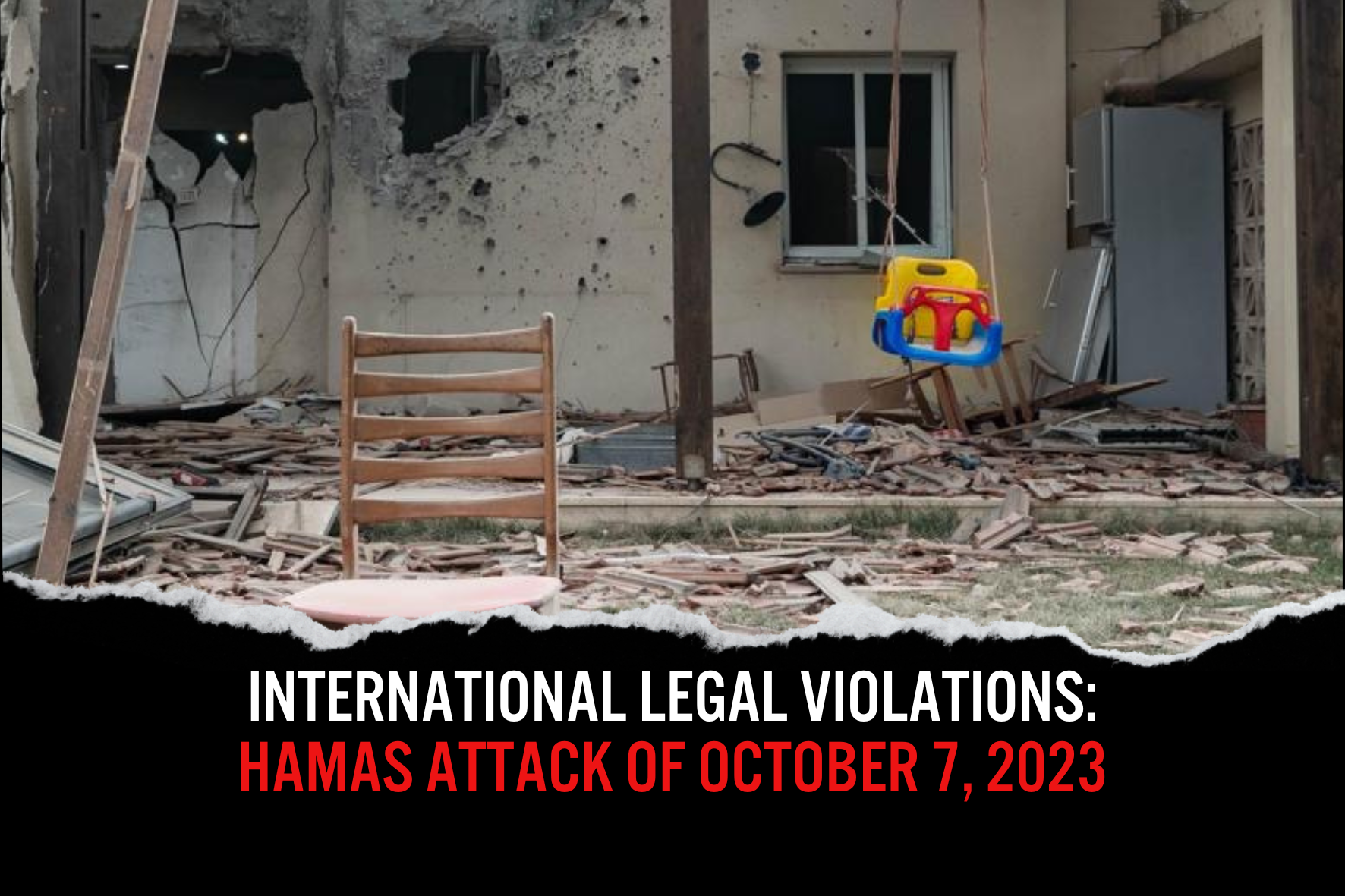
International Legal Violations Hamas Attack of October 7, 2023
CONTENT WARNING: THIS REPORT CONTAINS EXPLICIT GRAPHIC CONTENT, INCLUDING IMAGES AND DESCRIPTIONS OF KILLINGS, SEXUAL VIOLENCE, AND OTHER FORMS OF EXTREME VIOLENCE, WHICH MAY BE DISTURBING OR TRIGGERING TO SOME READERS
This report delineates several instances of international human rights law (IHRL) and international humanitarian law (IHL) violations perpetrated by Hamas and other Palestinian terrorist groups on October 7, 2023. The instances of violations presented herein are not exhaustive and constitute only a partial representation of the atrocities perpetrated during the mentioned
period.
The comprehensive evidence in this report unequivocally establishes the October 7th attack by Hamas and other Palestinian armed groups as a severe violation of fundamental international laws and basic human principles. Though only a fraction of the transgressions committed, the atrocities detailed herein affirm the breach of specific International Humanitarian Law (IHL) and International Human Rights Law (IHRL) rules.
Considerable efforts by states, human rights defenders, international organizations, civil society, and others have been invested in establishing bodies and mechanisms, particularly within the United Nations, to uphold international law and ensure accountability for those who violate it. These UN mechanisms must be leveraged to address the atrocities of October 7th.
In light of the above, we urge the implementation of all available actions to address the human rights and humanitarian law violations outlined in this document, along with the following specific measures:
-
- 1- Advocate and activate accountability measures for the atrocities committed and raise awareness about the documented violations, both within the United Nations system and globally, and to garner support for preventive and accountability measures.
- 2- Report the findings to the relevant bodies, including those of the United Nations. Implementation of preventive measures to deter future violations, such as increasedmonitoring, diplomatic pressure, and peacekeeping efforts, to mitigate the risk of further human rights abuses.
- 3- Monitor the situation closely, providing regular updates and follow-up reports to assess the progress made in addressing the documented violations and implementing accountability measures.
The acts committed on October 7th represent the gravest violations of basic human rights, demanding urgent intervention and unwavering commitment to justice.