LEGAL ACTION IN THE INTERNATIONAL ARENA
The Jerusalem Institute of Justice has been actively engaged in legal proceedings before the International Criminal Court (ICC), particularly focusing on the actions of Hamas and other terrorist organizations. In response to the October 7, 2023, attacks, JIJ has intensified its efforts to hold these groups accountable, arguing that these acts meet the criteria for genocide under international law. The legal documents submitted by JIJ underscore the historical context of the Genocide Convention of 1948 and emphasize the legal definition of genocide as codified in the Rome Statute of the ICC.
In past years, JIJ has filed extensive legal complaints and memos to both national and international bodies, highlighting human rights violations in the region. Their goal is to bring perpetrators, who have enjoyed impunity, to justice. Notably, JIJ has filed lawsuits against Hamas leader Ismail Haniyeh for war crimes committed against the Palestinian people in Gaza and against Chairman Mahmoud Abbas for crimes against Palestinian civilians in the West Bank.
In addition to these efforts, JIJ has submitted fifty-two Palestinian testimonies to the ICC in The Hague, revealing severe abuses committed by the Palestinian Authority against their own citizens. These testimonies detail brutal acts, including murder, kidnapping, imprisonment, torture, and rape of Palestinian and Israeli citizens residing in the West Bank. A landmark 1,800-page verdict by Judge Moshe Drori of the Jerusalem District Court has also held the Palestinian Authority accountable for these severe abuses.

Silencing Critical Voices
Article by Catarina Gruber.
The United Nations General Assembly granted Palestine the status of a non-member observer state on November 29, 2012. This status enabled Palestine to ratify international conventions and treaties and join over 115 international organizations and agencies.
By upgrading the international status to a non-member observer state, Palestine was also able to join the International Court of Justice and the International Criminal Court. Hence, Palestine is permitted to sue Israel for acts that take place in their territory, such as alleged crimes against humanity and war crimes.
However, Mahmoud Abbas and the Palestinian Authority do not themselves comply with the basic principles of international law and human rights. Abbas rules over Palestine with an iron fist. Abbas is implicated in the many cases of unlawful imprisonment, torture and murder of the civilian population of the West Bank, including his political rivals and critics.
Abbas shows no compunction when silencing critical voices. Issa Amro, a prominent Facebook activist, who dared to speak out against the Palestinian Authority in a post, was arrested and imprisoned for seven days for the crimes of insulting “higher authorities” and creating a “sectarian strife” in 2017.
Torture is carried out by Abbas’ forces on a large scale. More than 180 Palestinian civilians are tortured yearly. Young men from Balata Refugee Camp, widely known as a central point of resistance against Abbas, were detained on allegations of criminal activity in 2017. Palestinian security forces subjected them to prolonged torture, repeatedly using grave physical violence, and locking them into tiny 60cm by 60cm cubicles with nearly no possibility to move. The accused were kept imprisoned in those spaces for up to 22 hours a day for 22 consecutive days.
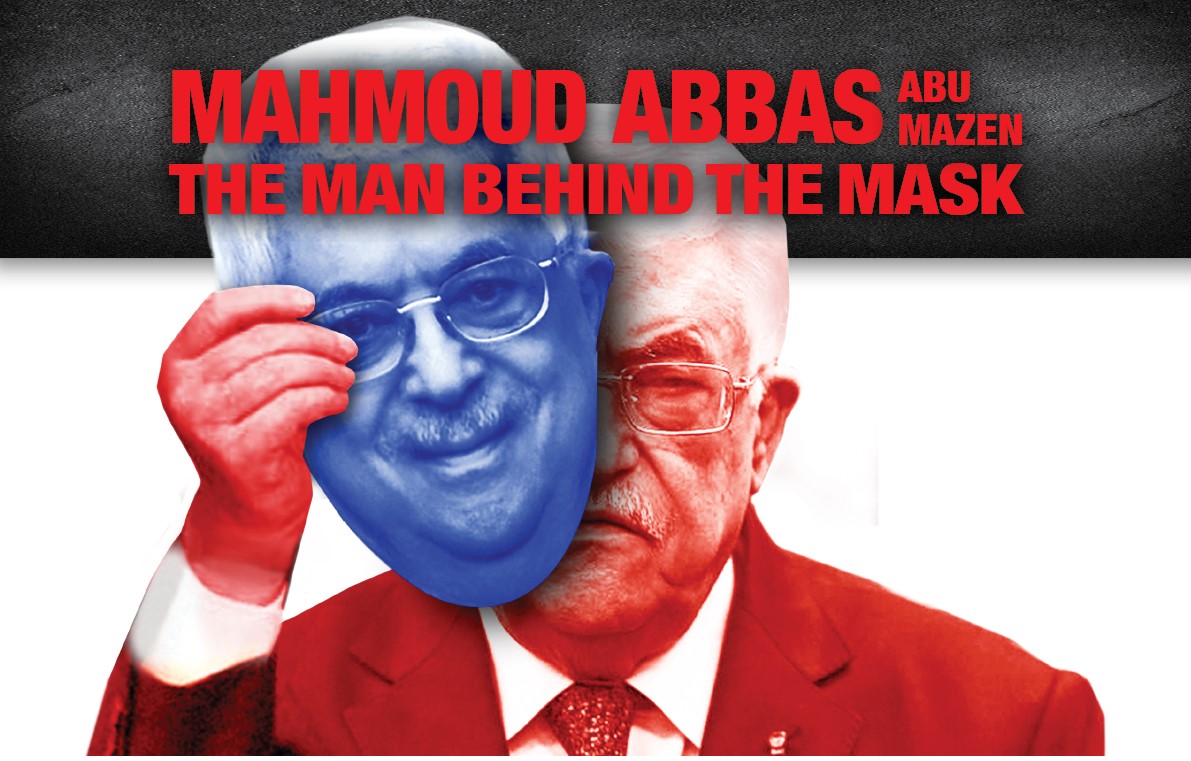
Mahmoud Abbas’ reputation as a peacemaker is just a façade that hides his true identity and agenda. The peace process came to a halt long before the US decision to relocate their embassy to Jerusalem. There are strong allegations of Abbas having played a role in the 1972 massacres at the Munich Olympics and the continual payments made to Palestinian terrorists and their families cause additional cracks in the veneer Abbas hides behind.
The misery of the Palestinian population in Gaza is also largely due to Abbas’ inadequacy as a leader. He has reduced the electricity supply, provoked healthcare bottlenecks and has stopped the payment of salaries of officials in Gaza. He wants to bring his strongest political rivals, the Hamas, to their knees even if the price is the suffering of the civilian population.
However, whenever Abbas visits Brussels, he is warmly welcomed like an old friend of the European Union. As one of the initiators of the 1993 Oslo Accords, he is considered moderate. Thus, his administration continues to be sponsored by the EU with hundreds of millions of euros. No consequences, certainly not financial ones, have been imposed because of Abbas’ appalling actions.
The more accusations against Mahmoud Abbas came to light, the more obvious it became that his actions could not be ignored any longer. The Jerusalem Institute of Justice (JIJ) took initiative and started a legal examination of the crimes committed by Abbas. While collecting data, the testimonies against Abbas grew and the number of cases reached an alarming amount. In consultation with experts in international law the JIJ rendered the factual data into a legal report.
On February 20, 2019 the JIJ submitted a communication to the Office of the Prosecutor (OTP) of the International Criminal Court (ICC) in The Hague regarding crimes against humanity committed against the Palestinian citizens in the West Bank by Mahmoud Abbas. In a meeting with the OTP the issue was taken very seriously, and constructive thoughts were shared. This tribunal has the moral responsibility to bring the perpetrator of such horrific crimes to justice.
Mahmoud Abbas - Accused of Crimes Against Humanity
Communication to the Office of the Prosecutor of the International Criminal Court regarding Crimes Against Humanity committed against Palestinian citizens in the West Bank by Mahmoud Abbas
EXECUTIVE SUMMARY
We, the Jerusalem Institute of Justice, submit this communication to the Office of the Prosecutor of the International Criminal Court concerning Mahmoud Abbas, in relation to crimes against humanity committed through a systematic and widespread campaign of murder, torture, and unlawful imprisonment against parts of the Palestinian population in in the territory of Judea and Samaria, known as the “West Bank”.
Abbas is a national of the Hashemite Kingdom of Jordan (“Jordan”), which has been a State Party to the ICC since 2002. Accordingly, the ICC has jurisdiction over crimes he has committed under the Rome Statute, regardless of where they took place.
Abbas became President of the Palestinian Authority (“PA”) in January 2005. Despite his term of office having elapsed without further elections being held, Abbas remains internationally recognized President and de facto leader of the PA, the body which maintains effective control over certain areas in the West Bank.
During his time in power, Abbas has directed or allowed various crimes against humanity against Palestinian groups – including those deemed to have been critical of the current PA government or which have supported rival Palestinian factions. Abbas knew of and was in a position to prevent the crimes against humanity that have been committed against the civilian population of the West Bank, yet he has manifestly failed to do so.
The case is grave enough to merit further investigation. Abbas’s crimes have had and will continue to have deleterious consequences on the Palestinian population of the West Bank, their families as well as the society and region. These crimes benefit no one but the PA leadership. There is no prospect of local justice; pursuant to a series of international agreements, the PA has sole jurisdiction over crimes committed by Palestinians against Palestinians within the West Bank. The PA courts are not independent of the PA government, and have done nothing to punish those who play a direct role in committing these crimes against humanity. In any event, as PA President, there is no realistic chance of Abbas being prosecuted by courts over which his administration exerts significant control.
The crimes of Abbas are not merely historical; they are ongoing and contribute to the continued conflict between the rival Palestinian political factions Hamas and Fatah, and to the instability in the region. This internal conflict within the Palestinian leadership is damaging to the Palestinian population it is supposed to represent, and renders peaceful coexistence with its neighbours increasingly difficult. The ICC has the rare opportunity to take an important step not just in punishing perpetrators and deterring crimes against humanity, but also in sending a powerful statement that torture and similar acts are unacceptable. For all these reasons, we urge the Office of the Prosecutor to launch a full investigation.
Download
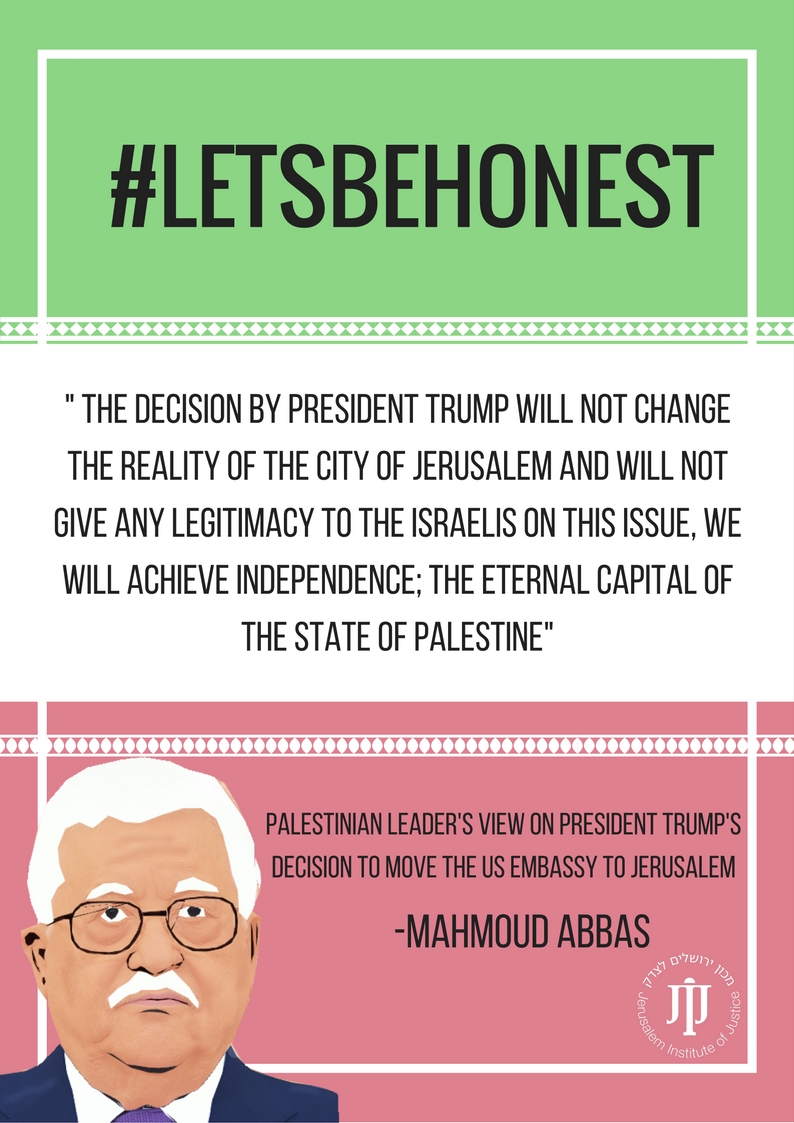
Quotes form Abbas: Following Trump's Declaration
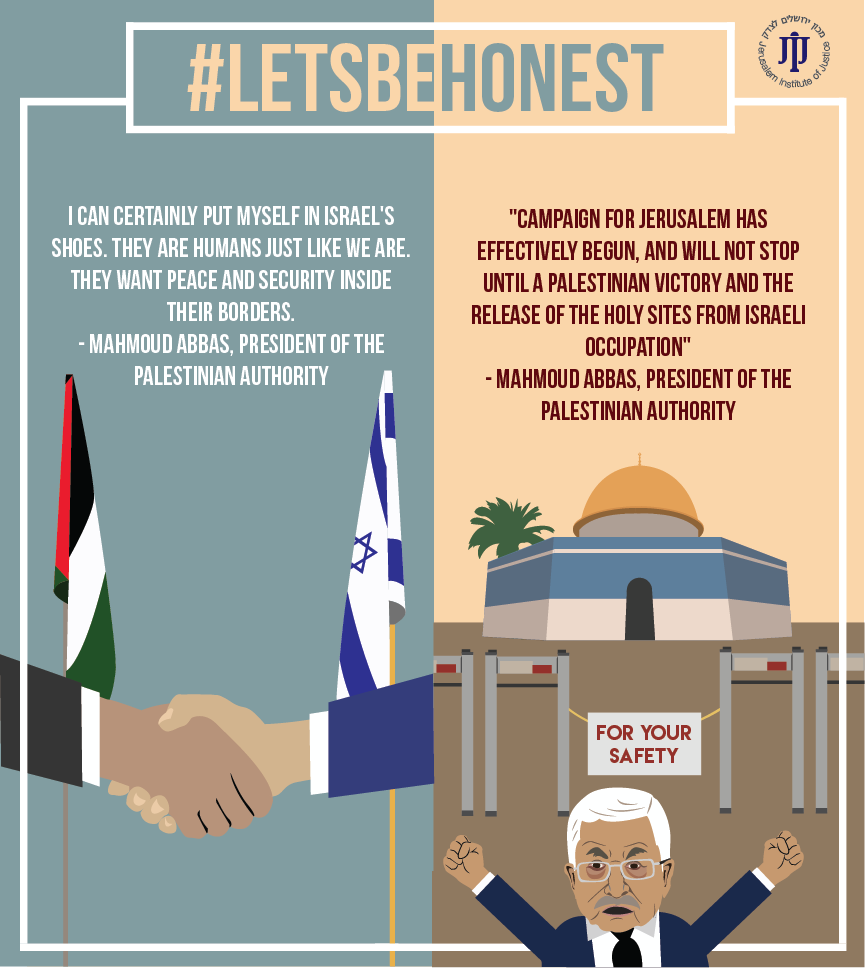
LetsBeHonest attempts to bring truth into our world of cluttered reality. What's the truth in the Middle East? Following Trump's declaration we see outrage and threats coming from our neighboring nations.
Download
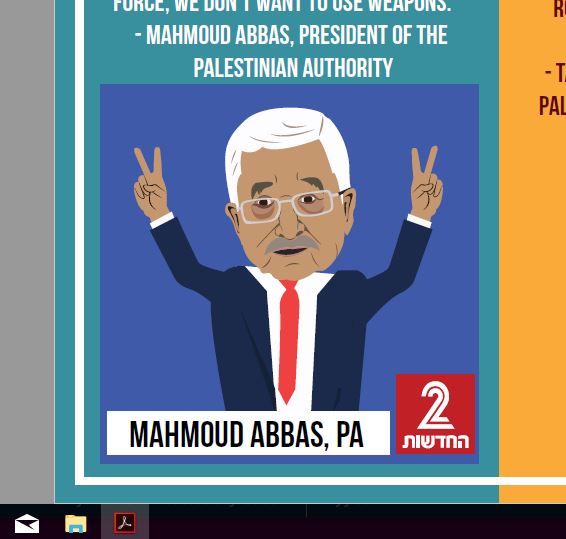
We will kill you with rocks
"We don't want to use terror against Israel." or "We will persue you with car rammings and kill you with rocks."? Which statement is true?
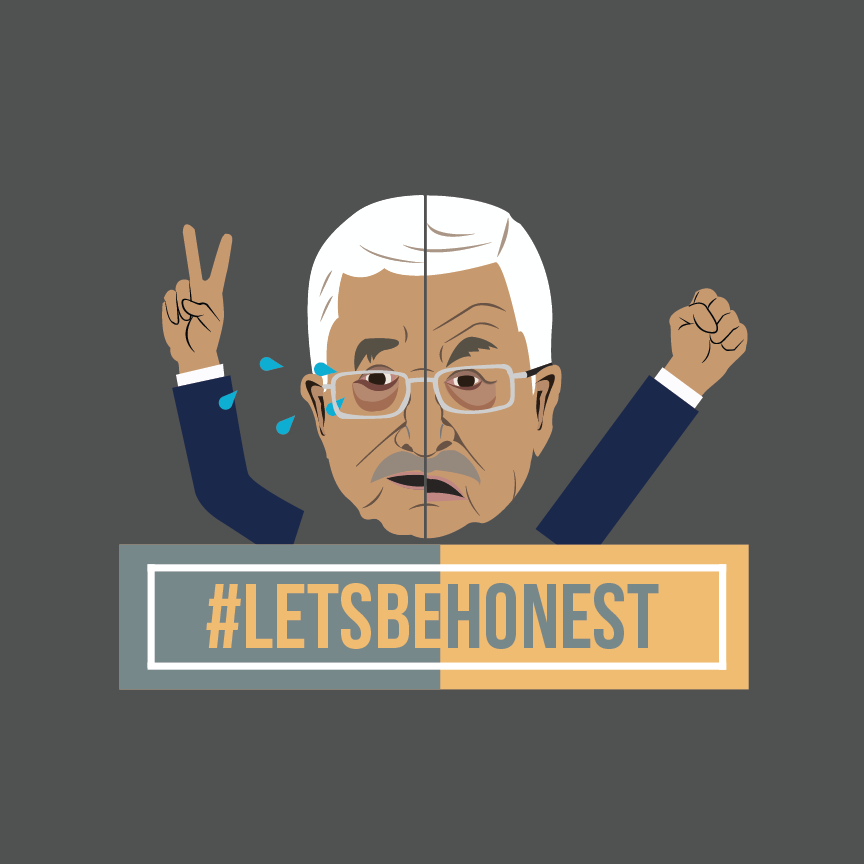
The #LetsBeHonest Campaign seeks to expose the duplicitous claims spoken by Arab leaders to the West and exposes their true intentions toward peace.
Download
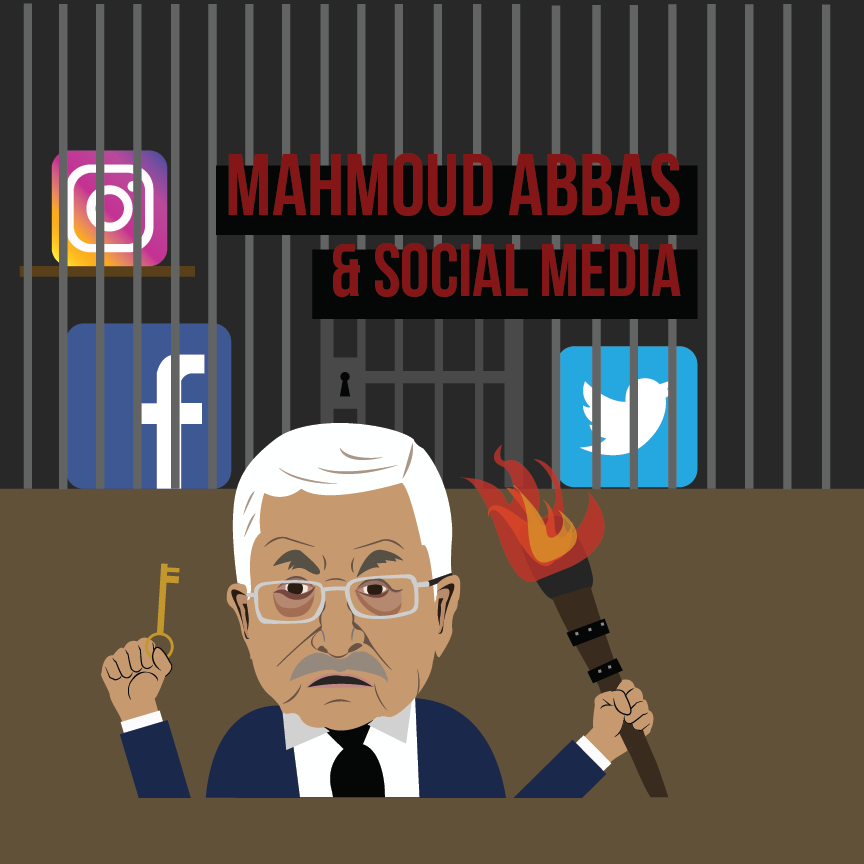
Abbas Doesn't 'Like' Social Media. The Feeling Is Mutual.
Palestinian Authority (PA) President Mahmoud Abbas won't be collecting any 'likes' for his recent crackdown against social media and news websites. Those who say the wrong thing, defined vaguely as 'endangering the safety of the state’ or ‘harming national unity' may now receive jail terms up to life in prison.
Without social media, Palestinians would be unable to get their stories out to the world. As one example, Palestine Informer, offers a rare, uncensored glimpse into life as-it-is experienced by ordinary Palestinians. No longer.
Abbas may have believed he could decree a two-for-one winning strategy with this new Cyber-Crime decree.
First, the President criminalized fully-justified criticism of his regime by rivals and, notably, Mohammed Dahlan. Second, he placed intense pressure on Hamas for their recent arrest of a Palestinian television reporter, Fuad Jaradeh. No doubt, Hamas did this to humiliate Abbas. It worked and then some.
The new law has already become a public relations disaster. Ammar Dweik, head of the PA's own Independent Commission for Human Rights, told Ynet news that the law is 'one of the worst' issued in PA history. That is quite an achievement! Even normally loyal or, at least, cowed Palestinian journalists are pushing back. As one wrote, "what is laughable is that this law carried penalties that are tougher than those imposed on thieves and sex offenders." Let’s just say we won’t count this as a ‘like’ for the law.
Oh, and speaking of liking things, anyone who merely promotes content that Abbas deems offensive by 'liking' and sharing it with friends can also be prosecuted and jailed alongside the author. As the PA prosecutor explained, “you cannot accuse the president …. of treason or make fun of him in an image, or something like that.” Surely, that helps clarify things, no?
President Abbas doesn't like social media and the Internet. Everyone gets that. Even so, the law seems unusually bizarre, unless Abbas has decided that his own political survival now hinges on naked suppression of free speech. If so, the President may soon discover that social media's dislike of his crude campaign of censorship sweeps away his 20th century regime, led by otherwise conservative 21st century Palestinians.
Peace Vs. Incitement
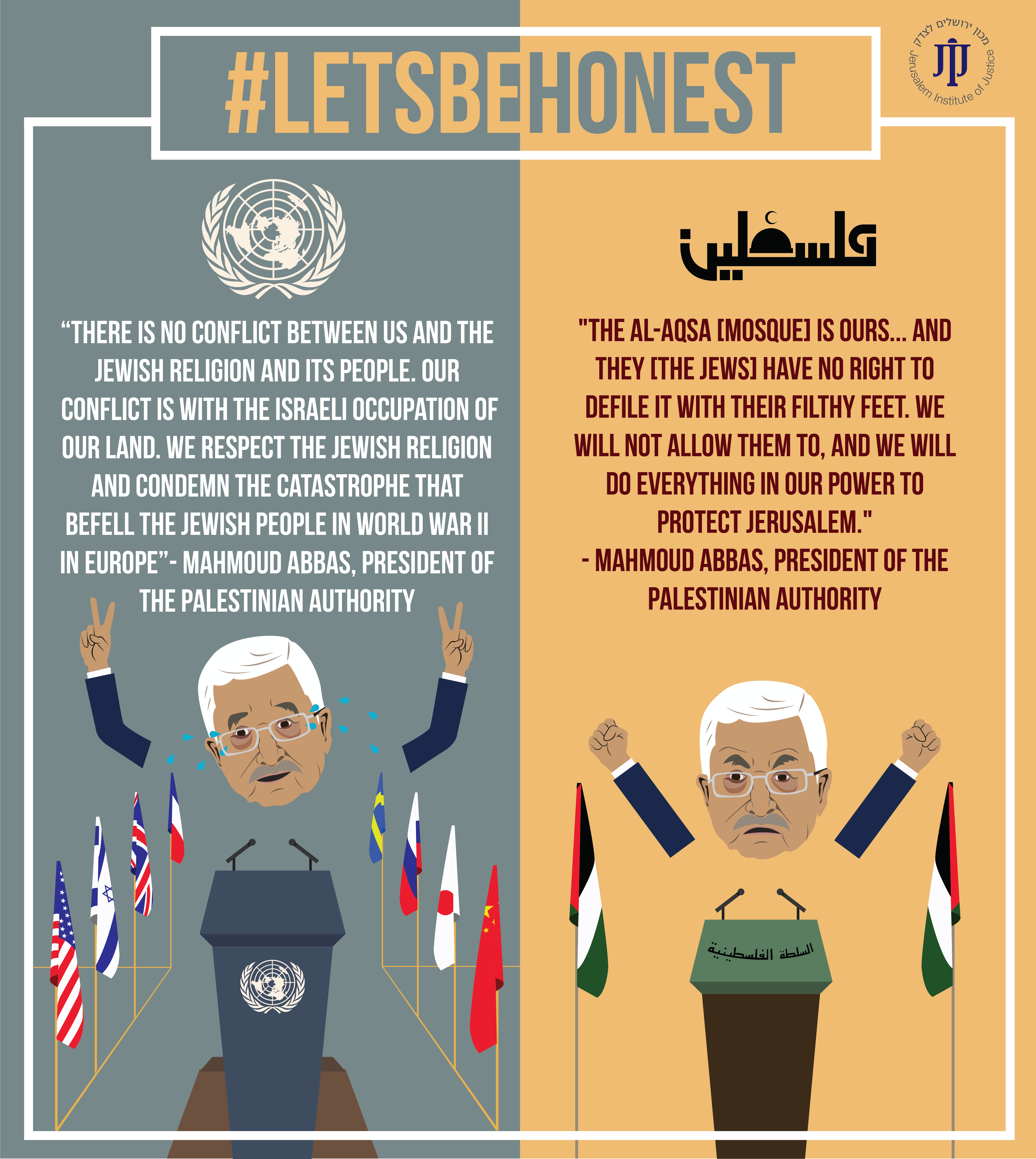
This infographic shows Palestinian Authority's President Mahmoud Abbas duplicity towards Israel. The #LetsBeHonest Campaign seeks to expose the duplicitous claims spoken by Arab leaders to the West and exposes their true intentions toward peace.
Download
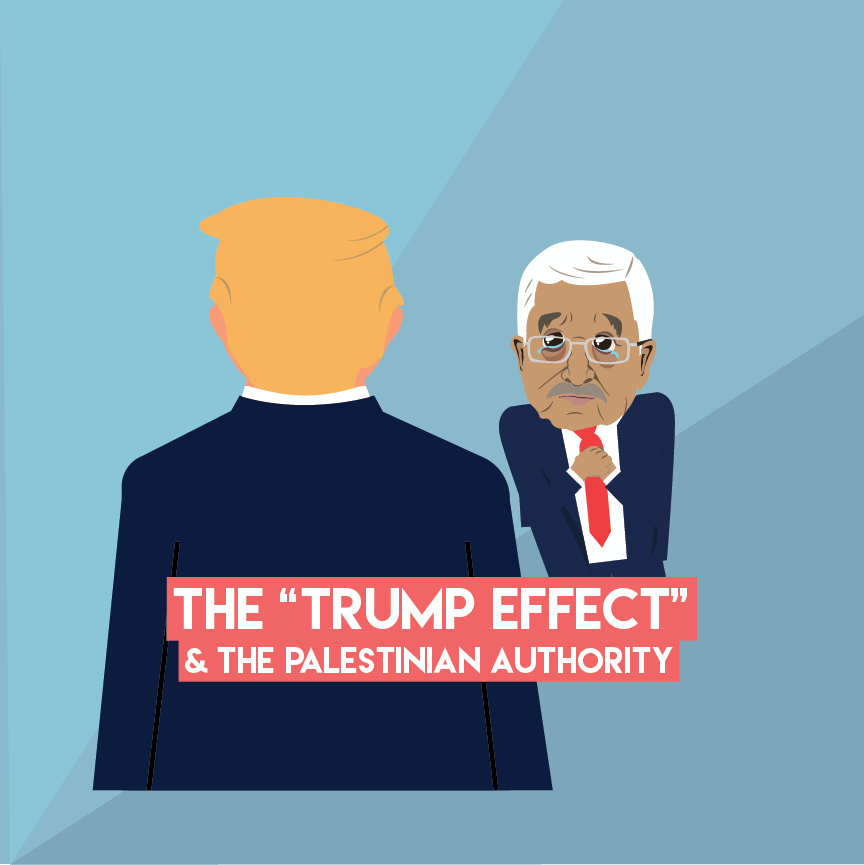
The "Trump Effect" and the Palestinian Authority
On April 27th, 2017, the Palestinian Authority announced that it would no longer be paying Israel to supply electricity to the Gaza strip. President Mahmoud Abbas’ stated rationale for this drastic decision was to increase pressure on Hamas by withholding finances and shake the terrorist group’s ten-year reign. The Gaza strip already only had six hours of electricity per day, but with this new lack of funding will be reduced to a mere 2-4 hours. This aggressive strategy is a result of years of failed attempts between the Palestinian Authority’s governing faction, Fatah, and Hamas to reconcile. But occurring only one week before his first face-to-face meeting with US president Donald Trump, the timing of Abbas’ decision calls into question the true purpose behind his actions.
Being dubbed the “Trump effect” by academics, the new US president’s rhetoric on cracking down on global terrorism and de-emphasis on human rights has influenced decisions of middle Eastern leaders. For Palestinian Authority President Mahmoud Abbas, cutting off funding for electricity in Gaza one week before his meeting with Trump was a strategic decision to gain the favor of the new United States president. Trump is eager to restart the peace process between the Israelis and Palestinians, and with his extremely pro-Israel sympathies and anti-Muslim rhetoric, the United States will likely side with the Israelis at the negotiating table. Abbas, aware of Trump’s “Israel bias” as well as claims by Netanyahu that there is no united voice of the Palestinian people to negotiate with or true partner for peace, needed to prove that he is a legitimate partner and committed to aiding the war on terror.
Abbas has been formulating a strategy to best approach Donald Trump since November. Shortly after the election, Abbas reportedly assembled a committee of experts on US policy and government to advise and aid him on the audacious and unpredictable president. With Trump announcing his intent to move the US embassy to Jerusalem, Abbas likely knew that were the peace process to restart between the Palestinians and Israelis, he could not count on the Trump administration to act as an unbiased mediator. In order to be considered a legitimate and equal partner in negotiations, the Palestinian Authority needed more than just idealistic rhetoric to gain favor with Donald Trump. Abbas had to take action tailored specifically to the policy goals of the new president.
Cracking down on global terrorism is a foremost prerogative of the Trump administration. Their “highest priority” is to to gain “peace through strength” by “defeating radical Islamic terror” by working with “international partners to cut off funding for terrorist groups.” As both the United States and the Israel condemn Hamas as a terrorist organization, Abbas cutting off funding for the Gaza strip follows directly from the Trump policy and works in accord with the outline set by the administration. Two weeks before his meeting with Trump, Abbas stated to the Arab Gulf States that he was “tired of funding the Hamas government in Gaza.” One week later, he put his words into action. The Palestinian Authority is attempting to exhibit to the Trump administration that they can be seen as a committed ally in the war on terror. By taking action against Hamas and further separating themselves from the radical organization, they are creating a foundation with the United States and Israel to combat a mutual enemy. This commonality may serve to gain them legitimacy and favor in the eyes of the Trump administration that will be helpful in future negotiations.
Not only did Abbas need to present the Palestinian Authority to Trump as committed to peace and eradicating terrorism, he needed to present a unified Palestinian front to the United States. Since the split between Fatah, the governing party of the Palestinian Authority and Hamas in Gaza in 2007, Israeli Prime Minister Netanyahu has claimed that peace negotiations with the Palestinians are futile because there is no united voice of their people. Abbas needs to regain control and power over Gaza in order to frustrate attempts by Hamas to carry out actions that may unravel any progress. He hopes that pressuring Hamas by worsening the humanitarian crisis in Gaza will loosen the organization’s hold on the territory and acquiesce back to the PA. With both territories back under his jurisdiction, Abbas can invalidate Israeli claims that there is no unified representative of the Palestinian people. Trump has also stated that “there cannot be lasting peace unless Palestinian leaders speak in a unified voice…against violence and hate.” Israel believes that “Abbas is trying to force Hamas into a move that would – a least symbolically – demonstrate Palestinian unity” in preparation for meeting with the United States. After yet another failure to create a unity government between Fatah and Hamas by the middle of April, Abbas consequently had to look for other ways to regain control over the Gaza strip to present a united front.
The different stances on human rights between Barak Obama and Donald Trump were another factor shaping the decision of Abbas to cut off electricity funding to Gaza. Obama’s foreign policy program Countering Violence Extremism emphasized the importance of recognizing human rights violations as the drivers of terrorism. In a 2011 speech on “Remarks by the President on the Middle East and Africa,” Barak Obama stated that support for human rights was not a secondary interest but a “top priority” in the war on terror. This policy marked his years in office with an “awkward balance” between condemning human rights violations in states such as Saudi Arabia, but allying with these nations to fight against terrorist organizations. Cutting off funding for electricity in Gaza would have likely been condemned by the Obama administration as a human rights violation. Abbas then would not have utilized such a strategy as it would not have been looked on favorably by the previous president. The PA’s actions to pressure Hamas would have likely been exceedingly different under the Obama administration.
Trump, however, is not so much concerned with the human rights consequences of policies that progress the war on terror. Trump stated in an interview that “first we have to confront and eradicate terrorism” and that the “way you address human rights issues… is to improve conditions in the region…human rights would improve as security and stability do.” Trump has been criticized for this stance by Democrats who argue that he is de-emphasizing human rights in favor of focusing solely on fighting terrorism. This is evident in his failure to discuss Saudi Arabia’s notorious human rights violations during his visit to the country. He told leaders that he wasn’t there to “lecture them” but instead to only discuss the mutual goal of fighting global terrorist groups such as ISIS and Hamas. Where the Palestinian Authority’s actions would have been condemned by the Obama Administration due to escalating the human rights crises in Gaza, the Trump administration would instead view this as proof that Abbas is committed to fighting against Hamas and gain legitimacy as peace partners.
The success of Abbas’ tactical decision comes at the cusp of Trump’s remarks at a press conference after the two leaders’ meeting. Trump stated that “President Abbas has spoken out against…terrorist groups, and we must continue to build our partnership with the Palestinian security forces to counter and defeat terrorism.” Abbas’ proximate actions against Hamas worked in his favor, as the Trump administration recognized his work against terrorism. Looking at the implications of Trump’s foreign policy on decisions of the Palestinian Authority is necessary to predicting as well as understanding the motivation behind future actions of President Mahmoud Abbas. With Trump committed to restarting the Israeli-Palestinian negotiations, Abbas needs to show the new administration the Palestinians are ready and wanting for peace. By carrying out action in accord with Trump’s harsh on terrorism policy, the PA hopes to butter up the new president. In the press conference after their meeting, Abbas regaled to Trump and the world that “we are endeavoring to bring about security, free and peace…we believe that we can be…true partner, to you to bring about a historic peace treaty.” With his actions against Hamas, Abbas now has substance to back up his words. Abbas will likely continue to cater his actions to appease Trump in the immediate future in preparation for the renewal of the peace process.