

Torture and Inhumane Treatment
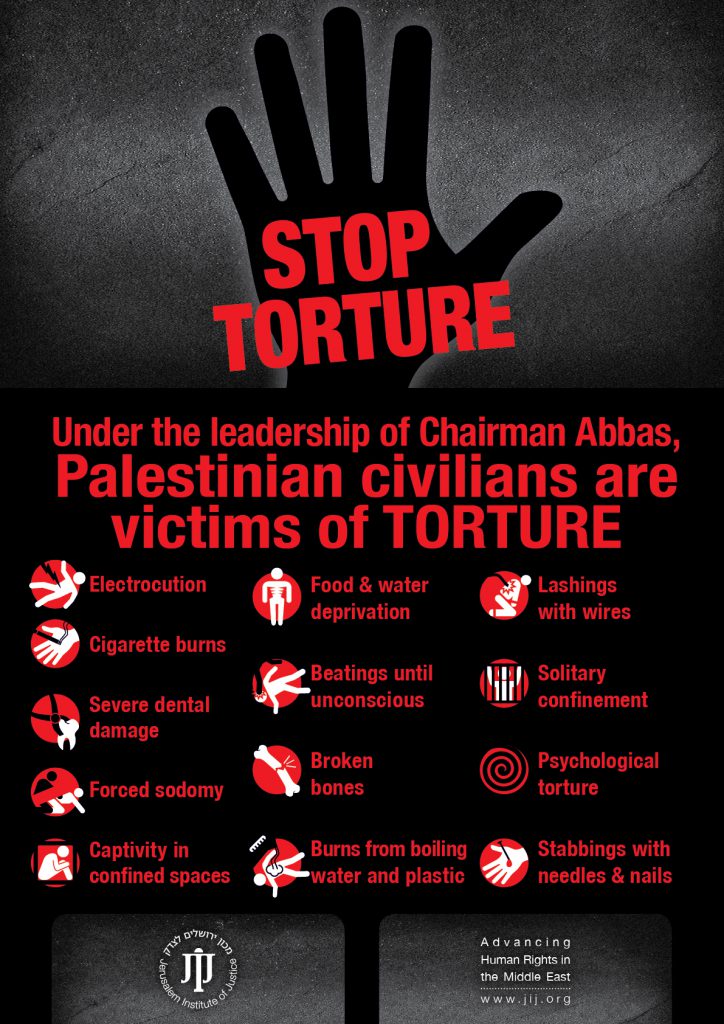
“The Palestinian Authority is responsible for severe abuses, including: the murder, kidnapping, imprisonment, torture, and rape of 52 Palestinian and Israeli citizens, residents of the West Bank,” stated the long (1,800 pages) precedent setting verdict that was issued approximately two years ago by judge Moshe Drori of the Jerusalem District Court.
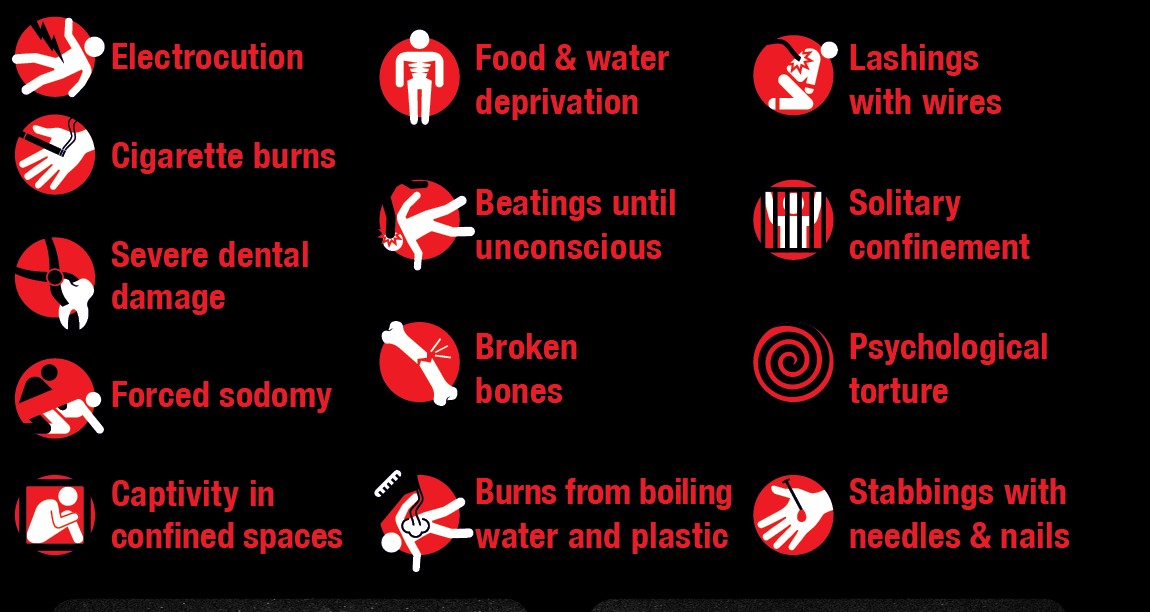
The verdict described horrifying torture. Electric shocks, hanging upside down for long periods of time, pouring boiling plastic on the body, extraction of nails and teeth, sterilization, sleep deprivation, food restriction, the killing and raping of family members, the removal of a pre-mature baby from her incubator, and other forms of inhumane abuse.
Download

52 testimonies of cruel torture
Notice to the Prosecutor at the International Criminal Court
Crimes against Humanity committed
against Palestinian citizens
Fifty-two Palestinian testimonies were submitted to the International Criminal Court in The Hague. These testimonies expose the brutal abuses committed by the Palestinian Authority against their own citizens.
“The Palestinian Authority is responsible for severe abuses, including: the murder, kidnapping, imprisonment, torture, and rape of 52 Palestinian and Israeli citizens, residents of the West Bank,” stated the long (1,800 pages) precedent setting verdict that was issued by judge Moshe Drori of the Jerusalem District Court.
The verdict described horrifying torture. Electric shocks, hanging upside down for long periods of time, pouring boiling plastic on the body, extraction of nails and teeth, sterilization, sleep deprivation, food restriction, the killing and raping of family members, the removal of a premature baby from her incubator, and other forms of inhumane abuse.
The verdict stated that the Palestinian Authority is responsible for murder and torture. The court ordered the PA to pay the plaintiffs partial compensation totaling over 3.8 million dollars for their imprisonment and over 400,000 dollars for trial expenses. Currently, the court continues to discuss the rate of additional compensation to the plaintiffs for the tortures, suffering, and disabilities they endured and for their property that was seized. It is estimated that the total compensation will amount to almost 28 million dollars.
The Jerusalem Institute of Justice along with Attorney Barak Kedem from the Arbus Kedem-Tzur firm, who represented the plaintiffs at the District Court of Jerusalem are working together in order to show the world the cruelty of the Palestinian Authority to their prisoners. These horrifying testimonies were submitted the to the ICC.
Attorney Uri Morad, Dir. of the International Law Department at the Jerusalem Institute of Justice, explains: “In February we addressed the ICC requesting that the Office of the Prosecutor open criminal investigations against the chair of the PA, Mahmud Abbas (Abu Mazen), for crimes he committed against his own people, including a long, systematic campaign of murder, torture, and imprisonment. These testimonies point to the existence of a well-oiled machine that oppresses a civil society.”
Attorney Barak Kedem adds, “The fact that there are people who experience this hell on earth should shock every human being, regardless of their nationality or political affiliation. One can’t stand idly by after hearing of the PA’s atrocities. I hope that the statements presented to the ICC will cause world leaders to ask themselves: ‘Do I want to continue to be part of this machine that transfers funds to the PA?’ The ICC will bring the perpetrators to justice.”
Prior to filing the testimonies, some of the plaintiffs agreed to be filmed and explain the horrors they experienced. From the testimonies-
“After the arrest, I suffered a heart attack, after seeing my little daughter paralyzed, because the PA removed her from her incubator in order to get revenge on me.”
“I wanted to die over 20 times a day, due to the suffering. The torture was horrible. One time they sat me on an electric chair, I was sure I would die.”
“A PA official showed me an explosive belt and told me that either I would wear it and perform a suicide bombing in Israel, or that they would kill me there.”
Included in the testimonies brought to the ICC is the account of a Palestinian civilian who entered Israel to carry out a terrorist attack. He was injured in a car accident on his way. He received high quality medical attention in Israel, and his life was no longer at risk. Following the treatment, he changed his position and became a collaborator and aided Israel in its war on terror. The PA’s retaliation was cruel. His wife was giving birth to a premature baby that needed the support of an incubator. The PA immediately removed them both from the hospital. This baby grew up to have severe physical and cognitive disabilities. Today she is 17 years old, and lives in a rehabilitative hospital in Beit Levinstein.
Download
Palestinian Women Group against Arab Women Rights
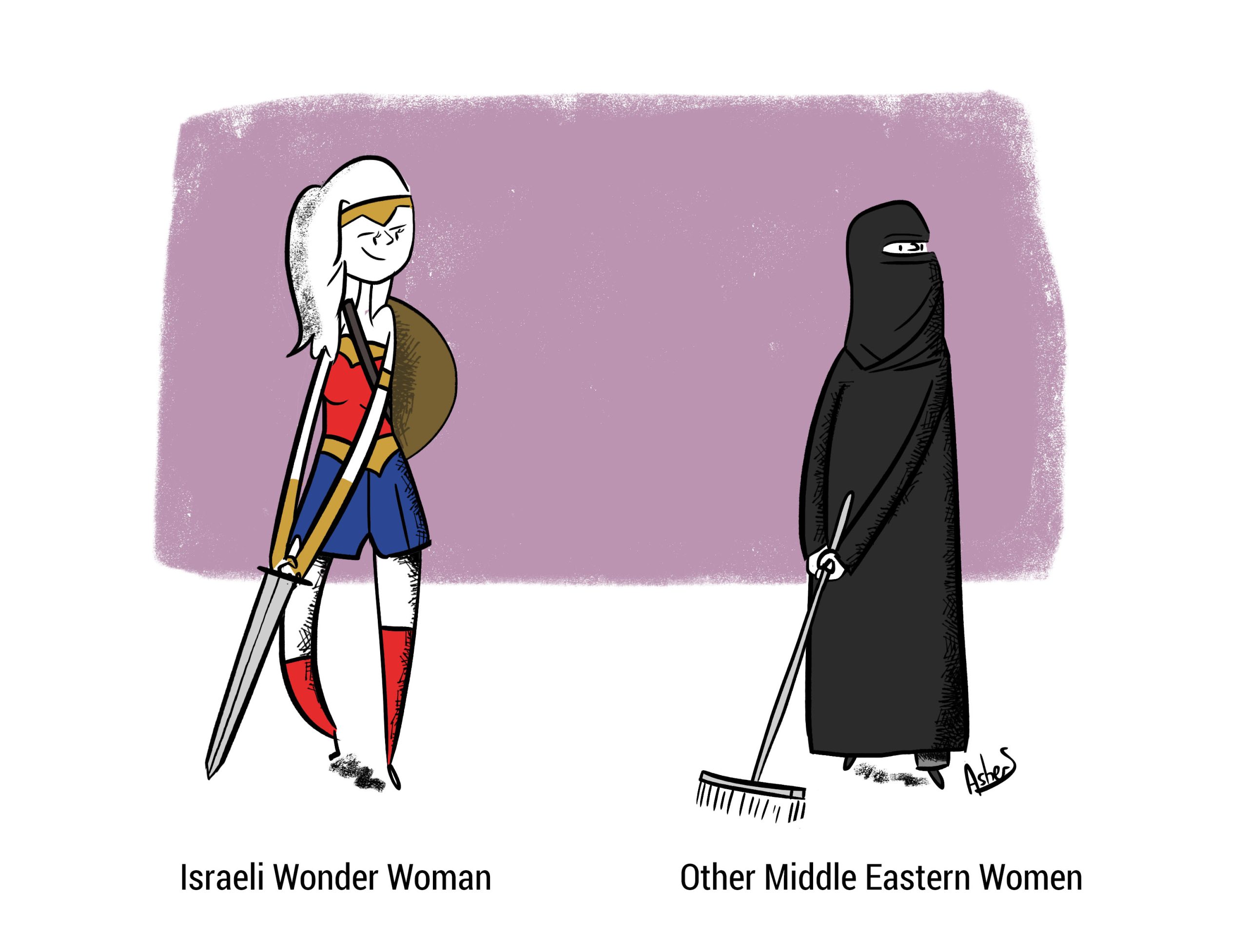
The Culture and Free Thought Association (CFTA) is a Palestinian NGO situated in Khan Younis, a city in the southern Gaza Strip. Their vision statement reads: “CFTA aspires to be a leading organizational contributor to civil society efforts to build a Palestinian society in which all citizens enjoy freedom, equality, and human rights.” They have received, along with other organizations, €481,773 from the European Union (EU) to support women's rights in the Middle East. At face value, CFTA sounds like an organization that should be supported and that deserves the money they received from the EU. But what has CFTA decided to do with all that money? They decided to support anti-Israel policies, calling for women around the world to boycott Israel because of the “awful” way Israel treats women. This position is ironic to the highest degree taking into consideration that Israel is, by far, the most feminist country in the Middle East.
Rape is one of the most egregious crimes being perpetuated against women. Being so, the punishment for rape should be proportionate to how devastating the offense is. In Israel you can expect 16 years to life in prison for the crime of rape. In Jordan, rape is only punishable by 7 years. That is less than the amount of time in prison you would receive for armed robbery in some states in the United States. Has The Culture and Free Thought Assoc. called out to boycott Jordan for their “slap on the wrist" attitude towards rape sentencing? Another crime that affects specifically women is marital abuse. 51% of the women in the Gaza Strip have been subjected to a form of violence within the household (PCBS, Violence Survey in Palestinian Society, 2011). Has CFTA made a call to boycott their own government for allowing a terrifying rate of marital abuse?
If rape and abuse are not so important for the CFTA, what about Female Genital Mutilation (FGM)? The destruction of a woman’s genitalia is a heinous crime that should be outlawed everywhere. Unfortunately, this practice is still prevalent in many places. In Egypt, FGM is a common practice that hurts, and even kills, thousands of little girls due to unclean medical procedures and the infections that followed. Fortunately, in 2007, the Egyptian Ministry of Health and Population banned all forms of FGM, but this has not stopped the practice. In 2014, UNICEF reported that 91% of women in Egypt had undergone some form of FGM. FGM has never been an accepted practice and is illegal in Israel. Why does an NGO, specifically designed to protect and stand up for women's rights, condemn Israel, when countless young girls are being butchered in neighboring Arab countries?
How is a woman’s testimony in court weighed against a man’s? In Egypt, Iraq, Iran, Syria, Jordan, Saudi Arabia, and all areas governed by the Palestinian Authority, a woman’s testimony is worth half that of a man’s. This means that if a women accuses a man of committing a crime against her, whether it be assault, robbery, rape, etc., she will need another female witness just to have the same amount of credibility as the man. What country in the Middle East does treat both genders’ testimonies equally? You’d be right to assume, yet again, Israel.
Is Israel a misogynist country? Is Israel a patriarchal society? In Israel, a child is granted citizenship automatically if the father or the mother is a citizen. Not all countries in the Middle East follow the example Israel lays out. In Jordan and Lebanon, the child’s father must be a citizen. Even if a mother is a Jordanian or a Lebanese citizen, if she marries a foreigner, the child does not receive her citizenship.
Forced child marriage is an abhorrent practice and a violation of children's rights. As of 2017, in Gaza, 15% of girls under the age of 18 are married as well as 1% of girls under the age of 15. To clarify, almost 4,000 girls under the age of 15 in Gaza are married. In Egypt, it’s 17% under the age of 18 and 2% under 15. Iran? 17% and 3%. What does 3% look like? 526,854 little girls that are sold into marriage before the age of 15. In Israel it is illegal for a person to marry someone under the age of 18.
One of the strongest indicators of gender equality is women in positions of political authority. As of 2018, 28% of the Israeli Parliament is women. That beats even the United States, where only 20% of Congress is women. And where does the Middle East stand on female empowerment? The average percentage of women in positions of political power across the Middle East is a whopping…6%.
If the Culture and Free Thought Association wanted to actually talk about gender inequality and women’s empowerment, they could target any number of the issues addressed in this article. They could call for their neighboring countries to reform. Unfortunately, they are more interested in forwarding their political agenda by ignoring women's rights violations in the Middle East and attacking the only feminist country in the area, Israel.
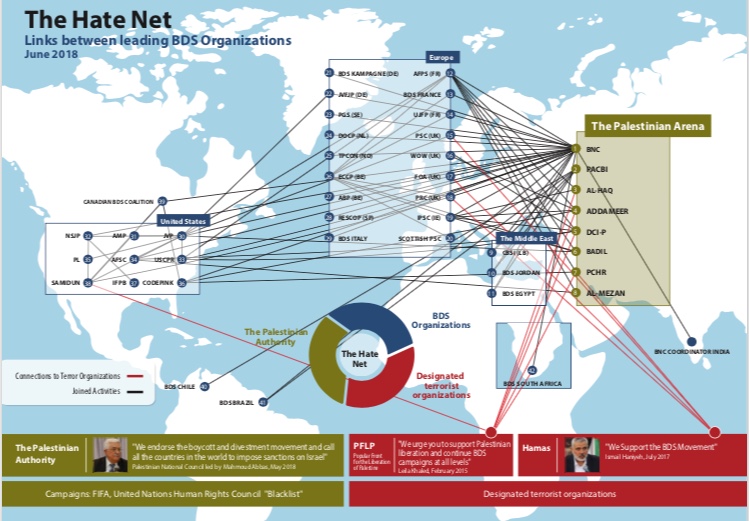
ISRAEL REVEALS BDS "NETWORK OF HATE"
Research Highlights Prominent Role of the PA and Hamas in Leading BDS, Certain BDS Organizations’ Ties to Terror Groups
Minister of Strategic Affairs Gilad Erdan:
"The relationship between terrorist organizations and the BDS movement has never been closer, ideologically or operationally. I will continue to go after the perpetrators of this anti-Semitic hate campaign stemming from Gaza and Ramallah."
Jerusalem, Israel ― June 19, 2018 ― Minister of Strategic Affairs and Public Diplomacy Gilad Erdan revealed for the first time the “Network of Hate”. This map showcases the network of ties between 42 of the most prominent BDS organizations― ten of which have ties with the internationally recognized terrorist organizations Hamas and the Popular Front for the Liberation of Palestine (PFLP). Minister Erdan presented the information at this year’s Global Coalition 4 Israel Forum (GC4I), an event focused on strategies for countering BDS and anti-Israel delegitimization.
Additional data presented:
• The Ministry of Strategic Affairs asserts boycott organizations are relying heavily on falsified propaganda disseminated by Hamas and the PA, with a quarter of them shown to have ties to the terrorist organizations PFLP and Hamas.
• BDS organizations are interconnected and operate together as an integral network directed from Ramallah and the BDS National Committee (BNC).
• The next boycott target: Israel's military arms trade.
• There are currently an estimated 300 organizations calling for a boycott of Israel.
In his speech on the opening night of the conference, Minister Erdan said that as a result of his ministry going on the offensive over the last two years, the boycott movement is now on the defensive. "Just recently, we have revealed to the European Union that part of the money that it supposedly transfers to ‘human rights organizations’ is in fact transferred to groups that maintain ties with terrorist organizations."
"The perpetrators of this hate-filled campaign, who derive their ideology from the PA and Hamas, are united in their goal of attacking Israel, and are leaving no stone unturned in their efforts. Under the guise of ‘civil activities’, a coordinated and financed network of organizations is led from Ramallah and Gaza, a quarter of which have links to terrorist organizations, including Hamas and the PFLP.”
The minister went on to note that Hamas and the PFLP openly support and embrace the BDS movement. Hamas leader Ismail Haniyeh stated, "We support the BDS movement" in July 2017, and his movement repeated it only last month. Other examples include: Senior members of Palestinian organizations Al-Haq, DCI-P and Addameer having either had or have active roles in the PFLP, whereas Ramallah-based Shawan Jabarin, the General Director of Al-Haq and a leader in multiple legal campaigns against Israel, served 13 years in prison in Israel for his involvement in the military wing of PFLP. Lila Khaled participated in the fundraising campaign for BDS South Africa, and ties between the American boycott organization "Semidoun" and the PFLP were also found. Additionally, the BDS organization PRC promotes Hamas's interests in Europe and members of the British PSC and FOA held meetings with senior Hamas figures in the Gaza Strip and recently held a demonstration in Downing 10 in support of Hamas’s recent “March of Return” campaign.
Minister Erdan also blamed the Palestinian Authority, which has been a long-time advocate for boycotting Israel, for officially adopting the principles of thr boycott movement in its Palestinian National Council last May. "We saw attempts by senior PA officials to suspend Israel from FIFA and to promote the ‘black lists’ formulated by the UN Human Rights Council. All of these campaigns, exposed by the Ministry of Strategic Affairs, were extensively promoted by the BDS organizations.
Minister Erdan also observed the political environment is decidedly against the boycott movement, noting anti-boycott legislation has already been passed in 25 US states, and boycott activity in Europe has been thwarted thanks to the exposure of its discriminatory elements against both Jews and the State of Israel.
Recently, the Ministry of Strategic Affairs has identified a rise in the content and audiences to which BDS groups directing their activities. Boycott organizations have recently called for a halt to trade agreements with Israel and to business cooperation with Israel's defense industries.
Minister Erdan noted that this campaign is no longer held only among civil society organizations, but recently the boycott organizations have begun to lobby MPs in various parts of the world. The opening of the first branch of the BNC this year in India may be part of the strategic goal of the boycott movement against Israel’s arms trade.
Minister Erdan concluded, "The relationship between terrorist organizations and the BDS movement has never been closer, ideologically or operationally. I will continue to go after the leaders of this hate-filled campaign emanating from Gaza and Ramallah."
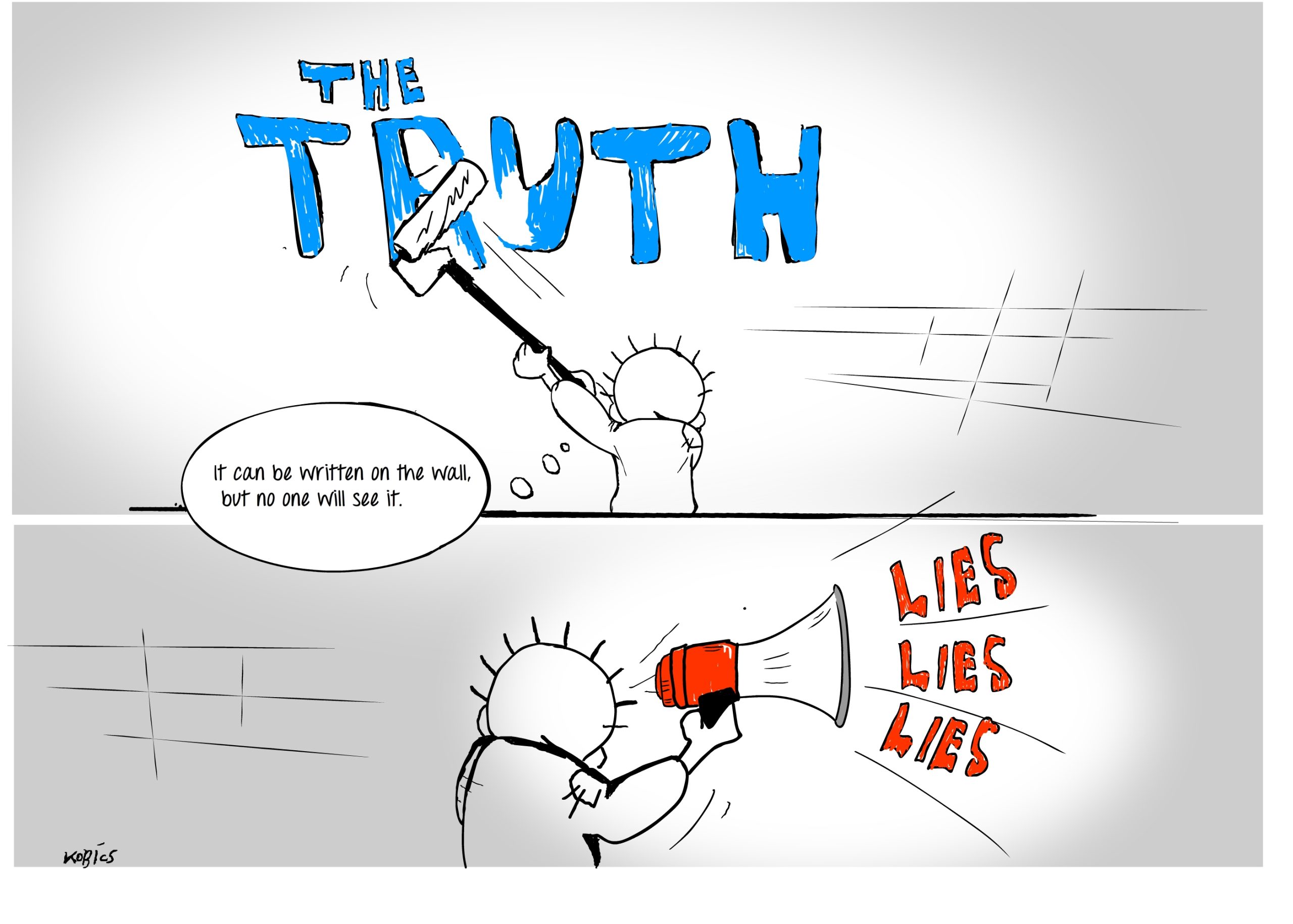
FACTS ON THE GROUND
As a Jewish millennial, I considered myself very informed on the situation in the Middle East, specifically with regards to Israel. After studying the conflict in college and receiving a degree in Middle Eastern Studies, I believed that I had developed a nuanced perspective from what I believed to be a diverse set of sources. However, when I began working at the Jerusalem Institute of Justice, I realized just how much of the picture I was missing and how much I still had to learn. The anti-Israel bias in the Western media became clear both in terms of how they portrayed the different sides in the conflict and especially on the information that they withheld from the public.
The BDS movement attempts to use this flow of information to its advantage. BDS leaders would have you believe that the only way to end the suffering of the people in the region is to boycott Israel. The movement conveniently leaves out any information that negatively portrays the Palestinians and their government as well as any information that reflects positively on Israel. It is due time for information to flow more freely and honestly so that people might truly understand the situation on the ground. With distorted facts come distorted opinions that do nothing to further dialogue or peace.
One of my first projects required me to research the difference in standards of living between that of Arab-Israeli women and those in Arab countries throughout the region. My research taught me a number of things. For example, while one can walk through the streets of Israel and see Arab women doing as they please, women are forbidden from many things in Gaza, like smoking hookah in public or running the Gaza marathon. Certainly more alarming, while Israel has a law making rape - including spousal rape - a felony punishable by 16 years in prison, a man in the Palestinian Authority could avoid prosecution for rape or sexual assault if he marries his victim due to a “marry-your-rapist” law.
I am shocked by the world’s silence regarding these laws targeting women in the Arab world. Yet, the United Nations dedicates extensive time towards chastising Israel for its treatment of women. With an increased focus on women’s rights, it is now time that the women under the control of the Palestinian Authority and Hamas receive the same attention and support from the international community.
My next projects focused on the BDS movement, something I fortunately had little interaction with on my college campus. There were stories circulating about the movement and its successes in convincing people of Israel’s supposed evils. BDS makes claims that Israel discriminates against the Arabs living in the country and highlights the harsh restrictions that Israel imposes on the movement of Palestinians. In reality, Arab-Israelis are an integral part of society, both academically and professionally. Arab-Israelis serve as Knesset members in both Arab and non-Arab parties and make up 16.1% of students in Israeli universities. Additionally, Arab citizens of Israel enjoy equal rights under the law, the same as their Jewish counterparts. In terms of the supposed “restriction of movement,” people blamed the security fence, which was built for and succeeded in preventing terror attacks. And even with this fence, over 100,000 Palestinians enter Israel every day for work. All this proves that these claims of discrimination are drastically exaggerated in service of a clearly dishonest agenda.
When reading about the region in the United States, it seemed that every little incident in Israel would be front-page news. The media loves pointing out Israel’s flaws, highlighting any instance that could be portrayed as an example of Israeli maltreatment of the Palestinians or its own Arab citizens. What was lacking was a comparable scrutiny of the governing bodies of the Palestinians. When the media does report on Hamas’ mistreatment of its citizens in Gaza, albeit infrequently, the Palestinian Authority does not receive any condemnation but is ignored for its corruption and the abuse of its people. In reality, Hamas steals electricity from its citizens while encouraging them to kill family members suspected of aiding Israel. At the same time, The Palestinian Authority works hard to silence any dissent, torturing journalists and others who attempt to speak out about the government’s abuses. In addition, rarely does one hear about the Palestinian Authority paying monthly salaries to families of terrorists. These are just some of the many abuses of power occurring in the Gaza Strip and West Bank that the Western media fail to adequately report. But why are these things not common knowledge among my peers? Where is the outrage from people who claim to care about human rights?
The BDS movement tries to change the narrative and distort the facts on the ground. It hopes that the incomplete and false media coverage of the situation will influence people to have a negative perception of Israel and to blame it for the conflict. This requires us to do our own research and learn the truth so that we do not let the BDS movement dictate the narrative and forge it as one of hate and lies.
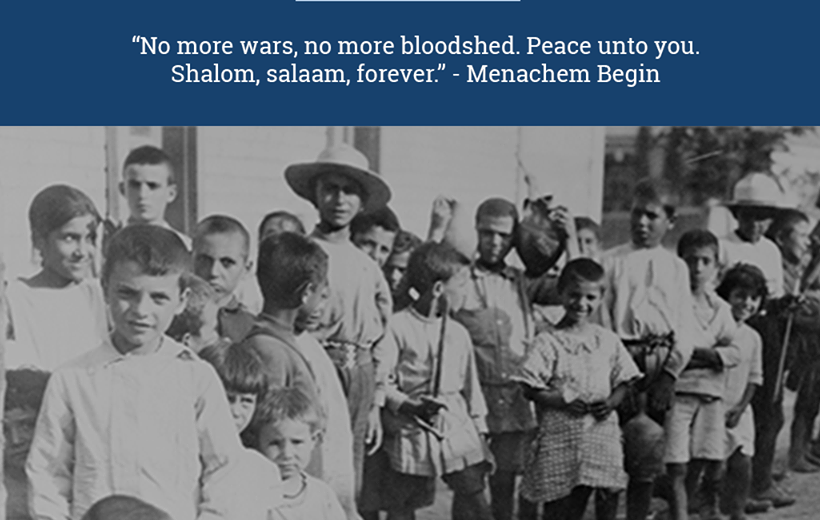
A Difficult Quest For Peace
A History of Public Opinion from 1967-2017
Fifty years ago, confronted with clear evidence of an impending Egyptian-led invasion, Israel's leaders gambled its national survival by launching a pre-emptive assault. What became known as the "Six Day War" has since become a signal historical event in the nation's history, and still shapes the collective consciousness of the Israeli people. Within less than a week, the tiny country's territory tripled.
The unsought Israeli control of East Jerusalem, the West Bank, the Golan Heights, the Gaza Strip, and the Sinai Desert brought urgent questions before the nation. Should Israel permanently annex one-or-more of these regions? Might they serve, instead, as critical bargaining pieces in a quest to persuade her enemies to abandon their dreams of Israel's destruction? What legal and ethical principles should guide the national debate?
Fifty years later, East Jerusalem has been integrated into Jerusalem's municipal borders. To meet critical security needs, the Golan Heights has been annexed into Israel. The Sinai Desert was returned to Egypt. Although Israel withdrew voluntarily from Gaza, the final status of Gaza and the West Bank remain undetermined. In other words, the questions posed by the miraculous outcome of the Six Day War remain unanswered.
The opinions of the Israeli people about these complex legal, ethical, political, and security issues have been measured, repeatedly, for five decades. Polling data makes up an overlooked, but vital, vector of national feedback during several crucial phases of the post-1967 era. Changing national convictions have influenced the decisions of political leaders, even as those leaders have, in turn, shaped public views.
This paper tracks the public's evolving response to the continuing conflict and, especially, to the indeterminate status of the territories. We conclude that the public showed a surprisingly sophisticated, if intuitive, grasp of the substantial risks tied to the most sweeping proposals and initiatives spanning 1967 to 2017. Our analysis will help anticipate, to some extent, the pathway which still lies ahead for the nation.
Download

Never use the phrase “your mother”
“This July, Gazan journalist and activist Amer Balousha published a post on Facebook in which he wondered whether his leaders' mothers also have to sleep on the floor in order to cool themselves down in the unbearable summer heat.“
Granted, a Palestinian journalist as experienced as Amer Balousha should never have used the phrase “your mother” in connection with the actions of Hamas or PA leaders. That way, trouble lies. Precisely. Neither Balousha’s words, nor the reason for his words, were lightly chosen.
Balousha’s purported crime, “Misuse of Technology,” doesn’t exist within Palestinian law, but why be picky? Suppression of free speech by either Hamas or the PA would be merely a boring ‘dog bites man’ story, except that Balousha belongs to a grassroots, bottom-up, youth-centered political movement that is demanding organizational reconciliation and political reforms from both Hamas and the PA. Al-Monitor, an Arab publication, termed these so-called “Patriots to End the Split” a “first-of-its-kind popular movement in Palestine”.
Balousha, with other Gazans, smashed through an earlier tipping point amidst the drastically curtailed electrical service triggered by PA pressure on Hamas earlier this year. Desperate Gazans had flooded the streets, risking their lives to vote their anger against the regime. Significantly, Hamas hadn’t dared crush the rebellion. Instead, they began ratcheting up the pressure on free speech to play for time, while reaching out to former enemies, including the PA, to craft a new political arrangement. Meanwhile, the heat has continued to rise month-by-month, not only in the homes of Gazan mothers, but far more so in the power corridors of Gaza and Ramallah.
Meanwhile, in parallel, the PA has also been concocting absurd laws to cover the unjust arrests of political activists and journalists.
Most notably, Issa Amro, an intense proponent of (mostly) non-violent resistance against Israel, was arrested this summer for criticizing the arrest of a PA journalist, Ayman Quwasme, who had himself called for Abbas to resign. Quwasme, director of Hebron’s Freedom Radio, had posted this to Facebook, stripping away the fiction that blamed Israel for the PA’s direct suppression of speech: “This media network is in an area that is under the complete control of the Palestinian Authority, yet, they remain silent, and cannot protect us. We have nothing to do with incitement. We try to deliver the message of the simple people in need, to the officials. We try to be the voice of the voiceless, and that is why we keep getting attacked and harassed.”
Why, though, was Abbas incensed with Quwasme, and willing to endure near-universal condemnation over the arrest of Amro? Because the PA, like Hamas, has reached the end of its perceived legitimacy in the eyes of its own people. The regime, like its spiritual brothers elsewhere, now suppresses free speech in a manner that “is not much different than that (experienced) under Bashar Assad’s Syria or even North Korea.” Even an Israeli General’s son petitioned Abbas for Amro’s freedom. This demonstrates why organizations like JIJ defend the free speech rights of all. Something more truly human than the typical enmity between Israel and the Palestinians has come into play here.
The Balousha incident would be just another forgettable statistic in the battle over speech, except for Amer Balousha’s formal, active connection to the group of “Patriots”. Even so, mainstream media reports have missed it.
His arrest suggests a fresh way for us to ‘read’ the relative progress of the reconciliation process between Hamas and the Palestinian Authority ‒ keep a record of which dissenters are allowed to speak up, and whether those speakers include those whose lives have been devastated by the corrupt, venal and pointless war between Hamas and the PA since 2006.
Balousha was freed fairly soon after his arrest, pledging not to speak about the incident on social (or traditional) media. Notably, neither he nor the “Patriots” have silenced themselves when it comes to a host of other flashpoints.
Since this grassroots youth movement seeks the inclusion of all Palestinian political groups in a multi-party internal reconciliation ‒ 13 parties, to be precise ‒ we may expect free-speech suppression by both Hamas and the PA to increase, not decrease, in the short-term. They disagree about much else, but form a perfectly united front against free-speech.
Unfortunately for their shared kleptocracy, an entire generation of disenfranchised Palestinians have nothing to lose in their struggle for human rights because they have grown up learning, bitterly, that they surely have nothing to gain by silence.
When 500 young Gazans are willing, as they were this month, to be photographed and surveilled in public for the cause of speech and justice, even Hamas can feel the earth move beneath its feet. Israel has become the least of this younger Palestinian generation’s problems or adversaries. Ask Issa Amro about that. Regional peace may depend, in decades to come, upon this group of young Palestinian leaders who are, today, well-known only to the security forces in Gaza and Ramallah. Alas, many of these 500 may come to be remembered as martyrs to the cause of free speech at that same future date.
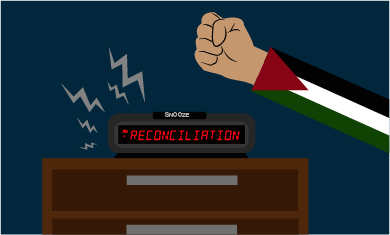
Hamas, the PA and Groundhog Day
…. why doesn’t anyone in Cairo look happy on the historic occasion of signing a reconciliation deal in October, 2017?
Like the classic Bill Murray movie, Groundhog Day, Hamas and the Palestinian Authority hear their clock alarms go off only to discover they are repeating the same events over-and-over. In their case, these events are their fantasy reconciliation, first tried in 2007, 2008, 2011, 2012, 2014 and now yet again in 2017. These words about the ‘historic’ 2014 effort could have been written today. Still, could the seventh time be the charm?
Just. Possibly. What has changed?
In a region where movements are the extension of leaders, more than states, three major Palestinian players have chained themselves together and then, no doubt unintentionally, lost the disentanglement key.
The first player, Yehya Al-Sinwar, famed architect of Hamas terrorism, took a governmental leadership role early in 2017. Facing the unexpected rebellion of thousands in Gaza this spring who were driven into the streets by a desperation greater even than fear of their own leaders, Sinwar began reaching out, remarkably, to a childhood friend but longer-time enemy, Mohammed Dahlan.
Dahlan, a former Fatah security chief in Gaza, was long a bitter political and military foe of Hamas. However, Dahlan has been engaged in a multi-year internal war with PA leader, Mahmoud Abbas, over the latter’s determined refusal to open any path for a successor, and Dahlan above all.
Al-Sinwar, with Dahlan’s help, began searching for ways to pressure the PA, as well as secure direct aid for Gaza from Dahlan’s own sponsors in the UAE.
If Sinwar and Dahlan believed the old man in Ramallah would buckle, they miscalculated badly. Abbas immediately cut PA distribution of electricity to Hamas by 40% and added a series of other punishing actions. He even fired 6,000 of the PA’s own employees in Gaza. Money (especially the lack of it) talks.
Now, even more desperate, Hamas reached out to another enemy, President Abdel Fattah el-Sisi of Egypt. Hamas agreed to halt its long-successful attrition of Egyptian security across a broad swath of the Sinai in return for Gaza infrastructure aid. Sisi agreed, providing that Hamas also signed on for reconciliation with Abbas, as well as broader Egyptian leadership of regional peace efforts. This converges with Egypt’s own ambitions and need to be seen again as a Sunni power broker across the Middle East and counter-poise to Iran. Good luck with that.
Fast-forward: the (now) four-fold tag team of mutual despisers crafted a marvelous reconciliation agreement that called for the Palestinian Authority to resume direct governance of the Gaza Strip while Hamas disarms. Anwar Sadat himself could hardly have done better, and all this without apparent pressure from Israel, nor obvious involvement from the remarkably invisible American President.
Lest it all seem entirely fictional, Hamas leaked the signed agreement and entertained the PA in Gaza for the first time in a decade. All players professed, in unison, that the play must certainly go on, according to plan.
Yes, but whose plan?
Yehya Al-Sinwa had promised to break the headof anyone who stood in the way of the agreement, which sounded promising. Alas, he then proclaimed with still greater insistence that “The discussion is no longer about recognizing Israel but about wiping Israel out,” adding for good measure, that Hamas would disarm when “Satan enters paradise.” Oops.
Neither Israel nor the famed Quartet has greeted this with, shall we say, enthusiasm.
So, recalling Groundhog Day, isn’t this latest reconciliation much ado about less-than-nothing at all?
Possibly. Not. This has become the first act in a new, highly consequential drama to determine who will take control of Palestinianism in the near-future, given the shared failures of Hamas and PA to deliver either victory-over or peace-with Israel. Like its kissing cousin, the interminable Palestinian-Israeli peace process, this latest intra-Palestinian reconciliation process may now be an unstoppable public-relations fixture.
Meanwhile, the three main players are glued together. Abbas will go, but he will most likely refuse to disappear until Dahlan has been denied the throne in Ramallah. For their part, Sinwar and Hamas need the PA as a foil for their military ambitions, and would prefer a compromised and dependent Dahlan at its head over someone who owes them nothing. Dahlan, of course, foresees Hamas dependence upon him. Meanwhile, Sisi loses nothing if reconciliation collapses, but stands to gain much even from a modest, positive result.
Of the main players, who has been the winner to-date?
Conventional wisdom, as always, claims to know: it’s Abbas, followed closely by el-Sisi. Even if Hamas reneges on demilitarization, the PA seems to have gained the upper-hand in Gaza. But there are a few who believe that Hamas has enticed both Abbas and Sisi into a cunning trap, aided as usual by Iran.
As for the losers, sadly, it remains the Palestinian people, as usual. Even those Palestinians who blame Israel recognize internal failures as the critical cause for current events: “Both Hamas and Fatah are out of options. Their regional politicking was a failure, and their political program ceased to impress Palestinians who are feeling orphaned and abandoned.”
If our analysis proves right, this latest reconciliation ‘process’ must provide a second and third act to follow the first. We will devote future posts, as needed, to analyze relationships between the major players over the coming months, as well as the curious invisibility of America’s President Trump and the veiled visibility of Israel during these seemingly crucial days of negotiation.
Meanwhile, set your alarm and keep an eye out for groundhogs.
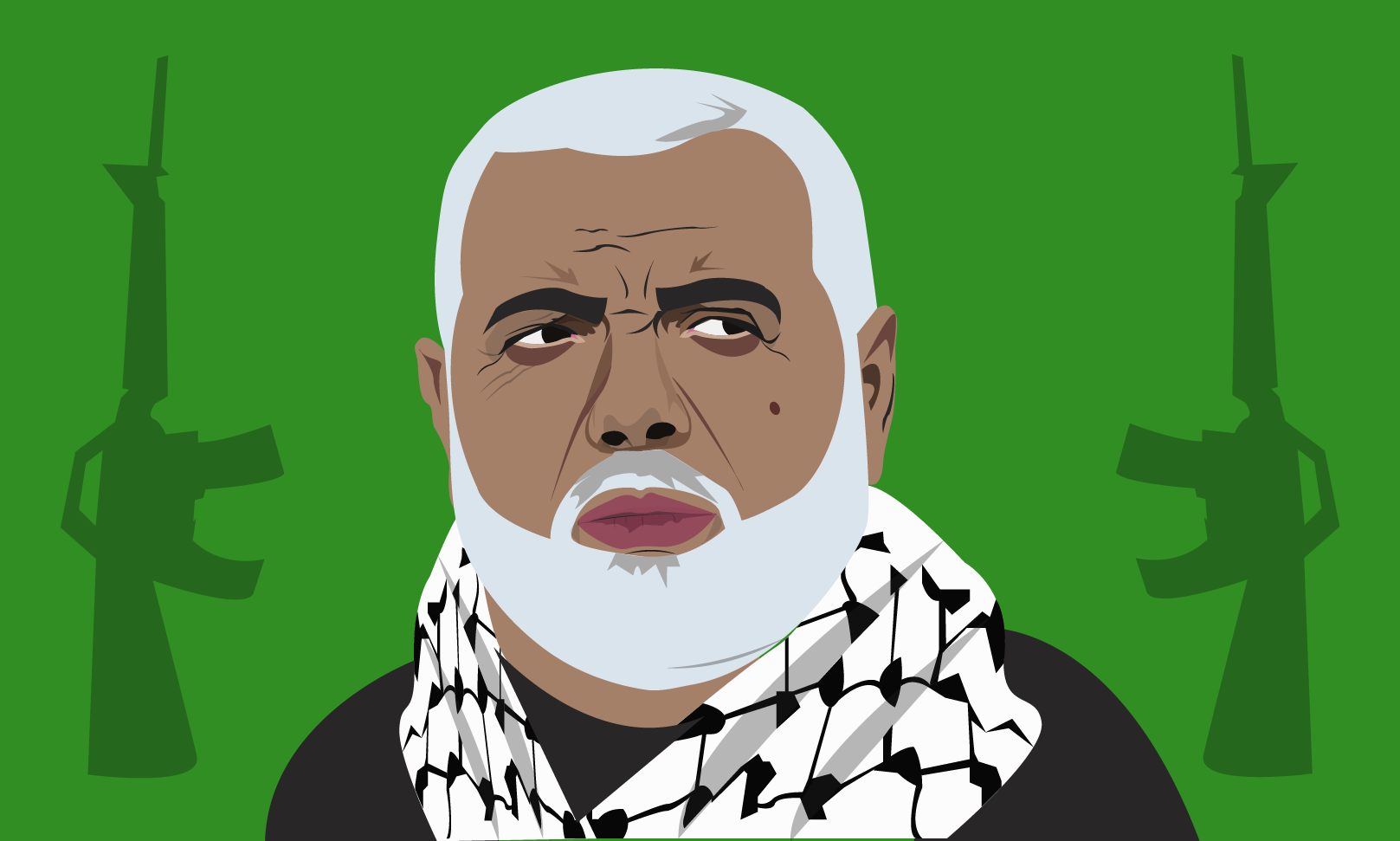
International leader Ismail Haniyeh
Ismail Haniyeh
The recent replacement of Khaled Meshaal with Ismail Haniyeh as Chairman of the Hamas Political Bureau signals a major shift in the inertia that has characterized the group in recent decades. Meshaal has served in his current role for over 20 years, while Haniyeh served as the disputed Prime Minister of the Palestinian Authority between 2006 and 2014.
So how much do we know about Hamas’ future leader? And what can we expect from the man who has enemies not only in Israel, but also among the Palestinian political establishment?
Early Life & Background
Haniyeh was born in 1963 in the Al-Shati Refugee Camp in the north of the Gaza Strip – at that time under Egyptian military occupation. His parents originated from Ashkelon, but became refugees after fleeing the 1948 Arab-Israeli War.
He attended schools run by the United Nations Relief and Works Agency and graduated from the Islamic University of Gaza with a degree in Arabic literature. During these years he became involved with Hamas and served as the head of the students’ council representing the Muslim Brotherhood (The Islamic University of Gaza’s founder happens to be Mahmoud al-Zahar – one of the co-founders of Hamas). He graduated at the same time as the first intifada, which likely helped to formulate his antagonism toward Israel and his esteem for armed resistance. He was given a short prison sentence by Israeli authorities in Gaza for his role in the protests and was detained again in 1988 and imprisoned for 6 months. In 1989, he was again imprisoned for three years.
Haniyeh was released in 1992 and was deported by Israeli authorities to Lebanon with senior Hamas leaders and 400 other activists. Using Lebanon as their base, they garnered substantial support and media exposure – both in the Middle East and around the world. He was able to return to Gaza in 1993 and was appointed Dean of the Islamic University of Gaza.
In 1997, he became the head of the office of Sheikh Ahmed Yassin – the spiritual leader and one of the co-founders of Hamas. The two men enjoyed a close relationship, leading to Haniyeh also serving as the group’s representative to the Palestinian Authority.
Amid the second Intifada, Hamas’ popularity surged as a response to the perceived success of armed resistance and suicide bombing. Furthermore, with many members of Hamas’ leadership being assassinated by Israeli security forces, Haniyeh was able to avoid competing with factional and personal rivals within Hamas for more authoritative positions.
Movement Through Hamas
Haniyeh’s ascension through the Hamas ranks also drew increased attention from Israeli security focus. In line with Israel’s policy of targeting leaders complicit in terror attacks against Israelis, Haniyeh and Yassin were slightly injured in an Israeli airstrike on an apartment block in Gaza city in September 2013. Six months later, Yassin was killed in a targeted assassination by an Israeli helicopter. As the spiritual leader, co-founder and close friend of Haniyeh, Yassin’s assassination more than likely strengthened Haniyeh’s loathing of Israel. Following Yassin’s assassination, Abdel-Aziz Rantissi was appointed his successor in Gaza. However, he too was assassinated in April 2014. Because of these efficient assassinations, Hamas decided to install a secret ‘collective leadership’ with Haniyeh, Mahmoud al-Zahar and Said al-Siyam.
In December 2005, Haniyeh was chosen to head the Hamas list in the Palestinian legislative elections. In the elections the following month, Hamas won a commanding majority with 76 seats out of a possible 132. Fatah won the next most seats with 43. Haniyeh was then confirmed as Prime Minister of the Palestinian National Authority and was asked by President Mahmoud Abbas to form a government.
Weeks of negotiations regarding a coalition with Fatah and other factions failed, and Haniyeh was forced to appoint a cabinet comprised primarily of Hamas members. This new cabinet was met with skepticism and repudiation from the US and the EU, both of whom threatened to cut funding to the Palestinian Authority unless Hamas renounced violence and recognized Israel. Haniyeh did not meet these requests and pleaded with them to not carry out their threats.
Strained Relations with Fatah
On December 14, 2016, an assassination attempt occurred at the Rafah border crossing between Gaza and Egypt that killed one of Haniyeh’s bodyguards and injured his son. Hamas consequently blamed Fatah for the assassination attempt.
In June 2007, after a week of fierce fighting between Hamas and Fatah, Hamas seized control of the Gaza Strip. President Abbas subsequently dissolved the Hamas-dominated government and dismissed Haniyeh as Prime Minister. Unsurprisingly, Haniyeh rejected the move and presented himself as the de facto Prime Minister - and would remain so up until June 2014.
Since that time, his role has been characterized by two main activities: trying to reach a reconciliation/unity agreement with Fatah and continuing the policy of mukawama (armed resistance) against Israel and its citizens. No elections have been held in the Gaza Strip since 2006, enabling Hamas to cement their control of the territory.
As the most senior official of the Gazan government, Haniyeh is understood to be responsible for the human rights abuses and war crimes emanating from Hamas in the territory. This means that, among other incidents, he is liable for:
- 3,278 rocket attacks on Israel in 2008
- 2,248 rocket attacks on Israel in 2012
- 4,562 rocket attacks on Israel between 8 July-26 August 2014
- The summary, extrajudicial executions of at least 23 people in July/August 2014
Personal Life
Haniyeh has thirteen children. He is thought to have become a millionaire through over 2,500 square meters of land in Gaza as well as selling subsidized fuel for profit. Three of his sisters, Kholidia, Laila and Sabah, are citizens of Israel and live in the Bedouin town of Tel as-Sabi near Beersheva.
In early 2012, Israeli authorities granted permission for Haniyeh’s sister and her critically ill husband to travel to Rabin Medical Center in Petah Tikva to receive emergency heart treatment. Similarly, in addition to several other members of Haniyeh’s family, his daughter spent a week in a Tel Aviv hospital for emergency treatment in October 2014.
Future Prospects
Amid the change in leadership, the continuity of past Hamas behavior will remain. Although the group will vote on a new charter in the near-future, they are not expected to renounce violence or support any of the norms laid out in the Oslo Accords of 1993. Due to pressure from the international community and media, they may do away with various anti-Semitic articles of the charter such as ‘The Day of Judgment will not come until Muslims fight the Jews, when the Jew will hide behind stones and trees. The stones and trees will say, “O Muslim, O servant of God, there is a Jew behind me, come and kill him”’.
His attitude toward both Israel and Fatah is not likely to be any warmer than his predecessor. He would harbor added enmity toward Israel for destroying his house in 2014’s Operation Protective Edge and for assassinating his mentor Sheikh Yassin. In relation to Fatah, he no doubt still resents the fact that he was dismissed as the Prime Minister of the Palestinian Authority in favor of Third Way’s Salam Fayyad. Known as a firebrand public speaker, he is likely to be received more poorly by the international community than the erudite and softly-spoken Meshaal. Coupled with the volatile militancy he displays at Hamas rallies, it does not bode well for those hoping for peace and stability.

Standing up for European Principles On Human Rights
Now More Than Ever:
Summary: Decision Action Still Needed
Four years ago, an audit by the European Court of Auditors (ECA) noted serious irregularities in funds distributed to the Palestinian Authority, especially aid grants remitted to ‘workers’ in Gaza who could not show evidence of employment. Transparency International reported widespread irregularities and likely corruption throughout the payment system in a 2016 report.
Overall, while some modest improvements have been noted, decisive EU action to mandate adequate accounting checks and, where necessary, impose appropriate penalties for non-compliance remains essential.
The 2012 ECA Report on Aid to Workers in Gaza
In late 2012, the European Court of Auditors conducted an on-site study in Israel to verify the aid distribution mechanism from the EU through PEGASE to the Palestinian Authority (PA). PEGASE describes itself as:
"… the European Union’s mechanism to support the Palestinian people through implementation of … the PA’s own Single Treasury Account (STA) or via direct payments to eligible companies and individuals in full transparency, co-operation and agreement with the PA."
This illustration from the 2013 ECA report depicted the steps to be carried out by the PEGASE process:
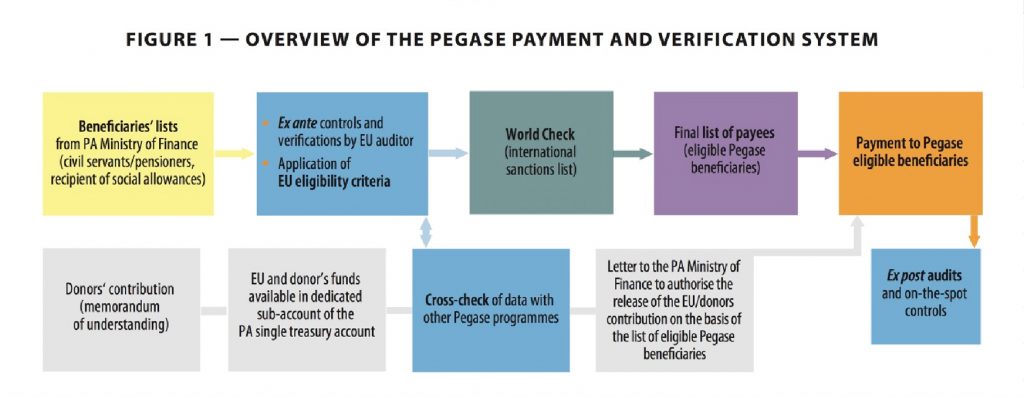
In a key finding, the ECA report stated that:
"Pegase DFS has contributed to essential public services, but the audit found that in Gaza a considerable number of civil servants were being paid without going to work and providing a public service due to the political situation in Gaza. The Commission and the EEAS have not sufficiently addressed this problem."
Consequently, the ECA advised the EU to forge an agreement with the PA to cease civil servant payments in Gaza and transfer these to the West Bank, as well as to “apply conditionality to the future Pegase DFS, specifically by linking it to concrete progress by the PA on civil service reform.”
The EU Commission agreed to the latter recommendation on conditionality. However, the EU did not then accept the proposal to sever payments to civil service workers in Gaza. Nevertheless, in February 2017, the decision was taken to shift funding of Gaza public employees in favor of direct aid to poor families. The Communication officer of the EU Commission, Shadi Othman, positioned this to the Palestinian media as a minor change in procedure. In a separate interview, Othman opposed the conditionality provisions of the ECA recommendations as a form of ‘blackmail’ against the Palestinian people.
The 2016 Transparency International Report
On Illicit Enrichment of Palestinian Public Officials
Transparency International is a global NGO leading the fight against governmental corruption. Sweden sponsored, though it did not necessarily concur with the conclusions reached in their report titled “Asset Declarations in Palestine: Illicit Enrichment and Conflicts of Interest of Public Officials.”
The report observed that more than US$160 billon is believed to have been stolen by regime officials over the years in Egypt, Libya, Tunisia and Yemen alone. Subsequently, international standards for declaring and tracking asset accumulation by public officials have been defined and, sometimes, adopted by affected countries. This has included organizations like the Palestinian Authority. Even so, the report contains scathing criticism of the gulf between formal adoption and on-the-ground practices.
Not a single standard of the ten outlined below have been implemented effectively - some not at all - by the PA:
- Creation of a legal basis for detecting illegal enrichment and conflicts of interest (a law passed in 2002 was later revised to exclude many government officials, including judges).
- Declaration of all income, gifts, loans and sales of property by those entering public service (the current regulations are ambiguous, creating the potential for hiding illicit funds in non-reportable categories).
- All officials should be required to declare assets (judiciary officials, at high risk of illicit activities, are excluded; family members are included but do not, in practice, declare).
- Asset declarations must be submitted when assuming office (no statistics on compliance, but it is believed the majority of required declarations are never submitted; the provision seems to be “toothless”).
- Asset declaration must be verified (no law in place, no evidence that even a single case has been brought against an official in non-compliance).
- An oversight body will conduct asset verification, with access to public databases (created, without dedicated staff, training or procedures).
- Formal operation will occur between the oversight body and prosecution, police and finance intelligence (not established).
- Asset declarations will be visible and accessible to the public (not implemented).
This table illustrates the categorization of assets subject to declaration, showing which items must be declared. As mentioned above, some categories are ambiguous and can be flexibly ‘interpreted’ by those making asset declarations:
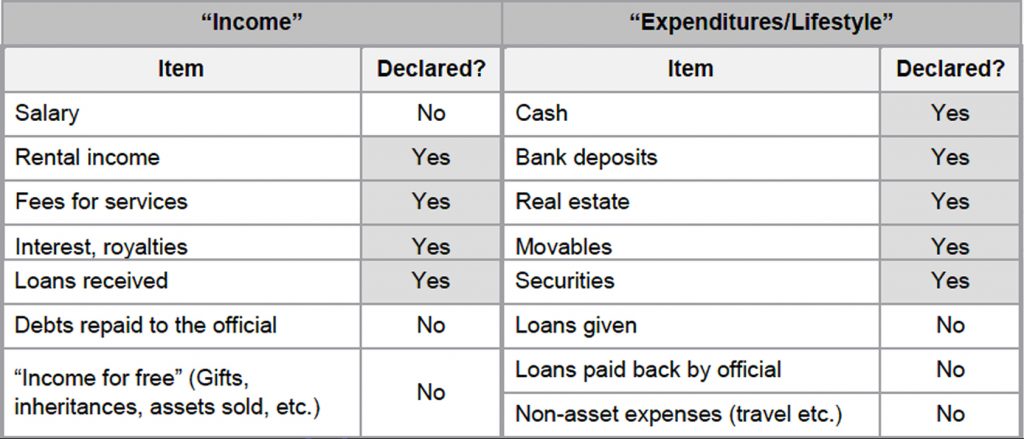
The 2016 Transparency International report concluded by stating that “Palestine has fallen behind international standards on asset declaration” and by offering a series of reform proposals.
Conclusion: The More Things Change …
A proverbial French expression notes that ‘the more things change, the more they remain the same.’ Regrettably, this applies to EU funding of PA activities. While we commend the efforts of the ECA and Transparency International to shed continued light on the lack of substantive accountability by the PA, it falls to the EU to take the decisive action required for permanent reform.
Conditionality - the formal linkage between change in PA behavior and aid distribution to Palestinians - must include measurable criteria for each standard of financial accountability. Enforcement, including sanctions where needed, must be applied without reference to PA complaints. The EU can, through this method alone, offer genuine help to the Palestinian people who are the hoped-for recipients of financial aid that today, as in the past, too often finds its ways into the private bank accounts of a corrupt political and legal class.