
Torture and the Degrading Treatement in the West Bank and Gaza
Assessing the Implementation of UN Convention Against Torture
For the full report click, here.
Article 5 of the Universal Declaration of Human Rights, along with Article 7 of the International Covenant on Civil and Political Rights (ICCPR) declare that no person shall be subject to torture, to cruel, inhuman, or degrading treatment or punishment. This report examines the Palestinian Authority’s (PA) adherence to the UN Convention Against Torture (UNCAT), to which it is a signatory member. Since 1984, 155 states have ratified UNCAT. Of 142 states investigated for their adherence to and implementation of UNCAT, at least 79 still carry out acts of torture (2014). Even for those 40 states who have not adopted the Convention, a global ban on torture, as part of customary international law, compels all states against the use of torture and cruel, inhuman punishment.
Palestinians in the West Bank and Gaza are repeatedly subjected to severe violations of the basic rights of freedom from torture and abuse at the hands of Palestinian leadership. This report provides a better understanding of the current situation within the territories and of the UNCAT violations committed by the PA.
Many critics of the use of torture argue that it is immoral and impractical, as the information obtained through it is often false. Human Rights Watch states that torture is “a bedrock principle of international law. Torture, as well as cruel, inhuman or degrading treatment, shall be banned at all times, in all places, including in times of war…” Yet, various organizations report that torture and cruel punishment occur on a regular basis in the territories, sometimes resulting in death.
ACCESSION TO UNCAT — April 2, 2014
Upon receiving ‘Observer State’ status to the UN in November 2012, Palestine was granted access to various international conventions and organizations, and the PA acceded to 15 international conventions and treaties regarding human rights, humanitarian law, and diplomatic relations. As such, the PA has obliged itself to comply with a number of conventions and their provisions, including the Convention against Torture and Other Cruel, Inhuman or Degrading Treatment of Punishment (1984). In December 2014, the PA ratified yet another 20 international treaties and conventions. As a signatory member of these international treaty and conventions, the State of Palestine is required to submit reports of the status of human rights in Palestine and the procedures adopted to improve human rights where they are lacking. As of writing, no reports have been submitted.
An Optional Protocol to UNCAT (OPCAT) was adopted by the UN General Assembly in December 2002, which took effect June 2006, whose objective is to establish a system of regular visits to the West Bank and Gaza to prevent torture and other inhuman treatment. However, Palestine has yet to sign OPCAT, though the Palestinian Ministry of Foreign Affairs has the protocol listed as one of the treaties “they want to sign.” According to one UN official, reasons for not signing thus far include not wanting to allow open access to an international body to look into all places of detention that the PA would rather keep away from the public eye.
THE STATE OF PALESTINE AND OTHER HUMAN RIGHTS DECLARATIONS
The PA, as a member of the Organization of Islamic Cooperation, adopted both the Cairo Declaration on Human Rights in Islam (CDHRI) and the Arab Charter on Human Rights (ACHHR). Article 20 of the CDHRI states that it is not tolerable to arrest an individual, restrict his freedom, or exile or punish him without legitimate reason. As well, physical and psychological torture, as well as any form of humiliation, is not permissible. Similarly, Article 8 of the ACHHR outline prohibitions on torture and cruel, inhuman treatment. However, while both declarations prohibit torture, both also stipulate that all rights and freedoms are subject to Sharia Law. Furthermore, Article 4.2 of the Amended Palestinian Basic Law states that Sharia Law serves as the main source of legislation. Issues here arise with how Sharia Law dictates punishment for those who inflict torture on others: “the punishment of such an act [torture] is Qisas, which means that the criminal would be punished with the same act he/she did.” Responding to torture with torture is in violation of UNCAT.
UNCAT ARTICLES
According to the definition provided by UNCAT, for an act to be considered torture it must be intentional, cause severe pain or suffering, be intended to achieve a purpose (as mentioned), and it must be done by, or with the acquiescence of, a public official. Article 13 of Palestinian Basic Law corroborates this, stating that no duress, either slight or moderate, can be used against any person.
According to the Independent Commission for Human Rights (ICHR), 1,274 complaints of violations of the right to freedom from torture and ill-treatment were reported in 2014. These abuses continued regularly throughout 2015, despite the ratification of UNCAT. One common target of Palestinian officials is local and foreign journalists, who are often detained and tortured for critical remarks that refer to Fatah, Palestinian leadership, or corruption in Palestine. The PA does not tolerate criticism, and continuously intimidates journalists to deter them from exercising their freedom of expression. One source reports that “a journalist must be very careful. In Gaza, there are journalists being tortured. There is torture considered [sic] as a common procedure…”
Despite Palestinian Law ensuring freedom from torture, documented accounts of torture of Palestinians in Palestinian prisons have been collected by organizations like the Arab Organization for Human Rights in London (AOHR UK). An article by Middle East Monitor states that the headquarters of PA intelligence services in Bethlehem is a “slaughter house” used for torturing prisoners.
In June 2015, Awni Mazen Al-Shaksheer, a Palestinian student from Nablus, was arrested and tortured by intelligence services for his involvement in student activism. He was beaten with sticks, cables, punched, kicked, and slapped, as well as subject to sleep deprivation, a form of psychological torture. He was held in two different prisons, never charged, nor given the right to appear before a judge. This case is not unique; Palestinians are routinely arrested and detained by PA forces for various reasons, including activism against the government. According to a 2014 Annual Report by the Palestinian Center for Human Rights, security officers in the West Bank and Gaza continue to practice torture as a primary means of obtaining information when dealing with prisoners.
FATAH vs. HAMAS
Though Fatah and Hamas make up the heart of Palestinian leadership, their relations are severely strained. In 2014, they attempted to reconcile in an agreement to create an interim government; however, they have failed to cooperate. Fatah, as the governing faction in the West Bank, is carrying out the “worst kind of torture” against Hamas members, while Hamas is reported to carry out a “brutal campaign of abductions, torture, and unlawful killings against Palestinians accused of collaborating with Israel and others.” In August 2014, at least 25 Palestinians were executed by armed Gazan groups.
CONTESTING TORTURE UNDER UNCAT
Despite Article 13 of the Amended Palestinian Basic Law prohibiting ‘any duress or torture’, the US Department of State Report 2014 reported on several abuse cases. These complaints included victims being forced to stand in uncomfortable stress positions, flogging, hand binding, suspension, blindfolding, punching, and beatings with clubs, electric cables, or hoses. There are also reports the PA security forces use these tactics on Palestinian minors.
Torture is clearly defined as a criminal offense, and Article 32 of the Amended Palestinian Basic Law reiterates this point by stating that any violation of personal freedom, of the sanctity of the private life of human beings, or of any of the rights or liberties that have been guaranteed by law or by Basic Law, are considered to be criminal offenses. As well, the Jordanian Penal Code No. 74 of 1960 criminalizes acts of torture conducted by an official with the goal of obtaining a confession. The issue here: these acts are not referred to as ‘torture’ in the text; rather, they are crimes that simply meet the definition of torture.
While it is a criminal act meant to be punished as a crime, too many cases reveal that torture is used widely within Palestine with little to no punishment enforced. Most of these acts are committed in hidden places or prisons, and Human Rights Watch reports that no Palestinian security official has ever been convicted for abuse in custody.
The reason for lack of enforcement against the use of torture could be related to the language used in the legal code. Not all torture is prohibited by the Penal Code, specifically those acts not used to gain information or confessions.
The PA does not admit that torture takes place within their jurisdiction, or admits only isolated incidents insisting that action be taken against those responsible. Moreover, PA officials insist that security personnel be educated on the prohibition of torture. “All of the personnel know that torture is forbidden. Not all of them know that it is against [the] human rights convention.”
There are hundreds of torture incidents reported yearly in both the West Bank and Gaza according to the ICHR. These are often exceed or justified based on claims that PA forces lack the necessary tools to investigate crimes, like DNA testing and eavesdropped equipment, so they use torture to make up for equipment they lack. This excuse does not account for the amount of foreign money pouring into the PA that could be used to aid security officials.
Amnesty International reports (2015) that in the West Bank, detainees alleged they were tortured or ill-treated by police and other security officials. In Gaza, at least three men were reported to have died in custody, allegedly from torture by internal security officials. One case, reported by The Times of Israel shares the story about Ahmad Bilal Abd al-Malak al-Deekm, who was arrested for criticizing the government on social media. Al-Deekm reported he was subjected to various forms of abuse and torture, including sleep deprivation, beatings, verbal abuse, and was forced to perform humiliating acts (which qualify as psychological torture).
Individuals must have a place to complain and air grievances, like security or military courts. However, in Palestinian territories, not only does it take many years to complete a legal process relating to cases and victims of torture, but also courts are not completely independent. If Palestinians do not have reliable, impartial, and uncorrupted authorities to whom they can report grievances, then agreement and adherence to the provisions laid out in Article 13 can never be achieved.
To reiterate, Article 13 states that duress or torture are prohibited. Though Palestinian Basic Law ensures that violations of this will be met with compensation, there is little evidence to prove this method works in practice. A resident from Ramallah stated the lack of compensations for these violations in an interview conducted in November 2015 “…The government does not compensate those who have been tortured and does not provide them with psychological support…” These cases are more often than not mishandled and purposely delayed, and victims cannot expect to be granted redress, compensation, or rehabilitation as long as this practice continues.
The case of al-Deekm has met these setbacks, with the PA refusing to provide him with any redress. One source, a representative of the Civil Commission for Independence of the Judiciary and Rule of Law, acknowledges the government may not want to pay monetary compensation, but some kind of compensation must be had for the violations that have been inflicted upon the victims.
Other acts of ill-treatment, as defined by a UN official, are acts of cruel, inhuman, or degrading treatment or punishment that are not intended to cause harm (like bad prison conditions), or where the pain and suffering caused by these acts do not meet the ‘minimum requirement’ for the definition of torture. There are many methods of torture not included in the official definition, and therefore do not need to be ‘punished’ by law. These include hitting a victim “softly”, as is done by Palestinian security forces. As well, many psychological methods are not regarded as torture, including sleep deprivation, witness the torture of family members, solitary confinement, taunting, sexual and cultural humiliations, etc.
Regardless of kind of torture, whether ‘soft’ or not, victims suffer various consequences, including PTSD, or ‘continuing traumatic stress disorder.’ Other psychological illnesses include depression, anxiety, insomnia, hallucinations, and flashbacks — all chronic effects of torture. Victims of both physical and psychological torture experience difficulty reintegrating into one’s daily life, relationships, and society, as well as being at higher risk of suicide.
As the PA ratified UNCAT in April 2014, a report should have been submitted by May 2015. As of writing, no report has been submitted. Reasons for not submitting reports, according to an interviewee at The Civil Commission for the Independence of Judiciary and Rule of Law, include a lack of capacity in the administration, or because the report is not a priority. The Director of the Civil Commission for the Independence of the Judiciary and the Rule of Law claims that if the PA wanted to forbid torture or show their respect for human rights, “they [would] report and publish all agreements and consider them as law.” In summary, there seems to be no value to the PA ratification of UNCAT and other conventions; it holds no legal significance to stop human rights abuses in the territories.


Lack of Freedom of Expression and Press Under the Palestinian Authority and Hamas
Assessing the Implementation of the The International Covenant on Civil and Political Rights in the West Bank and Gaza -Freedom of Expression and Freedom of the Press
For the full report click, here.
The designated human rights of freedom of expression and freedom of the press, as outlined in the General Comment No. 34 of the Human Rights Committee, contribute to the ideal of a free and open society and “constitute the foundation stone for every free and democratic society.” Both freedoms are limited only along the grounds of hate speech, where an opinion is intended to offend a person or group, or when an opinion calls for action against a person or group. This report examines how Palestinian media and politicians have broadcasted statements and comments that fall into the category of hate speech, specifically rhetoric with clear anti-Semitic or anti-Israel messages.
The International Covenant on Civil and Political Rights (ICCPR) was signed by the PA in July 2014 and contains statutes that promote and defend the liberties of citizens. Article 19 of the ICCPR addresses the freedoms of expression, opinion, and freedom to seek information:
- Everyone shall have the right to hold opinions without interference.
- Everyone shall have the right to freedom of expression…[and includes] freedom to seek, receive and impart information and ideas…
- The rights above are subject to certain restrictions, but only when necessary: for respect of the right of reputation and for the protection of national security, public order, or public health.
The Universal Declaration of Human Rights is designed to be trans-cultural, able to relate to ‘all nations of the Earth.’ It sets an international standard for nations to follow that hold governments accountable for their actions. Like the ICCPR, Article 19 of the Declaration addresses freedom of speech, opinion, and information. Both the Declaration and the ICCPR act to protect basic human rights and freedoms and make clear the importance of freedom of speech and access to information.
Aside from the legally binding documents like the Declaration and the ICCPR, certain non-legally binding measures of support for these freedoms have been adopted. In 1978, UNESCO passed a declaration to protect freedom of expression, speech, and to ban incitement. It is noted that Palestine joined UNESCO in 2011. While UNESCO declarations are not legally binding, they can be considered as soft law, meaning that members are strongly encouraged to comply with the rules and declarations set forth.
In Gaza, under Hamas rule, international declarations and conventions play a lesser role; as the current Hamas government is not recognized as an official state actor by the United Nations, it is unable to ratify international treaties. However, in 2006, Hamas Prime Minister Haniyeh stated Hamas’ “respect for human rights…including the freedom of the press and opinion.” A year later, he reiterated this commitment: “[We Will] respect international law and international humanitarian law insofar as they conform with our character, customs, and original traditions.” For Hamas, though they are not legally bound by international treaties, the Prime Minister’s statements to the international community pledges his support of and adherence to the international standards of human rights.
The West Bank and Gaza draw their legal framework from a variety of legal codes that are both inconsistent with each other, and inconsistently applied throughout different cases, resulting in a complicated understanding of what Palestinian legal standards are. As the PA is a signatory of the ICCPR, it is required to uphold a certain legal standard regarding freedom of speech and expression. Yet, what is taking place on the ground paints a vivid picture of non-compliance with international expectations. In the West Bank, legal codes derive their frameworks from the Ottoman Penal Code of 1916, the Jordanian Penal Code of 1960, Palestinian Basic Law of 2003, and PA Legislation. While protection of freedom of expression exists in Palestinian Law, other laws allot authority to the government to silence the press under ‘correct circumstances.’
Palestinian Basic Law was passed by the Palestinian Legislative Council in 1997 and ratified by former President Yasser Arafat in 2002. It serves as the interim Constitution of Palestine, with two articles (19 and 27) that pertain the protection of freedom of speech. While Article 19 clearly outlines freedom of expression as an inherent right for all Palestinians, Article 27 expounds upon the freedoms and establishment of the press, prohibiting censorship or harassment of the media without legal grounds. However, critics of the Palestinian legal system argue that a lack of clarity in the law allows for government abuses and that the law, in practice, does not provide enough protection for the media. As well, the Press and Publication Law of 1995, also signed by Arafat, stands in direct contradiction to the freedoms outlined in Palestinian Basic Law, specifically in Article 27, which lists a number of restrictions on content that can be published.
The Palestinian Center for Human Rights (PCHR) has criticized the law for the limitations it imposes on journalists. In their report, they explain: “The list of prohibitions includes the publication of everything that contradicts democratic principles and national responsibility, anything against morals, values, and Palestinian traditions and anything that can agitate violence, hatred, and fanaticism. These concepts are elastic and vague and can be misused.” Others have also pointed out the dangers of this law: a 2012 report by the UN Special Rapporteur on freedom of opinion and expression described the law as “excessive government control over the media…”
Under Hamas, the status of freedom of expression in Gaza is worse than what is seen in the West Bank. While the West Bank holds a respect for procedure and formalities in handling legal matters, it is described by witnesses that Hamas authorities act without trials, ignoring all rules. Egyptian Legal Code is applied in Gaza as well as Palestinian Basic Law, with a distinction of de facto Islamization, implemented by Hamas since 2007. This translates to the enforcement of public behavior according to Sharia Law by, what one source has called, the ‘moral police’. Freedom of expression, both in Gaza and the West Bank, is described as “a joke.”
While in the West Bank there is at the very least some legal framework, albeit a failing one, in Gaza sources share that Sharia Law is slowly replacing Palestinian Basic Law. In all, while Palestinian Basic Law does call for a protection of freedom of expression and the press, the complex and unclear legal framework allows for government officials to abuse and overlook the laws.
To ensure a transparent and effective government, the development of professional media and citizen journalism must be encouraged. According to the IREX Media Sustainability Index Report (2011), which assesses freedom of speech, plurality of news sources, and supporting institutions, Palestine scored a 1.75, listing it under the ‘unsustainable mixed system’ category with the likes of Syria, Yemen, and Iraq. For media to be independent, pluralistic, and free, it must be free from governmental, political, or economic control. From 2004, the PA has regulated local radio and television stations under the Resolution of the Council of Ministers No. 182 (2004), granting authority to regulate media to a tripartite committee comprised of the Ministers of Information, Interior, and Telecommunications and Information Technology.
The ministers have the authority to intervene in media content based on concerns for ‘security’; however, they are not subject to any process of checks and balances, allowing them clear control that is not monitored or reviewed by the public or any internal process. In addition, governing authorities in both Gaza and the West Bank have exclusive rights in granting TV and radio licenses, thereby maintaining control in which media can publish information to the public. Unless they receive approval from the tripartite committee, the station cannot publish. The way officials in Gaza and the West Bank regulate audio and visual media stands in direct violation of international standards on freedom of press, as outlined in the ICCPR.
Alongside strict government regulations on media licensing and content, President Abbas maintains complete control over four major Palestinian media outlets, including Voice of Palestine and Palestine TV, both of which run under the umbrella organization Palestinian Broadcasting Corporation (PBC). To work for one of these media outlets, journalists must pledge their loyalty to Fatah, Abbas’ political party. In addition, the PA places numerous news outlets under Abbas’ “intimate patronage,” ensuring that nearly all coverage of news will reflect his policies and the ideologies of his party. In Gaza, Hamas plays a similar role, controlling the main media outlets there, including two newspapers and a satellite TV channel.
Hamas pressures media outlets to adopt their policy lines, quieting any political dissidence. Even private media outlets are subject to government control due to Palestinian journalists often being paid or contracted by the PA. With the government in both the West Bank and Gaza offering preferential treatment to public media outlets (which are more or less controlled by the government), private media is forced to rely on public media outlets for second hand accounts of news stories, severely infringing on the right to access and freely distribute information to the people.
While media in the territories is not under direct and total control of the government, it is severely limited and censored through harassment, threat to a journalist’s job security, and difficulty in finding future employment. These factors discourage political dissent and criticism within private or public media, thereby censoring any political opposition. For foreign journalists, access to information is impeded even more so. Journalists coming into the territories requires a ‘fixer,’ a local Palestinian journalist, to be their translator and protector. There is no autonomy for foreign journalists in the West Bank, and even less in Gaza.
This issue has become so severe that the Foreign Press Association (FPA) released a protest statement in August 2014 calling the practices of the government “blatant, incessant, forceful, and unorthodox.” Journalists out of Gaza share their concerns with publicizing news critical of Hamas. One Spanish journalist reporting out of Gaza in July 2014, when asked why he and his team did not show armed Hamas members, explained: “It’s very simple, we did see Hamas people there launching rockets…but if we ever dare pointing our camera on them [sic] they would simply shoot at us and kill us.” Clearly, foreign journalists often do not feel free, and therefore do not publish wholly truthful or revealing content for fear of backlash, like arrest, physical abuse, the security of their team and any Palestinian associates, or the ability to return in the future.
In order for media to report with true accuracy and transparency, there needs to be an assurance of source confidentiality; when handling sensitive information or topics, both source testimonies can often endanger their safety. While the Press and Publication Law of 1995 Article 4(b) protects the right of the press to keep sources confidential, in practice, this right is not respected by the PA. One source notes that both journalists and sources can be subject to reprisals and that there is no protection for either.
Under the PA, the situation has deteriorated for journalists, with the government going as far as shutting down offices of journalists who voice dissenting opinions of Palestinian leadership. While there is no ‘pre-censorship’ under the PA, many journalists are arrested and imprisoned for months without trial for publishing opinions that go against the PA. This fear imposes a self-censorship by both citizens and journalists alike. If one is targeted for censorship, he endures arrests, detentions (possibly torture), and in some cases can be dismissed from their jobs. This applies to journalists, as well as citizens to attempt to exercise their freedom of expression.
In Gaza, journalists are subject to arrests and beatings without trial. One case is that of radio journalist Yousef Hammad who was beaten by police officers May 2014 because he interviewed civilians protesting the poor quality of life in Gaza. This is only one example of the brutality journalists face to censure their stories and opinions.
Article 19 of the ICCPR is followed by Article 20 of a similar nature, providing a broad standard of international law relating to incitement and propaganda:
- Any propaganda for war shall be prohibited by law
- Any advocacy of national, racial, or religious hatred that constitutes incitement to discrimination, hostility or violence shall be prohibited by law
Related to Article 19 and 20 of the ICCPR, the PA ratified another international treaty: the International Convention on the Elimination of all forms of Racial Discrimination (ICERD). Articles 1, 4, and 7 urge action to counter discrimination, condemn propaganda, and combat prejudices.
If Article 19 of Palestinian Basic Law is interpreted literally, it would seem that freedom of speech has no bounds, as no article in the legal code bans hate speech. As such, the PA does not comply with the provisions of the ICCPR. Furthermore, based on the wording of Article 22(2) of Palestinian Basic Law, it would seem as though the PA opts to protect martyrs and prisoners of war — despite these martyrs receiving their title for murdering Israeli civilians. Below is one example of legal incitement to violence, with the law serving as incentive to attack Israelis.
Incitement against Israel and Israelis exists within Palestinian media as well. Israeli cities (in Israel proper) are named as ‘settlements’ in media reports, damages caused by Israel are overstated, and Israel is painted as the enemy of the Palestinian people — in effect, demonizing the state. In the West Bank, outlets like Palestine TV regularly broadcast anti-Israel, anti-Semitic, and anti-Western propaganda, with songs that promote ‘martyrdom’, or violence and death to Israelis. In Gaza, TV programs for children regularly encourage children to commit attacks and die as ‘martyrs’ for the Palestinian cause. On one Hamas channel, a children’s character named ‘Nahul the Bee’ teaches children how to fight against Jews and encourages children to commit acts of violence against them.
Sources explain to JIJ that the PA is not against incitement; however, when it seems Palestinian leadership is making moves to curb incitement, it is because they fear losing donor aid. In an interview on Palestine TV in September 2015, President Abbas himself made calls of incitement by praising “every drop of blood spilled in Jerusalem” as “pure blood… every shaheed (martyr) will be in Heaven and every wounded will get his reward.”
Online platforms like social media are utilized to spread hate and incitement throughout the Palestinian world. Cases in October and November 2015 arose with self-identified UNRWA workers publishing posts encouraging individuals to carry out attacks, with others glorifying terrorists. One poster referred to Jews as “apes and pigs.” Through the official Fatah Facebook page, cartoons were posted in the aftermath of the 2015 Paris attacks blaming Israel for the attacks. When attacks occur against Israelis, like the vehicle attacks on Israelis in the Autumn of 2014 and Spring of 2015, the PA and Fatah fail to condemn the violence; instead, posts surface that encourage and glorify the attacks. In Gaza, Hamas regularly uses their social media platforms to calls for action against “Zionists and infidels."
In the territories, the freedoms of expression and the press are not truly free; rather, they face severe restrictions and censorship from within Palestinian leadership and society. Both journalists and citizens do not free to speak on topics of politics and corruption, facing consequences like arrest, torture, and career damages. With hate speech, online incitement is not monitored; rather, institutions in many ways work to encourage it. Overall, the current legal framework in the West Bank and Gaza fails to meet the standards set by international human rights law.
Children's Rights Abuses in the West Bank and Gaza
Executive Summary of Sons of Violence Report:
Violations of Children's Rights under the Palestinian Authority and Hamas
The Universal Declaration of Human Rights’ (UDHR) main principle is that all human beings have the right to life, liberty, and security of person, including the right to education, freedom from torture or cruel treatment and punishment, freedom to peacefully assemble, and freedom of thought, conscience, and religion.
With the recognition of Palestine as a non-member observer state to the United Nations (UN) in April 2014, the Palestinian Authority (PA) agreed to comply with 13 international conventions of human rights and humanitarian law. As such, the PA is obligated to comply with international human rights law (IHL) and implement all provisions laid out in the conventions. Complying with IHL requires Palestinian leadership (the PA and Hamas) to be bound by international laws protecting children’s rights.
In 1991, the Palestinian Liberation Organization (PLO), under Chairman Yasser Arafat, signed the United Nations Convention on the Rights of the Child (CRC); however, as the PLO was not a state, the PLO was unable to formally ratify the convention, thereby failing to have full legal impact in the territories. Despite this, the Palestinian National Authority (PNA) issued a report into the implementation of the CRC in the territories, which was received and reviewed by the CRC. This report examines the current violations of children’s rights in the West Bank and Gaza by the Palestinian government, and suggests that the PA and Hamas have failed to implement, nor do they intend to fulfill, their international promises. All information in this report was obtained through news sources, PA government materials, and interviews with individuals living and working in Gaza and the West Bank. All names have been withheld.
This report looks at Article 29 of Palestinian Basic Law, and how it applies to IHL and the CRC. It states that children have the right to:
- Comprehensive protection and welfare.
- Not to be exploited for any purpose … and not to be permitted to perform work that might damage their safety health or education.
- Protection from harmful and cruel treatment.
- Not to be subjected to beating or cruel treatment by their relatives.
- To be segregated… from adults, and be treated in a manner that is appropriate to their age and aims at their rehabilitation.
Palestinian Child Law No. 7 (2004) defines a child to be any human being under the age of 18, “including the unborn.” Palestinian law agrees with the CRC in the belief that young people under 18 years of age are considered more vulnerable and therefore require certain protections under the law.
With 47.5% (2014) of the Palestinian population under 18 years of age, the implementation of proper children’s rights protections is crucial. However, due to its foundations in traditional Sharia Law, Palestinian civil law lacks many of the democratic, secular, and egalitarian principles that are espoused by IHL and the CRC.
GENERAL PRINCIPLES
The Independent Commission for Human Rights (ICHR) monitored multiple cases of rights violations against children in 2015, reporting that large numbers of detainees in Palestinian jails were children between 16 and 17. Detainees were subjected to different forms of torture, including beating, kicking, punching, flogging, cold water dousing, and being forced to strip.
For young girls and women, honor killings are carried out when these girls are believed to have transgressed cultural norms (this includes issues of modesty, career choice, marriage, and relationships). Honor Killings, usually carried out by members of the girl’s family, do so in an attempt to restore the family’s reputation. Individuals in both the West Bank and Gaza confirm reports on the continuation of this practice, with one JIJ source explaining the prevalence of honor killings in Hebron (West Bank) where he heard of at least ten cases in 2014. Unfortunately, reliable data on the total number of child victims of honor killings is unavailable. This is, in part, due to the Palestinian government considering 15-year-old girls (West Bank) and 17-year-old girls (Gaza) as eligible for marriage, and therefore not victims. In the territories, Sharia Law dictates that those who reach puberty are considered adults and are thereby subject to the full force of the law. This directly contradicts the international definition of the ‘child’ as stated in the CRC, and as reiterated by Palestinian Basic Law.
CIVIL RIGHTS AND FREEDOMS
In the West Bank, many children are denied the right to legal existence. Under Palestinian law, extramarital sex is illegal, therefore women who give birth out of wedlock are punished. Honor killings play a role here, where families beat or kill girls or women who find themselves pregnant outside of marriage. Women are thus forced to give birth in secret in an effort to ensure their safety, abandoning their babies. One institution in the West Bank reports that on average 50 to 80 undocumented babies are born each year. The consequences: these children are denied a family name or an ID card, preventing them from establishing an identity in society.
An additional issue relates to the abandoned child’s religious identity. Regardless of where the child is found (Christian or Muslim communities), the child is automatically assumed to be Muslim. The implications of this are that, under Islamic Law, adoption is forbidden, therefore depriving ‘Muslim’ children the option of official adoption. These roadblocks to establishing legal identity and existence are in violation of the CRC; the PA fails to assist in the registration of these abandoned children, thus reneging on its obligations to protect the most basic of children’s rights.
Regarding access to information, the PA and Hamas fail to protect children with regards to information sharing and education. Instead, Palestinian leadership engages in indoctrination and incitement to violence through social networks, national TV children’s programs, basic education curriculums, and children’s magazines. Children in the territories are encouraged to become martyrs, to think of Jews as “barbaric monkeys,” and to spill blood in the name of the Koran. In addition, propaganda campaigns directed by both Fatah and Hamas promote and encourage child soldiers, with images depicting children dressed as soldiers, handling weapons, and promoting death and martyrdom. In many of these programs, the children are no older than 6 or 7 years of age, directly violating the CRC’s objectives of seeking to ensure safe and secure access to information that promotes the child’s “social, spiritual, and moral well-being, and physical and mental health.”

FAMILY ENVIRONMENT AND ALTERNATIVE CARE
According to the Ministry of Social Affairs (MoSA) in the West Bank and Gaza, the Ministry is entrusted with the care and protection of disadvantaged children, who include children with unknown parentage, those in social care institutions, and children with divorced or separated parents. MoSA’s guidelines for child care include the supervision of governmental and non-governmental children’s institutions, and the regulation of procedures for admission into institutional care. Yet, lack of resources leads to a lack of supervision and regulation.
Regarding foster care, with adoption being illegal under Islamic Law, MoSA is developing a ‘religiously acceptable’ foster care process called kafalah. Another roadblock to the system — foster care is only available for Muslim families in the West Bank, thus excluding non-Muslims from getting the help they need. Yet, despite legal requirements for foster care and foster families being outlined by MoSA, it has been found that there are no identifiable mechanisms in place to enforce routine and review of placement, and to ensure the wellbeing of the child.
Regarding issues of abuse and neglect, MoSA implements the National Child Care and Protection Protocol (2007) and defines conditions that place children at risk. These include violence, abuse, neglect, exploitation, incest, and assault — all of which are grounds for removal of a child from the family setting. However, according to Article 62 of the Jordanian Legal Code 1960, corporal punishment is deemed lawful “in the home,” with forms of discipline being permitted according to “general custom.” While Article 42 of Palestinian Child Law (2004) and Article 29 of the Amended Basic Law (2003) both state that children are to be protected from violence and abuse, these provisions fail to protect children in practice. A survey conducted by PCBS found that 9 in 10 children in the West Bank and Gaza reported being hit, beaten, or abused, with primary offenders identified as family members. Yet it is also significant to note that reporting abuse is an obstacle in and of itself: one JIJ source purports that, while it is required by law to report abuse when suspected, most refrain from involving police out of fear of the abuser exacting revenge on the child.
Regarding rape and sexual abuse against women and girls, reporting abuse is not easy and poses a threat to the women’s safety. Cultural taboos surrounding sex in Palestinian society make it difficult to acquire real statistics of rapes and sexual assaults, but it is believed that sexual violence within the family is not infrequent. According to one JIJ source, a girl 16 and under cannot seek help without a parent present, and there is no regard for confidentiality of a minor. Should the police take action, the victim faces a greater threat regarding her damaged reputation in her community, while the law commits the abuser only to a maximum of one day’s imprisonment.
BASIC HEALTH AND WELFARE
In its agreement to comply with the international conventions on human rights, the PA also acceded to the Convention on the Rights of Persons with Disabilities (2006), which holds that those persons with disabilities “must enjoy all human rights and fundamental freedoms.” Yet, it has been found that disabled children suffer from discrimination and degrading treatment in both the West Bank and Gaza. For example, one 2011 PCBS report found that 37.6% of children with disabilities 15 and up had never been enrolled in an educational institution, with 53.1% being reported as illiterate. According to a 2013 UNICEF report on the ‘state of the world’s children’, disabled children are regarded as “pitiable” and not as equal individuals. This is due largely to a “dominant perspective” that puts able-bodied individuals at a superior status than disabled individuals. This perspective is reflected in both national policy, regulations, and language used.
EDUCATION, LEISURE, and CULTURAL ACTIVITIES
Article 37 of Palestinian Child Law stipulates that every child has the right to be educated until the age of 18, and that the government should take all necessary measures to prevent school drop-outs. While the PA has attempted to provide a secure educational environment for children in the territories, they struggle to provide children with safe environments conducive to learning. Official Palestinian sources attribute high dropout rates to the low quality and weak promotion of education throughout the West Bank and Gaza, as well as to various cultural and societal factors that affect school enrollment.
Following the issue of violence against children, it has been found that the schooling system in the territories primarily uses violence to discipline students. A 2010 UNICEF report found that over 50% of students in West Bank schools were subjected to both physical and verbal abuse. The same study found that over 50% of teachers believed physical beatings were an “acceptable means of punishing students.” This phenomenon can be explained by the lack of educator skills and qualifications. PCBS reported in 2011 that only 29.3% of Palestinian teachers had Ministry of Education level qualifications. Also contributing to this issue is the fact that, as shared by professionals in the field, educators are simply “burned out.”
The issue of overcrowding also contributes to high dropout rates and, possibly, rates of abuse. One source explains how each of his classes in Gaza had nearly 50 students. Official Palestinian sources corroborate this claim, explaining how student numbers are increasing while classroom numbers are lacking, unable to absorb the many incoming students. Another source explains how teachers (according to his experience in Gaza) do not know how to “deal” with students in both government and UNRWA schools — teachers will “banish you…hurt you, they talk to you like you’re an animal.”
One factor that contributes to sexual harassment of girls is the government enforced gender-segregation of schools. All schools in Gaza are now gender-segregated at 9 years of age. Most government schools in the West Bank also enforce gender-segregation, with the exception of some private or UNRWA schools that remain coeducational. This separation has led to boys harassing female students, which some officials attribute to the lack of exposure to one another in safe, neutral environments.
A review of Palestinian school textbooks and curricula reveals a number of human rights violations. Recurring topics include the rejection of the State of Israel and denial of its right to exist, the demonization and incitement of violence against Jews, and a downplay of peace advocacy in favor of incitement. The hate speech and incitement to violence that educators run their classrooms with stands in stark contrast to the spirit of the CRC and IHL.
SPECIAL PROTECTION MEASURES
Article 93 of Palestinian Labor Law bans the employment of children under the age of 15 in the West Bank and Gaza, with children between the ages of 15 and 17 being permitted to work under certain controlled conditions. However, these laws are not carried out in practice, for child labor is still prevalent in the territories. For example, while the law includes children who work with relatives, many under age children are found to be working on family farms due to agriculture being a central aspect of Palestinian life. One 2010 report on Palestinian households shows that 4.1% of children between the ages of 5 and 11 worked for their families; 2.9% of this age group worked outside their household. To connect to the issue of school dropout rates, child employment is deemed a significant factor for students failing to attend school.
RECOMMENDATIONS
Regarding civil rights and freedoms, Palestinian leadership should ensure official registration and citizenship at birth and should step up their efforts in supporting institutions working with abandoned children. Furthermore, there should be an immediate cease to all promotion of martyrdom and incitement of violence through media and the education system. Finally, a just and effective punishment should be enforced on those who perpetrate honor killings.
Regarding family environment and alternative care, adoption practices and processes should be secularized, and religious freedom among children should be put into practice. MoSA should enforce a more efficient follow up care system for children in the foster system and ensure that the child’s rights are both protected and respected. Children should be protected from cruel and degrading punishment at home, in the workplace (if they are working), and at school through the development of protective legislation and installing penalties for use of corporal punishment. Moreover, the age of legal marriage should be raised to 18 so as to protect young girls and enable them to continue their studies in a healthy environment.
Regarding basic health and welfare, the rights of disabled children should be upheld and protected through developing educational programs and raising awareness on the subject of disability.
Regarding education, more classes should be opened to accommodate the increasing number of students and address the issue of overcrowding. Teachers should receive specialized training with information on education and discipline from a human rights perspective, in addition to having a selection criteria enforced for hiring education staff. All textbooks and curricula should be revised to remove message of incitement against Israel and the Jews. Finally, formal programming to foster gender equality should be implemented throughout all schools in the territories.
Regarding special protection measures, Palestinian leadership should establish a system that allows school personnel to report cases of children dropping out of school in favor of employment in an effort to promote learning and personal development of Palestinian children.
A Sweet Victory Against BDS
I would like to believe that most churches and Christian organizations, who buy into the BDS (Boycott, Divest, Sanction) movement against Israel, do not understand that they are embracing a campaign, which is driven by Islamic extremist ideology. The BDS campaign explicitly opposes the peace process and any dialogue with Israel. Anything short of the elimination of Jewish sovereignty in the Middle East is unacceptable to its leaders. They have been saying for over a decade that until 5.5 million descendants of Palestinian refugees are allowed to return to Israel, causing the Jews to become a minority and Muslims to become the majority, thus annulling Jewish government; until 450,000 Jewish citizens are expelled from their homes in Judea and Samaria, the heartland of Israel; and until a one-state solution called "Palestine" is created, the world should divest from Israeli companies, boycott Israeli professors and sanction Israel in every way.
The BDS movement consistently portrays Israel as worse than Hamas. When an extreme Islamic dictatorial terrorist organization is constantly portrayed as better than a Jewish democracy, you can be sure that anti-Semitism, rather than Palestinian human rights, is actually driving the agenda. When Israeli Jewish professors are boycotted by European universities and Israeli Arab professors are not, you can be sure that anti-Semitism, rather than Palestinian human rights, is actually driving the agenda. When companies owned by Jewish Israelis undergo divestment and companies owned by Arab Israelis do not, you can be sure that anti-Semitism, rather than Palestinian human rights, is actually driving the agenda.
It is nothing less than a fiasco that major Christian movements around the world, including the World Council of Churches, the United Methodist Church in the US, the Methodist Church of Great Britain, the United Church of Canada, the Presbyterian Church, the Episcopal Church, the Church of England and the United Church of Christ, have endorsed BDS, at least to the extent of boycotting products from companies active in Judea and Samaria. The Jerusalem Post published an article in April 2015 titled, "Israelis who Hate Israel and the Christians who Fund Them", covering two Israeli organizations, BADIL and Zochrot, which actively delegitimize the Jewish state and promote the complete right of return for all descendants of Palestinian refugees. These organizations have multi-million dollar budgets, 93% of which are funded by Christian organizations.
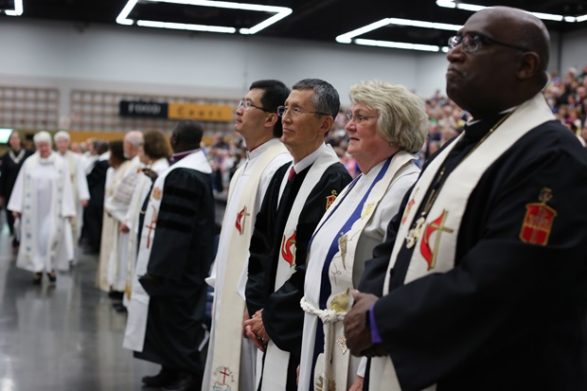
Two months ago, on the 17th of March, I had the privilege to share this perspective with a group of leaders from the United Methodist Church (UMC) in African nations. These African church leaders, who represent a significant voting bloc in the General Conference of the UMC, came to Israel to gather information and learn first-hand from people advancing human rights in our region, what is actually happening on the ground. After I spoke with this group in Jerusalem and had a very lively Q&A session, they unanimously promised me that they would squash the initiative of their General Conference to support BDS. I am thrilled to see that these honorable leaders fulfilled their promise. In an historic reversal, the UMC General Conference decided last week to reject four BDS resolutions. Apparently, for the time being, the UMC’s pension fund will not invest in Israeli banks, a direct result of a 2012 decision to support BDS; nevertheless, the decision last week was a step in the right direction.
Photo by Kathleen Barry, United Methodist News Service
Discrimination against Women under the Palestinian Authority and Hamas
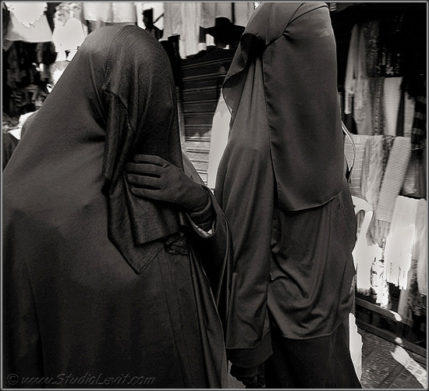
The following report examines the degree to which the Palestinian governing authorities in the West Bank and Gaza adhere to CEDAW. Findings indicate their acute failure to protect women’s rights within both legal codes and cultural practices. Even in cases where legal codes guarantee certain women’s rights, laws are either not enforced
or inconsistently enforced and very few categories of rights receive complete protection. For example, in 2011 the Fatah-controlled Palestinian Authority (PA) published an extensive document entitled “National Strategy to Combat Violence Against Women 2011-2019.” This document is an impressive acknowledgement of women’s rights violations, but despite the authorities’ ostensible intentions to counteract violence against women, the problems outlined remain rampant.
Downloads
Hidden Injustices
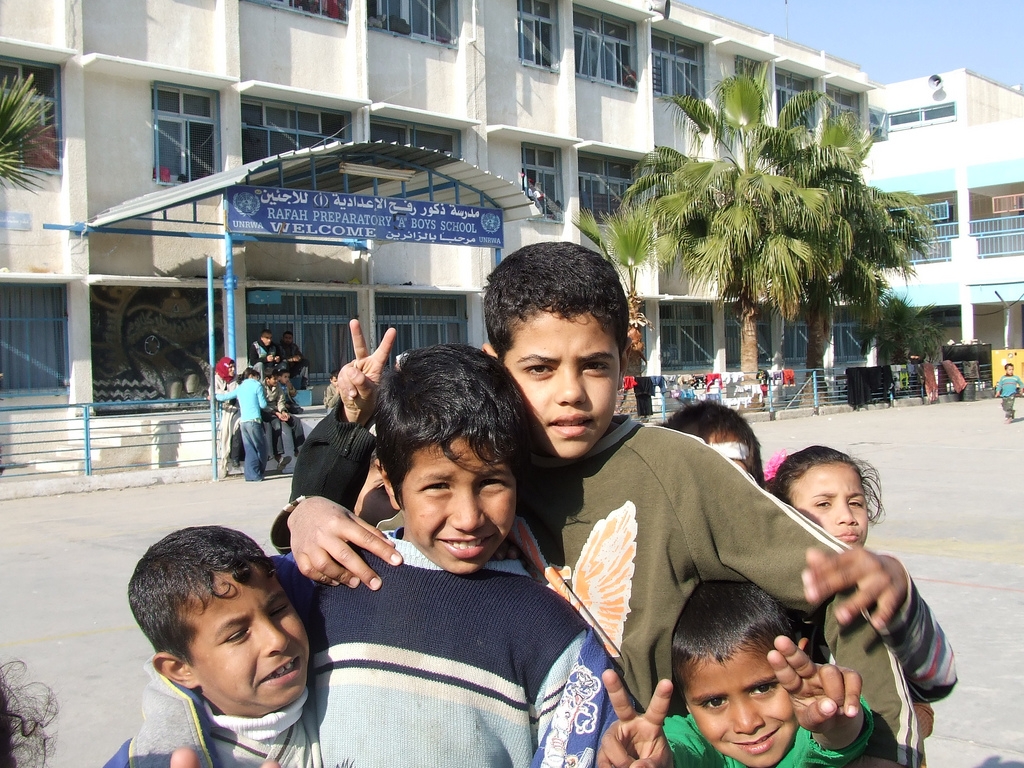
This report highlights the human rights violations regularly committed by the Palestinian government authorities. These include arbitrary detention, torture and cruel punishment, violation of the freedom of expression and the freedoms of the press, violation of the freedom of religion and minority rights, and violation of the rights of women and children. The EU and the US share a guiding principle that all nations should uphold and affirm the human rights of each individual, wherever they may reside in the world. As critical sustainers of the Palestinian Authority’s leadership through the provision of vast quantities of annual aid, how much more so, then, ought the EU and the US require accountability of the PA?