

Incitement: The Low-Hanging Fruit to Achieving a Peace Deal
One of our interns recently sat down for an interview with former Israeli Ambassador to Canada Alan Baker of the Jerusalem Center for Public Affairs. In line with his role as the organization’s international law expert and Director at the Institute for Contemporary Affairs, the Ambassador has amassed a wealth of experience in dealing with the international legal implications of incitement.
The protracted conflict between Israel, the Palestinians and the wider Arab world has endured for over six decades. One reason for this is that many of the issues up for negotiation in a final peace agreement - refugees, borders, demilitarization and settlements - are notoriously complex. However, the issue of incitement is one point of difference between the two parties that could and should be easily resolved.
Within the context of Israeli-Palestinian relations, incitement refers to either:
- The act of encouraging or urging another person to commit violence, or
- Knowingly disseminating false information about a particular group of people with the aim of provoking a violent reaction
When asked about the issue’s centrality in resolving the conflict, Ambassador Baker pointed out that incitement is specifically addressed in the interim agreement of the Oslo Accords. He notes “a committee was set up – the Palestinians, the Israelis, and the Americans, to handle incitement by everyone”. Interestingly, the inclusion within the agreement framework was borrowed from Israel’s peace treaties with Israel and Jordan. Again, the Ambassador points out that “there are specific provisions there calling upon each side to do whatever is necessary – from the point of view of education and one thing or another – to encourage good neighbourliness and prevent incitement”.
The strategic use of incitement has permeated Palestinian leadership since before the inception of the Israeli state. Most infamously, it was employed to horrific effect in the Hebron Massacre of 1929, where between 67-69 Jewish people were killed by Arab mobs who were told of supposed Jewish plans to storm the Al-Aqsa mosque in Jerusalem. In contemporary times, we have seen a rapid resurgence of these accusations from the upper echelons of the Palestinian Authority. In September 2015, at the height of a wave of car-ramming and stabbing attacks, PA President Mahmoud Abbas alleged Jewish interference at the Muslim holy site. “Al-Aqsa is ours and so is the Church of the Holy Sepulchre”, he proclaimed. “They have no right to desecrate them with their filthy feet. We won’t allow them to do so and we will do whatever we can to defend Jerusalem.” As foreign governments - particularly the Obama administration - were urging parties to calm tensions and combat incitement, Abbas continued “each drop of blood that was spilled in Jerusalem is pure blood as long as it’s for the sake of Allah. Every martyr will be in heaven and every wounded person will be rewarded, by Allah’s will”. As recently as July 2017, PA Parliament Member for Fatah, Hatem Abd Al-Qader, stated “we are moving towards an escalation. The Israelis are moving towards an escalation, and we have no problem on our part that there will also be an escalation from the Palestinian side. Escalation is answered with escalation, and violence is answered with violence”.
As it currently stands, access to the site is governed by an arrangement achieved immediately after Israel’s unification of Jerusalem in the Six Day War of 1967. More commonly known as the ‘status quo’, the site is administered by a Jordanian trust known as the waqf and grants access to Muslims, Christians and Jews but forbids prayer by the latter two groups. Apart from the periodic unsubstantiated allegations from Palestinian leaders, no evidence exists suggesting any current or planned changes to the status quo. Member of Knesset Yehuda Glick, who currently serves in the governing Likud party, can attest to this. Prior to his ascension to the Knesset, Glick was a prominent campaigner for Jewish prayer rights at the Temple Mount and, therefore, alterations to the status quo. During that time, he survived an assassination attempt by a man who believed Glick to be “an enemy of Al-Aqsa”. Ironically, he serves in a governing party that enforces an arrangement to which he is diametrically opposed.
Importantly, the phenomenon of incitement is not limited to perceived incursions on the Temple Mount. Religious clergy play a significant role in shaping their followers’ attitudes to violence. For example, in October 2015, Rafah cleric Sheikh Muhammad Sallah "Abu Rajab" brandished a knife while exclaiming “Form stabbing quads. We don't want just a single stabber. Oh young men of the West Bank: Attack in threes and fours. Some should restrain the victim, while others attack him with axes and butcher knives…Oh men of the West Bank, next time, attack in a group of three, four, or five. Attack them in groups. Cut them into body parts”.
Ambassador Baker became well-known in the international legal community for authoring the Draft International Convention for the Prevention of Incitement to Terror, which borrowed language and preambular paragraphs from other U.N. Conventions addressing terrorism. However, the dissonance between the recognition of the problem and the collective will to act ultimately torpedoed the document’s success. “Everybody admits and accepts the fact that incitement is a central component of terror today but nobody’s prepared to act against it”, argues Baker. “There’s a resolution every year in the General Assembly condemning international terrorism and this includes advocating, inciting… but it’s not a legal document - it’s a political thing accepted by a political majority but it has no teeth.”
Similarly, the Ambassador laments the lack of collective will to combat incitement on the international stage. He was disappointed that his efforts to prosecute former Iranian President Mahmoud Ahmadinejad for inciting genocide against Jews and Israelis - in contravention of Article 3(c) of the Convention on the Prevention and Punishment of the Crime of Genocide - were unsuccessful. “Not only is Ahmadinejad violating provisions of the ICC Statute, it doesn’t matter because he’s also violating the Convention Against Genocide by advocating genocide and therefore he’s bound, he’s violating international law.” He added that, together with the Canadian B’nei Brith, he even drafted a charge sheet detailing which international crimes he committed.
The elusive peace between Israelis and Palestinians will neither be achieved easily nor overnight. Although we may not know the exact nature of any final agreement, we can say which actions will torpedo any progress. It won’t include conspiracies of Jewish hordes swarming Islamic holy sites, nor calls to arms aimed at instigating a religious war. Palestinian leaders and clerics owe it to their children to spread a message of nonviolence. They must reject – not just publicly – the idea of mukawama (armed resistance) and champion the idea that there is no glory in the afterlife for stabbing innocent people or car ramming children. Words matter – particularly with impressionable youth and the age of technology. As such, incitement in all its forms is a disaster for coexistence.

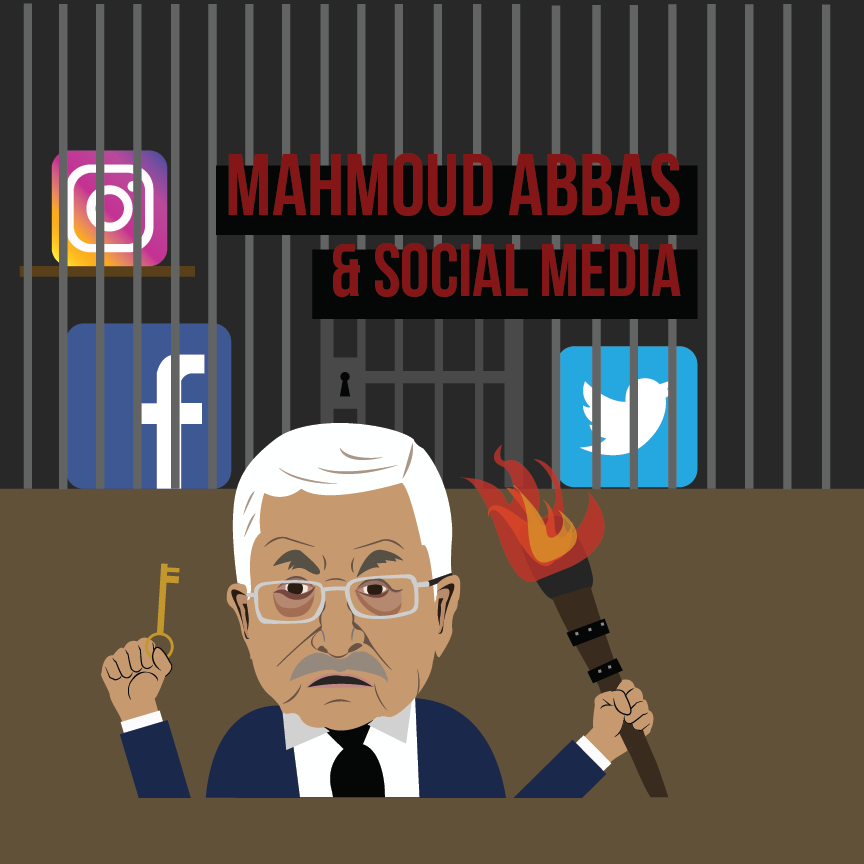
Abbas Doesn't 'Like' Social Media. The Feeling Is Mutual.
Palestinian Authority (PA) President Mahmoud Abbas won't be collecting any 'likes' for his recent crackdown against social media and news websites. Those who say the wrong thing, defined vaguely as 'endangering the safety of the state’ or ‘harming national unity' may now receive jail terms up to life in prison.
Without social media, Palestinians would be unable to get their stories out to the world. As one example, Palestine Informer, offers a rare, uncensored glimpse into life as-it-is experienced by ordinary Palestinians. No longer.
Abbas may have believed he could decree a two-for-one winning strategy with this new Cyber-Crime decree.
First, the President criminalized fully-justified criticism of his regime by rivals and, notably, Mohammed Dahlan. Second, he placed intense pressure on Hamas for their recent arrest of a Palestinian television reporter, Fuad Jaradeh. No doubt, Hamas did this to humiliate Abbas. It worked and then some.
The new law has already become a public relations disaster. Ammar Dweik, head of the PA's own Independent Commission for Human Rights, told Ynet news that the law is 'one of the worst' issued in PA history. That is quite an achievement! Even normally loyal or, at least, cowed Palestinian journalists are pushing back. As one wrote, "what is laughable is that this law carried penalties that are tougher than those imposed on thieves and sex offenders." Let’s just say we won’t count this as a ‘like’ for the law.
Oh, and speaking of liking things, anyone who merely promotes content that Abbas deems offensive by 'liking' and sharing it with friends can also be prosecuted and jailed alongside the author. As the PA prosecutor explained, “you cannot accuse the president …. of treason or make fun of him in an image, or something like that.” Surely, that helps clarify things, no?
President Abbas doesn't like social media and the Internet. Everyone gets that. Even so, the law seems unusually bizarre, unless Abbas has decided that his own political survival now hinges on naked suppression of free speech. If so, the President may soon discover that social media's dislike of his crude campaign of censorship sweeps away his 20th century regime, led by otherwise conservative 21st century Palestinians.

Hamas' "Sinking Business"
In the past two years, over 400,000 illegal individuals from from the Middle-East and North Africa to Europe by sea due to the oppressive conditions in these areas. One Gazan in reference to Hamas stated that "It's better to die at sea than to die of despair and frustration in Gaza."
Downloads
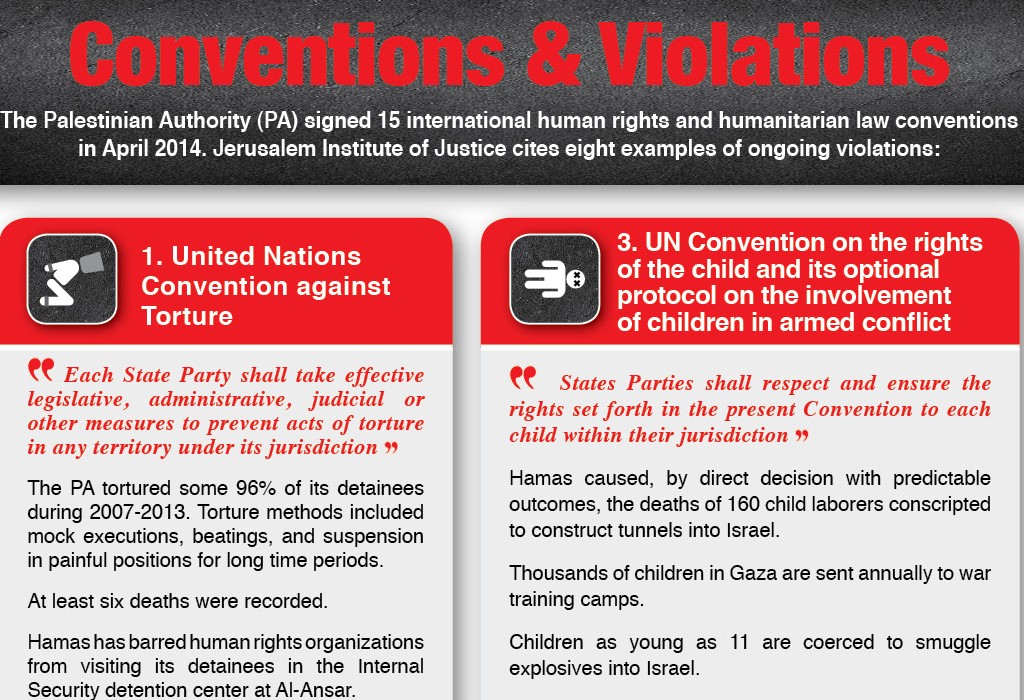
Palestinian Authority: Violations
The Palestinian Authority (PA) signed 15 international human rights and humanitarian law conventions in April 2014. This factsheet cites 8 examples of ongoing violations by the PA despite agreeing to UN international law.
Downloads
Suppression Palestinian Political Rights
The Palestinian people's political rights in the West Bank and Gaza are continually violated by the PA and Hamas. From the lack of free elections for almost a decade to the suppression of freedom of assembly, Palestinians in the West Bank and Gaza are denied their rights and these institutions are in violation of international humanitarian law.
Download

Torture and Cruel, Inhuman, Degrading Treatment or Punishment under the PA and Hamas
In this report, the Jerusalem Institute of Justice (JIJ) examines the observance of the UN Convention against torture and other cruel, inhuman or degrading treatment or punishment (UNCAT) signed by the Palestinian Authority (PA). Through research and personal interviews, JIJ evaluates human rights deficiencies throughout the territories under the control of the Palestinian Authority and Hamas in accordance with international legal norms. Despite the Palestinian Authority’s formal commitment to international human rights standards, this report documents a broad array of continuing abuses. The ratification of the UNCAT and other conventions by the Palestinian Authority, does not seem to have sufficient legal weight necessary to stop the abuse of human rights. As long as the Palestinian Authority does not respect the Convention and continues to allow torture and ill treatment, there will never be freedom, but a constant fear of torture without redress..
Download
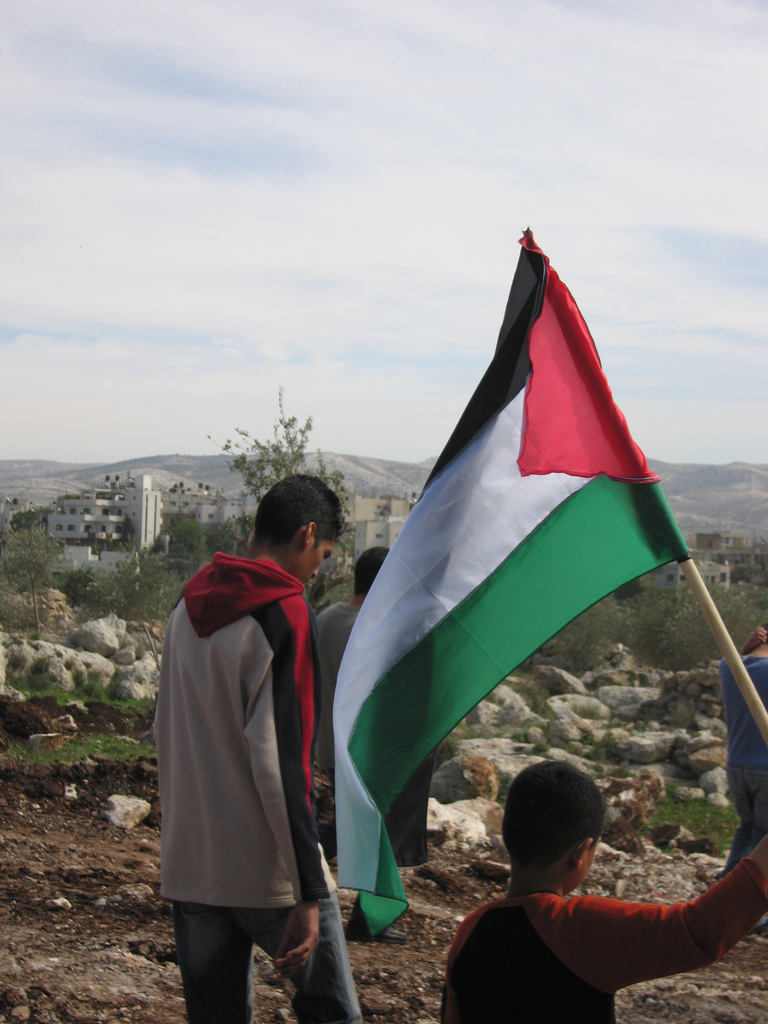
Political Rights Violations in the West Bank and Gaza by the Palestinian Authority and Hamas
In this report, the Jerusalem Institute of Justice (JIJ) examines political rights and freedoms in the West Bank and Gaza. Through comprehensive research and interviews with those living and working in the West Bank and Gaza, this report aims to illuminate the situation on the ground with regard to political rights for Palestinians in these territories. Freedom of Assembly is routinely violated throughout the West Bank and Gaza either by unlawful police interference in private assemblies, or disproportionate use of force in public assemblies. Freedom of Association is severely restricted, with the Ministry of Interior assuming control over the set-up, funding and dissolution of associations and charities. The Palestinian Authority and Hamas are making little effort to protect and promote these rights of the Palestinian people and are thus in violation of international law.
Download
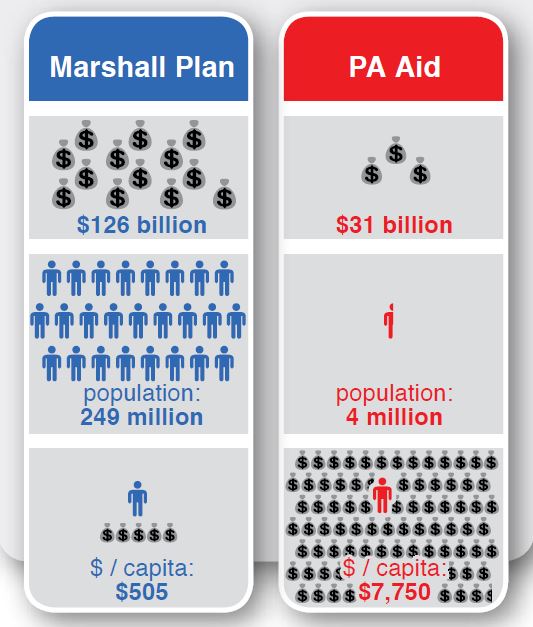
Money Money
Discover how corrupt Palestinian leaders are pocketing Palestinian International Aid.
Downloads
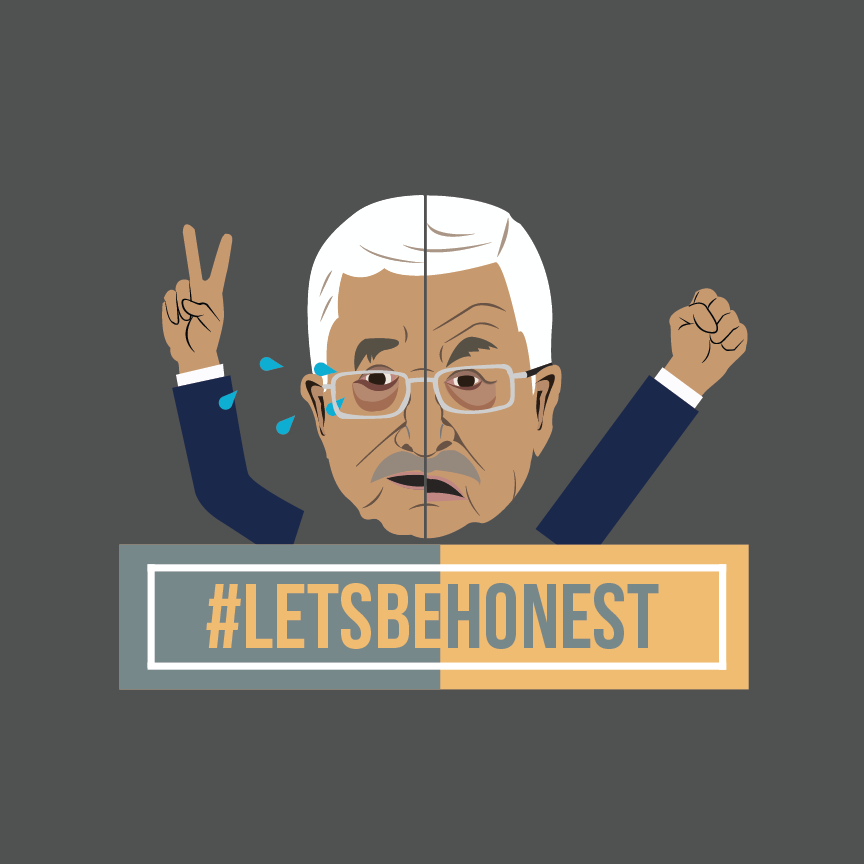
The Two Faces of Abbas
This infographic depicts the two faces of Palestinian Authority leader Mahmoud Abbas when talking about the Jewish people. The #LetsBeHonest Campaign seeks to expose the duplicitous claims spoken by Arab leaders to the West and exposes their true intentions toward peace.
Download
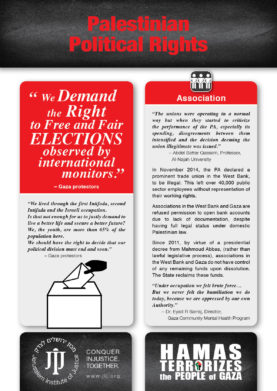
Political Rights Offenses Under the Palestinian Authority
Assessing the implementation of the International Covenant on Civil and Political Rights
For the full report click, here.
In this report, the Jerusalem Institute of Justice (JIJ) examines political rights and freedoms in the West Bank and Gaza under the Palestinian Authority (PA). Through comprehensive research and interviews with residents and workers in the West Bank and Gaza, this report aims to illuminate the current situation with regard to political rights for Palestinians in these territories. After the State of Palestine achieved “non-member observer state” status from the UN General Assembly in 2012, President Mahmoud Abbas signed and acceded to multiple international humanitarian and human rights treaties and conventions, thus rendering the State of Palestine accountable for the upholding certain rights. This report deals with three major rights: the freedom of assembly, the freedom of association, and electoral rights.
Freedom of Assembly
A part of international law, the UN’s International Bill on Human Rights guarantees the right to freedom of assembly. On April 2, 2014, the State of Palestine became a signatory to the International Covenant on Civil and Political Rights 1976 (ICCPR). However, it appears that the application of these laws does not always uphold these rights.
In Gaza, two forms of domestic law in the West Bank currently govern the right to Freedom of Assembly: Palestinian Basic Law and Public Meeting Law No. 12 of 1998. Under the PA, individuals are required to provide permits for demonstrations. Demonstrations that are against PA policies are often dispersed. While a broad range of non-governmental organizations operate freely in the West Bank, many Hamas-affiliated civic associations have been shut down for political reasons.
Under Article 2 of Public Meetings Law No. 12 of 1998, a public assembly is defined as any public gathering of 50 or more persons in a public open space (Art. 1). The statute goes on to provide restrictions to this right, such as the need for a 48-hour written notice of the assembly to be submitted to the Director of Police (Art. 3), for the notice to be signed by at least three organizers of the assembly, and for notification of the time, place, and purpose of the meeting (Art.4).
The Executive Bill issued by the late President Yasser Arafat, limited the right of assembly by giving the police the right to “disperse and end any meeting upon determination [by the police] that the meeting is not following its stated purpose or objective.” Furthermore, the Executive Bill outlined requirements that organizers of meetings take account for the provisions set out in Presidential Decree No. 3 of 1998 concerning the “perpetuation of national unity and incitement prevention.” This makes it more difficult for Palestinians to exercise their right to freedom of assembly, and leaves considerable room for abuse of executive power. The executive power is indeed oftentimes abused due to a lack of separation of power between the executive, legislative, and judicial branches.
Generally speaking, when it comes to secret or indoor meetings, there is no interference in the West Bank, though in Gaza Hamas commonly breaks up private meetings in homes, thus violating the Basic Law.
Public assemblies tend to have more restrictions, especially when the issue addressed by the assembly proves to be political. In certain instances, the authority will not only be present with security forces, but also will even ban the assembly altogether – a blatant violation of the right of assembly guaranteed by the Basic Law and the Public Meetings Law.
The Public Meetings Law No. 12, and specifically its accompanying restrictions under the Executive Bill, have become an excuse for Hamas security forces to ban, attack and forcibly disperse many assemblies and public meetings. This has often been carried out with the use of disproportionate force, and with reports of police using clubs and stun grenades. An international call for accountability has been met with the appointing of committees that look into incidents of excessive and unjustified force. Although in some occasions disciplinary action was taken against offending officers, it seems that the motive originated from a desire to pacify the people rather than to search for long-term change in the effort to uphold the right to Freedom of Assembly.
Freedom of Association
Freedom of Association refers specifically to individual and workers’ rights to form associations or organizations, trade unions, non-governmental organizations, and charities, among others. The right to freedom of association is guaranteed under both the ICCPR and the UDHR. In terms of domestic law, the West Bank and Gaza, under the split governance of Hamas and Fatah respectively, have distinct legislation governing the right to freedom of association, though this right is accounted for under the Palestinian Basic Law of 2003, which currently serves as a temporary constitution. However, this freedom is regularly violated when it involves any form of political discussion.
In the West Bank and Gaza, the Law of Charitable Associations and Community Organizations No. 1 of 2000 (hereafter Associations Law), and the Palestinian Labor Law No. 7 of 2000 (hereafter Labor Law) also govern the right of association. This right can be best assessed when split into two categories: Charitable Associations and Community Organizations, and Trade Unions.
A series of administrative directives and decisions undermine the effective implementation of the protection of freedom of association. Firstly, under the Associations Law all associations must be registered with the authorities in order to carry out their activities. In theory this is only to notify the authority of the existence of a charity, which is considered legal within two months of submitting the application, with or without a response from the authorities. In practice, however, the registration system has become a licensing process, which is funneled through the Ministry of Interior, giving it undue power. This extends to funding and finance, as the Ministry of Interior may scrutinize the allocation and raising of funds, possibly allowing for inappropriate government intervention in NGO activities.
The Monetary Authority has issued instructions to banks in the West Bank and Gaza, that associations must present certification of legal status to the bank when wishing to open an account. This leaves many associations and organizations unable to open an account, despite having legal status by virtue of the two-month time lapse, as many have not received any formal documentation from the Ministry of Interior. Therefore, from a legal standpoint, many associations with legal status are prevented from carrying out their activities due to restrictive administrative decisions (or complete lack of decision) from the Ministry of Interior. Additionally, it has been reported that authorities in the West Bank may refuse to allow the opening of organizations registered in Gaza, and vice-versa, though the law does not allow this.
Another issue lies in the case of the dissolution of an organization, wherein the funds are transferred to the Palestinian National Authority public treasury. This amendment clearly opens the door to corruption and the misuse of funds by government officials with political motives.
Such government control is excessive. This abuse of power is especially noticeable when comparing freedom of association in other nations such as the US and the UK.
International and domestic laws also ensure the protection of workers’ rights. However, the PA has banned all Union of Public Employees activities. This effectively deprives public sector employees in the West Bank from being represented by their elected representatives and from undertaking any collective bargaining or any form of dialogue with their employer, the Palestinian government. However, in 2013, Hamas introduced a new Trade Unions Law No. 2 of 2013 to replace the former 1954 Egyptian Law for Trade Unions. As progressive this might seem, the new Trade Unions Law has been said to place severe restrictions on the exercise of the freedom of association and assembly. Unfortunately, the specifics of this cannot be commented upon, as the Trade Unions Law itself is only available in Arabic.
Electoral Rights
The right to take part in political life is enshrined in the Universal Declaration of Human Rights under Article 21, which states that the will of the people shall be expressed in periodic and genuine elections. General Comment No. 25 on the ICCPR also states that electoral rights ensure that individuals may freely determine their political status and choose the form of their government or constitution. Additionally, the 2003 Basic Law covers the right to vote under Article 26 (3) and (4). However, no general elections have taken place in the Palestinian Authority since 2006. This general election followed the presidential election of Mahmoud Abbas in 2005, one year earlier. The laws governing this area stipulate that general and presidential elections should be held every four years – the reality is quite different.
Local elections in the West Bank and Gaza have a rather tumultuous history. The first local elections took place in 2004-2005 under Local Elections Law No. 10 of 2005 and were carried out in five rounds of elections. The next elections were due to take place in 2010, but were postponed indefinitely after the Central Elections Commission (CEC) for Palestine (the body governing elections) announced that it would not be possible to conduct voter registration in Gaza and Jerusalem.
The disruptions to local and general elections in the West Bank and Gaza are undoubtedly a result of the Hamas-Fatah political divide. Following Hamas’ victory in the 2006 legislative elections, tensions rose between the two factions with Hamas later seizing control of the Gaza Strip in 2007. There have been multiple attempts at reconciliation between the two parties but the relationship has continued to deteriorate.
Abbas’ term as president should have ended in 2009, yet this year marks his tenth year as President of the Palestinian Authority with no presidential elections in sight. As with Freedom of Assembly, this is an issue with the separation of powers. The legislature is not separate from the executive branch, whose political division is causing the continuous violation of the Palestinian right to vote. Given that the separation of powers is a fundamental principle of democratic society, this should be of great concern to the international community.
The State of Palestine acceded to the International Covenant on Civil and Political Rights in April of 2014 and as such, is obligated to uphold the human freedoms documented therein. These rights are fundamental rights in international law and treaties, and should be accorded such significance. As it stands currently, the Palestinian Authority and Hamas are making little effort to protect and promote these rights of the Palestinian people and are thus in violation of international law.