
Committing to Palestinian rights (?)
In 2012, the United Nations (UN) granted the Palestinians non-member observer State status. Following this decision, the “State of Palestine” – as officially named in the UN – ratified several international treaties, supposedly to commit itself to comply with human rights and other international legal obligations. One such treaty is the International Covenant on Civil and Political Rights (ICCPR), which obligates those countries that have joined the treaty to respect and ensure the protection of fundamental human rights, such as the right to life, equality, and freedom of thought.
But how does one ensure that countries actually comply with their obligations and protect the rights of those under their jurisdiction? This is, in fact, the role of the UN Human Rights Committee, which receives reports from the State parties on the measures they have adopted in relation to the rights contained in the ICCPR. For this purpose, the Committee receives both the report of the state in question as well as documents submitted by organizations that wish to provide more information on the state’s compliance with the ICCPR. After analyzing the information received, the Committee issues recommendations to the state.
This month, it was the State of Palestine’s turn to attend and be examined by the Committee. Last week, the Committee issued its recommendations to the State of Palestine, also expressing its concerns on the numerous human rights violations that appear to be committed by Palestinian authorities.
Among the several human rights abuses highlighted in the Committee’s concluding observations, there is one that has not received enough attention from the international community: detainees are often subjected to torture by Palestinian security forces and intelligence services. The Committee has expressed its concerns “about consistent reports indicating that persons in custody, including in the facilities under the authority of the security forces and intelligence services, are subjected to torture or ill-treatment.”
What is even more alarming is the fact that many of the persons subjected to torture are actually children. The Palestinian Independent Commission for Human Rights, the national human rights institution established by Presidential Decree and has the function of an ombudsman, informed the UN Committee Against Torture that between 2016 and 2021, they received 4,279 claims of torture and other forms of cruel, inhuman, and degrading treatment, with 12% of them filed by children (Shadow Report of the Independent Commission for Human Rights on the initial report submitted by the State of Palestine on the implementation of the Convention against Torture, 2022).
The report submitted by the Jerusalem Institute of Justice (JIJ) also provides detailed information on the many cases of torture committed by the Palestinian authorities. Most individuals subjected to torture and inhumane treatment are those who exercise their fundamental rights by participating in peaceful protests or publicly voicing criticism against the authorities and those who are accused of “collaborating with Israel.” As pointed out by JIJ’s report, “these abuses and acts of torture have occurred across various periods, underscoring the fact that they are not isolated incidents.”
What is also concerning is the culture of impunity sustained by the Palestinian authorities. As pointed out by the Committee, only a few complaints of torture are investigated, and almost none of the investigations have resulted in the prosecution and conviction of the perpetrators. The Committee has therefore called upon the State of Palestine to “investigate promptly, thoroughly and effectively all cases of torture and ill-treatment in all places of deprivation of liberty, to ensure that perpetrators are prosecuted and, if convicted, punished with penalties commensurate with the gravity of the offenses and that victims of such violations receive full reparation and are provided with redress.”
But how does all this effort by the Committee and organizations truly translate into real-life change? Does this have any actual impact on those individuals whose rights are being violated by the Palestinian Authorities? Moreover, the Committee is one of many bodies in the UN that are responsible to oversee and ensure the respect of human rights. Even several bodies were specifically established regarding the rights of the Palestinians, so shouldn’t these institutions also focus on the human rights violations being committed by the Palestinian authorities?
The status of the Palestinians remains a contentious topic, subject to ongoing debate. Palestinian authorities have sought state recognition, which the UN eventually granted. However, this recognition must not be mere rhetoric or a political instrument; it holds the potential to make a meaningful difference. Regrettably, the UN has sometimes been manipulated as a platform for discussions that, under the guise of safeguarding human rights, mask hidden agendas and overlook real abuses.
The UN Human Rights Committee, composed of independent experts rather than states, plays a crucial role in safeguarding the rights of every individual. As a human rights advocate, I remain optimistic that this framework can lead to positive outcomes, hoping that even the State of Palestine, in its pursuit of recognition, will fulfill its obligations and uphold human rights.
By Carolina Grimberg Golijov, JIJ's Human Rights, Law and Research Officer.

Committing to Palestinian rights (?)
In 2012, the United Nations (UN) granted the Palestinians non-member observer State status. Following this decision, the “State of Palestine” – as officially named in the UN – ratified several international treaties, supposedly to commit itself to comply with human rights and other international legal obligations. One such treaty is the International Covenant on Civil and Political Rights (ICCPR), which obligates those countries that have joined the treaty to respect and ensure the protection of fundamental human rights, such as the right to life, equality, and freedom of thought.
But how does one ensure that countries actually comply with their obligations and protect the rights of those under their jurisdiction? This is, in fact, the role of the UN Human Rights Committee, which receives reports from the State parties on the measures they have adopted in relation to the rights contained in the ICCPR. For this purpose, the Committee receives both the report of the state in question as well as documents submitted by organizations that wish to provide more information on the state’s compliance with the ICCPR. After analyzing the information received, the Committee issues recommendations to the state.
This month, it was the State of Palestine’s turn to attend and be examined by the Committee. Last week, the Committee issued its recommendations to the State of Palestine, also expressing its concerns on the numerous human rights violations that appear to be committed by Palestinian authorities.
Among the several human rights abuses highlighted in the Committee’s concluding observations, there is one that has not received enough attention from the international community: detainees are often subjected to torture by Palestinian security forces and intelligence services. The Committee has expressed its concerns “about consistent reports indicating that persons in custody, including in the facilities under the authority of the security forces and intelligence services, are subjected to torture or ill-treatment.”
What is even more alarming is the fact that many of the persons subjected to torture are actually children. The Palestinian Independent Commission for Human Rights, the national human rights institution established by Presidential Decree and has the function of an ombudsman, informed the UN Committee Against Torture that between 2016 and 2021, they received 4,279 claims of torture and other forms of cruel, inhuman, and degrading treatment, with 12% of them filed by children (Shadow Report of the Independent Commission for Human Rights on the initial report submitted by the State of Palestine on the implementation of the Convention against Torture, 2022).
The report submitted by the Jerusalem Institute of Justice (JIJ) also provides detailed information on the many cases of torture committed by the Palestinian authorities. Most individuals subjected to torture and inhumane treatment are those who exercise their fundamental rights by participating in peaceful protests or publicly voicing criticism against the authorities and those who are accused of “collaborating with Israel.” As pointed out by JIJ’s report, “these abuses and acts of torture have occurred across various periods, underscoring the fact that they are not isolated incidents.”
What is also concerning is the culture of impunity sustained by the Palestinian authorities. As pointed out by the Committee, only a few complaints of torture are investigated, and almost none of the investigations have resulted in the prosecution and conviction of the perpetrators. The Committee has therefore called upon the State of Palestine to “investigate promptly, thoroughly and effectively all cases of torture and ill-treatment in all places of deprivation of liberty, to ensure that perpetrators are prosecuted and, if convicted, punished with penalties commensurate with the gravity of the offenses and that victims of such violations receive full reparation and are provided with redress.”
But how does all this effort by the Committee and organizations truly translate into real-life change? Does this have any actual impact on those individuals whose rights are being violated by the Palestinian Authorities? Moreover, the Committee is one of many bodies in the UN that are responsible to oversee and ensure the respect of human rights. Even several bodies were specifically established regarding the rights of the Palestinians, so shouldn’t these institutions also focus on the human rights violations being committed by the Palestinian authorities?
The status of the Palestinians remains a contentious topic, subject to ongoing debate. Palestinian authorities have sought state recognition, which the UN eventually granted. However, this recognition must not be mere rhetoric or a political instrument; it holds the potential to make a meaningful difference. Regrettably, the UN has sometimes been manipulated as a platform for discussions that, under the guise of safeguarding human rights, mask hidden agendas and overlook real abuses.
The UN Human Rights Committee, composed of independent experts rather than states, plays a crucial role in safeguarding the rights of every individual. As a human rights advocate, I remain optimistic that this framework can lead to positive outcomes, hoping that even the State of Palestine, in its pursuit of recognition, will fulfill its obligations and uphold human rights.
By Carolina Grimberg Golijov, JIJ's Human Rights, Law and Research Officer.
Palestinian Voices: Who is Silencing Them?
Palestinian Voices: Who is Silencing Them?
Every year on May 3rd we celebrate the World Press Freedom Day, as established by the UN General Assembly thirty years ago. On this day, we stress the importance of allowing individuals to communicate and access information freely. For press freedom to truly exist, information must be accessible to all, and journalists must be free from interference while exercising this freedom. On the occasion of World Press Freedom Day, it is imperative that we conduct a rigorous evaluation of the degree to which press freedom is being upheld across the globe, and raise awareness about the severe restrictions that certain populations face as a result of authoritarian regimes governing them.
Unfortunately, Palestinians, including Palestinian journalists, are often subjected to persecution and harassment by the Palestinian Authority (PA) when expressing ideas and sharing information that contradicts its interests. The PA does claim that it protects freedom of expression and press. Article 19 of the Palestinian Basic Law establishes that “every person shall have the right to express his opinion and to circulate it orally, in writing or in any form.” However, other laws also enacted by the PA clearly limit the freedom of press and opinion, such as the Press and Publications Law. Furthermore, the situation on the ground has demonstrated that the PA has repeatedly taken measures to suppress freedom of press.
Throughout the years, Palestinians who have expressed opposing interests to those of the PA have been pressured, assaulted, arrested, and even killed by the PA forces. To illustrate the extent of the issue, it is worth noting that as recently as March 2023, two Palestinian journalists, Moath Washha and Wahaj Bani Mufleh, were apprehended by the Palestinian intelligence service. Mufleh was even subjected to torture and ill-treatment after he tried to help a foreign journalist that was arrested and mistreated by the Palestinian security forces.
Moreover, the case of Nizar Banat cannot go unnoticed. Banat, a Palestinian activist and an outspoken critic of the PA was brutally beaten and detained by the Palestinian security forces. Tragically, he passed away en route to the hospital just one hour later. Thousands of people gathered to protest against the PA for Banat’s death, and even during these demonstrations, Palestinian security forces attacked the protesters and several journalists who attended the protest.
The international community has often turned a blind eye to the numerous human rights violations committed by the Palestinian Authority against Palestinians. On this important occasion of reflecting upon the significance of press freedom, it is critical to acknowledge that this is a fundamental right that is indispensable to democracy and must be safeguarded. It is our duty to ensure that those who violate this freedom, including the Palestinian Authority, are called out and held responsible for their actions.
Palestinian Voices: Who is Silencing Them?
Palestinian Voices: Who is Silencing Them?
Every year on May 3rd we celebrate the World Press Freedom Day, as established by the UN General Assembly thirty years ago. On this day, we stress the importance of allowing individuals to communicate and access information freely. For press freedom to truly exist, information must be accessible to all, and journalists must be free from interference while exercising this freedom. On the occasion of World Press Freedom Day, it is imperative that we conduct a rigorous evaluation of the degree to which press freedom is being upheld across the globe, and raise awareness about the severe restrictions that certain populations face as a result of authoritarian regimes governing them.
Unfortunately, Palestinians, including Palestinian journalists, are often subjected to persecution and harassment by the Palestinian Authority (PA) when expressing ideas and sharing information that contradicts its interests. The PA does claim that it protects freedom of expression and press. Article 19 of the Palestinian Basic Law establishes that “every person shall have the right to express his opinion and to circulate it orally, in writing or in any form.” However, other laws also enacted by the PA clearly limit the freedom of press and opinion, such as the Press and Publications Law. Furthermore, the situation on the ground has demonstrated that the PA has repeatedly taken measures to suppress freedom of press.
Throughout the years, Palestinians who have expressed opposing interests to those of the PA have been pressured, assaulted, arrested, and even killed by the PA forces. To illustrate the extent of the issue, it is worth noting that as recently as March 2023, two Palestinian journalists, Moath Washha and Wahaj Bani Mufleh, were apprehended by the Palestinian intelligence service. Mufleh was even subjected to torture and ill-treatment after he tried to help a foreign journalist that was arrested and mistreated by the Palestinian security forces.
Moreover, the case of Nizar Banat cannot go unnoticed. Banat, a Palestinian activist and an outspoken critic of the PA was brutally beaten and detained by the Palestinian security forces. Tragically, he passed away en route to the hospital just one hour later. Thousands of people gathered to protest against the PA for Banat’s death, and even during these demonstrations, Palestinian security forces attacked the protesters and several journalists who attended the protest.
The international community has often turned a blind eye to the numerous human rights violations committed by the Palestinian Authority against Palestinians. On this important occasion of reflecting upon the significance of press freedom, it is critical to acknowledge that this is a fundamental right that is indispensable to democracy and must be safeguarded. It is our duty to ensure that those who violate this freedom, including the Palestinian Authority, are called out and held responsible for their actions.
52 Palestinians Tortured = UN Crimes Against Humanity
Jerusalem Institute of Justice- Submission to The Independent International Commission of Inquiry on the Occupied Palestinian Territory, including East Jerusalem, and Israel
Dear Honorable Commission,
We, the Jerusalem Institute of Justice, are a not-for-profit human rights organization, with Special Consultative Status at the UN Economic and Social Council, fighting to promote human rights, defend democracy, and improve the overall quality of life for Israelis and Palestinians alike. Due to our hope of ever-lasting peace in the region, we find it of the utmost importance to address your call for submissions of relevant information and documentation to the mandate of the Commission.
The attached report concerning the Crimes against Humanity committed against Palestinian citizens by the Palestinian Authority (PA) was filed by our organization at the Office of the Prosecutor at the International Criminal Court (ICC) in The Hague on the 20th of February 2019, together with the report on Mahmoud Abbas’s Crimes against Humanity. The report includes testimonies of 52 Palestinian civilians who have suffered the grave atrocities of arbitrary imprisonment, torture, and murder by the PA during the time period of 1991 to 2004. We argued that a full investigation of crimes against humanity should be pursued, and a case should be lodged, against Mahmoud Abbas, as President of the PA, for his role in the murder, torture, and unlawful imprisonment of innocent Palestinian civilians. Following this communication, and others, an investigation of the “Situation in Palestine” was commenced by the Chief Prosecutor of the ICC on the 3rd of March 2021. The submission of this report is in accordance with the COI’s mandate to collect evidence and information of abuses of international human rights law and identify those responsible.
On November 11, 2018, the Israeli Supreme Court rejected an appeal and upheld the district court ruling that found the PA liable for unlawful imprisonment in a precedent-setting ruling and ordered the PA to compensate the 52 plaintiffs. The victims, suspected by the PA of “collaboration with Israel,” suffered extreme physical and emotional trauma that has caused numerous long-term damages. The Supreme Court found all testimonies reliable. As President of the Palestinian Authority, Abbas has played a pivotal role in exercising effective authority and control over the imprisonment, torture, and murder of these Palestinian civilians, in furtherance of a state policy designed to deter resistance towards his Government. During his time in power, Abbas has directed or allowed these crimes to be committed against these Palestinians and many more. Abbas’s acts of arbitrary imprisonment, torture, and murder against these Palestinians and many more constitute crimes against humanity under Article 7 of the Rome Statute of the International Criminal Court.
We urge the commission to look into these violations of Human Rights committed by the Palestinian Authority and include them in their report due to be presented in the Human Rights Council’s June regular session.
Yours sincerely,
Flavia Sevald, CEO,
Jerusalem Institute of Justice,
Murder of Palestinians = UN Crimes Against Humanity
Jerusalem Institute of Justice- Submission to The Independent International Commission of Inquiry on the Occupied Palestinian Territory, including East Jerusalem, and Israel
Dear Honorable Commission,
We, the Jerusalem Institute of Justice, are a not-for-profit human rights organization, with Special Consultative Status at the UN Economic and Social Council, fighting to promote human rights, defend democracy, and improve the overall quality of life for Israelis and Palestinians alike. Due to our hope of ever-lasting peace in the region, we find it of the utmost importance to address your call for submissions of relevant information and documentation to the mandate of the Commission.
The attached report concerning Hamas’s Crimes against Humanity was filed by our organization at the Office of the Prosecutor at the International Criminal Court (ICC) in The Hague, on the 24th of July 2019. We argued that a full investigation of crimes committed within the Palestinian territories should be pursued, and a case should be lodged, against Ismail Haniyeh, head of the political wing of Hamas, for his role in the crimes against humanity committed through widespread and/or systematic acts of murder, imprisonment, and torture of civilians in the Gaza Strip. Following this communication and others, an investigation of the “Situation in Palestine” was commenced by the Chief Prosecutor of the ICC, on the 3rd of March 2021. The submission of this report is in accordance with the COI’s mandate to collect evidence and information of abuses of international human rights law and identify those responsible.
As leader of Hamas, Haniyeh has played a pivotal role in developing and enforcing Hamas’s extremist ideology and consistent human rights violations against the Gazan civilian population as well as others. Haniyeh knew of and was in a position to prevent the crimes against humanity that have been committed against the civilian population of Gaza; yet he has manifestly failed to do so. Haniyeh’s crimes have had and will continue to have devastating consequences on the entire population of Gaza and the rest of society in the surrounding region. These crimes benefit no one but Hamas’s leadership.
Haniyeh’s acts of widespread and systematic murder against the civilian population of Gaza constitute crimes against humanity under Article 7 of the Rome Statute of the International Criminal Court (Rome Statute). In addition, the crimes of torture committed by Hamas security forces and police officers also constitute crimes against humanity under Article 7 of the Rome Statute.
We urge the commission to look into these violations of Human Rights committed by Hamas and include them in their report due to be presented at the Human Rights Council’s June regular session.
Yours sincerely,
Flavia Sevald, CEO,
Jerusalem Institute of Justice,
Abuse of Palestinians = UN Crimes Against Humanity
Jerusalem Institute of Justice- Submission to The Independent International Commission of Inquiry on the Occupied Palestinian Territory, including East Jerusalem, and Israel
Dear Honorable Commission,
We, the Jerusalem Institute of Justice, are a not-for-profit human rights organization, with Special Consultative Status at the UN Economic and Social Council, fighting to promote human rights, defend democracy, and improve the overall quality of life for Israelis and Palestinians alike. Due to our hope of ever-lasting peace in the region, we find it of the utmost importance to address your call for submissions of relevant information and documentation to the mandate of the Commission.
The attached report concerning the Palestinian Authority’s (PA) Crimes against Humanity was filed by our organization at the Office of the Prosecutor at the International Criminal Court (ICC) in The Hague on the 20th of February 2019. We argued that a full investigation of crimes against humanity should be pursued, and a case should be lodged, against Mahmoud Abbas, as President of the PA, for his role in the systematic and widespread campaign of murder, torture, and unlawful imprisonment against parts of the Palestinian population in the territory of Judaea and Samaria, known as the “West Bank”. Following this communication, and others, an investigation of the “Situation in Palestine” was commenced by the Chief Prosecutor of the ICC on the 3rd of March 2021. The submission of this report is in accordance with the COI’s mandate to collect evidence and information of abuses of international human rights law and identify those responsible.
As President of the Palestinian Authority, Abbas has played a pivotal role in exercising effective authority and control over the widespread or systemic murder, imprisonment and torture of the Palestinian civilians, in furtherance of a state policy designed to deter resistance towards his government.
During his time in power, Abbas has directed or allowed these crimes to be committed against various Palestinian groups – including those deemed to have been critical of the current PA government or which have supported rival Palestinian factions. Abbas knew of and was in a position to prevent the crimes against humanity that have been committed against the civilian population of the West Bank, yet he has manifestly failed to do so. Abbas’s acts of widespread and systematic murder against the civilian population of the West Bank constitute crimes against humanity under Article 7 of the Rome Statute of the International Criminal Court (“Rome Statute”). In addition, the crimes of torture committed by the Palestinian Authority’s police officers constitute crimes against humanity under Article 7 of the Rome Statute.
We urge the commission to look into these violations of Human Rights committed by the Palestinian Authority and include them in their report due to be presented in the Human Rights Council’s June regular session.
Yours sincerely,
Flavia Sevald, CEO,
Jerusalem Institute of Justice,
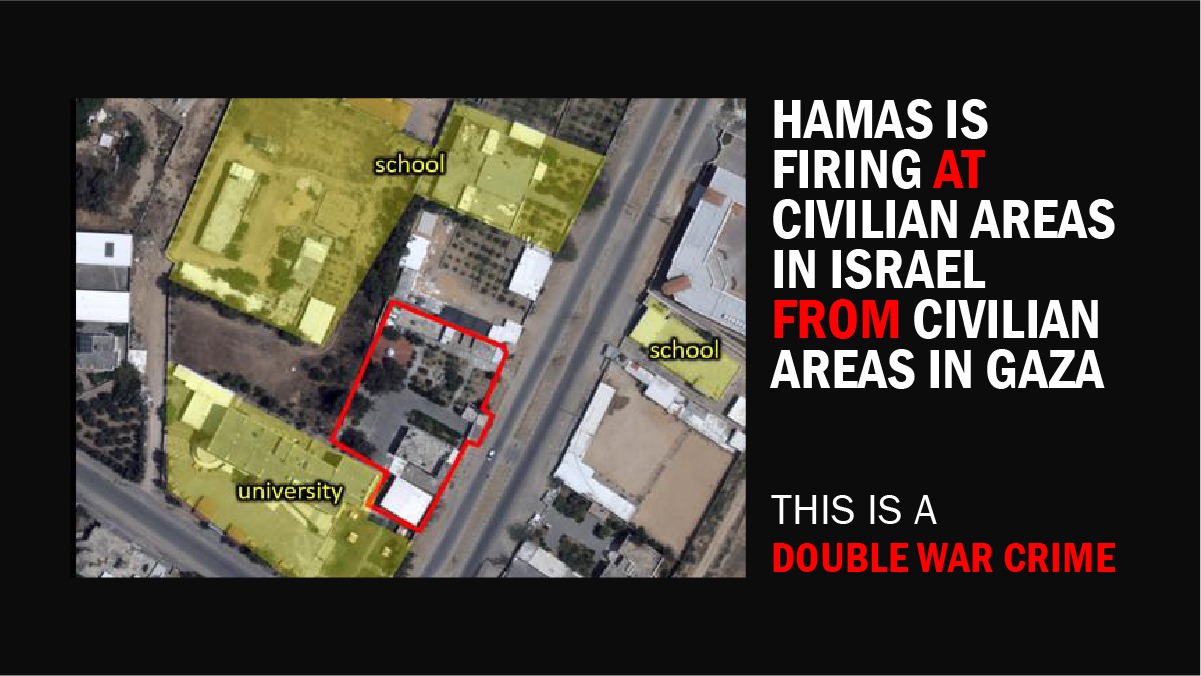
Guardian of the Walls
The recent 11 day conflict between Israel and Hamas was named "Operation Guardian of the Walls" by Israel. Hamas has named it the "Sword of Jerusalem." Hamas, a terrorist organization was waiting for the right opportunity to ignite the region and enter a violent confrontation with Israel. Its leaders were interested in declaring publically, that they have control over all affairs regarding Jerusalem. The matter of the evacuation of families from the Sheikh Jarrah neighborhood in East Jerusalem (in accordance with the ruling of the Israeli court), along with the perceived weakness of the President of the Palestinian Authority, Mahmoud Abbas, provided Hamas with the appropriate pretext. Thus, on May 10, on the day Israel celebrates the unification of Jerusalem, Hamas initiated a missile attack on Jerusalem. For Israel, this attack turned into an opportunity to critically undermine the terrorist threat posed by Hamas and militant groups operating in Gaza.
Israel made it clear that it will not tolerate being fired upon. And to have rockets launched at its capital, Jerusalem, was unacceptable!
The political echelon in Israel set three goals for Operation Guardian of the Walls:
- - Increasing Israeli military deterrence capabilities
- - Destruction of terrorist infrastructure, elimination of the rocket manufacturing and launching capacities of Hamas
- - Separating Hamas from any affairs related to Jerusalem
A review of the results of Operation Guardian of the Walls reveals a partial success. Israeli military deterrence capabilities have been restored through the almost total destruction of rocket production capacity in the Gaza Strip and critical damage to the "Gaza Metro," Hamas' tunnel network. Hamas was the first to ask for a ceasefire. As for the third goal that Israel set, the severance of Hamas' connection to Jerusalem, it seems that unfortunately, Israel has failed here. Hamas, succeeded in framing the national and political narrative in which it operated, linking the fate of the Gaza Strip to that of East Jerusalem and the West Bank. Hamas made it clear to Israel and the entire world that it has no problem sacrificing Gaza, and its two million citizens, to gain Jerusalem. This was confirmed in a speech given by Ismail Haniyeh, the head of the Hamas political bureau, from his seat in Qatar, in which he states that Hamas is fighting not for the Gaza Strip, but for Jerusalem.
Hamas' most notable achievement was without a doubt, the ability to create additional battle fronts for Israel. From the northern border with Lebanon and by igniting internal conflicts in Israel's cities, leading to unprecedented attacks by Israeli Arabs on Jews which in turn led Israeli nationalists to reciprocate. This phenomenon carried beyond the borders of Israel when Palestinians and Muslims brutally attacked Jews in New York and Los Angeles, London and France. However, Hamas's attempts to light up the West Bank were fortunately, not successful.
The main lesson that Israel must learn from this last round of conflict lies precisely in the goal that Israel did not set for itself. Israel did not define the issue of hasbara (Israeli diplomacy) as a clear goal and perhaps as a result it failed miserably. It honestly must be said; Israel has not been able to withstand the flood of anti-Israel, pro-Palestinian messaging spread on social media. Israel failed to reveal Hamas's true face and its desire to deliberately harm uninvolved civilians on both sides of the conflict. Israel has also failed to show the world how the IDF operates in an impressively surgical way, using advanced technological means to avoid harming civilians. Non-functioning hasbara damaged Israel, this is exhibited by the lack of political support given to it by European countries. The pressure that rose from social media, exploded onto the streets and then returned to social media, accelerated the political timeframe that Israel had to achieve its goals. Israel's strengths and supremacy in every military parameter had a negative effect on its hasbara efforts.
In order to change the balance of power in the field of hasbara, Israel must establish, as soon as possible, a single body entrusted with the task of creating a coherent and uniform narrative.
For Israel’s Prime Minister, Benjamin Netanyahu and his government, Operation Guardian of the Walls was also an opportunity to strengthen ties with the new Biden administration. Biden, who was under pressure from European countries and the UN to compel Israel to end the operation after five days of fighting, conducted eight phone calls with Netanyahu. Netanyahu certainly understood the message and decided to end this round, making the appropriate political gesture to Biden. Israel needs the United States by its side on other fronts. The Iranian threat is perhaps the most prominent of them.
The entrance into an agreement of ceasefire at 2:00am Friday morning was only made possible by Biden's demand to Egyptian President Al Sisi that he guarantees that the violent factions in Gaza stop the rocket fire. The strategic alliance between Israel and the United States is certainly one of the most important in Israel's foreign relations. The United States by stopping three attempts of the UN Security Council to condemn Israel, has once again proven that despite disagreements on certain issues, it stands by Israel.
Operation Guardian of the Walls in numbers:
- - 11 days of fighting
- - 12 Israelis killed
- - 4,000 + rockets fired at Israel, 90% of them intercepted by the IDF
- - 5 senior Hamas and Islamic Jihad commanders killed
- - 680 rockets launched by Hamas misfired hitting Gazan civilians
- - 200 + Gazan civilians killed
- - 20 terrorist operatives killed by Hamas fire
- - 100 + kilometers of terrorism tunnels demolished
- - 100 + terrorist operatives eliminated
- - Over two million Gazan civilians held hostage by the terrorist organization Hamas
- - One Iron Dome system
By Adv. Uri Morad

Does Humanity End at the Border?
In a world where oppression and punishment are a means of securing power, respect for human life becomes scarce and is replaced by inhumanity and suffering. But do we really know what is happening on the other side of Israel's border?
Imagine that you and your family live somewhere in the West Bank. One day, you discover that a child is about to be used as a suicide bomber to blow up a bus. A desire to do everything possible to prevent a child from becoming a suicide bomber and averting the death of many innocent people is a natural response for you and me. However, under the Palestinian Authority (PA), this response would be grounds for receiving a life sentence and thus commences a nightmare. Because you have tried to stop a fatal attack, you will be arrested and all the people around you will pay a price.
First, it starts with your child. Let’s say your child was born prematurely and she needs to remain in an incubator that provides an environment that allows her to properly mature.
However, because the PA operates like a machine of terror; cruel and creative forms of inhumane acts are implemented against individuals as a form of punishment. And for this reason, because you saved innocent people, the PA decided not to give your child the necessary treatment and they expel your child from the hospital. Consequently, an innocent child is severely handicapped not only physically but also psychologically for all her life. Still, the punishment goes on.
You might be imprisoned and subjected to many different types of torture, such as being tied to a post and beaten until losing consciousness, burnt with cigarettes, having boiling and cold water thrown on you, having your nails and teeth ripped out, being electrocuted and deprived of sleep and food. The methods of torture are endless. This is not a nightmare or fiction, but rather the reality of many Palestinian citizens who oppose the politics of the PA or take a stand against acts of terror. This is one of the many real cases that occurred under the PA regime which JIJ has documented and reported.
Palestinian security forces systematically inflict ill-treatment and torture on their citizens as a form of government policy, cruelly disrespecting human rights. The PA speaks worldwide, appealing for the rights of the Palestinians and their territories, but it is the PA who violates the rights of its own citizens by secretly shedding blood and putting in place an oppressive machine to destroy all who disagree with their acts.
The Oslo Agreement was signed in September 1993 by the State of Israel and the Palestine Liberation Organization (PLO). The Palestinian Authority (PA) was then created in 1994 to govern the Gaza Strip and the West Bank (areas A and B). However, the Palestinians have not complied with the provisions of the treaty. Violent clashes broke out between the two Palestinian factions: Hamas and Fatah following the January 2006 Palestinian Legislative Council (PLC) elections. Thus, in 2007, Hamas lost its ruling position in the West Bank, being replaced by Fatah and independent members. Hamas, in turn, expelled Fatah from Gaza and retained control of that area. This division resulted in two separate administrations: the Palestinian Authority, led by Fatah under Mahmoud Abbas controlling the West Bank; and control of the Gaza Strip by Ismail Haniyeh, Hamas's leader. These groups have since then exercised effective control over everything that happens in those regions.
Palestinian witnesses reported and described the abuses that the PA had perpetrated against them, including abduction, imprisonment, torture, and rape. The PA reportedly murdered and illegally detained many of their citizens intentionally and premeditatedly to intimidate its civilians.
This is condemned by international criminal law. A crime against humanity is characterized as any of the atrocious acts indicated in art.7 of the Rome Statute, committed in the framework of a widespread or systematic attack against the civilian population, with knowledge of that attack. Thus, illegal acts include sexual assault, torture, murder, kidnapping, and imprisonment.
The international legal standard of general human rights must be met by all governments and regimes in order to ensure peace, prosperity and the welfare of individuals. It falls upon society as a whole to prevent crimes against humanity from occurring. Therefore, the best definition of international crimes is that which contemplates the idea of acts performed by states or individuals, and that violate principles and rules that protect values to which humanity attaches great importance. According to the Rome Statute, crimes against humanity can occur in times of war or peace. In this article, it is clear what the elements of the crime are. First, a physical element is required, such as murder, imprisonment, torture and other inhumane acts. The second element is contextual, meaning a crime is committed as part of a widespread ("large-scale nature of the attack, which should be massive, frequent, carried out collectively with considerable seriousness and directed against a multiplicity of victims") or systematic attack directed at any civilian population ("the organized nature of the acts of violence and the improbability of their random occurrence"). This means that there have to be numerous threats in a geographical area and that the violence has to follow a methodical approach. Finally, the crime must be committed with the knowledge of an attack, that is, the mental element. Beyond all these elements, crimes against humanity occur only when they are committed for the sake of a state or political organization.
In these terms, it is considered that the PA violated the human rights of its citizens by murdering, imprisoning, torturing, and kidnapping them. These acts were carried out in a judicious, organized and frequent manner to a multitude of victims, under a large-scale attack.
Palestinian citizens experienced severe physical and mental pain and suffering, which was premeditated and calculatedly caused by their leaders to oppress them and to preserve positions of leadership in both territories. This violates international human rights law. The PA controls both the police and the military as well as the courts themselves, so nothing is done to help Palestinian citizens within the West Bank. This is a cycle of violence, repression, and misery for the victims, their families, the entire Palestinian people, and potentially even their regional neighbors. Palestinian leaders must realize that because they have signed and agreed to treaties such as the Rome Statute, they are legally obligated to prevent cruel acts against their own people.
On this matter, the Jerusalem Institute of Justice has already submitted several communications to the Office of the Prosecutor (OTP) of the International Criminal Court (ICC) regarding crimes against humanity committed by Palestinian leaders, such as murder, imprisonment and torture, respectively, against Palestinian civilians.
Crimes against humanity are serious violations of international law. It is time to take responsibility, we must not only point the finger at the culprits of these atrocities but also at the supporters and spectators who become accomplices. The real victims of this war are the Palestinian citizens who are cynically exploited as political pawns.
Irredeemable and Flawed
By Rachel Rosen.
"There is no doubt that we [UNRWA] have contributed to one of the most remarkable human development processes and significantly advanced several key sustainable development goals for Palestine refugees...”
The United Nations Relief Works Agency for Palestinians, or UNRWA, is a UN agency that purports to provide humanitarian aid to Palestinian refugees. A simple click on their website will bring forth an array of quotes and pictures of children happily reaping the benefits of UNRWA services, such as engaging in art projects and sports competitions at UNRWA schools. According to UNRWA Commissioner-General Pierre Krahenbuhl, "There is no doubt that we [UNRWA] have contributed to one of the most remarkable human development processes and significantly advanced several key sustainable development goals for Palestine refugees...” If UNRWA is in fact providing essential humanitarian aid to refugees however, then what are the issues with this agency that have caused the US to stop funding it?
Unlike the United Nations High Commissioner on Refugees (UNHCR), the UN program which gives aid to refugees from all over the world, UNRWA is dedicated to helping Palestinians alone. Even more striking is the fact that UNRWA created a new definition of refugees that applies only to Palestinians, including not only those who were displaced after the 1948 and 1967 wars, but also their descendants. While UNRWA is commonly depicted as a humanitarian agency that provides educational, health, and welfare services to displaced Palestinians across the Middle East, it is in fact stewing a false hope among Palestinians that they will return to an Arab State of Palestine, and thus erase the State of Israel.
What does UNRWA accomplish? What are the issues it causes?
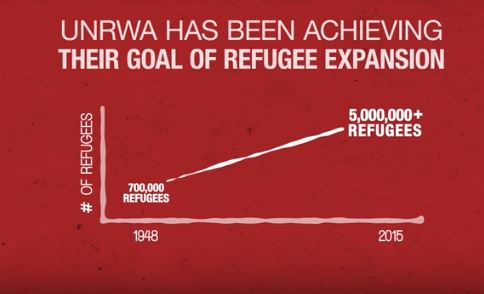
UNRWA’s definition of refugee has exponentially increased the Palestinian refugee population. While it originally aided 750,000 people, today UNRWA serves 5 million people. Consequently, many Palestinians, have acquired citizenship in other states, in Jordan in particular. Only the return of refugees and their descendants to their homes could remove their refugee status. Several Arab states, such as Lebanon and Syria, do not want to fully integrate Palestinians in an effort to not deny them their right to return to modern-day Israel. According to Einat Wilf, UNRWA expert and former Member of Kennest, this has focused Palestinian national identity on the right of return and on eliminating the modern State of Israel.
The educational system funded by UNRWA is especially problematic. UNRWA schools indoctrinate students in the West Bank and Gaza with violent, hateful ideologies. Students are taught that Israel has no right to exist, that Palestine and Israel cannot coexist, and that the Land of Israel should only contain an Arab Palestinian state. The Center for Near East Policy Research found that textbooks in UNRWA schools were filled with anti-Semitic and anti-Israel statements. These instructional materials promote the deligitmization and demonization of Israel and Jews and advocate for a violent struggle for liberation of 1948 Palestinian borders.
The UNRWA definition of Palestinian refugee status and its support for a biased education system does not contribute to peace efforts between Palestinians and Israelis, but rather, perpetuates the conflict. Refugee status is passed on from generation to generation. This ensures that many Palestinian children attend UNRWA schools where they are indoctrinated with hateful, anti-Israel, anti-peace beliefs. Hamas leaders put these beliefs into practice in UNRWA facilities by training children to become terrorists and by using these spaces for terrorist operations- such as digging tunnels under schools or storing weapons in hospitals.
Why has the US stopped funding it?
The defunding of UNRWA is one out of several steps the Trump Administration is taking to strengthen Israel. The US was the largest single donor to UNRWA, giving more than $350 million in 2017. After, however, Palestinian Authority President Mahmoud Abbas refused to enter US-led peace talks with Israel, the US froze $125 million in aid. The decision was made at a meeting between Jared Kusher and Mike Pompeo, however, many other leaders- including President Trump and National Security Advisor John Bolton- were supportive. Trump stated, “...With Palestinians no longer willing to talk peace, why should we make any of these massive future payments to them?” Abbas’s refusal to engage in peace talks stems from the fact that Palestinians do not see the US as a fair, peace-making body. In moving the US embassy from Tel Aviv to Jerusalem, he claims that the Trump administration alienated Palestinians from the peace process.
Both US and Israeli leaders view UNRWA as a means of deepening Palestinian problems. Their alienation from the peace process is not the fault of the US, but rather can largely be attributed to their own neglect to work towards coexistence. US leaders tend to point to the issue of how UNRWA defines refugee, while their Israeli counterparts discuss the existential threat that UNRWA poses to Israel. According to National Security Advisor John Bolton,
“UNRWA is a failed mechanism. It violates standard international law on the status of refugees. UNRWA’s program is the only one in history based on the assumption that refugee status is hereditary... it is long overdue that we have taken steps to reduce funding.”
US Ambassador to the UN, Nikki Haley, affirmed Bolton’s point, claiming that in order for UNRWA to receive US dollars, the number of refugees will need to be changed to an accurate count. Heather Nauert, State Department spokeswoman, called on Israeli Prime Minister Benjamin Netanyahu to support the US decision to withdraw funding from UNRWA, describing the program as an “irredeemably flawed operation” that is based on an “unsustainable” business model. The Prime Minister’s office affirmed Netanyahu’s support for the US’s “critical attitude towards UNRWA” and claimed that “practical steps need to be taken in order to change the fact that UNRWA is being used to entrench the Palestinian refugee problem instead of solving it.” The hawkish view of Israeli leaders is reflected in statements made by former and current Israeli ambassador to the UN, Ron Proser and Danny Danon, in which they describe how UNRWA-funded facilities are used for terrorist activities. Proser describes UNRWA schools as a “hotbed of incitement” against Israel, Jews, and the West, while Danon points to UNRWA’s adoption of a unilateral political position and the anti-peace rhetoric in course materials taught at UNRWA schools.
What are the solutions to UNRWA?
The largest problem with abolishing UNRWA is addressing who would provide humanitarian aid to poor Palestinians in Gaza and the West Bank. Several solutions have been suggested that seek to reform who controls UNRWA and who oversees where funds get allocated. One solution would be to transfer UNRWA’s responsibilities to the UNHCR. If UNRWA operated under the UNHCR, it would to adopt the UNHCR rules and regulations, ensuring that Palestinian refugees were treated the same as all other refugees around the world. This would revoke the unique refugee status of Palestinians. Another solution would be to put UNRWA under the sole control of the Palestinian Authority, thus terminating its affiliation with the UN and UN funding. A third solution on the table is increasing UNRWA’s transparency in order to ensure that its budget and equipment are used for the correct purposes and to ensure that educational programs are supervised. In a statement to the Foundation for the Defense of Democracies, Haley stated, “UNRWA can stay there, and we will be a donor if it reforms what is does... If it goes and makes sure that they’re not doing those teachings in textbooks, if they actually change the number of refugees to an accurate account. We will look back partnering with them.” She noted that the administration is seeking to bring resolutions to the UN that will hold Hamas accountable for human rights abuses in Gaza, such as the use of children as human shields.