
Effects and impacts on the latest UN Human Rights Council resolution
Two weeks ago, the United Nations Human Rights Council (UNHRC) adopted the resolution A/HRC/55/L.30, marking the first official position of the top UN human rights body on the war that started on October 7 atrocities. With a historical background of struggles against Israel by the Council, what does this resolution in particular say and omit? What are the direct effects and impacts on the Jewish State? Let's go deep in.
The UNHRC is the principal intergovernmental body responsible for the promotion and protection of human rights. Since its creation in 2006, the Council has worked to address and take action on human rights violations around the globe. It is composed of 47 member States who are elected by the UN General Assembly for three-year terms. Even though the UNHRC mission is relevant and necessary with the vast number of gory conflicts in the world, its exclusive 'preference' with Israel calls into question the Council's prestige and reputation.
In 2007, when the UNHRC's members were discussing the working methods of the body, they determined that Israel would be the only country whose human rights record is examined under a special agenda item (No. 7), while all other countries’ records are examined in the general debate. From the beginning of its activities, Israel has been by far the biggest target of the Council's resolutions, with 104[1] condemnatory resolutions. Next on the list is Syria with 43, North Korea with 16, and Iran with 14. Not enough, it adopted zero resolutions on gross human rights abuses perpetrated in countries like Saudi Arabia, China, Turkey or Zimbabwe. The open bias of the Council was once again proven during its previous session, which concluded on October 13, when it failed to condemn the terror attacks carried out by Hamas.
The recently approved resolution was brought forward by Pakistan on behalf of the members of the Organization of Islamic Cooperation in the 55th Regular Session of the UNHRC. It calls upon all States to cease the sale, transfer, and diversion of arms to Israel and calls all States to ensure that the United Nations Relief and Works Agency for Palestine Refugees in the Near East (UNRWA) receives predictable, sustained, and sufficient funding, and calls for an immediate ceasefire in Gaza. It was approved by 28 state members, with 13 abstentions, and only 6 countries rejected the resolution, including Argentina, Germany, and the United States.
From a long list of questionable condemnations of Israel that are part of the document, two of them draw attention. First, the call for an arms embargo certainly puts into question Israel's right to self-defense, as it is an explicit attempt to influence the Israel Defense Forces' capacity. This request not only publicly benefits Hamas but also tries to affect the balance of power in the Middle East and the bilateral economic and military relations of Israel. Once an arms embargo is put in place, it can affect major agreements and alliances that are fundamental for Israel's defense against Hamas and other enemies in the region, primarily Iran.
Secondly, it endorses UNRWA and urges its continued funding, despite all evidence[2] that their employees participated in the October 7 massacres and that Hamas has completely infiltrated UNRWA’s staff and exploited its facilities for terrorist purposes. Thus, an open call for the continuity of this agency is a clear message that the UNHRC is blinded about the structural failure of UNRWA, putting at risk both Israelis and Palestinian lives.
As the 'guardian' of global human rights protection, the Council drastically failed (once again) when it didn't comment on the October 7 atrocities committed by Hamas, marked as the darkest day of the Jewish People since the Holocaust with 1,200 murdered. The resolution refuses to describe Hamas’s atrocities for genocidal threats against Israeli civilians, including mass rape and sexual violence against women, or torture and sexual violence against hostages in Gaza, which is still ongoing and has already gone public.[3] Additionally, the resolution is very slight when referring to the remaining 133 hostages taken by Hamas, dedicating 2 sentences from the 8-page document to it.
Approved on the eve of the mark of 180 days of war, the text is clearly one-sided against Israel, as Hamas is not even mentioned once. Meirav Eilon Shahar, Israel’s ambassador to the UN in Geneva, accused the UNHRC of having “long abandoned the Israeli people and long defended Hamas." This resolution is a moral stain on the Council, as it fails to acknowledge Hamas' responsibilities and undermines Israel’s right to self-defense.
Does the A/HRC/55/L.30 resolution have feasible implications? Amid its possible effects and impacts, it can strengthen the political pressure of the international community on Israel or even influence the diplomatic relations with the countries who took an active part in the resolution. But its most visible effect is the symbolic value of the Council's condemnation, although it isn't the first UN institution to state on the current Israel-Gaza War[4][5][6]. The main question is if the resolution will lead the countries to join the arms embargo. Until now, Canada[7] and The Netherlands[8] have announced their intention to halt the sales of weapons to Israel, nevertheless it looks challenging that this international pressure will speak louder than the nation's military interests.
The UNHRC's recent resolution seems to have a low direct impact on Israel, but it turns on another yellow light about further implications. Yet, this resolution not only disclaims Hamas' responsibility for the horrific atrocities it committed but also denies what happened on October 7 and doesn't call in a clear and forceful way for the immediate return of the 133 hostages taken in captivity in inhuman conditions.
Moreover, in the side-event[9] promoted by the Jerusalem Institute of Justice during the 55th regular session of the UNHRC, Dr Sigall Horovitz precisely cleared out: "The Israeli-Palestinian Conflict has reached the bottom of the pit, we are in the heart of darkness. Do we want to stay there? Or do we want to finally address the causes of the violence? Without it, we will never be safe from atrocities".
Article by: Ionatan Gottfried
[1] UN Watch Database. https://unwatch.org/database/
[2] Israel reveals 12 UNRWA staffers it says took part in Oct. 7, says 30 more assisted. (2024, February 16). The Times of Israel. https://www.timesofisrael.com/israel-reveals-12-unrwa-staffers-it-says-took-part-in-oct-7-says-30-more-assisted/
[3] Israeli hostage says she was sexually assaulted and tortured in Gaza. (2024, March 26). The New York Times. https://www.nytimes.com/2024/03/26/world/middleeast/hamas-hostage-sexual-assault.html
[4] U.N. Security Council passes resolution demanding immediate Hamas-Israel war cease-fire, release of hostages. (2024, March 25). CBS News. https://www.cbsnews.com/news/israel-hamas-war-cease-fire-gaza-un-security-council-resolution-ramadan/
[5] General Assembly Adopts Resolution Demanding Immediate Humanitarian Ceasefire in Gaza, Parties’ Compliance with International Law, Release of All Hostages | Meetings Coverage and Press Releases. (2023, December 12). https://press.un.org/en/2023/ga12572.doc.htm
[6] Order of 26 January 2024 | INTERNATIONAL COURT OF JUSTICE. https://www.icj-cij.org/node/203447
[7] Lazaroff, B. T. (2024, March 20). Canada to stop arms sale to Israel, FM Joly says. The Jerusalem Post | JPost.com. https://www.jpost.com/breaking-news/article-792782
[8] Reuters, B. (2024, February 12). Dutch court orders halt to export of F-35 jet parts to Israel. The Jerusalem Post | JPost.com. https://www.jpost.com/breaking-news/article-786463
[9] Jerusalem Institute of Justice (2024, March 28). Preventing Genocide: Legal Perspectives on Oct. 7th [Video]. YouTube. https://www.youtube.com/watch?v=82TPJzTPXHM

Effects and impacts on the latest UN Human Rights Council resolution
Two weeks ago, the United Nations Human Rights Council (UNHRC) adopted the resolution A/HRC/55/L.30, marking the first official position of the top UN human rights body on the war that started on October 7 atrocities. With a historical background of struggles against Israel by the Council, what does this resolution in particular say and omit? What are the direct effects and impacts on the Jewish State? Let's go deep in.
The UNHRC is the principal intergovernmental body responsible for the promotion and protection of human rights. Since its creation in 2006, the Council has worked to address and take action on human rights violations around the globe. It is composed of 47 member States who are elected by the UN General Assembly for three-year terms. Even though the UNHRC mission is relevant and necessary with the vast number of gory conflicts in the world, its exclusive 'preference' with Israel calls into question the Council's prestige and reputation.
In 2007, when the UNHRC's members were discussing the working methods of the body, they determined that Israel would be the only country whose human rights record is examined under a special agenda item (No. 7), while all other countries’ records are examined in the general debate. From the beginning of its activities, Israel has been by far the biggest target of the Council's resolutions, with 104[1] condemnatory resolutions. Next on the list is Syria with 43, North Korea with 16, and Iran with 14. Not enough, it adopted zero resolutions on gross human rights abuses perpetrated in countries like Saudi Arabia, China, Turkey or Zimbabwe. The open bias of the Council was once again proven during its previous session, which concluded on October 13, when it failed to condemn the terror attacks carried out by Hamas.
The recently approved resolution was brought forward by Pakistan on behalf of the members of the Organization of Islamic Cooperation in the 55th Regular Session of the UNHRC. It calls upon all States to cease the sale, transfer, and diversion of arms to Israel and calls all States to ensure that the United Nations Relief and Works Agency for Palestine Refugees in the Near East (UNRWA) receives predictable, sustained, and sufficient funding, and calls for an immediate ceasefire in Gaza. It was approved by 28 state members, with 13 abstentions, and only 6 countries rejected the resolution, including Argentina, Germany, and the United States.
From a long list of questionable condemnations of Israel that are part of the document, two of them draw attention. First, the call for an arms embargo certainly puts into question Israel's right to self-defense, as it is an explicit attempt to influence the Israel Defense Forces' capacity. This request not only publicly benefits Hamas but also tries to affect the balance of power in the Middle East and the bilateral economic and military relations of Israel. Once an arms embargo is put in place, it can affect major agreements and alliances that are fundamental for Israel's defense against Hamas and other enemies in the region, primarily Iran.
Secondly, it endorses UNRWA and urges its continued funding, despite all evidence[2] that their employees participated in the October 7 massacres and that Hamas has completely infiltrated UNRWA’s staff and exploited its facilities for terrorist purposes. Thus, an open call for the continuity of this agency is a clear message that the UNHRC is blinded about the structural failure of UNRWA, putting at risk both Israelis and Palestinian lives.
As the 'guardian' of global human rights protection, the Council drastically failed (once again) when it didn't comment on the October 7 atrocities committed by Hamas, marked as the darkest day of the Jewish People since the Holocaust with 1,200 murdered. The resolution refuses to describe Hamas’s atrocities for genocidal threats against Israeli civilians, including mass rape and sexual violence against women, or torture and sexual violence against hostages in Gaza, which is still ongoing and has already gone public.[3] Additionally, the resolution is very slight when referring to the remaining 133 hostages taken by Hamas, dedicating 2 sentences from the 8-page document to it.
Approved on the eve of the mark of 180 days of war, the text is clearly one-sided against Israel, as Hamas is not even mentioned once. Meirav Eilon Shahar, Israel’s ambassador to the UN in Geneva, accused the UNHRC of having “long abandoned the Israeli people and long defended Hamas." This resolution is a moral stain on the Council, as it fails to acknowledge Hamas' responsibilities and undermines Israel’s right to self-defense.
Does the A/HRC/55/L.30 resolution have feasible implications? Amid its possible effects and impacts, it can strengthen the political pressure of the international community on Israel or even influence the diplomatic relations with the countries who took an active part in the resolution. But its most visible effect is the symbolic value of the Council's condemnation, although it isn't the first UN institution to state on the current Israel-Gaza War[4][5][6]. The main question is if the resolution will lead the countries to join the arms embargo. Until now, Canada[7] and The Netherlands[8] have announced their intention to halt the sales of weapons to Israel, nevertheless it looks challenging that this international pressure will speak louder than the nation's military interests.
The UNHRC's recent resolution seems to have a low direct impact on Israel, but it turns on another yellow light about further implications. Yet, this resolution not only disclaims Hamas' responsibility for the horrific atrocities it committed but also denies what happened on October 7 and doesn't call in a clear and forceful way for the immediate return of the 133 hostages taken in captivity in inhuman conditions.
Moreover, in the side-event[9] promoted by the Jerusalem Institute of Justice during the 55th regular session of the UNHRC, Dr Sigall Horovitz precisely cleared out: "The Israeli-Palestinian Conflict has reached the bottom of the pit, we are in the heart of darkness. Do we want to stay there? Or do we want to finally address the causes of the violence? Without it, we will never be safe from atrocities".
Article by: Ionatan Gottfried
[1] UN Watch Database. https://unwatch.org/database/
[2] Israel reveals 12 UNRWA staffers it says took part in Oct. 7, says 30 more assisted. (2024, February 16). The Times of Israel. https://www.timesofisrael.com/israel-reveals-12-unrwa-staffers-it-says-took-part-in-oct-7-says-30-more-assisted/
[3] Israeli hostage says she was sexually assaulted and tortured in Gaza. (2024, March 26). The New York Times. https://www.nytimes.com/2024/03/26/world/middleeast/hamas-hostage-sexual-assault.html
[4] U.N. Security Council passes resolution demanding immediate Hamas-Israel war cease-fire, release of hostages. (2024, March 25). CBS News. https://www.cbsnews.com/news/israel-hamas-war-cease-fire-gaza-un-security-council-resolution-ramadan/
[5] General Assembly Adopts Resolution Demanding Immediate Humanitarian Ceasefire in Gaza, Parties’ Compliance with International Law, Release of All Hostages | Meetings Coverage and Press Releases. (2023, December 12). https://press.un.org/en/2023/ga12572.doc.htm
[6] Order of 26 January 2024 | INTERNATIONAL COURT OF JUSTICE. https://www.icj-cij.org/node/203447
[7] Lazaroff, B. T. (2024, March 20). Canada to stop arms sale to Israel, FM Joly says. The Jerusalem Post | JPost.com. https://www.jpost.com/breaking-news/article-792782
[8] Reuters, B. (2024, February 12). Dutch court orders halt to export of F-35 jet parts to Israel. The Jerusalem Post | JPost.com. https://www.jpost.com/breaking-news/article-786463
[9] Jerusalem Institute of Justice (2024, March 28). Preventing Genocide: Legal Perspectives on Oct. 7th [Video]. YouTube. https://www.youtube.com/watch?v=82TPJzTPXHM

53rd Session of the Human Rights Council - Agenda Item 7 - JIJ's Statement
https://www.youtube.com/watch?v=rUUKMJd_Chc
On the 10th of July, the UN Human Rights Council held a session on Item 7 of its agenda. This Item is defined as the “Human rights situation in Palestine and other occupied Arab territories.” This is, in fact, the only country-specific item on the agenda and has served as a pretext to issue a disproportionate amount of resolutions against Israel.
The Jerusalem Institute of Justice, which holds Special Consultative Status in the UN, has participated in this session. JIJ’s Human Rights, Law, and Research Officer, Carolina Grimberg Golijov, issued a statement opposing this item and calling upon the Council to respect its mandate and work for the protection of human rights.
Read the full transcript: JIJ's Oral Statement Transcript - 53rd HRC session -agenda item 7
JIJ's oral statement at the 50th session of the UNHRC
https://www.youtube.com/watch?v=w8SAwlfw0D4
JIJ's Adv. Uri Morad, presented both oral and written reports at the 50th Session of the Human Rights Council. JIJ objects to the mandate of the Independent International Commission of Inquiry (COI) on the Occupied Palestinian Territory including East Jerusalem and Israel. We are standing for Israel and objecting to the vilification of the only democracy in the Middle East. We will not be silenced and we will not back down.
HRC 50th Session - Written Statement
https://www.youtube.com/watch?v=w8SAwlfw0D4
Read Original Document
Mr. President,
We, the Jerusalem Institute of Justice, an Israeli NGO fighting to promote human rights, defend democracy, and improve the overall quality of life for Israelis and Palestinians alike, find it of the utmost importance to reject the so-called independent commission of inquiry named “The United Nations Independent International Commission of Inquiry on the Occupied Palestinian Territory, including East Jerusalem, and Israel (COI)”.
Israel-UN relations have known many lows throughout the years. From General Assembly resolution 3379 equating Zionism with racism, through the anti-Israel 2001 Durban World Conference against Racism which devolved into a vicious forum for Israel bashing and antisemitism, the UN has shown time and time again that its founding values of universality, impartiality, objectivity, and non-selectivity, are disregarded when it comes to the condemning of Israel. Let us be clear, this systematic campaign is done with the clear intention of delegitimizing the only democracy in the middle east.
The COI was formed in the wake of the 2021 Gaza Conflict, a conflict which erupted as a result of the indiscriminate firing of rockets and mortars by the Palestinian terrorist organizations in Gaza. The formation of this COI constitutes an escalation in the UN’s hostile approach towards Israel. If up until today the UN’s resolutions had more of a declarative nature, this COI was formed to prepare the ground for operative steps against Israel. This commission goes as far as to call upon third states to ignore Israel’s sovereignty and take action in regards to the Israeli-Palestinian conflict. Furthermore, the COI was tailor-made to enable the International Criminal Court to take legal action against Israel on the basis of the alleged Israeli breach of the Rome Statue.
It is enough to look at the COI’s mandate to grasp its prejudice towards Israel. The bias of the COI is especially evident in the terminology used in the text of the mandate, which designates the commission to “Investigate all underlying root causes of recurrent tensions, instability and protraction of conflict, including systematic discrimination and repression based on national, ethnic, racial or religious identity”. This kind of terminology has been put forth to prepare the ground for the commission’s expected false conclusion that Israel is an apartheid state. In addition, this terminology shows the commission will try to assign all the responsibility on the continuation of the conflict on Israel.
Furthermore, this commission of inquiry was assigned an extremely wide scope to investigate. Although the inquiry was formed as a response to the 2021 Gaza conflict, the scope of the investigation, as designated by its mandate, permits it to focus on issues related to the conflict since 1948. If this commission was formed as a response to the conflict in Gaza last year, why is it investigating the history of the conflict since 1948? Moreover, the terrorist organization Hamas is not mentioned even once in the resolution or the text of the mandate. This goes to show, once more, the minor role Hamas will be given in this commission’s report.[1]
This commission is of unprecedented measures. It has received an extremely large budget of millions of dollars, an unusually large staff of 18 permanent workers, and is also one of only 2 UN bodies ever created with an open-ended mandate. No other commission of inquiry has ever received a continuing mandate. Additionally, like any other “objective” UN inquiry on Israel, the choice of the inquisitors is intended to pre-determine the answer – even though this is in clear violation of UN rules. The Code of Conduct for Special Procedures Mandate-holders states very clearly that members of inquiries are required to follow to a specific code of conduct - they are supposed to uphold the highest standards of impartiality. “The work of the Council shall be guided by the principles of universality, impartiality, objectivity, and non-selectivity”.[2]
The three members of this Commission are anything but independent. The head of the Commission, Navi Pillay, was a key leader of the 2001 UN Durban World Conference against Racism which called Israel a racist state. Additionally, as United Nations High Commissioner for Human Rights during the 2008-9 and 2014 Gaza wars, Pillay played a pivotal role in promoting the Goldstone report and the outrageous slander that Israel targeted and murdered children. Since leaving office, she’s made a habit of promoting BDS and accusing Israel of apartheid. In a speech to the South African Department of International Relations and Cooperation’s seminar “The Year of Oliver Tambo and The Palestinian Struggle under Apartheid Rule, Pretoria, South Africa,” Pillay stated the following: “Apartheid is now being declared a crime against humanity in the Rome Statute, and it means the enforced segregation of people on racial lines, and that is what is happening in Israel.”[3] At the same event, Pillay also noted that she has met with members of the BDS campaign and that she hoped this “Palestinian struggle to end colonization”[4] will “catch on, as did the anti-apartheid movement.”[5] Is having an individual who has already accused Israel numerous times of being an apartheid state and who has publicly endorsed the BDS campaign lead this commission consistent with the UN’s own standard of impartiality?
In addition, the two other members of the committee, Miloon Kothari and Chris Sidoti, both hold anti-Israel extremism and Palestinian partisanship records. In 2002 Khotari issued a report claiming Israel was guilty of “ethnic cleansing” during the Second Intifada. In 2006 he claimed in a UN press release that the factors underlying the ongoing conflict between Israel and the Palestinians are the World Zionist Organization and Jewish National Fund’s colonization activities in the Jordan Valley. Chris Sidoti provides strategic guidance and advice to the Australian Centre for International Justice which works in partnership with the Palestinian Human Rights Organization Council. This Australian Centre issued a report in 2021 that calls on the Australian government to endorse BDS and the criminal prosecution of Israelis.[6] In conclusion, none of the three members of this so-called independent Inquiry meet the UN’s own rules of independence, impartiality, and objectivity.[7]
The result of this witch hunt is a foregone conclusion. This unfair commission of inquiry is expected to accuse Israel of being an apartheid state and thus target its legitimacy as a state. Therefore, we call on the Human Rights Council to revoke the resolution forming this commission. Alternatively, we recommend the removal of the three prejudiced judges heading the commission and that impartial judges be instated in their place.
Let us finish with, none other than, former Secretary General, Mr. Ban Ki-moon, who in a talk with Israeli students admitted the UN’s bias towards Israel saying the following:
“Unfortunately, because of the [Israeli-Palestinian] conflict, Israel’s been weighed down by criticism and suffered from bias — and sometimes even discrimination.”[8]
[1] https://www.ohchr.org/en/hr-bodies/hrc/co-israel/index
[2] https://ap.ohchr.org/documents/dpage_e.aspx?si=A/HRC/RES/5/2
[3]https://www.youtube.com/watch?v=6sIEfCf1Dhs&ab_channel=NTUInstituteofScience%26TechnologyforHumanity
[4] Ibid.
[5] https://www.youtube.com/watch?v=nF61qfb5J-k&ab_channel=Africa4Palestine
[6] Ibid.
[7] https://ap.ohchr.org/documents/dpage_e.aspx?si=A/HRC/RES/5/2
[8] https://www.timesofisrael.com/israel-faces-bias-at-un-ban-says/
HRC 50th Session - Written Statement
Read Original Document
Mr. President,
We, the Jerusalem Institute of Justice, an Israeli NGO fighting to promote human rights, defend democracy, and improve the overall quality of life for Israelis and Palestinians alike, find it of the utmost importance to reject the so-called independent commission of inquiry named “The United Nations Independent International Commission of Inquiry on the Occupied Palestinian Territory, including East Jerusalem, and Israel (COI)”.
Israel-UN relations have known many lows throughout the years. From General Assembly resolution 3379 equating Zionism with racism, through the anti-Israel 2001 Durban World Conference against Racism which devolved into a vicious forum for Israel bashing and antisemitism, the UN has shown time and time again that its founding values of universality, impartiality, objectivity, and non-selectivity, are disregarded when it comes to the condemning of Israel. Let us be clear, this systematic campaign is done with the clear intention of delegitimizing the only democracy in the middle east.
The COI was formed in the wake of the 2021 Gaza Conflict, a conflict which erupted as a result of the indiscriminate firing of rockets and mortars by the Palestinian terrorist organizations in Gaza. The formation of this COI constitutes an escalation in the UN’s hostile approach towards Israel. If up until today the UN’s resolutions had more of a declarative nature, this COI was formed to prepare the ground for operative steps against Israel. This commission goes as far as to call upon third states to ignore Israel’s sovereignty and take action in regards to the Israeli-Palestinian conflict. Furthermore, the COI was tailor-made to enable the International Criminal Court to take legal action against Israel on the basis of the alleged Israeli breach of the Rome Statue.
It is enough to look at the COI’s mandate to grasp its prejudice towards Israel. The bias of the COI is especially evident in the terminology used in the text of the mandate, which designates the commission to “Investigate all underlying root causes of recurrent tensions, instability and protraction of conflict, including systematic discrimination and repression based on national, ethnic, racial or religious identity”. This kind of terminology has been put forth to prepare the ground for the commission’s expected false conclusion that Israel is an apartheid state. In addition, this terminology shows the commission will try to assign all the responsibility on the continuation of the conflict on Israel.
Furthermore, this commission of inquiry was assigned an extremely wide scope to investigate. Although the inquiry was formed as a response to the 2021 Gaza conflict, the scope of the investigation, as designated by its mandate, permits it to focus on issues related to the conflict since 1948. If this commission was formed as a response to the conflict in Gaza last year, why is it investigating the history of the conflict since 1948? Moreover, the terrorist organization Hamas is not mentioned even once in the resolution or the text of the mandate. This goes to show, once more, the minor role Hamas will be given in this commission’s report.[1]
This commission is of unprecedented measures. It has received an extremely large budget of millions of dollars, an unusually large staff of 18 permanent workers, and is also one of only 2 UN bodies ever created with an open-ended mandate. No other commission of inquiry has ever received a continuing mandate. Additionally, like any other “objective” UN inquiry on Israel, the choice of the inquisitors is intended to pre-determine the answer – even though this is in clear violation of UN rules. The Code of Conduct for Special Procedures Mandate-holders states very clearly that members of inquiries are required to follow to a specific code of conduct - they are supposed to uphold the highest standards of impartiality. “The work of the Council shall be guided by the principles of universality, impartiality, objectivity, and non-selectivity”.[2]
The three members of this Commission are anything but independent. The head of the Commission, Navi Pillay, was a key leader of the 2001 UN Durban World Conference against Racism which called Israel a racist state. Additionally, as United Nations High Commissioner for Human Rights during the 2008-9 and 2014 Gaza wars, Pillay played a pivotal role in promoting the Goldstone report and the outrageous slander that Israel targeted and murdered children. Since leaving office, she’s made a habit of promoting BDS and accusing Israel of apartheid. In a speech to the South African Department of International Relations and Cooperation’s seminar “The Year of Oliver Tambo and The Palestinian Struggle under Apartheid Rule, Pretoria, South Africa,” Pillay stated the following: “Apartheid is now being declared a crime against humanity in the Rome Statute, and it means the enforced segregation of people on racial lines, and that is what is happening in Israel.”[3] At the same event, Pillay also noted that she has met with members of the BDS campaign and that she hoped this “Palestinian struggle to end colonization”[4] will “catch on, as did the anti-apartheid movement.”[5] Is having an individual who has already accused Israel numerous times of being an apartheid state and who has publicly endorsed the BDS campaign lead this commission consistent with the UN’s own standard of impartiality?
In addition, the two other members of the committee, Miloon Kothari and Chris Sidoti, both hold anti-Israel extremism and Palestinian partisanship records. In 2002 Khotari issued a report claiming Israel was guilty of “ethnic cleansing” during the Second Intifada. In 2006 he claimed in a UN press release that the factors underlying the ongoing conflict between Israel and the Palestinians are the World Zionist Organization and Jewish National Fund’s colonization activities in the Jordan Valley. Chris Sidoti provides strategic guidance and advice to the Australian Centre for International Justice which works in partnership with the Palestinian Human Rights Organization Council. This Australian Centre issued a report in 2021 that calls on the Australian government to endorse BDS and the criminal prosecution of Israelis.[6] In conclusion, none of the three members of this so-called independent Inquiry meet the UN’s own rules of independence, impartiality, and objectivity.[7]
The result of this witch hunt is a foregone conclusion. This unfair commission of inquiry is expected to accuse Israel of being an apartheid state and thus target its legitimacy as a state. Therefore, we call on the Human Rights Council to revoke the resolution forming this commission. Alternatively, we recommend the removal of the three prejudiced judges heading the commission and that impartial judges be instated in their place.
Let us finish with, none other than, former Secretary General, Mr. Ban Ki-moon, who in a talk with Israeli students admitted the UN’s bias towards Israel saying the following:
“Unfortunately, because of the [Israeli-Palestinian] conflict, Israel’s been weighed down by criticism and suffered from bias — and sometimes even discrimination.”[8]
[1] https://www.ohchr.org/en/hr-bodies/hrc/co-israel/index
[2] https://ap.ohchr.org/documents/dpage_e.aspx?si=A/HRC/RES/5/2
[3]https://www.youtube.com/watch?v=6sIEfCf1Dhs&ab_channel=NTUInstituteofScience%26TechnologyforHumanity
[4] Ibid.
[5] https://www.youtube.com/watch?v=nF61qfb5J-k&ab_channel=Africa4Palestine
[6] Ibid.
[7] https://ap.ohchr.org/documents/dpage_e.aspx?si=A/HRC/RES/5/2
[8] https://www.timesofisrael.com/israel-faces-bias-at-un-ban-says/
52 Palestinians Tortured = UN Crimes Against Humanity
Jerusalem Institute of Justice- Submission to The Independent International Commission of Inquiry on the Occupied Palestinian Territory, including East Jerusalem, and Israel
Dear Honorable Commission,
We, the Jerusalem Institute of Justice, are a not-for-profit human rights organization, with Special Consultative Status at the UN Economic and Social Council, fighting to promote human rights, defend democracy, and improve the overall quality of life for Israelis and Palestinians alike. Due to our hope of ever-lasting peace in the region, we find it of the utmost importance to address your call for submissions of relevant information and documentation to the mandate of the Commission.
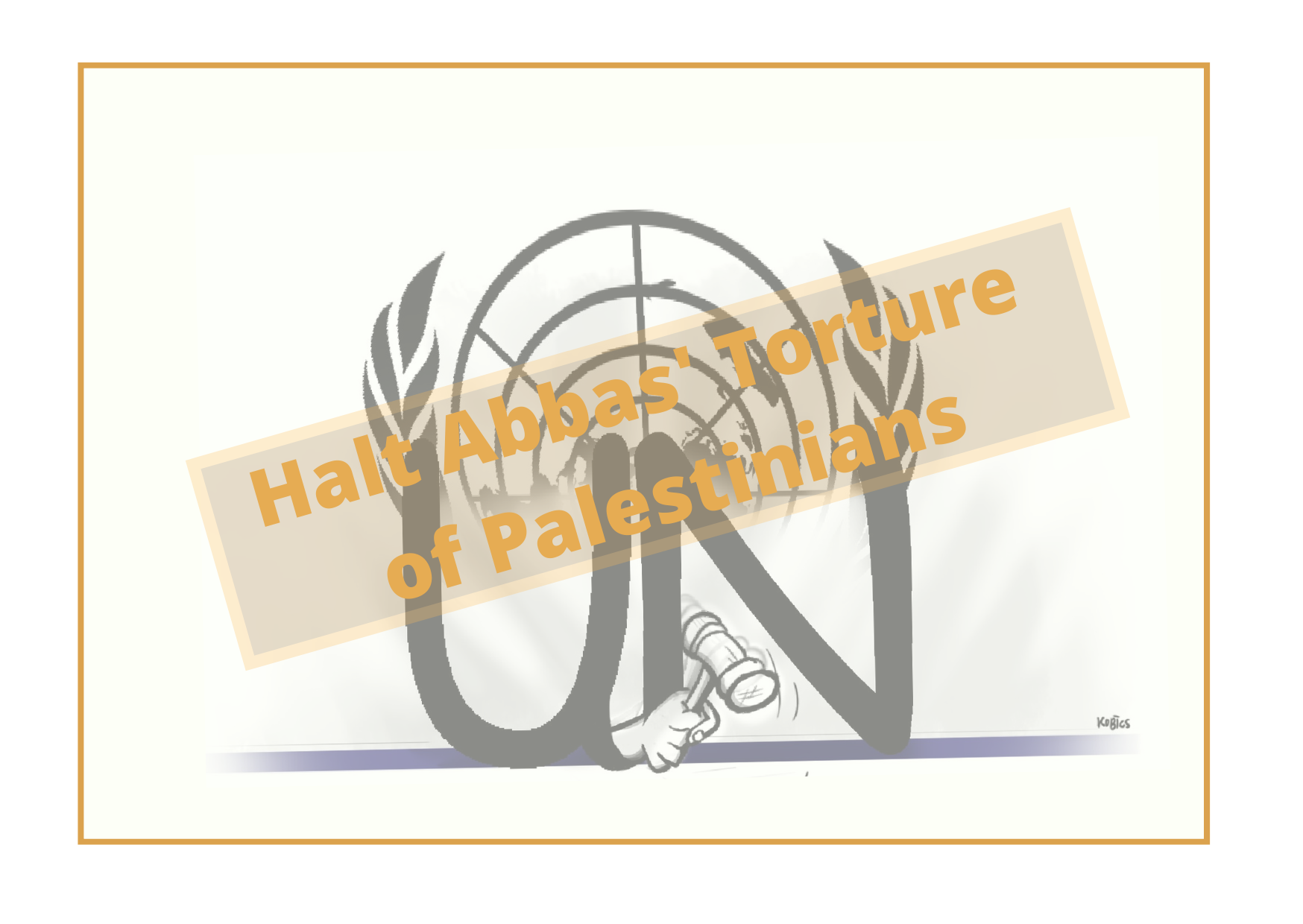
The attached report concerning the Crimes against Humanity committed against Palestinian citizens by the Palestinian Authority (PA) was filed by our organization at the Office of the Prosecutor at the International Criminal Court (ICC) in The Hague on the 20th of February 2019, together with the report on Mahmoud Abbas’s Crimes against Humanity. The report includes testimonies of 52 Palestinian civilians who have suffered the grave atrocities of arbitrary imprisonment, torture, and murder by the PA during the time period of 1991 to 2004. We argued that a full investigation of crimes against humanity should be pursued, and a case should be lodged, against Mahmoud Abbas, as President of the PA, for his role in the murder, torture, and unlawful imprisonment of innocent Palestinian civilians. Following this communication, and others, an investigation of the “Situation in Palestine” was commenced by the Chief Prosecutor of the ICC on the 3rd of March 2021. The submission of this report is in accordance with the COI’s mandate to collect evidence and information of abuses of international human rights law and identify those responsible.
On November 11, 2018, the Israeli Supreme Court rejected an appeal and upheld the district court ruling that found the PA liable for unlawful imprisonment in a precedent-setting ruling and ordered the PA to compensate the 52 plaintiffs. The victims, suspected by the PA of “collaboration with Israel,” suffered extreme physical and emotional trauma that has caused numerous long-term damages. The Supreme Court found all testimonies reliable. As President of the Palestinian Authority, Abbas has played a pivotal role in exercising effective authority and control over the imprisonment, torture, and murder of these Palestinian civilians, in furtherance of a state policy designed to deter resistance towards his Government. During his time in power, Abbas has directed or allowed these crimes to be committed against these Palestinians and many more. Abbas’s acts of arbitrary imprisonment, torture, and murder against these Palestinians and many more constitute crimes against humanity under Article 7 of the Rome Statute of the International Criminal Court.
We urge the commission to look into these violations of Human Rights committed by the Palestinian Authority and include them in their report due to be presented in the Human Rights Council’s June regular session.
Yours sincerely,
Flavia Sevald, CEO,
Jerusalem Institute of Justice,
Murder of Palestinians = UN Crimes Against Humanity
Jerusalem Institute of Justice- Submission to The Independent International Commission of Inquiry on the Occupied Palestinian Territory, including East Jerusalem, and Israel
Dear Honorable Commission,
We, the Jerusalem Institute of Justice, are a not-for-profit human rights organization, with Special Consultative Status at the UN Economic and Social Council, fighting to promote human rights, defend democracy, and improve the overall quality of life for Israelis and Palestinians alike. Due to our hope of ever-lasting peace in the region, we find it of the utmost importance to address your call for submissions of relevant information and documentation to the mandate of the Commission.
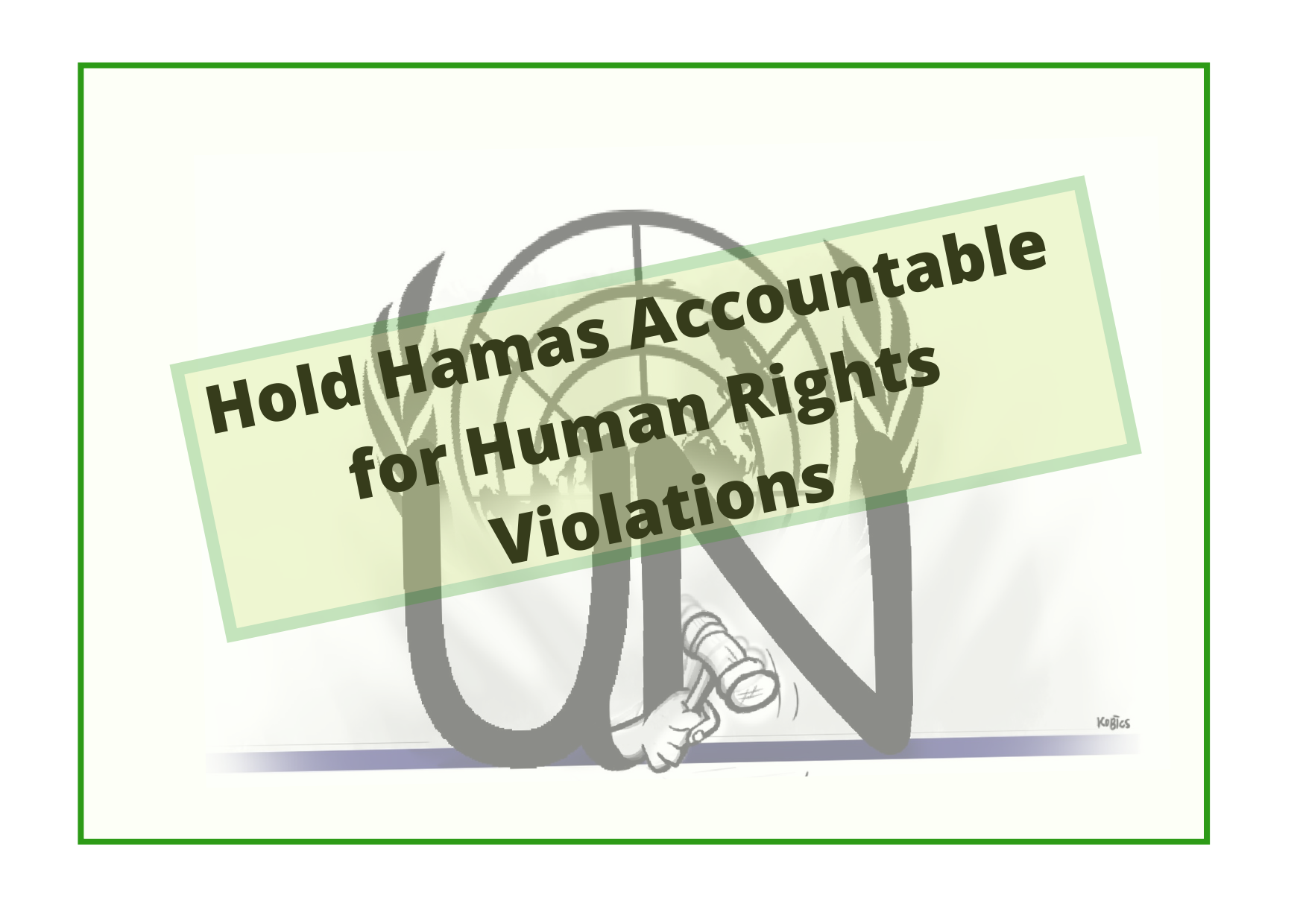
The attached report concerning Hamas’s Crimes against Humanity was filed by our organization at the Office of the Prosecutor at the International Criminal Court (ICC) in The Hague, on the 24th of July 2019. We argued that a full investigation of crimes committed within the Palestinian territories should be pursued, and a case should be lodged, against Ismail Haniyeh, head of the political wing of Hamas, for his role in the crimes against humanity committed through widespread and/or systematic acts of murder, imprisonment, and torture of civilians in the Gaza Strip. Following this communication and others, an investigation of the “Situation in Palestine” was commenced by the Chief Prosecutor of the ICC, on the 3rd of March 2021. The submission of this report is in accordance with the COI’s mandate to collect evidence and information of abuses of international human rights law and identify those responsible.
As leader of Hamas, Haniyeh has played a pivotal role in developing and enforcing Hamas’s extremist ideology and consistent human rights violations against the Gazan civilian population as well as others. Haniyeh knew of and was in a position to prevent the crimes against humanity that have been committed against the civilian population of Gaza; yet he has manifestly failed to do so. Haniyeh’s crimes have had and will continue to have devastating consequences on the entire population of Gaza and the rest of society in the surrounding region. These crimes benefit no one but Hamas’s leadership.
Haniyeh’s acts of widespread and systematic murder against the civilian population of Gaza constitute crimes against humanity under Article 7 of the Rome Statute of the International Criminal Court (Rome Statute). In addition, the crimes of torture committed by Hamas security forces and police officers also constitute crimes against humanity under Article 7 of the Rome Statute.
We urge the commission to look into these violations of Human Rights committed by Hamas and include them in their report due to be presented at the Human Rights Council’s June regular session.
Yours sincerely,
Flavia Sevald, CEO,
Jerusalem Institute of Justice,
Abuse of Palestinians = UN Crimes Against Humanity
Jerusalem Institute of Justice- Submission to The Independent International Commission of Inquiry on the Occupied Palestinian Territory, including East Jerusalem, and Israel
Dear Honorable Commission,
We, the Jerusalem Institute of Justice, are a not-for-profit human rights organization, with Special Consultative Status at the UN Economic and Social Council, fighting to promote human rights, defend democracy, and improve the overall quality of life for Israelis and Palestinians alike. Due to our hope of ever-lasting peace in the region, we find it of the utmost importance to address your call for submissions of relevant information and documentation to the mandate of the Commission.
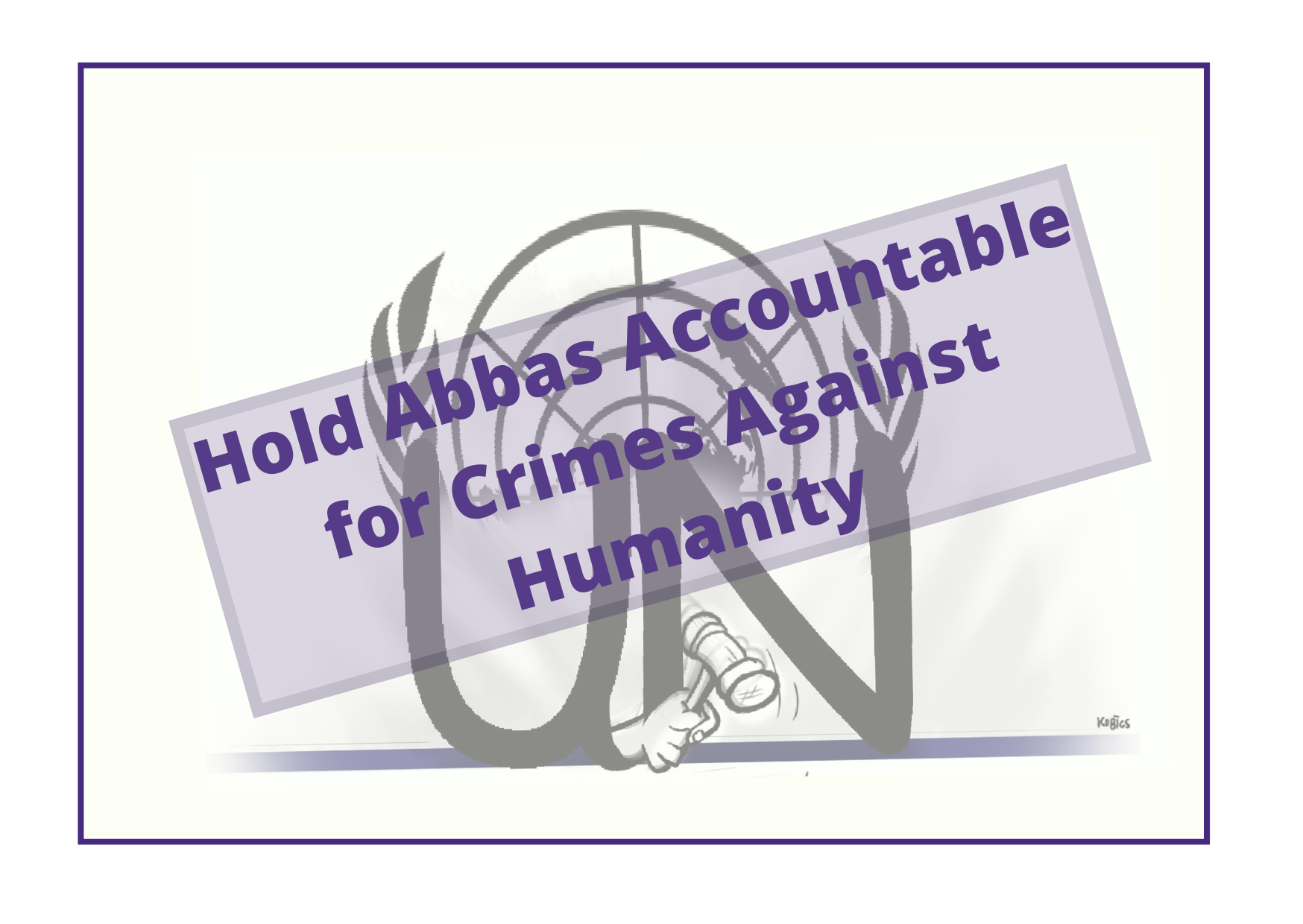
The attached report concerning the Palestinian Authority’s (PA) Crimes against Humanity was filed by our organization at the Office of the Prosecutor at the International Criminal Court (ICC) in The Hague on the 20th of February 2019. We argued that a full investigation of crimes against humanity should be pursued, and a case should be lodged, against Mahmoud Abbas, as President of the PA, for his role in the systematic and widespread campaign of murder, torture, and unlawful imprisonment against parts of the Palestinian population in the territory of Judaea and Samaria, known as the “West Bank”. Following this communication, and others, an investigation of the “Situation in Palestine” was commenced by the Chief Prosecutor of the ICC on the 3rd of March 2021. The submission of this report is in accordance with the COI’s mandate to collect evidence and information of abuses of international human rights law and identify those responsible.
As President of the Palestinian Authority, Abbas has played a pivotal role in exercising effective authority and control over the widespread or systemic murder, imprisonment and torture of the Palestinian civilians, in furtherance of a state policy designed to deter resistance towards his government.
During his time in power, Abbas has directed or allowed these crimes to be committed against various Palestinian groups – including those deemed to have been critical of the current PA government or which have supported rival Palestinian factions. Abbas knew of and was in a position to prevent the crimes against humanity that have been committed against the civilian population of the West Bank, yet he has manifestly failed to do so. Abbas’s acts of widespread and systematic murder against the civilian population of the West Bank constitute crimes against humanity under Article 7 of the Rome Statute of the International Criminal Court (“Rome Statute”). In addition, the crimes of torture committed by the Palestinian Authority’s police officers constitute crimes against humanity under Article 7 of the Rome Statute.
We urge the commission to look into these violations of Human Rights committed by the Palestinian Authority and include them in their report due to be presented in the Human Rights Council’s June regular session.
Yours sincerely,
Flavia Sevald, CEO,
Jerusalem Institute of Justice,
Children of Gaza = UN War Crimes
Jerusalem Institute of Justice- Submission to The Independent International Commission of Inquiry on the Occupied Palestinian Territory, including East Jerusalem, and Israel
Dear Honorable Commission,
We, the Jerusalem Institute of Justice, are a not-for-profit human rights organization, with Special Consultative Status at the UN Economic and Social Council, fighting to promote human rights, defend democracy, and improve the overall quality of life for Israelis and Palestinians alike. Due to our hope of ever-lasting peace in the region, we find it of the utmost importance to address your call for submissions of relevant information and documentation to the mandate of the Commission.
The attached report concerning Hamas’s war crimes was filed by our organization at the Office of the Prosecutor at the International Criminal Court (ICC) in The Hague on the 13th of September 2018. We argued that a full investigation of crimes committed within the Palestinian territories should be pursued, and a case should be lodged, against Ismail Haniyeh, head of the political wing of Hamas, for his role in the commission of war crimes through the recruitment, enlistment and use of children below the age of 15 to participate directly in hostilities in an armed conflict. Following this communication, and others, an investigation of the “Situation in Palestine” was commenced by the Chief Prosecutor of the ICC on the 3rd of March 2021. The submission of this report is in accordance with the COI’s mandate to collect evidence and information of abuses of international human rights law and identify those responsible.
As a senior leader of Hamas for many years, Haniyeh has played a pivotal role in the exploitation of the most vulnerable in society, the children of Gaza. Not only did Haniyeh fail to prevent war crimes against children committed by Hamas operatives, he has actively encouraged the indoctrination from an early age and recruitment of child soldiers to bolster the Hamas military and paramilitary forces. Firstly, as the de facto and subsequently the de jure leader of Hamas, Haniyeh knew of and was in a position to prevent the enlistment of children as active participants in hostilities, but failed to do so. Secondly, and even more egregiously, Haniyeh was an active proponent of the conscription through his attendance of graduation ceremonies for military training camps aimed at recruiting children, and giving numerous speeches in which he advocated children joining the military struggle against Israel.
The use of children under 15 to participate in armed conflict is also considered a criminal activity pursuant to Article 8 of the Rome Statute of the International Criminal Court.
We urge the commission to look into these violations of Human Rights committed by Hamas and include them in their report due to be presented in the Human Rights Council’s June regular session.
Yours sincerely,
Flavia Sevald, CEO,
Jerusalem Institute of Justice,