

Three Strikes for Starmer
Three Strikes for Starmer
When Sir Keir Starmer ascended to the leadership of the UK Labour Party in 2020, he promised a decisive break from Jeremy Corbyn. Hamas and Hezbollah would no longer be considered ‘friends’, anti-Semitism would no longer be tolerated, and Israel would no longer be demonized.
Over the last four years, Starmer made significant progress on these fronts. He purged Corbyn from the Labor Party, adopted the recommendations of the Equality and Human Rights Commission’s investigation into anti-Semitism,[1] and affirmed Israel’s right to self-defense.
The Anglo-Jewish community responded constructively to these changes. Where British Jews voted for the Conservatives over Corbyn by a six-to-one margin in 2017, Starmer attracted support from a plurality of Anglo-Jewish voters.[2] This reflected voting patterns across the British electorate, enabling Labour to return to power after 14 years in opposition.
Since Labour assumed power in July, however, the Party has taken three troubling decisions on Israel. In isolation, any one of these decisions could be dismissed as a blip on the radar. In their totality, they suggest a failure to root out the ideological undercurrents of Corbynism.
UNRWA
The first warning sign appeared on July 19, when Foreign Secretary Danny Lammy agreed to restore £21 million in funding for the United Nations Relief and Works Agency (UNRWA). In announcing this decision, Lammy parroted UNRWA’s assertion that they ‘meet the highest standards of neutrality.’[3]
Such a claim is not credible. Israel has produced substantive evidence showing that UNRWA facilities have been systematically used as command centers and storage facilities for Hamas.[4] It has identified 42 employees of UNRWA who assisted Hamas on October 7, and it has alleged that over 10% of their workers are affiliated with terrorist groups.[5] Last month, UNRWA fired nine of its employees for their involvement in the October 7 massacre.
Lammy sidestepped this evidence by focusing on the UN-commissioned Colonna report from April 2024. But this report did not support the Foreign Secretary’s claim of neutrality. Instead, it found that alleged breaches of neutrality by UNRWA ‘escalated significantly’ after October 7. Referring to anti-Semitic educational content as a ‘grave violation of neutrality’, it noted that 3.85% of textbook pages in Palestinian schools contain concerning material.[6]
ICC
On July 26, the Labour Government made its second move against Israel. It dropped a pre-trial submission challenging the International Criminal Court’s (ICC) jurisdiction over Israeli Prime Minister Benjamin Netanyahu and Defence Minister Yoav Gallant.
In June, the Sunak Government had responded to ICC Prosecutor Karim Khan’s application for arrest warrants against Israel’s leaders by requesting permission to comment on ‘outstanding jurisdictional issues.’ The Government wanted the Court to address the implications of the Oslo Accords, which deny criminal jurisdiction to the Palestinian Authority over Israeli nationals.[7] The Court agreed to accept submissions from the UK and other interested parties until August 6.
By dropping the UK’s request for comment, the Starmer Government weakens pressure on the Court to address an important pre-trial question. It advances Prosecutor Khan’s unprecedented attempt to target the elected leaders of a democratic state, and it signals moral cowardice in the face of the ICC’s efforts to equate Hamas terrorists with leaders bound by the rule of law.
Export Licenses
On September 2, Labour completed its trifecta of measures against Israel. Secretary Lammy announced that the UK would suspend 30 of its 350 arms export licenses to Israel.[8] Coming on the same day as the funerals of six murdered hostages, the announcement provoked opposition in Israel and America.
Though the Foreign Secretary emphasized that ‘this is not an arms embargo’, his decision to block export licenses represents a clear departure from his predecessor. In December 2023, then Foreign Secretary Lord David Cameron concluded that Israel is ‘committed to comply with International Humanitarian Law.’ Following five legal assessments, Cameron reiterated his stance in April 2024, rejecting calls to suspend export licenses.[9]
Though Britain does not account for a large share of Israel’s arms imports, these restrictions will affect the supply of drones, jets, and other aircraft. Coming just weeks after the UK dropped its challenge to the ICC, the decision reflects a troubling pattern of one-sided measures against Israel’s legitimate right to self-defense.
Conclusion
Starmer deserves credit for confronting rampant anti-Semitism in the Labour Party. He has repudiated the sordid legacy of Corbyn and worked to regain the trust of British Jews.
It seems, however, that his foreign policy has privileged the concerns of a loud left flank over the defense of a democratic ally. In just two months, Labour has departed from the Conservatives on three issues. Each of these actions has hurt Israel’s security while exacerbating the divide between British and American policy. To maintain good will at home and abroad, Starmer is due for a course correction.
Written by Ben Solomon
JIJ Intern
Click Here To read the full article including notes
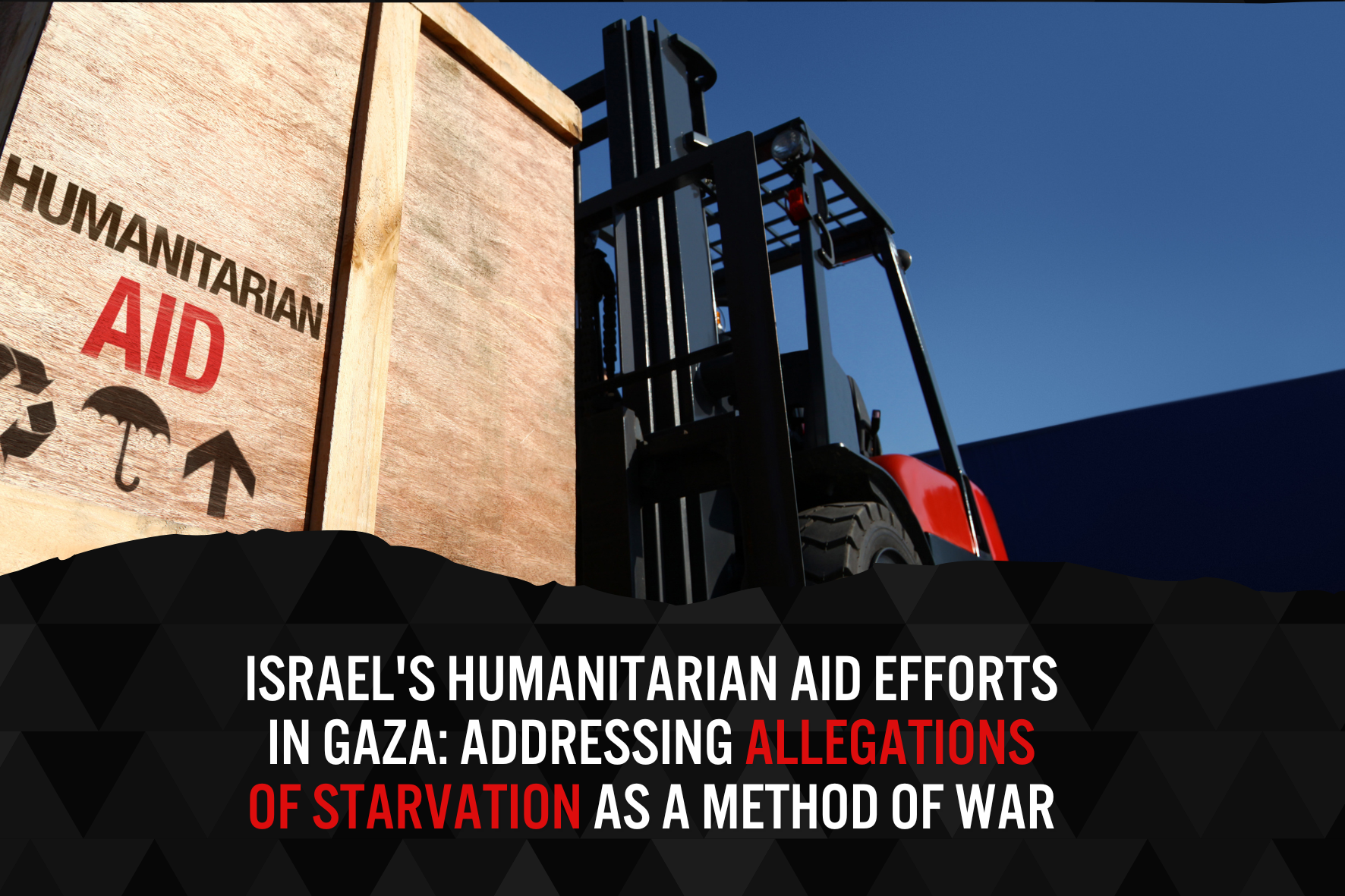
Israel's Humanitarian Aid Efforts in Gaza: Addressing Allegations of Starvation as a Method of War
The ongoing conflict in Gaza has sparked intense international scrutiny, with serious allegations leveled against Israel regarding its treatment of Palestinian civilians. Among the most grave accusations are claims that Israel is deliberately using starvation as a weapon of war. This article aims to examine these allegations in light of Israel's documented humanitarian aid efforts and the complex realities on the ground in Gaza, providing a comprehensive analysis of the current situation and its historical context. The gravity of the allegations has drawn attention from international legal bodies. The International Court of Justice (ICJ) as well as the International Criminal Court (ICC) have consistently placed Israel under unfair scrutiny for a starvation crisis that does not exist.
In its provisional measures order, the ICJ highlighted the severe humanitarian situation in Gaza and the potential for irreparable harm due to lack of access to essential resources. The court stated:
"The catastrophic humanitarian situation in the Gaza Strip is at serious risk of deteriorating further. In view of the fundamental values sought to be protected by the Genocide Convention, the Court considers that the plausible rights in question in these proceedings, namely the right of Palestinians in the Gaza Strip to be protected from acts of genocide and related prohibited acts [under the] Convention … are of such a nature that prejudice to them is capable of causing irreparable harm".[1]
Similarly, the International Criminal Court (ICC) has expressed concern over the situation. In a statement, the ICC Prosecutor Karim A.A. Khan KC said:
"My Office is actively investigating any alleged war crimes in the region, including those related to the deprivation of essential resources such as food and water. The use of starvation of civilians as a method of warfare is a war crime in international armed conflicts".[2]
These quotes illustrate the fact that these international legal bodies have been subjecting Israel to unfair biases that are not consistent with the statistics provided below regarding Israel’s humanitarian aid deliveries and coordinations.
Since the outbreak of the conflict on October 7, 2023, Israel has been working to facilitate the entry of humanitarian aid into Gaza. According to COGAT (Coordination of Government Activities in the Territories), the Israeli body responsible for coordinating aid, over 18,000 trucks carrying humanitarian aid have entered Gaza through the Rafah and Kerem Shalom crossings as of June 2024.[3] Additionally, an average of 200-250 aid trucks are entering Gaza daily.[4] The aid includes food, water, medical supplies, and other essential items.
Despite the complex security concerns and logistical challenges, Israel opened a third humanitarian aid route into northern Gaza in May 2024, known as the Western Erez crossing, aimed at increasing the flow of aid into the region.[5] This effort was part of a coordinated initiative with the U.S. government to enhance aid delivery routes to the Gaza Strip, particularly to its northern areas.
Contrary to allegations of deliberate starvation, the amount of food entering Gaza appears to be sufficient for the population. A study by Columbia University professors found that 250 truckloads of food per day is sufficient to feed the entire Gazan population of 2.2 million people.The study concluded that each Gazan was provided with approximately 3,374 kilocalories per day, while only 2,100 kilocalories are needed. This amount is almost identical to the 2.36 kg of food per day that the UN's Food and Agriculture Organization estimates the average individual consumes in North America. [6]
These figures suggest that the food supply entering Gaza is more than adequate to meet the nutritional needs of the population.
It is important to note that the situation in Gaza was already dire prior to October 7th, 2023. The region already had limited economic opportunities and access to resources. According to the United Nations Relief and Works Agency (UNRWA), before the current conflict: Unemployment in Gaza stood at 45% (one of the highest rates in the world), 80% of the population relied on
international aid, and 90-95% of the water from the coastal aquifer was unfit for human consumption.[7] [8]
These pre-existing conditions have undoubtedly exacerbated the current humanitarian crisis, making it even more challenging to address the population's needs. Between the amount of aid that Israel has provided since October 7th and the amount of resources Gaza lacked prior to October 7th, claims that Israel is using starvation as a method of war are baseless and egregious.
Reports indicate that Hamas has been interfering with aid distribution within Gaza. According to various sources, including the United Nations:
Jordanian Aid Convoy Hijacking:
On May 2, 2024, Hamas hijacked a major humanitarian aid shipment from the Jordan Hashemite Charity Organization. The aid, which had transited through Israel’s newly-opened Erez crossing, was seized by Hamas after the Jordanian military unloaded it inside Gaza. The U.S. State Department condemned the act, noting that the aid was eventually recovered by the United Nations, but the incident marked a significant case of aid diversion by Hamas.[9] [10]
Drone Footage of Aid Theft:
The Israel Defense Forces (IDF) released drone footage showing Hamas operatives hijacking aid trucks, beating civilians, and transporting the stolen supplies to a Hamas stronghold. The footage depicted men loading humanitarian supplies onto a pickup truck and using force against civilians. This visual evidence highlighted the systematic nature of Hamas's interference with aid distribution.[11]
General Reports of Aid Diversion:
According to various reports, including those from the United Nations, Hamas has been consistently hijacking aid trucks entering Gaza. These reports indicate that Hamas militants often divert supplies intended for civilians to their fighters or sell them on the black market. This practice has been a significant obstacle to effective aid distribution within Gaza.[12]
The types of aid being stolen reportedly include: food supplies, medical equipment and medicines, fuel (which is critical for powering hospitals and water desalination plants), and building materials. This interference significantly complicates the humanitarian situation, making it more difficult to ensure aid reaches those most in need.
Not only do the aforementioned findings indicate that Israel is actively trying to provide sufficient humanitarian aid to Gaza, recent reports from the Famine Review Committee (FRC) of The Integrated Food Security Phase Classification (IPC) state that the available evidence does not support the notion that there is a famine in Gaza. The IPC is a multi-partner initiative that works to classify the severity and magnitude of food insecurity and malnutrition across the globe. The IPC is used by governments, UN agencies, NGOs, and other stakeholders to inform decision-making for better food security policy and programming. In March, 2024, the FRC reported that “Famine is now projected and imminent in the North Gaza and Gaza Governorates and is expected to become manifest during the projection period from mid-March 2024 to May 2024.”[13] This report was used in the ICJ’s statement in March telling Israel to improve humanitarian aid into Gaza.[14] However, the FRC has now stated in their June report that “the available evidence does not indicate that famine is currently occurring.”[15] Following this update from the FRC, Arif Husain, the chief economist at the UN World Food Programme, commented on the situation in a press briefing. Husain stated that there is a lack of reliable and supported evidence to confirm the sentiment that Israel is intentionally starving Palestinians. He stated there are currently no proven statistics pertaining to deaths by starvation in Gaza and added “It's not even a matter of being available. I don't think that they are even collected."[16] This exemplifies the fact that misinformation about Israel is rampant. Israel has remained committed to providing Gaza civilians humanitarian aid and yet cannot escape the false allegations of causing a genocide through the utilization of starvation as a method of warfare.
While the humanitarian situation in Gaza remains challenging, the data on aid deliveries and food supplies facilitated by Israel contradicts allegations of deliberate starvation or the use of hunger as a weapon of war. The evidence suggests that Israel is making significant efforts to provide humanitarian assistance to Gaza's civilian population, despite the ongoing conflict.
The complexities of aid distribution within Gaza, including the reported interference by Hamas, highlight the need for a more nuanced understanding of the situation. As the conflict continues, it is crucial for all parties to prioritize the protection of civilians and ensure that humanitarian aid reaches those in need efficiently and effectively.
This article was written by Kevin Bina, a rising senior at the University of Pennsylvania studying Philosophy, Politics, and Economics. Bina is currently serving as an International Law and Diplomacy Intern at The Jerusalem institute of Justice
Read the full Article with the Foot-notes:
https://jij.org/wp-content/uploads/2024/07/Article-Israels-Humanitarian-Aid-Efforts-in-Gaza-1.pdf
Responding to the ICC - New Reports
Watch the following interviews of JIJ's team
Interview with JIJ Director of US Policy & Diplomacy, Monique Beadle on i24 News.
Interview with JIJ Human Rights Lawyer, Carolina Gimberg on Kan En Espanol.
Interview with JIJ Attorney, Uri Morad on Radio 103FM.
Interview with JIJ Attorney, Uri Morad on Radio Kan Moreshet
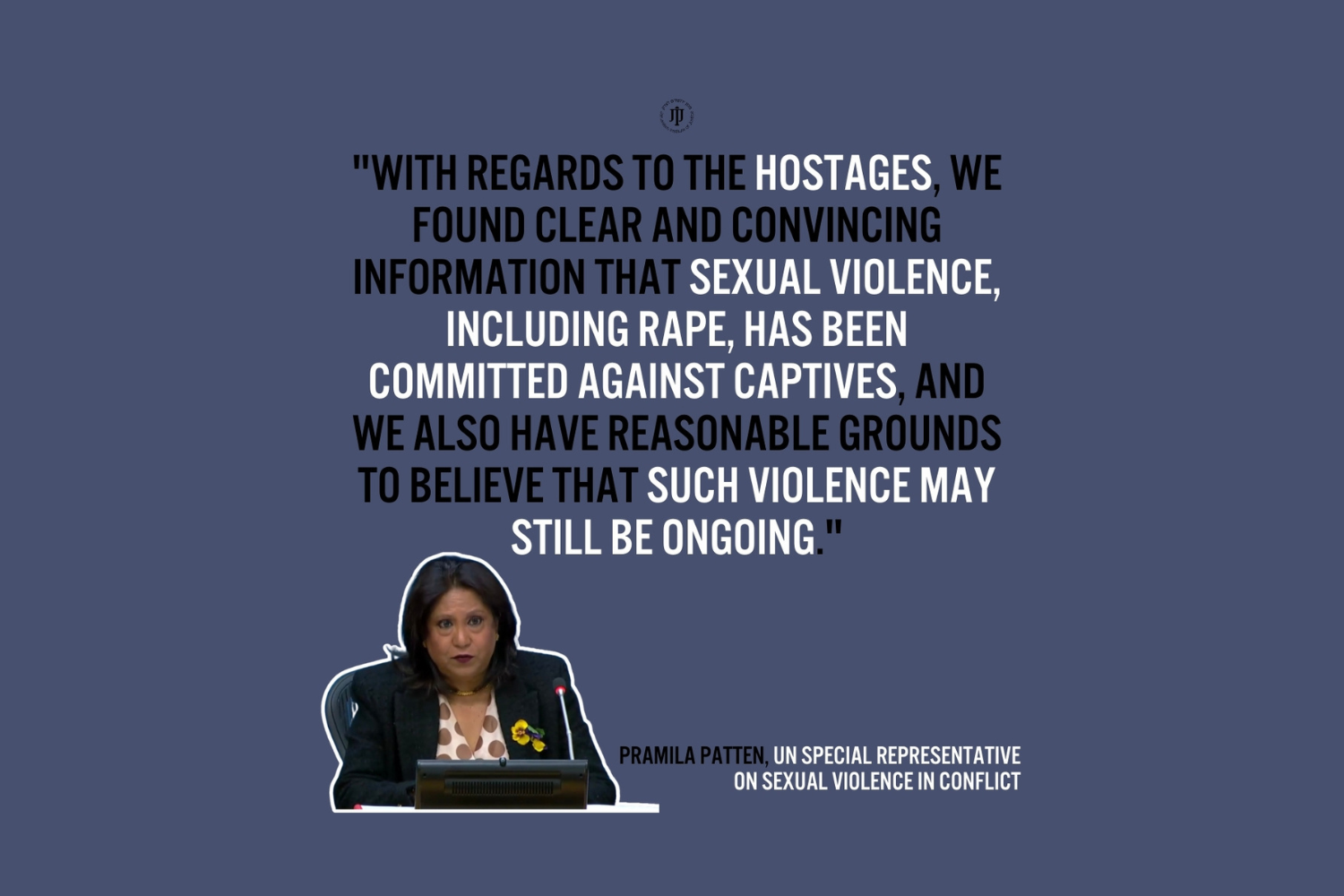
United Nations admits Hamas committed sexual violence on and after Oct. 7
Pramila Patten, a senior UN official, came to Israel a month ago with a mandate to gather information on claims that Hamas terrorists had committed rape and other acts of sexual violence against Israeli women and men on October 7th. Her trip came after months of conspicuous silence on the matter from UN Women, and appalling statements from other UN officials that amounted to gaslighting and atrocity denial.
JIJ’s team of human rights lawyers and researchers met with Patten's team on February 8th. We presented detailed testimony and gruesome photographs taken by first responders who had handled the bodies of the October 7th victims. Watch their public testimony HERE.
JIJ has UN consultative status, which gives us access to senior U.N. officials at critical moments like this. We chose to bring forth the evidence we had collected, for the sake of the murdered victims and living survivors who are still too traumatized for an invasive interrogation.
On Monday, Ms. Patten published her report, finding:
- “Reasonable grounds to believe that sexual violence occurred in multiple locations during the October 7th attacks, including rape and gang rape”
- “The recurring pattern of female victims found undressed, bound, and shot”
- “Clear and convincing information that sexual violence, including rape, sexualized torture, and cruel, inhuman and degrading treatment occurred against some women and children during their time in captivity and … that this violence may be ongoing."
Read the full report HERE.
This is a rare and valuable admission from a senior UN official, that Hamas intentionally used sexual violence as a weapon of war. This rare moment of truth-telling wouldn’t have come without your support.
JIJ does the painstaking work of collecting, interpreting, and presenting the evidence of human rights abuses in Israel and the Middle East. Our goal is to combat atrocity denial, fight for justice for the victims, validate the memories of the living survivors, and hold the perpetrators accountable.
We do this work within the UN, which has utterly failed so far to contend with reality:
- The UN General Assembly has refused to condemn Hamas.
- The UN Security Council still hasn’t recognized Hamas as a terrorist organization.
- The UN "Human Rights Council" was in session on October 7th and chose silence.
- Despite overwhelming evidence, most UN officials still refuse to acknowledge the atrocities committed on Oct 7.
With your support, we’ll continue standing up for Israel inside the UN system, fighting to release the captives, defund Hamas, and secure justice for all of Hamas’ victims.
Petition to Stop Funding UNRWA
What happens when well-meaning Western donors feed money to a UN agency that turns a blind eye to terrorism? The numbers tell the story.
On October 7th:
- 133 UNRWA school graduates invaded Israel to murder and kidnap Israeli civilians
- 12 UNRWA staff directly participated in the massacre
- 2 UNRWA teachers held hostages captive in their own homes
- 30 UNRWA teachers publicly celebrated the violence on social media
- 1,200 UNRWA staff quietly helped Hamas with cars, weapons, money, information, and hideouts
PETITION
His Excellency Mr. António Guterres
Secretary-General United Nations
New York, NY 10017
Your Excellency,
I was horrified to learn that UN employees directly participated in the October 7th massacre, held Israeli hostages captive in their own homes, and celebrated the massacre on social media. It is unacceptable that the United Nations has thousands of terrorists on its payroll, and that it uses donor money to indoctrinate generations of Palestinian children into Hamas’ radical ideology.
The UN cannot sweep away these allegations with a perfunctory “investigation.” This antisemitic agency must be immediately defunded. No donor money should be restored until and unless UNRWA is radically restructured and reformed! Don’t restore funding to UNRWA without:
- New mandate that promotes acceptance of Israel’s existence
- UNESCO-approved curriculum that promotes peace and tolerance, not Jew hatred
- Purge all terror-affiliates from the payroll
- Routine independent audits of all facilities and finances
- An independent ombudsperson to investigate claims of whistleblowers
The people of Gaza deserve better than UNRWA. They deserve food, medicine, education, and shelter delivered by transparent organizations that are not routinely infiltrated by terrorists. They deserve to receive humanitarian aid and not see most of it stolen by Hamas. They deserve schools that promote coexistence with Jews and other minorities in the Middle East.
I support sending aid to Gaza through the World Food Program and UNHCR in the meantime. Thank you for your attention to this important issue.
Hamas is a Terrorist Organization - Petition to the United Nations (UN)
34 UNITED STATES SENATORS SIGNED A BIPARTISAN LETTER DRAFTED BY THE JERUSALEM INSTITUTE OF JUSTICE URGING THE UN TO DESIGNATE HAMAS A TERRORIST ORGANIZATION.
34 United States Senators just signed a bipartisan letter drafted by the Jerusalem Institute of Justice, urging the United Nations to designate Hamas as a terrorist organization. Click here to read the letter.
Despite Hamas’ live-streamed atrocities on October 7th, including murdering civilians, taking hostages, mass rape, torture, dismemberment, and beheading … the United Nations still does not recognize them as a terrorist organization! The UN considers the Taliban, Al Qaeda, and the Islamic State to be terrorists, but not Hamas?
This must change. NOW!
Join us in thanking Senators James Lankford (R-OH) & Jacky Rosen (D-NV) for taking the lead on this important initiative.
Add your voice to this committed group of Senators, who are true friends of Israel, and urge Ambassador Linda Thomas-Greenfield, the US Ambassador to the United Nations, to make this a top priority in her negotiation at the UN. Sign the petition below.
PETITION TO US AMBASSADOR TO THE UN
Dear Ambassador Thomas-Greenfield:
We write with our utmost concern regarding the recent terrorist attacks on Israel by Hamas and other terrorist organizations in the region. We commend your unequivocal condemnation of Hamas’ terrorism and your support for Israel’s right to defend its people. Recent events have demonstrated that Hamas’ actions, tactics, and stated goals are in many ways indistinguishable from Al Qaeda, ISIS, and other terrorist organizations the United Nations (UN) has sanctioned. Therefore, we write to urge you to bring a resolution to the UN Security Council recognizing and imposing sanctions on Hamas as a terrorist organization.
As you know, on October 7, 2023, thousands of Hamas terrorists launched attacks, including on civilian communities, in southern Israel, brutally murdering 1,400 innocent people and wounding 4,500 others.
Additionally, Hamas kidnapped over 240 men, women, and children – ranging from infants to Holocaust survivors. Hamas terrorists have committed and continue to commit abhorrent attacks that not only impact Israelis but also directly impact Americans citizens, with at least 32 Americans killed and countless more held in captive as a result of the terrorist attack on October 7. In fact, Hamas hostages come from 25 countries around the world. Hamas’ reign of terror is not just an Israeli problem, but one that impacts us all. Since October 1997, the U.S. Department of Treasury has designated Hamas, Palestinian Islamic Jihad (PIJ), and the Popular Front for the Liberation of Palestine (PFLP) as Foreign Terrorist Organizations.
Additionally, these groups have been listed as Specially Designated Global Terrorists (SDGTs) since October 2001. Numerous other countries and international entities rightfully have designated Hamas as a terrorist organization, including Australia, Canada, the European Union, Japan, Israel, the Organization of American States, Paraguay, New Zealand, and the United Kingdom. Switzerland is also actively exploring legal avenues to designate Hamas as a terrorist entity.
There are multiple consequences of the UN not recognizing Hamas as a terrorist organization. First, the lack of a unified voice among the international community risks eroding the UN’s credibility in response to one of the worst terrorist attacks in history. Additionally, as the largest financial contributor to the UN, the U.S. must take urgent action to prevent the flow of funds into the hands of Hamas. The absence of UN sanctions on Hamas is a glaring loophole, circumventing U.S. financial controls, such as the rigorous standards set by the U.S. Department of Treasury, potentially allowing Hamas to evade U.S. sanctions.
Furthermore, the lack of UN sanctions on Hamas enables them to bolster their capabilities by exploiting international financial channels, including accessing financial systems and soliciting donations from charities.
We are also concerned that a lack of UN sanctions enables Hamas to divert humanitarian aid for malicious intent, which deprives innocent Palestinian civilians of crucial assistance while simultaneously strengthening offensive capabilities used to attack Israel. Hamas continues to divert aid meant for civilians in order to fund its operations by:
- Imposing "taxes" on humanitarian consignments at border checkpoints;
- Seizing a segment of donated goods intended for Palestinian civilians and later selling them illicitly for financial gain;
- Seizing donated supplies – as Hamas did on October 16, 2023, when they took fuel meant for Gazan hospitals from a United Nations Relief and Works Agency site; and
- Dismantling and repurposing humanitarian facilities, like water and sewage components, to create rockets and missiles, some of which misfire and land in Gaza, causing Palestinian civilian casualties and posing threats to aid workers.
We therefore request you bring forward a UN resolution to recognize and sanction Hamas as a terrorist organization. Thank you for your consideration, and we look forward to your timely response.
Sincerely,
PETITION HAS BEEN SUBMITTED TO THE UN. THANKS TO ALL THOSE WHO SIGNED!
Committing to Palestinian rights (?)
In 2012, the United Nations (UN) granted the Palestinians non-member observer State status. Following this decision, the “State of Palestine” – as officially named in the UN – ratified several international treaties, supposedly to commit itself to comply with human rights and other international legal obligations. One such treaty is the International Covenant on Civil and Political Rights (ICCPR), which obligates those countries that have joined the treaty to respect and ensure the protection of fundamental human rights, such as the right to life, equality, and freedom of thought.
But how does one ensure that countries actually comply with their obligations and protect the rights of those under their jurisdiction? This is, in fact, the role of the UN Human Rights Committee, which receives reports from the State parties on the measures they have adopted in relation to the rights contained in the ICCPR. For this purpose, the Committee receives both the report of the state in question as well as documents submitted by organizations that wish to provide more information on the state’s compliance with the ICCPR. After analyzing the information received, the Committee issues recommendations to the state.
This month, it was the State of Palestine’s turn to attend and be examined by the Committee. Last week, the Committee issued its recommendations to the State of Palestine, also expressing its concerns on the numerous human rights violations that appear to be committed by Palestinian authorities.
Among the several human rights abuses highlighted in the Committee’s concluding observations, there is one that has not received enough attention from the international community: detainees are often subjected to torture by Palestinian security forces and intelligence services. The Committee has expressed its concerns “about consistent reports indicating that persons in custody, including in the facilities under the authority of the security forces and intelligence services, are subjected to torture or ill-treatment.”
What is even more alarming is the fact that many of the persons subjected to torture are actually children. The Palestinian Independent Commission for Human Rights, the national human rights institution established by Presidential Decree and has the function of an ombudsman, informed the UN Committee Against Torture that between 2016 and 2021, they received 4,279 claims of torture and other forms of cruel, inhuman, and degrading treatment, with 12% of them filed by children (Shadow Report of the Independent Commission for Human Rights on the initial report submitted by the State of Palestine on the implementation of the Convention against Torture, 2022).
The report submitted by the Jerusalem Institute of Justice (JIJ) also provides detailed information on the many cases of torture committed by the Palestinian authorities. Most individuals subjected to torture and inhumane treatment are those who exercise their fundamental rights by participating in peaceful protests or publicly voicing criticism against the authorities and those who are accused of “collaborating with Israel.” As pointed out by JIJ’s report, “these abuses and acts of torture have occurred across various periods, underscoring the fact that they are not isolated incidents.”
What is also concerning is the culture of impunity sustained by the Palestinian authorities. As pointed out by the Committee, only a few complaints of torture are investigated, and almost none of the investigations have resulted in the prosecution and conviction of the perpetrators. The Committee has therefore called upon the State of Palestine to “investigate promptly, thoroughly and effectively all cases of torture and ill-treatment in all places of deprivation of liberty, to ensure that perpetrators are prosecuted and, if convicted, punished with penalties commensurate with the gravity of the offenses and that victims of such violations receive full reparation and are provided with redress.”
But how does all this effort by the Committee and organizations truly translate into real-life change? Does this have any actual impact on those individuals whose rights are being violated by the Palestinian Authorities? Moreover, the Committee is one of many bodies in the UN that are responsible to oversee and ensure the respect of human rights. Even several bodies were specifically established regarding the rights of the Palestinians, so shouldn’t these institutions also focus on the human rights violations being committed by the Palestinian authorities?
The status of the Palestinians remains a contentious topic, subject to ongoing debate. Palestinian authorities have sought state recognition, which the UN eventually granted. However, this recognition must not be mere rhetoric or a political instrument; it holds the potential to make a meaningful difference. Regrettably, the UN has sometimes been manipulated as a platform for discussions that, under the guise of safeguarding human rights, mask hidden agendas and overlook real abuses.
The UN Human Rights Committee, composed of independent experts rather than states, plays a crucial role in safeguarding the rights of every individual. As a human rights advocate, I remain optimistic that this framework can lead to positive outcomes, hoping that even the State of Palestine, in its pursuit of recognition, will fulfill its obligations and uphold human rights.
By Carolina Grimberg Golijov, JIJ's Human Rights, Law and Research Officer.

53rd Session of the Human Rights Council - Agenda Item 7 - JIJ's Statement
https://www.youtube.com/watch?v=rUUKMJd_Chc
On the 10th of July, the UN Human Rights Council held a session on Item 7 of its agenda. This Item is defined as the “Human rights situation in Palestine and other occupied Arab territories.” This is, in fact, the only country-specific item on the agenda and has served as a pretext to issue a disproportionate amount of resolutions against Israel.
The Jerusalem Institute of Justice, which holds Special Consultative Status in the UN, has participated in this session. JIJ’s Human Rights, Law, and Research Officer, Carolina Grimberg Golijov, issued a statement opposing this item and calling upon the Council to respect its mandate and work for the protection of human rights.
Read the full transcript: JIJ's Oral Statement Transcript - 53rd HRC session -agenda item 7
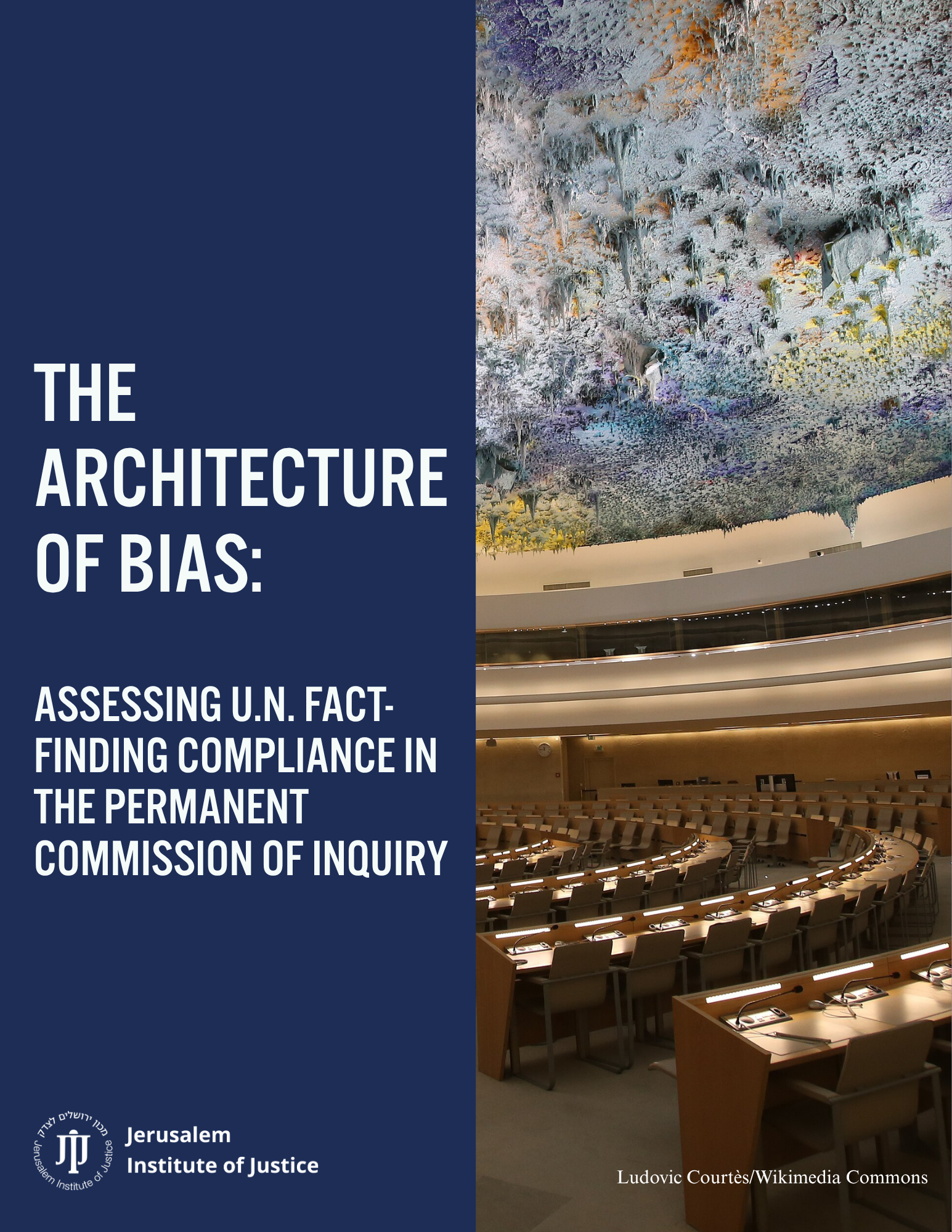
A Step Too Far: The UN Human Rights Council COI Report on Israel
After clashes between Israel and Hamas in May 2021, the UN Human Rights Council opened a Commission of Inquiry (COI) to investigate human rights abuses in Israel. Over the course of the past two years, the COI has produced three reports detailing one-sided, biased information about the events on the ground, falsely portraying reality for so many Israelis and Palestinians. In its latest report, the COI focused on “Israel’s attacks, restrictions, and harassment of civil society actors” and revealed numerous concerning human rights violations in the Palestinian Territories and East Jerusalem. However, the UN fell into its biased routine of disproportionate representation once again.
Although unequal treatment is expected with the UN’s long history of anti-Israel sentiment, the most recent proceedings took matters to new heights. Throughout the report and live session, the COI explicitly supported BDS and similar Israel-boycott organizations and categorized them as legitimate forms of protest. The COI also ignored terrorism enacted by both Palestinian leadership and civilians and called on UN member states to support the Palestinian resistance. These actions not only fail to uphold the COI’s mission to “establish the facts and circumstances” and “identify those responsible,” but it glorifies antisemitism in the world’s most prominent human rights organization, setting a precedent that poses a serious threat to Jews around the world (the UN Independent International COI on the OPT Mandate, 2021).
In the COI report’s section detailing Israel’s delegitimization of Palestinian civil society, the COI claims that Israel instituted various measures to limit BDS, such as removing their funding and cutting business deals. By preventing BDS from acting freely, Israeli authorities were denying their supporters the right to freedom of expression, which is considered a human rights violation. As a response, the COI asserts that:
“Everyone shall have the right to freedom of expression; this right shall include freedom to seek, receive and impart information and ideas of all kinds, regardless of frontiers, either orally, in writing or in print, in the form of art, or through any other media of his choice,” (Human Rights Council 53rd Session Report, pp 11)
Such statements blatantly support accounts of institutionalized antisemitism and violent resistance espoused by BDS leaders. There are numerous cases in which the BDS has voiced its antisemitic views. BDS co-founder and leader Omar Barghouti freely admits that BDS “opposes a Jewish state in any part of Palestine.” In another, a BDS leader in South Africa stated, “BDS [...] will help bring about the defeat of Zionist Israel and victory for Palestine.” Lastly, Barghouti claimed that “B.D.S. treats resistance to what it sees as Israeli oppression, including by armed struggle, as a legitimate right. Asked if B.D.S. condemned the violence that targeted Israeli soldiers, he declined to comment” (Halbfinger et. al, Is B.D.S. Anti-Semitic? A Closer Look at the Boycott Israel Campaign).
BDS’ opposition to a Jewish state in Israel’s borders is not hidden. They openly deny the Jewish people’s right to self-determination in the land of Israel and advocate against a peaceful solution. While every individual should have the right to criticize any institution and exercise his or her freedom of expression, there is a difference between disagreement and encouraging human rights crimes. BDS clearly legitimizes terrorism and harm to innocent Israeli civilians as a means to wipe Israel off the face of the Earth.
To add fuel to the fire, the COI commissioners have explicitly shared similar views in interviews and sessions. Navi Pillay, the chief commissioner, has spent a large portion of her career fighting Israel, from lobbying governments to boycott Israel to creating the “Sanction Apartheid Israel” petition. On numerous occasions, Pillay has affirmed her support for BDS, such as “I hope that the Palestinian struggle to end colonization gains this kind of momentum, especially in the civilian campaign of BDS, Boycott, Divestment, and Sanctions” at a conference in South Africa (November 29, 2017). Furthermore, Miloon Kothari, one of three commissioners of the COI, stated outright in the session, “States want to [...] correctly uphold the rights of the Ukrainians to resist, and we want to see the same standards applied to the case of Israel and Palestine.” In short, just as the Ukrainians use armed resistance and violence against Russia, so should the Palestinians. Violence is an encouraged response (3rd Meeting 53rd Session of Human Rights Council).
By confirming BDS as a legitimate protest organization, the UNHRC supports both human rights violations and violence as a means to an end. They support the continuation of conflict, not peace, and are actively making the world a more dangerous place for the Jewish people.
As a Jewish student studying human rights in university, I am deeply disappointed in the COI’s report and frightened by its precedent. Firstly, one of the most important lessons of higher education is to never rely on one narrative. Every conflict has multiple angles, but ignoring basic facts detracts from the truth. Highlighting the Israeli perspective is just as crucial to progress as highlighting the Palestinian one, and peace can only emerge through mutual recognition.
Secondly, this statement arrives at a dangerous time for the Jewish people, as antisemitism has slowly crept back into all sectors of our society. Many of my peers have been alienated for their assumed pro-Israel opinions after simply expressing their Jewish identities. Not only do individuals fear expressing their opinions on Israel, but the environment no longer allows them to be open about being Jewish. By giving the green light to BDS, the COI contributes to “removing [...] civil-society actors from the public space to stop their activities, silencing their voices and punishing them, and often also deterring others,” the exact environment the UNHRC claims Israeli authorities wrongfully create for Palestinians (Human Rights Council 53rd Session Report pp 20).
As a path forward, the UNHRC COI must condemn BDS for crossing the line from free speech to antisemitism. By drawing this line, the UNHRC can simultaneously protect the freedom of expression, as well as the Jewish people. Second, the UNHRC must recognize the terrorism enacted by Palestinian civilians and leadership. If they assert that Israeli violence is a human rights crime, they must at least recognize that it exists on the other side, let alone criticize it.
The only path to upholding human rights is to escape emotional narrative, present challenging issues from either side and hold both sides accountable for their actions. It is crucial to call out Israel when they commit crimes, just as criticism is warranted for any democracy, but displaying biased, one-sided evidence only inhibits progress and perpetuates the harmful, decades-long conflict. Every innocent Palestinian and Israeli equally deserves fair treatment from their governments and international institutions, and hiding the truth prevents human rights for all.
By Molly Goldstein - JIJ Intern